Races
San Sebastián Marathon: complete route guide and key facts
Route, schedule, bib numbers, prices, and atmosphere of one of the fastest races in northern Spain.

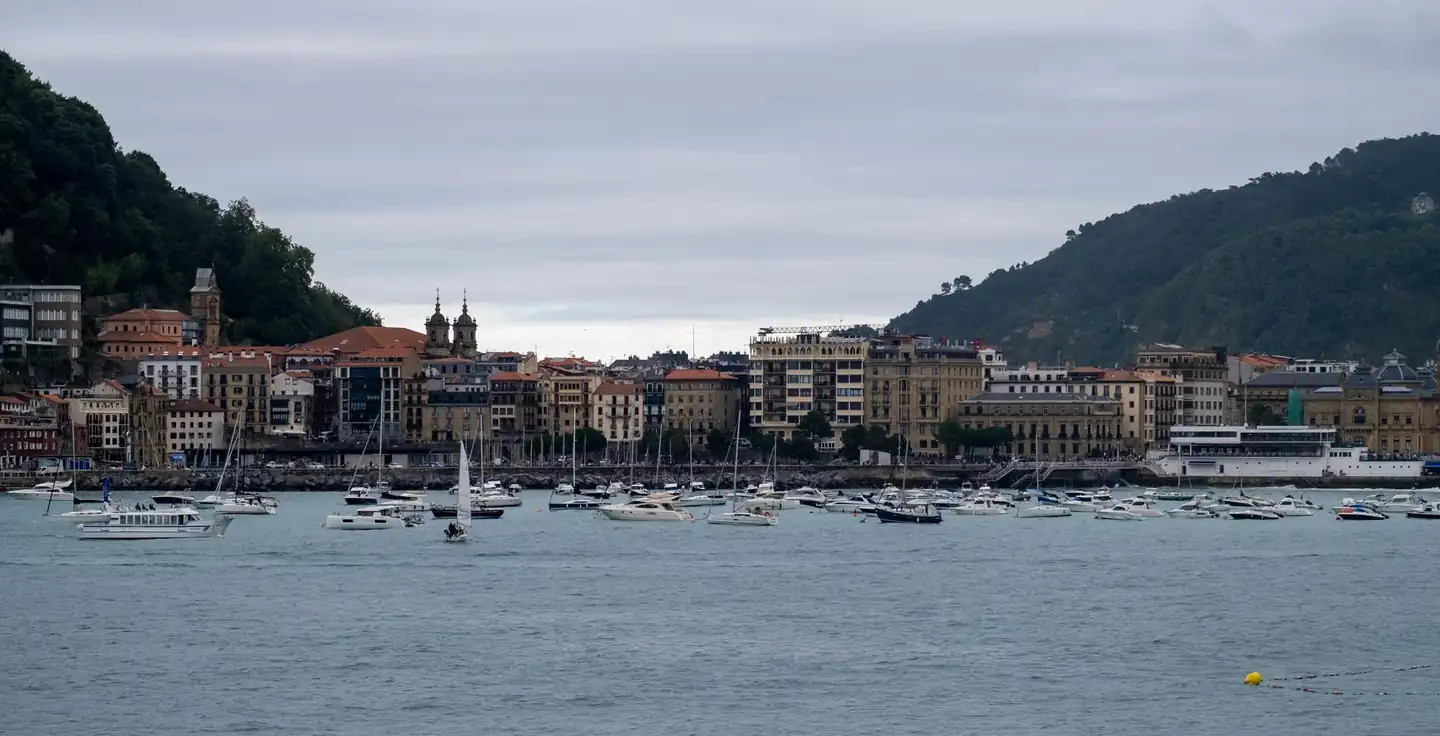
The San Sebastián Marathon holds a unique place in the Spanish calendar thanks to an unusual combination: a fast course, a compact city, and a coastal setting that turns every kilometer into a postcard. The race has established itself as one of the major autumn events thanks to its urban, flat profile, with the start in the heart of Donostia and a finish on a wide, straight final stretch that is ideal for pushing all the way to the last meter.
The edition scheduled for November 22, 2026 once again puts the capital of Gipuzkoa on the European running map. The organizers are offering two distances, marathon and 10 kilometers, with a now very familiar setup: bib collection at the Kursaal, start on Hernani kalea, and finish on the Boulevard. For many runners, that combination sums up the appeal of the event: it is serious, fast, and at the same time very human, with the atmosphere of a big neighborhood and a city open to the sea.
A race with its own weight in the history of Spanish running
San Sebastián does not need embellishment to explain why its marathon generates interest year after year. It is the second oldest marathon in Spain, born in 1978, and that longevity has not turned it into a museum piece, but into a race with modern energy. Its urban course, the closeness of the public, and the charm of Donostia have kept alive an event that blends tradition and performance without forcing the balance.
The city helps, and a lot. Donostia-San Sebastián offers an ideal scale for running and for walking afterward, with beaches, avenues, bridges, squares, and neighborhoods connected without abrupt transitions. La Concha Bay, the seafront promenade, the Urumea, and the old town form a setting that does not compete with the runner, but accompanies them. In races like this, the surroundings are not an aesthetic detail; they are part of the sporting story.
Competitive prestige also matters. The San Sebastián Marathon usually attracts runners looking for a good time, but without giving up an experience with identity. The course is flat and at sea level, a highly valued combination for those seeking a strong result in November, when cool temperatures usually favor sustained effort. It is no coincidence that the event has earned a reputation for speed within the national scene.
The course: city, coast, and a final straight that invites you to empty the tank
The marathon route starts on Hernani Street, next to City Hall and the Alderdi Eder gardens, and unfolds mostly through the central urban grid. From the first stretch, the race shows its Donostian character: wide streets, orderly traffic, passage along the Urumea, and a gradual approach to La Concha Bay, one of the most recognizable landscapes in the north of the peninsula.
The course passes through areas such as Antiguo, Amara, and Gros, linking together places that are immediately recognizable to any visitor. The organizers explicitly mention the La Concha promenade, the Victoria Eugenia Theater, Anoeta Stadium, the Buen Pastor Cathedral, the Kursaal, and Gipuzkoa Square. That list of landmarks is not just a tourist device: it helps explain the logic of a race that can be followed, almost corner by corner, like a long walk at racing speed.
The finish straight deserves special mention. After the necessary loops, the runner faces a final stretch that is completely flat and over a kilometer long, a kind of open corridor where fatigue and euphoria often mix without asking permission. In marathons like this, that last segment works like a slow-motion shot of effort: the legs grow heavy, but the city pushes you forward. And when that happens, the clock often tells stories that would be harder to write on other courses.
Timings, start, finish, and the role of the 10K
The 2026 edition sets the marathon start at 9:00 on Sunday, November 22. The 10K, held the same day, starts at 8:15. That time difference reflects the organization of a race day that shares logistics, aid stations, and part of the surrounding energy, but separates the participants to better manage pace and space on the course.
The 10K serves a very clear purpose within the event: it opens the door to runners who want to experience the atmosphere of the race without taking on the 42.195 kilometers. It is a short race, but not an insignificant one. Its urban route, also centered on the heart of the city, passes emblematic places such as La Concha, the Victoria Eugenia, and the Kursaal cubes. In journalistic and sporting terms, it is the small mirror of the big marathon: same city, same aesthetic, different demand.
This dual format broadens the audience and explains part of the event’s popularity. On the same morning, the runner chasing a personal best, the debutant testing their limits over 10 kilometers, and the enthusiast who lets themselves be carried along by the beauty of the course all coexist. The race is not understood only as a competition, but as a full day of urban athletics with its own identity.
Registration, prices, and limits worth keeping in mind
The official information for 2026 sets the marathon price at 95 euros, while the 10K starts at 28 euros and rises to 32 euros in the final registration period. On top of that, for those who do not have a valid Spanish RFEA or GAF license, a mandatory 5-euro day license is added. These concrete figures help read the race realistically, because the final cost depends both on the distance and on the runner’s federation status.
The organizers also set time limits that are worth knowing. For the marathon, the cutoff is set at 5 hours, and in the 10K at 1 hour and 10 minutes. These are not decorative figures: they shape race planning and starting strategy, especially in a 42-kilometer event where pace control is crucial from very early on. On a fast course, starting too hard may seem like a logical temptation, but the marathon always exacts a price from those who confuse enthusiasm with efficiency.
Another important detail is the minimum age. The marathon is open to participants who are 18 years old on race day, while the 10K admits runners from 16 years old, always with the required documentation and authorizations in the case of minors. These are administrative details, yes, but they are part of the reality of any well-regulated event: the race begins long before the starting gun, in the data folder and in the registration email.
Expo Sports, bib, and runner’s pack: the logistics that support the experience
Bib collection takes place at the Kursaal Elkargunea Center, within the Expo Sports area, on Friday, November 20 in the afternoon and on Saturday, November 21 throughout the day until 20:00. There is no bib pickup on race day itself, which means planning ahead is necessary. If someone else collects the material, they must bring a photocopy of the ID document, the registration receipt, and the email with the bib number.
The logistics of a marathon are not a mere formality. In Donostia, Expo Sports concentrates much of the pre-race atmosphere: stands, runners’ buzz, final gear checks, and that mix of calm and tension that accompanies major starts. The organizers also provide the usual services of a race of this level, such as baggage storage, medical assistance, aid stations, and rest areas. All of that, though invisible to the casual spectator, is the backbone of the day.
The runner’s pack usually includes the event’s classic items, and among the benefits linked to registration are the finisher medal, technical shirt, chip, bag, access to the expo, and other race-related services. Overall, the event is presented as a well-built experience, in which the sporting side and the organizational side move in parallel to reduce friction on a long and demanding day.
The atmosphere of Donostia: sea, pintxos, and a city that understands runners
One of the reasons the San Sebastián Marathon works so well is that the city knows how to welcome visitors. Its compact size, elegant profile, and gastronomic tradition create a favorable environment for the sporting visitor. The runner comes for the race, but discovers a capital with its own rhythm, where strolling, cuisine, and sea views matter as much as the competitive schedule.
The reference to pintxos appears in almost any conversation about Donostia, and for good reason. The Old Town, the full bars, and the lunchtime bustle are part of the trip’s identity. After the race, that social dimension has almost therapeutic value: the body unwinds, the city nourishes, and the effort finds a reward less visible than the medal, but just as memorable. This is not about turning gastronomy into a slogan, but about acknowledging that here it is part of the sporting landscape.
November weather also shapes the atmosphere. Temperatures are usually cool and rain is not unusual on the Cantabrian coast, something many runners see as a nuisance and others as an advantage. The mild air and lack of heat usually favor performance, although humidity and coastal wind require sensible management of effort and gear. In a marathon, weather is never secondary; it is a supporting actor that sometimes becomes the star.
What makes a fast, sea-level course special
The phrase fast course is repeatedly associated with this race, and it is not an empty cliché. A flat, coastal route changes the feeling of the race, reduces the muscular punishment accumulated from climbs and descents, and allows more even pacing. In San Sebastián, that profile is combined with practically zero elevation, a modest but real physiological advantage for those looking to push themselves intelligently.
The route, however, is not a personality-free highway. The proximity of the sea, the urban turns, and the passages through different neighborhoods provide visual and mental variety. Running a flat marathon does not mean running a monotonous one; in Donostia, the sea horizon and the landmark buildings provide enough scene changes to keep the brain from sinking into the mechanical repetition of the kilometer. That matters more than it may seem when the distance exceeds three hours of effort for many participants.
There is also a competitive reason for its prestige: the race combines speed with a highly recognizable setting, attracting both elites and recreational runners who want a clean, well-measured, visually powerful experience. The marathon works as a showcase for well-executed urban running. It does not need grand artifices; it only needs a smart course and a city willing to play along.
Records, participation, and the race’s international dimension
The marathon has grown in importance until it has become a reference with international reach. The 2025 edition brought together 11,500 runners, a figure that confirms the organization’s ability to mobilize a large audience without losing the event’s accessible character. That participation also speaks to the current state of running: more runners, more diversity, and more interest in races with recognizable identity.
On the sporting side, the event has benchmark historical times. The records cited by the organizers include the 2:09:34 by Timothy Cherigat in the men’s category and the 2:23:09 by Rebbeca Tanui in the women’s, both as milestones in a race with a tradition of strong performances. Those times help explain the course’s potential and Donostia’s reputation as a place to run fast when conditions are right.
The presence of foreign runners, the urban character of the course, and the city’s tourist appeal strengthen an increasingly international image. This is not just a marathon for local specialists; it is a race that converses with the European calendar and competes, in its category, with events of enormous appeal. Its value lies in that mix of mid-scale size, tradition, and scenery that so often proves more convincing than impersonal giants.
Services, safety, and practical details that make a difference
The organizers emphasize aspects that, in long-distance races, can greatly affect the final experience. Headphones are not allowed for safety reasons, and pacer reference times range from 2:45 to 5:00, offering tangible help to those aiming for a specific target. There are also aid stations every five kilometers in the marathon, with water, isotonic drink, and, at some points, gels.
Baggage storage is centralized at the Kursaal and has generous hours, including race morning. That kind of detail avoids unnecessary stress and reduces room for improvisation. In a long marathon, every prior decision matters: where to leave your clothes, when to collect your bib, how to organize the time before the start. None of that appears in the finish-line photos, but it all supports the execution of the day.
There are also prizes planned for the overall top finishers and for different age categories. That detail highlights an important point: the race is not designed only for the mass of recreational runners, but also to recognize competitive performance at several levels. Donostia, in that sense, maintains a classic athletic rhythm, where result and experience coexist without one consuming the other.
The marathon that combines performance, scenery, and a city with character
The San Sebastián Marathon sums up something uncommon in the calendar: speed, beauty, and organizational expertise in a single proposal. Its urban, flat course makes it attractive for chasing a personal best, but the bay, the city center, and the cultural weight of the city add a layer of meaning that goes beyond the stopwatch. It is a race remembered for the times and also for the images.
There is also that element of a city that is just the right size, of an event that neither overflows nor disguises itself. Donostia does not need to raise its voice to catch a runner’s attention. It is enough for it to offer a solid setting, a clear course, and an atmosphere that combines order, beauty, and liveliness. In a calendar saturated with similar events, that identity matters a great deal.
That is why the San Sebastián Marathon continues to occupy a singular place in the imagination of Spanish running. It is not just a November date or another bib. It is a race with memory, with scenery, and with a very recognizable sporting logic, one of those that turn a long morning of effort into an experience that remains alive even after the clock has stopped.
You may also like: San Francisco Marathon: history, route, and key points of the race.
Where to stay in Donostia-San Sebastián
Hotels available 20–23 November 2026.
Affiliate links: if you book through this map we earn a commission, at no extra cost to you.



How to prevent thigh chafing: causes and real solutions

Women’s running windbreakers: seven jackets and how to choose

Do more workouts get rid of soreness? A guide for runners

Jaén Half Marathon 2026: Record 3,800 Runners Registered

Men’s short running tights: how to choose the right pair

World Triathlon confirms data breach involving medical data

Izan Edo targets podium at Miyazaki World Cup

María Pérez ranks ninth in World Athletics’ 2026 top ten

Dos Santos, Duplantis and Sawe: World Athlete of the Year finalists

San Silvestre Vallecana 2026: 42,000 places, prices and start times

 Races3 months ago
Valencia Half Marathon 2027: date and registration

 Reviews and Comparisons4 months ago
Asics Gel-Roadmiles 3 for men: review and current price

 Races3 months ago
Valencia Marathon 2026: entry, ballot and course

 Reviews and Comparisons4 months ago
Asics Gel Sonoma 8 Gore-Tex: complete analysis for trail and rain

 Sneakers3 months ago
Saucony Endorphin Pro 4: full review and verdict

 News5 months ago
Strava API 2026: what changes for clubs, challenges and runner apps?

 Reviews and Comparisons5 months ago
Nike Alphafly 3: opinions, sensations, and real key points

 Reviews and Comparisons4 months ago
Under Armour running shoes review 2025-2026: models and key features

 Sports Equipment4 months ago
Shoe sizes in cm: a clear guide to getting the right fit for your footwear

 Sneakers3 months ago
Skechers GO RUN Consistent 2.0 analysis: comfort and limits

 News5 months ago
Valencia Marathon 2026 route: key tips to train and run better

 Sneakers4 months ago
Adidas Adizero Boston 13 for men: review and verdict