Races
Albacete San Silvestre 2025: certified 5 km course
The December 31 race keeps an officially certified 5K course and a central route with the start and finish on Avenida de España.

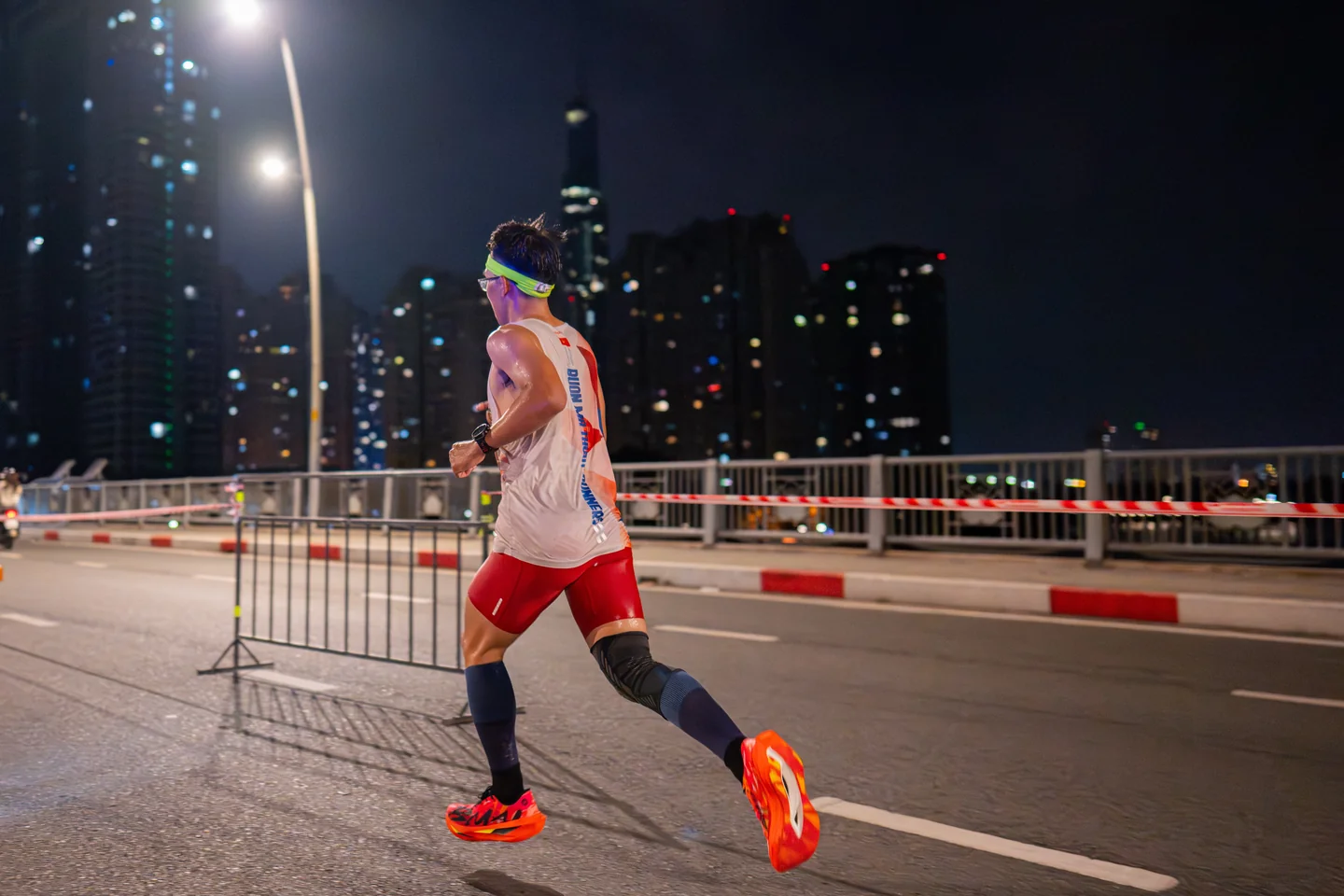
The 2025 San Silvestre de Albacete will once again feature a fast, urban, and highly recognizable course: 5 kilometers certified by the RFEA, with the start and finish on Avenida de España and a continuous passage through some of the busiest streets in the city center. The organizers are repeating a circuit designed for running in groups, with a year-end atmosphere and a layout that favors both mass participation and official race-time recording in this federated event.
The route has no changes compared with the model already announced by the organizer and reported by local media. The race will start at 5:00 p.m. on December 31 and will trace an urban loop linking Avenida de España, Calle Hellín, Paseo de la Circunvalación, Calle Rosario, Arquitecto Vandelvira, Hermanos Jiménez, Paseo de la Feria, Calle Feria, Calle San Julián, Martínez Villena, Marqués de Molins, and Tesifonte Gallego before returning to the starting point. It is an itinerary that captures the essence of the race: accessible, visible, and with the city’s pulse in the late afternoon.
A certified 5K that centers the race downtown
The course certification by the RFEA changes how this edition is viewed. It is no longer just a popular year-end celebration, but a validated course designed to provide stable references, official times in the federated race, and more reliable measurement for those looking to compare performances. In a 5-kilometer race, every meter matters; that is why certification adds a layer of seriousness that coexists with the festive tone of the day.
That detail also explains why the organizers have kept the start and finish on Avenida de España. The city center offers width, visibility, and a very recognizable setting for the public. Along the course, runners do not face a maze of tight turns or a technically complicated profile; what they find is a succession of streets that guide the pace, as if the city were marking short, steady beats. That favors both those aiming to enjoy themselves and those looking to push the clock.
The race also fits into a year-end landscape in Albacete that is no longer just one event, but a small sports festival. The popular San Silvestre shares the spotlight with other events on the same day, multiplying the sense of open streets, lively atmosphere, and corridors occupied by runners of very different profiles. The 5-kilometer route thus becomes the centerpiece of an afternoon in which the pavement acts almost like a shared carpet for athletes, enthusiasts, and families.
The street-by-street itinerary and its racing logic
The start on Avenida de España places the race in a wide and highly visible location. From there, the entry via Calle Hellín opens the route smoothly and leads toward Paseo de la Circunvalación, a transition that allows the pack to stretch out before tackling the most recognizable urban section. Then comes Calle Rosario, which links with Arquitecto Vandelvira and Hermanos Jiménez, a sequence that draws the race like a thread through the heart of the city.
The stretch through Paseo de la Feria and Calle Feria adds one of the most appreciated features for the recreational runner: the feeling of crossing spaces where the city looks at itself. These are streets with a strong place in local memory and, on a day like this, they become corridors of sound, applause, and held breath. The road is not presented as a neutral stage; it becomes a winter backdrop, with low light and a particularly concentrated crowd at the most visible points.
The straight section that continues through Calle San Julián, Martínez Villena, Marqués de Molins, and Tesifonte Gallego helps organize the effort before the final return. It is a stretch that, in its sequence, may seem like a chain of simple links, but that is precisely where the runner sees the value of good planning: the streets connect one after another without breaking the rhythm too much. The return to Avenida de España closes the loop with a sense of coming back to the origin, a coherent finish for a race that is not looking for topographic surprise, but rather continuity and flow.
What the runner gains and what the companion sees
For the participant, a course like this has a clear advantage: it allows running with constant visual references. There are no long isolated zones or stretches where the runner loses contact with the overall idea of the race. That matters a lot in a San Silvestre, where the mix of costumes, fitness levels, and personal goals can lead to dispersion. Albacete’s circuit offers the opposite: an easy-to-follow urban script that is compact enough for the race to maintain energy from start to finish.
For the spectator, the design is equally rewarding. Because it is concentrated in a central area, the route makes it easy to see the runners pass at more than one point without major movement. The San Silvestre thus gains street atmosphere, with a public that can position itself on corners, sidewalks, and emblematic stretches to accompany the pack’s progress. In urban year-end races, that closeness often makes the difference between a simple competition and a shared city scene.
There is also a practical side: the circuit is clear enough for the recreational runner to anticipate effort, manage pace changes, and understand where they can push without compromising the final stretch. The presence of wide streets and very familiar names in the center helps build an intuitive race, almost as if the map had been drawn with a thick marker. That visual clarity reduces noise and focuses attention on the essentials: running, enjoying, and crossing the finish line with room to look around.
The federated race and the value of official time
The organizers have emphasized that participants in the federated race will have official classification and time. That is no minor detail. Over a 5-kilometer distance, having time control turns the event into more than just a festive run. It gives context to performance, makes split comparisons possible, and places the result within a truly competitive framework, even if the atmosphere remains friendly and open.
This dual format is one of the keys to the growth of the San Silvestre de Albacete. The race retains the popular layer that gives it color, while adding a more precise sporting dimension for those who need objective references. That balance explains part of its success: it does not force you to choose between celebration and competition, but lets both coexist. On an afternoon marked by the end of the year, that mix works especially well because each runner finds their space without affecting the whole.
Certification also protects the race’s credibility among runners from other places. A measured and repeatable course has value beyond the local calendar because it allows editions to be compared and the race’s evolution to be tracked with a common standard. In this case, the 5K has become a benchmark distance, and the city has embraced it as part of its December sporting identity.
A San Silvestre that is already part of Albacete’s landscape
The 2025 edition arrives as a continuation of a story that has been growing since 2004, when the race was much smaller in scale. The jump in participation and organization speaks not only to the race’s appeal, but also to the consolidation of popular athletics in the city. What began as a modest event has become a reference day, with thousands of bibs and logistics that require near-surgical precision.
That growth is also reflected in the way the route has been designed and repeated. There is no improvisation in the selection of streets: the circuit is designed to work safely, to coexist with urban traffic, and to handle a significant number of runners. The city, in that sense, transforms for a few hours into a temporary course where everyday elements—streetlights, intersections, facades, avenues—become milestones in a race that is already part of local memory.
The result is a very specific image: a cold afternoon, pavement still under the low light of December, the downtown streets filled with runners wearing visible bibs, and the public gathered in emblematic areas. No embellishment is needed. The San Silvestre de Albacete lives on precisely that, on the coincidence between a recognizable city and a short distance that demands hard running but still allows you to enjoy the surroundings. It is, in essence, a year-end farewell with an urban stride.
What the course reveals about the race experience
The route profile suggests a race without major elevation changes or complex technical elements. That makes it ideal for a wide range of runners, from those taking part in a San Silvestre for the first time to those seeking a fast time on a certified 5K. The race relies on the speed of the streets and the continuity of the course, not on the difficulty of the terrain. The focus is on cadence, pace control, and constant movement.
That accessibility also explains why the circuit can accommodate costumes, family audiences, and runners with very different goals. A course of this kind does not require specialized preparation to be enjoyed, though it does reward the ability to maintain a steady pace for a relatively short time. In journalistic terms, it is a race of contrasts: cheerful on the surface, precise underneath. The party is on the surface; the sporting detail, in the structure.
In addition, passing through avenues and central streets gives it an almost cinematic quality. The race does not hide in an industrial estate or fragment into peripheral loops. It is shown in the heart of the city, with architecture, controlled traffic, and the public all part of the scene. For the runner, that means a more complete experience; for Albacete, a way to showcase itself on one of its most visible days of the year.
A year-end farewell where the map matters as much as the clock
In events like this, the route is not an incidental detail: it is the backbone of the experience. It sets the race’s emotional temperature, defines the perception of effort, and shapes the relationship between runner and city. The certified 5K of the 2025 San Silvestre de Albacete fulfills exactly that role. It does not aim to dazzle with complexity, but to offer a clear, central, and sufficiently emblematic route so that each step has meaning.
The mix of a wide start, familiar streets, passage through emblematic points, and return to Avenida de España creates a solid structure that is easy to understand and comfortable to follow. On a year-end day, when time seems compressed between the last training session and the first dinner, that kind of clarity is appreciated. The runner knows where they are, the public knows where to look, and the city recognizes the role it has to play.
That is why the 2025 circuit fits so well with what the Albacete San Silvestre represents: a popular race that has learned to organize itself without losing character, an official 5K that coexists with costume play and street culture, and an urban route that turns a simple sequence of avenues into a shared scene. In the end, that is the value of this course: it does not just take you from the start to the finish, it also makes the city visible as the year fades away.



How to prevent thigh chafing: causes and real solutions

Women’s running windbreakers: seven jackets and how to choose

Do more workouts get rid of soreness? A guide for runners

Jaén Half Marathon 2026: Record 3,800 Runners Registered

Men’s short running tights: how to choose the right pair

World Triathlon confirms data breach involving medical data

Izan Edo targets podium at Miyazaki World Cup

María Pérez ranks ninth in World Athletics’ 2026 top ten

Dos Santos, Duplantis and Sawe: World Athlete of the Year finalists

San Silvestre Vallecana 2026: 42,000 places, prices and start times

 Races4 months ago
Valencia Half Marathon 2027: date and registration

 Races4 months ago
Valencia Marathon 2026: entry, ballot and course

 Reviews and Comparisons4 months ago
Asics Gel-Roadmiles 3 for men: review and current price

 Reviews and Comparisons4 months ago
Asics Gel Sonoma 8 Gore-Tex: complete analysis for trail and rain

 Sneakers4 months ago
Saucony Endorphin Pro 4: full review and verdict

 News5 months ago
Strava API 2026: what changes for clubs, challenges and runner apps?

 Reviews and Comparisons5 months ago
Nike Alphafly 3: opinions, sensations, and real key points

 Reviews and Comparisons4 months ago
Under Armour running shoes review 2025-2026: models and key features

 Sports Equipment4 months ago
Shoe sizes in cm: a clear guide to getting the right fit for your footwear

 Sneakers3 months ago
Skechers GO RUN Consistent 2.0 analysis: comfort and limits

 News5 months ago
Valencia Marathon 2026 route: key tips to train and run better

 Sneakers4 months ago
Adidas Adizero Boston 13 for men: review and verdict