Races
Aldapeta Popular Cross 2026: date, route and registration
A short race open to the community is part of the Marianist Olympics program in Donostia.

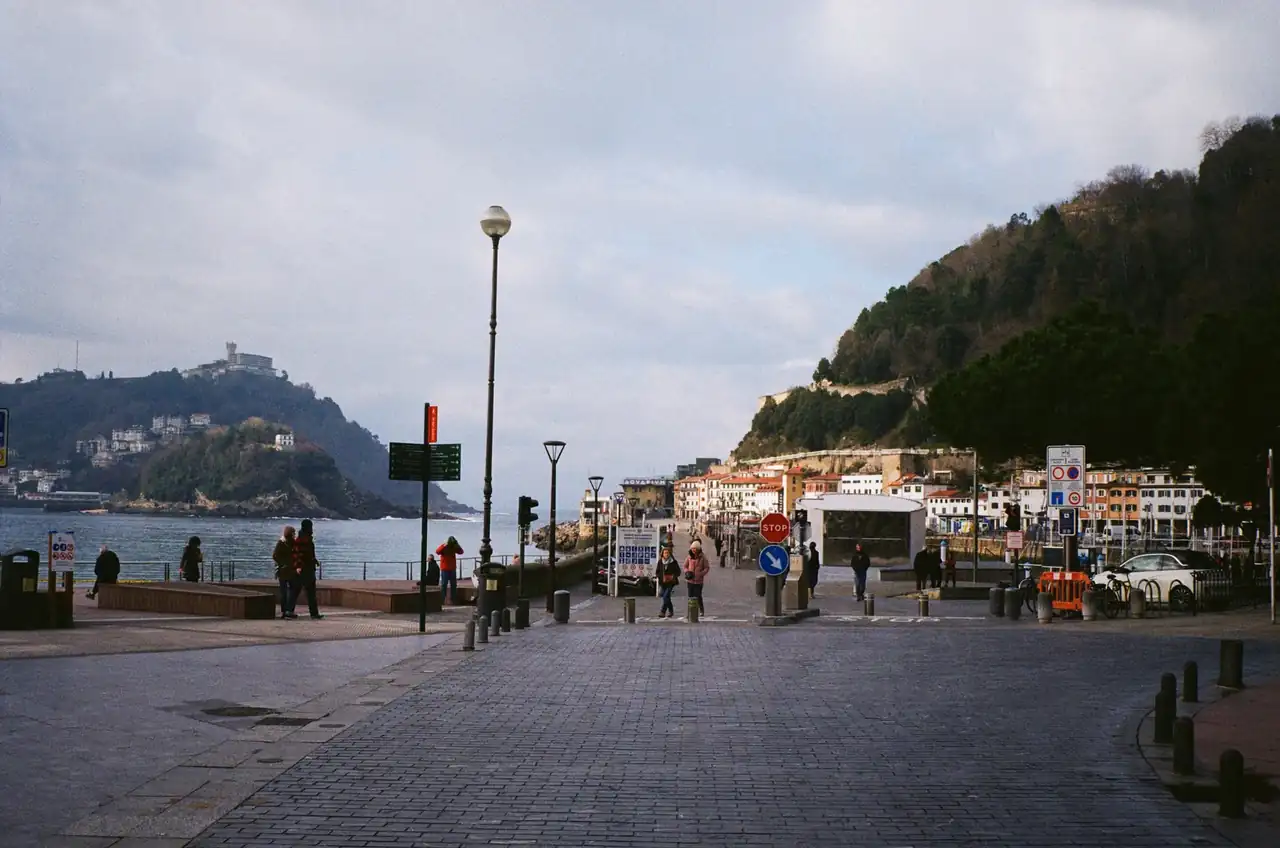
The popular race linked to the 46th Marianist Olympics will take place on Monday, Dec. 28, 2026, in Gros, a neighborhood of Donostia-San Sebastián. The published distance is 1.52 kilometers: a short course designed for different age groups and included as a community activity in the wider sporting program.
Available information places the start at Plaza del Padre Claret and the finish at the Sagüés esplanade. Registration costs 3 euros, and the stated deadline is Dec. 26. No start time has been announced, and no official course map has been published, so those details should be checked with the organizers before travelling.
A short race within the Marianist Olympics
The event is part of the Parallel Olympics associated with the 46th Marianist Olympics in Donostia-San Sebastián. It is not presented as a long-distance competition or a lengthy mountain race, but as a popular event within a broader sports program. Its format allows the race to sit alongside other activities at the event.
The event is intended for families, visitors and people connected with the Olympics. That openness defines much of its character: the appeal is not only the stopwatch, but also sharing an athletic activity in an urban setting as part of a community celebration. Its short distance sets it apart from standard 5K or 10K races, although the organizers still need to clarify participation requirements by age.
The published date is specific, but some key operational details are still missing. In particular, no start time has been announced, and the available listings do not include full rules or a detailed course map. The date and distance have been announced; the rest of the event information may be updated through official communications.
Announced date, location and distance
The race is scheduled for Dec. 28, 2026, in Gros, a neighborhood of Donostia-San Sebastián in Gipuzkoa. Some race-calendar listings identify the area in abbreviated form, while others place the event in the city; the most specific available reference is a start at Plaza del Padre Claret and a finish at the Sagüés esplanade.
The distance appears as 1.5 kilometers in some summaries and 1.52 kilometers in the route description. These are not two separate options: the shorter figure appears to be a rounded version of the more precise one. For clarity, the most detailed published distance is 1.52 km, although the final measurement will depend on the course confirmed by the organizers.
One calendar classifies the race as trail, but the available information does not reliably describe the surface. The start and finish are in urban areas of Gros, and no official route has been released to show whether the course includes dirt, paths or only streets and paved areas. The category label should not be treated as a definitive description of terrain that has yet to be confirmed.
Starting at Plaza del Padre Claret and finishing at Sagüés
The announced starting point is Plaza del Padre Claret, while the finish will be at the Sagüés esplanade, also in Gros. This gives runners a clear reference for the two ends of the race, but it is not enough to reconstruct the route covering 1.52 kilometers. No official map or confirmed sequence of streets and turns is available.
The difference between knowing the start and finish and having the full course is important even for a short race. The route determines where participants gather, how runners of different ages move through the event and what traffic or access arrangements apply nearby. Until a map is published, the course profile, width and surface cannot be confirmed.
The Sagüés esplanade is also listed as the bib pickup point. According to the information released, participants can collect their numbers there on race day, up to 15 minutes before the start. Because no start time has been announced, the exact cutoff time cannot yet be calculated: the 15-minute window depends on the official start time set by the organizers.
A distance suited to a popular-race format
At just over a mile, the event differs from popular races that require several weeks of specific preparation to cover 10 kilometers or a half-marathon. Its short format may be more accessible to occasional participants and people joining as a family, although the distance does not remove the need to follow the rules and event instructions.
In a race of this length, the start and early pace can matter more than in a long event: participants finish quickly, leaving less time to correct a rushed decision. However, no information has been released about timing, rankings, awards or the competitive format. It should not be assumed that official results or a specific competition structure will be provided until the rules are published.
The 1.52-kilometer figure helps indicate the scale of the event, but it does not show what the course will be like on the ground. An urban route may feature straight sections, turns or changes in surface; without a map, those features cannot be assigned to this race. The cautious reading is straightforward: the approximate distance is known, but not the profile or exact level of challenge.
Participation and announced categories
Available event information mentions children’s, cadet and youth categories, as well as the popular race. It does not specify age ranges, the number of starts, separate distances or how participants will be assigned to each category. Those details are essential for families and should be checked in the rules or official updates before completing registration.
The range of ages fits the community focus of the Marianist Olympics. Still, it does not necessarily mean every category will run the same route or start at the same time. Until the schedule is released, the order of starts and whether separate courses will be used remain unconfirmed.
The event description also names families, visitors and friends connected with the Olympics as potential participants. That wording suggests broad participation, but it does not replace formal registration requirements. The minimum age, parental consent for minors and any medical or administrative conditions are not included in the available information.
Registration, entry fee and deadline
The published entry fee is 3 euros, described in the event information as a symbolic amount. Advance registration is required, and the stated deadline is Dec. 26, 2026. The race is scheduled two days later, on Dec. 28, leaving a short interval between the announced closing date and the event.
The Marianist Olympics page listed in the reference information is the place to check registration. Since categories and participation details may be updated, it is sensible to review the form and current conditions there before paying. The published fee is 3 euros; no additional charges, refund policy or category-based price differences have been specified.
The short gap between registration closing and race day makes it important not to confuse the deadline with the event date. According to the published information, registration ends on Dec. 26, not Dec. 28. No maximum field size or early closure due to a sellout has been announced, so there is no basis to say that places are limited or full.
Bib pickup and the pending schedule
Bib pickup is scheduled for race day at the information point on the Sagüés esplanade. The stated window closes 15 minutes before the start. This is useful for planning arrival, but the start time has not been announced, so the exact time participants must collect their bibs is also unknown.
Without an official start time, a complete schedule for the day cannot be drawn up. Details about when the information point opens, required documents, collection by another person or advance pickup have also not been released. Those conditions should not be assumed; they need to appear in the organizers’ instructions.
Arriving with time to spare may make bib pickup easier and help avoid reaching the stated cutoff at the last minute, especially for families or groups. But the final timetable depends on the official start time. For now, the useful reference is that pickup closes 15 minutes before the start, with the clock time still to be announced.
Details still awaiting confirmation
The available listing identifies the date, general location, distance and fee, but it does not provide all the information needed to describe the event fully. There is no official schedule, route map, complete rulebook or breakdown of distances by category. Confirmed details about elevation, surface, timing system or participant services are also missing.
The lack of a route map is more than a minor omission for people who need to understand access, crossings or terrain. The course may be simple because it is short and urban, but that impression is no substitute for official documentation. Likewise, the trail label in one listing does not confirm the presence of paths or dirt sections. Important information about the route remains provisional.
It is also important to distinguish published details from those that have not yet been specified. The Dec. 28 date and 3-euro fee appear explicitly in the available information; the start time and course do not. To avoid errors, any last-minute changes should be checked with the Marianist Olympics rather than inferred from other races held in Gros.
What a 1.52-kilometer race involves
The distance places the event in a short recreational format, closer to a participation activity than a prolonged endurance challenge. For many people, its main difference from a training run will be the shared atmosphere and organized setting. Even over a modest distance, participants should follow their usual warm-up routine and respect the instructions at the start.
Occasional runners can approach it at a comfortable pace instead of turning a community event into an all-out effort. Guidance for younger participants should reflect their age and the organizers’ instructions. No medical guidance or specific training recommendations have been published, so the event should not be assigned a level of technical difficulty or exertion that the available details do not support.
Footwear will also depend on the final route. If it runs on pavement, comfortable road-running shoes may be enough; if it includes uneven terrain, the choice could change. Since there is no official surface description or published map, more specific footwear advice would be premature. The confirmed course, not a generic calendar label, should guide that decision.
Gros as the setting for a community event
Gros provides the urban backdrop for the race and links two locations named in the event information: Plaza del Padre Claret and the Sagüés esplanade. The short distance makes the location central to the experience for participants and spectators alike. Without a map, however, it is not possible to identify which streets will be included or where spectators will gather.
The race is part of a sports celebration connected to the Marianist community, rather than an isolated date on the calendar. That relationship explains its name and participatory focus. The short format may offer a meeting point for different generations, although the eligible ages and conditions for each group still need to be confirmed in the final program.
The combination of an accessible distance and a neighborhood setting gives the race a different scale from major city events. No participant figures or mobility measures have been announced, so the effect on local streets cannot be predicted. The most reliable description rests on the available facts: a 1.52-kilometer popular race within the Marianist Olympics, with its start and finish announced in Gros.
A confirmed date, with the route still to come
The Dec. 28 event already has the key details needed to locate it: it will take place in Donostia-San Sebastián, cover about 1.52 kilometers and require advance registration at a published fee of 3 euros. The stated registration deadline is Dec. 26, while bib pickup will take place on race day in Sagüés, up to 15 minutes before the start.
The next important announcement should fill in the practical details: start time, rules, full category information and route. Until then, the distance and start and finish points provide a reference, not a final map. The most accurate description combines what is confirmed with what remains unknown: a short community race within the Olympics, with the schedule and official route still to be published.
For prospective participants, that distinction avoids mistaking a preliminary listing for the final event program. The date and fee have been announced, but final planning depends on updated instructions. Those details can explain how categories are arranged and which route connects the plaza with the esplanade; for now, the central fact is a short popular race bringing the Olympics’ sporting program onto the streets of Gros.
Where to stay in San Sebastián
Hotels available 27–29 December 2026.
Affiliate links: if you book through this map we earn a commission, at no extra cost to you.



How to prevent thigh chafing: causes and real solutions

Women’s running windbreakers: seven jackets and how to choose

Do more workouts get rid of soreness? A guide for runners

Jaén Half Marathon 2026: Record 3,800 Runners Registered

Men’s short running tights: how to choose the right pair

World Triathlon confirms data breach involving medical data

Izan Edo targets podium at Miyazaki World Cup

María Pérez ranks ninth in World Athletics’ 2026 top ten

Dos Santos, Duplantis and Sawe: World Athlete of the Year finalists

San Silvestre Vallecana 2026: 42,000 places, prices and start times

 Races3 months ago
Valencia Half Marathon 2027: date and registration

 Races3 months ago
Valencia Marathon 2026: entry, ballot and course

 Reviews and Comparisons4 months ago
Asics Gel-Roadmiles 3 for men: review and current price

 Reviews and Comparisons4 months ago
Asics Gel Sonoma 8 Gore-Tex: complete analysis for trail and rain

 Sneakers3 months ago
Saucony Endorphin Pro 4: full review and verdict

 News5 months ago
Strava API 2026: what changes for clubs, challenges and runner apps?

 Reviews and Comparisons5 months ago
Nike Alphafly 3: opinions, sensations, and real key points

 Reviews and Comparisons4 months ago
Under Armour running shoes review 2025-2026: models and key features

 Sports Equipment4 months ago
Shoe sizes in cm: a clear guide to getting the right fit for your footwear

 Sneakers3 months ago
Skechers GO RUN Consistent 2.0 analysis: comfort and limits

 News5 months ago
Valencia Marathon 2026 route: key tips to train and run better

 Sneakers4 months ago
Adidas Adizero Boston 13 for men: review and verdict