Races
Almaty Marathon 2026: route, prices, and key details of the event
Start in Republic Square, four distances and a tough route between avenues and mountains in the great Kazakh showdown.

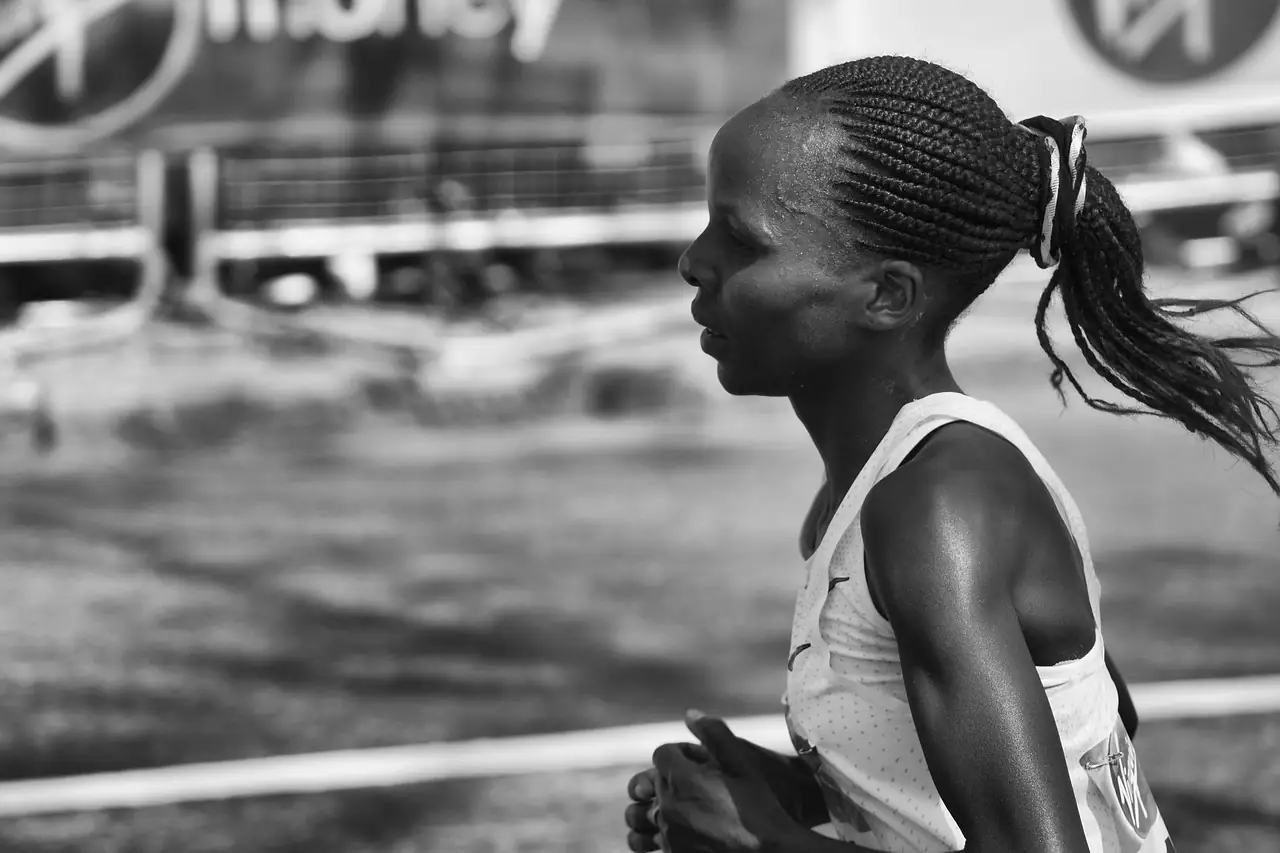
Imagen: ianwakefield1967 / Pixabay
Almaty Marathon returns for its 2026 edition with an unusual mix in the international calendar: big-city scale, notable elevation gain, and a charitable vocation that has defined its identity from the very beginning. The race takes place on 27 September in Republic Square and features several official distances, including the marathon, half marathon, 10 kilometers, Nordic walking, and Ekiden relays. The event has established Almaty as one of the running hotspots in Central Asia, with participation often exceeding tens of thousands of runners and an organization backed by international standards.
Beyond the starting-line photo, the real appeal lies in its course. The route runs along the city’s main avenues, with long climbs and marked descents, and usually requires better effort management than a completely flat course. That makes it a unique event for runners seeking a personal best, an urban experience, and a visual setting dominated by the foothills of the Zailiyskiy Alatau mountains, a backdrop that gives the entire race its character.
A race that combines city, altitude, and scenery
The name Almaty Marathon no longer refers only to a race in Kazakhstan, but to an event with its own weight within the large-format marathon circuit. Its growth has been rapid since 2012, when it began as a charity event with just a few thousand registrants, and it has since become the largest endurance competition in Central Asia. That expansion has not erased its most recognizable trait: a race design that demands a cool head and fresh legs.
The city offers a very particular mix. There are wide asphalt sections, open avenues, and a sense of a metropolis in motion, but also a constant reference to the mountains that appear to the north or south depending on the section. For runners, that combination translates into a race with variable pacing, where it helps to understand the profile before launching into aggressive splits. This is not a course designed for improvisation from the first kilometer.
The start and finish at Republic Square reinforce the event’s urban dimension. From there, the pack moves along Almaty’s main arteries and passes through the city’s iconic areas. It is a closed-to-traffic race model that eases sports logistics and, at the same time, turns the event into a kind of moving showcase for Kazakhstan’s economic capital.
The course and what it demands from runners
The current route was consolidated after a certified update in 2018. Since then, the course has kept a out-and-back structure around the main avenues, with Republic Square as the sole start and finish point. In the marathon, the course passes through routes such as Nazarbayev Avenue, Al-Farabi, Sain, Abai, and Satbayev, a sequence that links long straight sections with elevation changes more pronounced than the map suggests at first glance.
That detail matters. The marathon is decided not only by top speed, but by the ability to sustain effort on terrain that rises and falls persistently. Anyone who has raced on rolling courses knows that the clock can be misleading: paces seem reasonable on the flats, but muscular cost increases when false flats repeat again and again. In Almaty, race strategy usually rewards patience, controlled stride length, and heart-rate management.
The half marathon follows much of the same logic, with a single-loop course and around 200 meters of elevation difference according to the official description provided by third-party specialists in the event. The 10K and Nordic walking keep the door open to runners of different levels, while the Ekiden adds the team-relay element. This is not an event for a single profile: cautious first-timers, ambitious distance runners, and athletes looking for a sporting trip with a local flavor all coexist here.
Official distances, categories, and prices
The 2026 edition offers four main formats for individual runners and one team modality. The 42.195-kilometer marathon has a registration fee of 25,000 Kazakh tenge, while the half marathon costs 20,000 tenge and the 10K is also set at 20,000 tenge. The 10-kilometer Nordic walking event is priced at 17,000 tenge, and the Ekiden, with a six-person relay team, rises to 300,000 tenge.
Age categories are also clearly defined. The marathon accepts participants from 18 years old and organizes its groups from 18-24 up to 70 and over. The half marathon also requires participants to be 18 or older. Runners aged 15 to 17 and adults may take part in the 10K, while Nordic walking is open from 15 years old. In the Ekiden, in addition to requiring a minimum age of 15, the organizers stipulate that at least one woman is mandatory on the team.
This distribution makes the event function almost like a small festival of endurance and stamina. The marathon remains the symbolic centerpiece, but the range of distances greatly broadens participation. In practice, this means the day is not reserved for an elite of specialists. The event draws very different runners, from those tackling the 42 kilometers to those who prefer a shorter distance in a large-scale setting.
An organization with a social mission
The charitable component is not just a decorative layer, but a structural part of the project. From its earliest editions, Almaty Marathon has directed part of its proceeds to charitable projects for children with disabilities and special needs, as well as to sports facilities and medical equipment. The event was born with that purpose and has kept the idea that a major urban race can also be a tool for social investment.
The main organizing body is Courage to Be the First, together with KRIDA Fitness Club and the Shakhmardan Yessenov Foundation. The event is part of AIMS and its courses are certified according to World Athletics standards. That technical seal matters because it places the race among serious marathons, with officially measured courses and an organizational base recognizable to international runners comparing destinations and conditions.
In recent years, the organizers have also emphasized inclusion and sustainability. The 2024 edition, for example, stood out for reducing the use of disposable structures and incorporating biodegradable materials. This is an increasingly visible trend in major urban races, where the image of thousands of bibs, cups, barriers, and finish arches forces organizers to think beyond race day. Almaty has tried to move in that direction without losing the mass-participation character that defines it.
How the race has changed since 2012
The event’s history helps explain why it has gained so much relevance. The first edition, held on 27 May 2012, brought together around 2,500 runners, well above the 500 initially expected. The money raised went to a support and rehabilitation program for children with infant cerebral palsy. From there, the growth was steady and often spectacular.
In 2013, the race had already doubled participation to 5,000 entrants. In 2014 it surpassed 10,000, and in 2015 it reached 15,000 participants, with representation from more than 40 countries. The 2016 edition maintained a large runner count, and from 2017 onward the event expanded its formats and became a more diverse meeting point. That same year, official entries from several nationalities exceeded 13,000, and the international dimension was firmly established.
The big leap in visibility came later, with editions hovering around or exceeding 14,000 and 15,000 runners, and with participation peaks that confirmed the event’s draw in the region. The 2020 edition was canceled because of the covid-19 pandemic, but the project did not stop entirely: the planned fundraising was maintained for various social purposes. In 2021, the race returned in September for epidemiological reasons, and since then that month has become the reference date on the calendar.
Results, times, and real competitiveness
Almaty Marathon is not a race with a purely mass-participation profile. In the elite standings, solid times have appeared in both the men’s and women’s categories, with marks showing that the course allows for real competition. In 2024, for example, Ilia Tiapkin won the men’s race in 2:19:44, while Anastassiya Derkach took the women’s title in 2:45:37. These references help place the event’s level on the international marathon map.
In previous years, there have also been victories and performances of high competitive value. In 2022, Sherdak Koyech won in 2:21:27, a very strong time on a course that does not give away fast marks. In the women’s race, winners have included Tatyana Neroznak, Kseniia Avdeeva, and Alexandra Kalanova, with times that reflect solid endurance and the steady rise in participant level.
The fact that the race attracts runners from dozens of countries also explains the variety in its honor roll. This is not just a local celebration, but an event that blends regional elites, distance runners from Europe and Asia, and a huge block of amateur runners. That coexistence is part of its appeal: the same asphalt can host a fight for the podium and, a few hours later, the quieter battle of those who just want to finish.
Logistics, access, and practical details that shape the experience
The race places both the start and finish at the same point, Republic Square, Satbayev Street, which simplifies travel on race day. Bibs and race kits are distributed in Almaty on 25 and 26 September 2026, between 10:00 and 20:00, although the exact location will be announced later. This type of organization reduces last-minute improvisation, but it also requires planning your arrival in the city in advance if you are traveling from elsewhere.
The race has closed registration and, according to the available information, the registration deadline for 2026 falls in mid-September. The system also allows distance changes up to a specific time before the event, which shows fairly orderly logistics for a race of this size. In practice, Almaty Marathon operates like a major international race: defined schedules, age checks, set course segments, and clear bib pickup protocols.
Runners should also keep the urban context in mind. In recent editions, traffic closures have been announced on several avenues in the city for safety reasons. This is not a minor detail, because how the day functions affects access, transfers, and the atmosphere on the streets. The race is experienced inside the city, not apart from it, and that massive presence is part of its signature.
An event that goes beyond the clock
Almaty Marathon has achieved something unusual: it is at once a tough race, a city showcase, and a long-term social-impact operation. The formula is not new, but here it has been scaled up. The project has funded sports infrastructure, equipment for rehabilitation centers, and various initiatives linked to children and disability, all while continuing to grow in participation and organizational ambition.
That is why the race has a broader meaning than simply being a date on the calendar. It is a competition with identity, a recognizable course, and a recent history that shows how running can become a civic instrument. Almaty Marathon is not only about crowning winners; it has also been building a way of understanding sport as part of urban life, mobility, and public space.
On the international map, its value lies precisely in that mix. It is not the fastest marathon or the most media-driven, but it is one of the most distinctive in terms of context, scale, and mission. Between the toughness of the asphalt, the constant presence of the mountains, and the density of a city that closes itself to run, Almaty Marathon keeps intact a very clear idea: long-distance racing, when contested with community and purpose, stops being just a test and becomes a portrait of its time.



How to prevent thigh chafing: causes and real solutions

Women’s running windbreakers: seven jackets and how to choose

Do more workouts get rid of soreness? A guide for runners

Jaén Half Marathon 2026: Record 3,800 Runners Registered

Men’s short running tights: how to choose the right pair

World Triathlon confirms data breach involving medical data

Izan Edo targets podium at Miyazaki World Cup

María Pérez ranks ninth in World Athletics’ 2026 top ten

Dos Santos, Duplantis and Sawe: World Athlete of the Year finalists

San Silvestre Vallecana 2026: 42,000 places, prices and start times

 Races3 months ago
Valencia Half Marathon 2027: date and registration

 Races3 months ago
Valencia Marathon 2026: entry, ballot and course

 Reviews and Comparisons4 months ago
Asics Gel-Roadmiles 3 for men: review and current price

 Reviews and Comparisons4 months ago
Asics Gel Sonoma 8 Gore-Tex: complete analysis for trail and rain

 Sneakers3 months ago
Saucony Endorphin Pro 4: full review and verdict

 News5 months ago
Strava API 2026: what changes for clubs, challenges and runner apps?

 Reviews and Comparisons5 months ago
Nike Alphafly 3: opinions, sensations, and real key points

 Reviews and Comparisons4 months ago
Under Armour running shoes review 2025-2026: models and key features

 Sports Equipment4 months ago
Shoe sizes in cm: a clear guide to getting the right fit for your footwear

 Sneakers3 months ago
Skechers GO RUN Consistent 2.0 analysis: comfort and limits

 News5 months ago
Valencia Marathon 2026 route: key tips to train and run better

 Sneakers4 months ago
Adidas Adizero Boston 13 for men: review and verdict