Races
Alsace Vineyard Marathon 2026: date, distances and times
Molsheim once again brings together sport, wine, and a festive local atmosphere with several distances, tight schedules, and a strong local flavor.

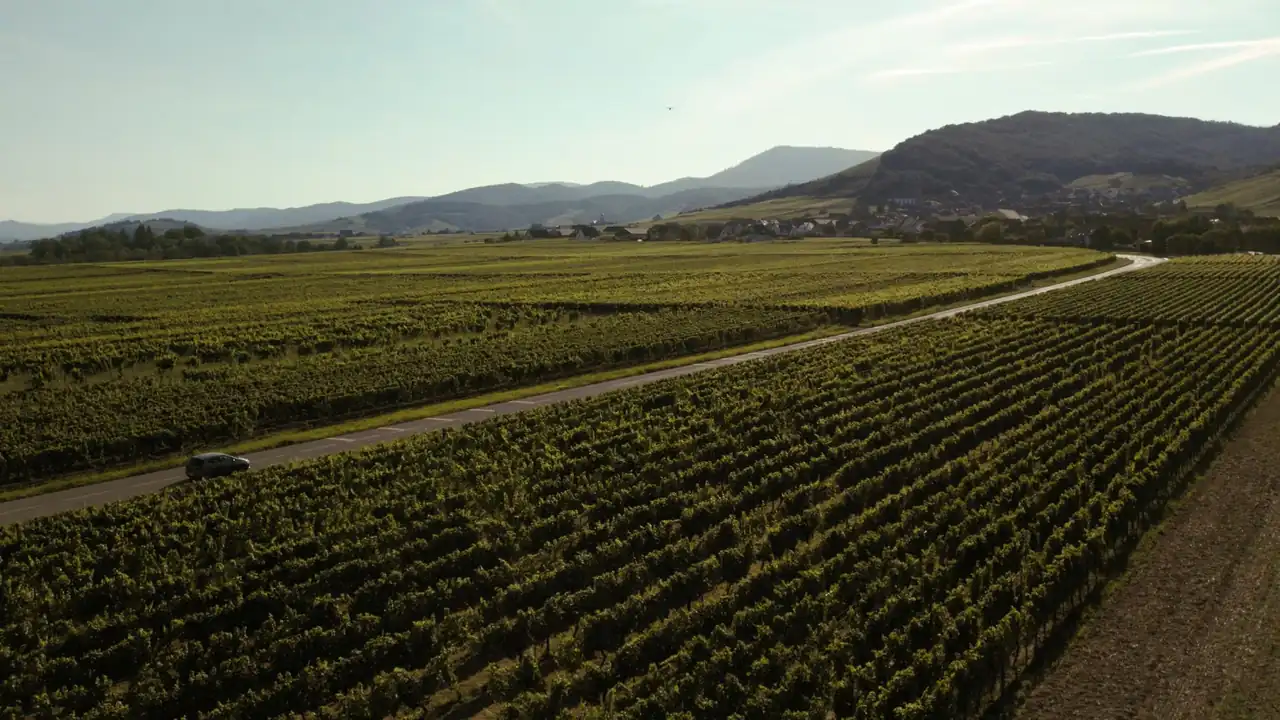
The Marathon du Vignoble d’Alsace reaches its 20th edition with an unusual mix in the European calendar: road racing, gastronomy, music, and a vineyard landscape that turns the race into a long, bright, and thoroughly Alsatian celebration. The event will take place from June 20 to 21, 2026 in Molsheim, in Bas-Rhin, with starts spread across Saturday and Sunday and a program that goes far beyond the clock.
The organizers have also confirmed a schedule change for the Sunday races because of the high temperatures expected. The marathon is moved up to 7:45, the half marathon to 9:30, and the 10 km remains at 9:00. That decision neatly sums up the spirit of the event: preserve the sporting experience without losing sight of the real conditions on the course, which in June can become a gentle oven among vines, pavement, and nearby villages.
A race that lives among vineyards, villages, and its own soundtrack
Molsheim does not host a simple marathon, but rather a festive corridor that unfolds along the Alsace Wine Route. The course passes through picture-postcard villages, colorful facades, narrow streets, and areas where the crowd, music groups, and volunteers create an atmosphere closer to a well-organized fair than to a strictly competitive race. That does not make the effort any easier, but it does add a sensory layer that is hard to find in other races.
The event’s identity rests on a carefully calculated balance between performance and celebration. There is a clear start and finish line, yes, but also tastings, entertainment, local products, medals, finisher gifts, and a Village Marathon designed as the gravitational center of the whole weekend. In the final stretch, when the legs are already heavy and the smell of food starts to overtake that of resin or sweat, the race shows its signature: running here is not only about adding kilometers, but also about entering a sporting culture served with beer, Riesling, and live music.
That personality explains why so many runners describe it as one of the most festive races of June. The atmosphere is not an extra, but part of the sporting proposal. The aid stations, for example, are integrated into a very generous logic, with 22 supply points in the marathon and an average of one station every two kilometers. In practice, that turns the effort into a story broken up by small stops for water, encouragement, and local products.
The distances and what each one offers
The 2026 edition offers a wide range, designed for several types of runners. On Sunday, the 42.198-kilometer marathon, the 21.102-kilometer half marathon, and the 10 km will be held. Saturday features the 5 km, children’s and youth races, and the Marche du Coeur, a 10 km charity walk linked to local associations.
The marathon starts from Carrefour Dorlisheim at 7:45 and keeps its character as a long race with a 6-hour 30-minute time limit. It is a demanding distance, not only because of the mileage itself, but also because of the possible heat, changing terrain, and gastronomic temptations that require careful pacing. The half marathon, starting in Scharrachbergheim at 9:30, is probably the most balanced distance for those who want to enjoy the course without the mental and physical load of the 42K.
The 10 km, starting at 9:00, keeps the logic of an accessible yet competitive race, useful for those who want to experience the atmosphere without committing to the length of the longer events. The Saturday 5 km, starting at 7:30 p.m., brings a lighter tone and almost a social prologue; it is the kind of race that feels like opening the weekend before Sunday concentrates the main effort. For families and minors, the children’s program completes an offer that gives the event a clearly community-based dimension.
Schedules adjusted for the heat and an organization that prioritizes caution
The main operational change in 2026 has been the adjustment of Sunday starts. The marathon is moved up to 7:45, a more reasonable hour to avoid the hottest periods; the half marathon shifts to 9:30, and the 10 km keeps its start time. The shuttle buses are also rearranged, with an initial departure at 7:20 and a second at 8:15, both aligned with the new race plan.
In a race like this, the schedule is no small detail. It affects pavement temperature, hydration pace, clothing choices, and even mental strategy. When a race crosses vineyards and villages under a June sky, half an hour can mean finishing with some margin or spending the second half more focused on the shade than on stride cadence. The organizers have chosen to cut their losses early before the heat becomes a safety issue or an unnecessary frustration for participants.
That approach becomes even clearer when looking at the event’s recent history. The 2026 edition was at one point threatened by the heatwave, to the point that the Sunday races were reported as canceled due to heat in the reference press coverage. That fact reveals the vulnerability of summer road races and the growing need to make quick decisions when the thermometer outweighs the epic narrative.
Registrations, bibs, and the practical framework of the edition
Registrations were handled exclusively online through the official race portal, opening on December 8, 2025 and closing on June 18, 2026 at 5:30 p.m., always within the limit of available bibs. On-site registration was also planned for Saturday, June 20 at the Village Marathon, between 2:00 p.m. and 6:00 p.m., although availability varies by race and capacity. In practice, the most in-demand categories, such as the marathon, half marathon, and 10 km, were already sold out in the registration information consulted.
Bib pick-up is concentrated in two very specific windows: Saturday from 2:00 p.m. to 6:00 p.m. at the Village Marathon in Molsheim, and Sunday from 6:00 a.m. to 9:00 a.m. at Carrefour Dorlisheim. This structure requires precise logistics, especially for those traveling from outside Alsace who must fit travel, overnight stay, and bib collection without room for improvisation. In high-attendance races, the clarity of those times avoids unnecessary queues and reduces tension before the start.
The race also maintains a classic access policy for this type of French event: a medical certificate or valid license is required to compete, and registration is subject to real availability. This is not an open race with no filters, but an event that has built a steady demand, supported by its mix of tourism, sport, and festive atmosphere. That makes it especially appealing for runners looking for a different experience, though it also makes last-minute bibs hard to find.
A course measured in more than kilometers
The map of the Marathon du Vignoble d’Alsace has something of a moving postcard about it. The runner advances among typical villages, vineyards, and stretches with their own identity, in a setting that changes with the light and the time of day. Unlike other more neutral road races, here the landscape converses with the effort: the rows of vines accompany the rhythm, the villages interrupt the monotony, and the presence of spectators turns each step into a scene larger than the stride itself.
The race has also successfully woven the region into its narrative. The Wine Route is not just scenery, but part of the storyline. Tastings and local products act as an extension of the course, almost as if the aid stations had the flavor of the region, with Alsatian specialties appearing within the sporting logic without distorting it. The result is a singular experience: you compete, yes, but you also inhabit the place.
That bond with the region explains why the event has grown with such a distinct reputation. The marathon began in 2005 and has since strengthened its festive identity without losing its athletic structure. It is not an empty celebration; behind it stands an organization that allocates resources, designs starts, manages timing, and splits the effort between Saturday and Sunday so that the party does not turn into disorder.
The social and environmental dimension matters as much as the bib
The 2026 edition reinforces a trait that is already part of its signature: social and environmental responsibility. The organizers speak of waste reduction, selective sorting, and a commitment to local products. This is not a cosmetic layer, but an attempt to ensure that a major road race does not merely consume the territory, but also gives something back in the form of visibility for producers, associations, and local stakeholders.
The Marche du Coeur perfectly reflects that orientation. It is a 10 km walk with a charitable purpose, with proceeds linked to associations such as UNAFAM Bas-Rhin and IMPro SEI du Ried. In a landscape where many races look alike in format and distance, this dimension adds an ethical layer that shifts the focus from pure personal bests to a broader idea of community.
The family logistics also point in that direction. The organizers provide free childcare on Sunday, from 7:00 a.m. to 2:00 p.m., for children aged 3 and up. That seemingly minor detail says a lot about how the race is conceived: as a full weekend capable of bringing together runners, companions, and families in the same experience without turning the event into a maze of incompatibilities.
The Village Marathon as a second stage of the race
If the course sets the sporting rhythm, the Village Marathon represents the event’s social soul. Concerts, entertainment, tastings, and festive meals such as Spaetz’on the Beach on Saturday and Runners Barbecue on Sunday are all concentrated there. Flammekueche, knacks, bretzels, and ice cream coexist with the fatigue of runners crossing the finish line and with the flow of those who simply want to enjoy the atmosphere. The scene has something of a market, something of a neighborhood celebration, and something of a well-organized food festival.
The presence of live music throughout the weekend reinforces that sense of continuity. There is no clear boundary between sport and celebration; the event is conceived as a sequence in which the body runs, stops, eats, listens, and blends back into the crowd. In this way, the Marathon du Vignoble d’Alsace moves away from the pure-racing model and toward a fuller, almost choreographed experience, where the finish line is just another stop along the way.
The reward at the end is also somewhat ceremonial. Each finisher receives a medal, a gift, a bottle of wine, and free access to the Molsheim pool, as well as a downloadable diploma. In the marathon and half marathon, the organizers also award the top three overall finishers and the winner of each category. There is even a very distinctive touch: the first man and the first woman overall win their weight in wine, a gesture as striking as it is consistent with the race’s character.
What awaits the runner between strategy and enjoyment
Those who come to Molsheim usually do so with a dual expectation. On the one hand, they seek a measurable challenge: to complete 42.198 kilometers, hold 21.102, or run a well-executed 10 km. On the other, they accept that here performance comes with noise, aromas, and temptations. In a conventional marathon, the runner focuses on conserving energy; in this one, they must also live with the possibility that each aid station may have more character than a desk, and that the crowd will repay the effort with a mix of applause and complicity.
That duality does not weaken it; it makes it unique. The race works because it does not try to hide its festive nature or disguise itself as an aseptic marathon. Quite the opposite: it displays it. That is why many participants repeat the experience and why previous edition reviews consistently mention the organization, the friendliness of the volunteers, and the feeling of experiencing something very different from yet another race. In a calendar saturated with near-identical events, that difference matters.
It is also worth viewing the event from a broader perspective. The Marathon du Vignoble d’Alsace does not just occupy a date; it occupies a place. And that place is a region where sport blends with vineyard landscapes, regional cuisine, and a very specific way of understanding the meeting between neighbors, visitors, and runners. That is why its success depends not only on the speed of its elites or the number of bibs sold, but on the strength of a recognizable identity that continues to attract those who want to run without giving up context.
An event that keeps growing between epic spirit, heat, and shared tables
The 20th edition confirms that the Marathon du Vignoble d’Alsace has found its own formula. Enough sporting challenge to interest the regular runner, enough festive apparatus to attract travelers, and enough local grounding to avoid feeling like a soulless exportable event. In times of increasingly uniform races, this mix of sport, territory, and celebration keeps its personality alive.
The conditions in 2026, with the heat forcing schedule changes, also remind us that no race stands above the climate. The organizers responded with concrete adjustments, a generous network of aid stations, and logistics designed to reduce risks. All of that matters as much as the music or the wine, because in the end the difference between a memorable celebration and an uncomfortable day lies in the details that do not appear in the finish-line photo.
So the Marathon du Vignoble d’Alsace is laid out before us: a road race that moves among vineyards, is supported by an engaged community, and turns the finish line into something closer to a long shared after-dinner conversation than a simple ending. In Molsheim, running is still competing, but also celebrating the landscape that lies beyond each stride.
You may also like: Barossa Marathon 2026: date, route, and key details and Marathon of the Châteaux of Médoc: route, date and key points.



How to prevent thigh chafing: causes and real solutions

Women’s running windbreakers: seven jackets and how to choose

Do more workouts get rid of soreness? A guide for runners

Jaén Half Marathon 2026: Record 3,800 Runners Registered

Men’s short running tights: how to choose the right pair

World Triathlon confirms data breach involving medical data

Izan Edo targets podium at Miyazaki World Cup

María Pérez ranks ninth in World Athletics’ 2026 top ten

Dos Santos, Duplantis and Sawe: World Athlete of the Year finalists

San Silvestre Vallecana 2026: 42,000 places, prices and start times

 Races3 months ago
Valencia Half Marathon 2027: date and registration

 Races3 months ago
Valencia Marathon 2026: entry, ballot and course

 Reviews and Comparisons4 months ago
Asics Gel-Roadmiles 3 for men: review and current price

 Reviews and Comparisons4 months ago
Asics Gel Sonoma 8 Gore-Tex: complete analysis for trail and rain

 Sneakers3 months ago
Saucony Endorphin Pro 4: full review and verdict

 News5 months ago
Strava API 2026: what changes for clubs, challenges and runner apps?

 Reviews and Comparisons5 months ago
Nike Alphafly 3: opinions, sensations, and real key points

 Reviews and Comparisons4 months ago
Under Armour running shoes review 2025-2026: models and key features

 Sports Equipment4 months ago
Shoe sizes in cm: a clear guide to getting the right fit for your footwear

 Sneakers3 months ago
Skechers GO RUN Consistent 2.0 analysis: comfort and limits

 News5 months ago
Valencia Marathon 2026 route: key tips to train and run better

 Sneakers4 months ago
Adidas Adizero Boston 13 for men: review and verdict