Races
Médoc Marathon 2026: date and route
Pauillac hosts a unique marathon: 42.195 km among vineyards, costumes, music, and tastings in the heart of Médoc.

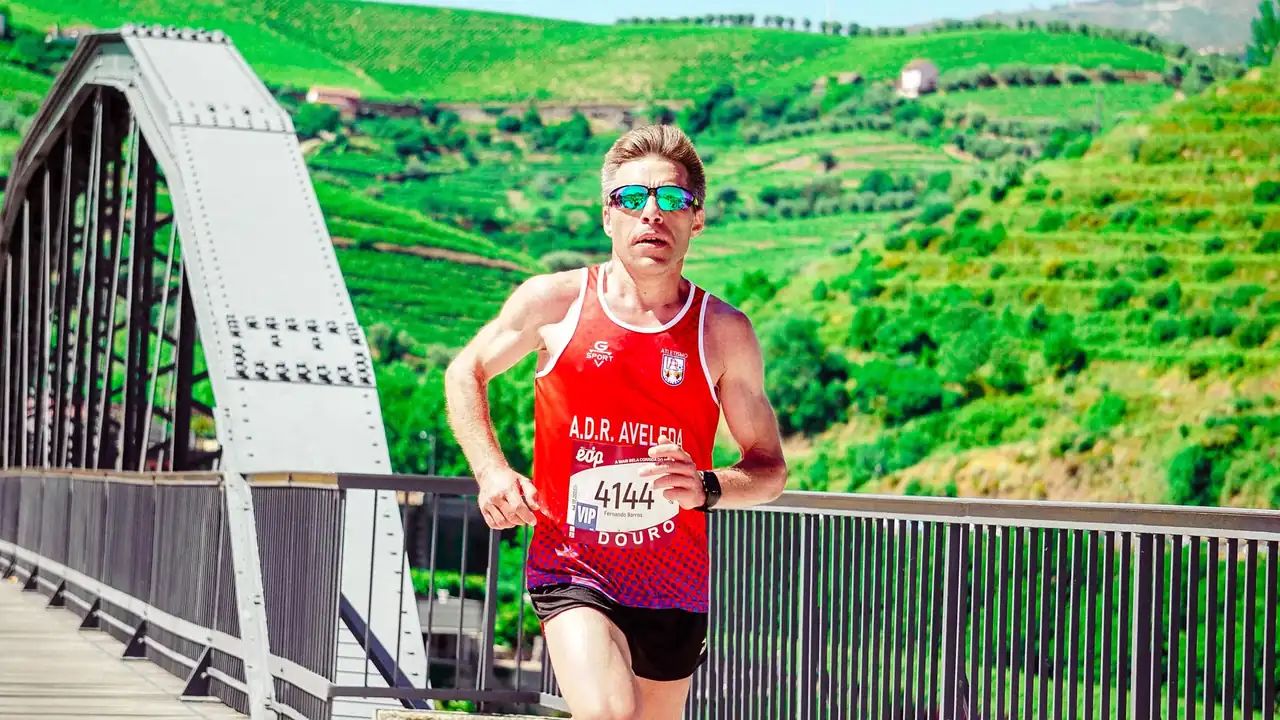
The Marathon des Châteaux du Médoc has earned a place of its own on the international calendar for a simple reason: it turns a classic marathon into a festive harvest scene, with the start and finish in Pauillac and a route that winds through the most recognizable vineyards of Gironde. Founded in 1985, the event blends the toughness of 42.195 km with a staging that breaks the mold of major road races.
The current edition is set for September 5, 2026, in Pauillac, and retains the essence that made it famous: music along the route, tastings in châteaux, costumes, and an atmosphere that weighs as much as the stopwatch. It is not just a marathon with a great vibe; it is a race in which the landscape, local products, and celebration are part of the sporting script itself.
A marathon that turned wine and running into the same postcard
The Marathon des Châteaux du Médoc was born in 1985 and has since maintained a very distinctive identity. It is held every year in September and is organized around an idea that sounds simple, but in practice requires considerable logistics: combining a certified marathon with the spirit of a large-scale popular festival. The formula has worked for decades because it does not compete with athletic seriousness; instead, it wraps it in a layer of spectacle and scenery.
In the world of racing, few events have such a recognizable signature. Here, the finish is remembered not only for the recorded time, but for the 23 tasting points, the musical interludes spread along the course, and the massive participation of costumed runners. The image of a pack moving through vineyards, with vests, capes, wigs, or full outfits, perfectly sums up the character of the event: a competition where epic effort lives alongside humor.
That balance explains why the race has attracted thousands of foreign participants and a notable number of spectators. In 2019, the event brought together more than 4,000 foreign runners from 75 nationalities, as well as a large volunteer network. The organization mobilizes around 3,000 volunteers, a figure that gives real scale to the setup required for an event of this kind, far more complex than a bare-bones linear marathon.
The route between Pauillac, the crus, and the pulse of the Médoc
The course starts and finishes in Pauillac, a town immediately associated with great Bordeaux wine and some of the region’s most famous names. The route runs through the vineyards and châteaux of the Pauillac, Saint-Julien, Saint-Estèphe, Médoc and Haut-Médoc appellations, so the runner is not only adding kilometers; they are also crossing a very specific cultural geography, almost as if each stretch had its own accent.
The course is officially measured at 42.195 km, so this is a full marathon, not a symbolic event. The beauty of the setting does not reduce the physical demands. Running among the vines, with small changes in terrain, shifts in pace, and the temptation to stop and take in the scenery, adds a kind of difficulty different from that of an urban course. Concentration must coexist with curiosity, and that is not always easy when the legs enter the rougher stages of the distance.
The event’s international reputation is also fed by an almost cinematic idea: the runner moves through an elegant, orderly, bright landscape, but the race inserts festive interruptions that break the monotony. There are musical interludes with dozens of bands spread along the route, wine tastings, and a sequence of aid stations that have become part of the race’s identity. The marathon is run, yes, but it is also staged.
Course & elevation Edition 2026
Per-kilometre table
| Km | Elevation | Grade |
|---|---|---|
| 1 | 10 m | 0.4 % |
| 2 | 20 m | 1.0 % |
| 3 | 21 m | 0.2 % |
| 4 | 22 m | 0.1 % |
| 5 | 29 m | 0.7 % |
| 6 | 26 m | -0.3 % |
| 7 | 23 m | -0.2 % |
| 8 | 21 m | -0.2 % |
| 9 | 21 m | -0.1 % |
| 10 | 18 m | -0.3 % |
| 11 | 17 m | 0.0 % |
| 12 | 15 m | -0.2 % |
| 13 | 15 m | 0.0 % |
| 14 | 14 m | -0.1 % |
| 15 | 13 m | 0.0 % |
| 16 | 16 m | 0.3 % |
| 17 | 15 m | -0.1 % |
| 18 | 12 m | -0.3 % |
| 19 | 12 m | 0.0 % |
| 20 | 23 m | 1.1 % |
| 21 | 18 m | -0.5 % |
| 22 | 6 m | -1.3 % |
| 23 | 11 m | 0.5 % |
| 24 | 17 m | 0.6 % |
| 25 | 13 m | -0.3 % |
| 26 | 6 m | -0.7 % |
| 27 | 20 m | 1.4 % |
| 28 | 14 m | -0.6 % |
| 29 | 14 m | 0.0 % |
| 30 | 20 m | 0.5 % |
| 31 | 21 m | 0.1 % |
| 32 | 18 m | -0.2 % |
| 33 | 22 m | 0.4 % |
| 34 | 5 m | -1.7 % |
| 35 | 11 m | 0.6 % |
| 36 | 12 m | 0.1 % |
| 37 | 8 m | -0.4 % |
| 38 | 3 m | -0.6 % |
| 39 | 4 m | 0.1 % |
| 40 | 5 m | 0.1 % |
| 41 | 5 m | 0.1 % |
| 42 | 5 m | 0.0 % |
| 43 | 6 m | 0.3 % |
Plan your pace on this course →
Route source: OpenRunner
What sets this event apart from a conventional marathon
Those who come to the Marathon des Châteaux du Médoc usually do so out of a mix of sporting interest and cultural curiosity. The race keeps the marathon format, with its classic distance and sustained effort, but the setting completely transforms the experience. Instead of an aseptic, functional course, runners find a continuous celebration where food logistics and musical atmosphere are just as important as the more traditional aid stations.
One of the most striking features is the widespread use of costumes. Figures shared by the organization itself and by international references speak of 90% of participants running in costume. That turns the start into a visual mosaic that swings between carnival and theater, with wine as the backdrop and physical effort as the guiding thread. In journalistic terms, the image is powerful because it contrasts two worlds that rarely meet so naturally: endurance sport and popular festivity.
It is also worth emphasizing an important detail to understand its uniqueness: the event has a maximum duration of 6 hours and 30 minutes. That limit places the race within the usual parameters of a competitive marathon, but the festive format means the final time is not always the center of the conversation. More often, the overall experience matters more, something that should not be confused with improvisation; behind the atmosphere there is a highly refined structure and a consolidated organizational culture.
Wine as part of the story, not as decoration
In the Médoc, wine does not appear as a mere tourist attraction. It is part of the territory’s story, of local identity, and of the event’s own design. The tasting points are integrated into the race and in a way act as stations in a larger narrative: each château contributes a piece to the landscape and the runner’s memory. That is why many participants remember the race for the sequence of places and flavors as much as for the time on their watch.
The presence of oysters at kilometer 38 and entrecôte at kilometer 39 has helped fuel the event’s fame for years. These are details that have endured because they sketch a marathon with an almost literary personality, where runner nutrition moves away from the conventional script of gels, sports drinks, and energy bars. Here, local gastronomy seeps into the effort itself, with an effect that mixes folklore, territorial branding, and a very French reading of the sporting event.
That gastronomic component does not eliminate the need to manage effort wisely. In a marathon, every runner interprets pace differently, but the challenge becomes more complex when the surroundings invite relaxation. The Médoc forces runners to live with distraction without losing the minimum discipline the distance demands. That tension is precisely part of its appeal: the race is not a highway to a personal best, but a journey with sensory curves.
Participation, atmosphere, and the real scale of the event
The scale of the Marathon des Châteaux du Médoc is easier to grasp when you look at its ability to draw crowds. Recent editions have hovered around 8,500 participants, with runners from more than 50 countries, as well as a large mass of companions and spectators. That diversity gives the event a cosmopolitan feel, but the foundation remains local: the municipalities, wineries, volunteers, and associations linked to the race sustain the experience through close proximity.
The organization is not limited to managing runners. It must coordinate music, road closures, tastings, support, signage, medical oversight, and a huge volunteer community. In an event like this, safety is not at odds with entertainment; on the contrary, both elements must move together for the event to work. That is why the Marathon des Châteaux du Médoc is often cited as an example of a highly professionalized popular race, while still retaining the atmosphere of a big village celebration.
The participation of international athletes also helps explain its media reach. The Médoc marathon does not compete with world records or the big names of fast-course racing, but it does have a very strong reputation as a destination experience. In the race market, that matters: people do not always travel just to run fast, but to live a different story. And few races offer such a recognizable scene as this one.
Recent history, interruption, and return to the calendar
Like so many events on the European calendar, the Marathon des Châteaux du Médoc has not been immune to the disruptions of recent years. The race was canceled in 2020 and 2021, an interruption that broke the continuity of a long-established event and made clear how much these gatherings depend on external factors. Its return came in 2022, restoring the rhythm and liturgy that had defined it for decades.
That return reinforced an essential idea: some races function as cultural barometers. It is not enough to reopen registration or put up a starting arch again. A community must also be reactivated, logistics rebuilt, and the course returned to the tone of a major festival that sets it apart. The Médoc did so naturally, and that capacity for continuity explains part of its prestige inside and outside France.
The 2026 edition is already on the official calendar, with the start scheduled for September 5. That fact alone confirms that the event remains a stable reference on the European marathon calendar. In Pauillac, September is not just a month of transition between summer and autumn; it is also the moment when the region looks at itself through a race that has turned its landscape into a sporting narrative.
What you should know if you follow the event for its sporting and cultural value
From an athletic point of view, the Marathon des Châteaux du Médoc is a full certified marathon, with the usual demands of the distance and the progressive fatigue that defines it. From a cultural point of view, it is a celebration of the territory, wine, and social life. That dual reading explains why it interests very different audiences: recreational runners, fans of major races, sports travelers, and readers drawn to the most unusual expressions of the European calendar.
The event neatly captures a growing trend in recreational running: the value of the experience matters as much as the placing. People still chase times, but they also look for memorable settings, local identity, and a story that justifies the trip. In that sense, the Médoc offers something many races strive for without fully achieving: a personality so clear that it is impossible to confuse it with any other.
That is why, more than a picturesque oddity, this marathon should be read as a highly polished piece of sports tourism. Pauillac, the crus, the music, the costumes, and the classic distance form a coherent whole. It is not a marathon to admire only through statistics; it is a race best understood as a way of celebrating a territory by running through it, with tired legs and a very alert memory.
A race that keeps growing without losing its own accent
The longevity of the Marathon des Châteaux du Médoc shows that not all races need to look alike to matter. Some aim to break records; others aim to build identity. This one has done both in its own way: it preserves the structure of a serious marathon while maintaining a festive tone that makes it immediately recognizable. In a calendar saturated with similar events, that difference is worth gold.
The continued success of the event also rests on a very specific mix of elements: an attractive course, a strong local culture, experienced organization, and an aesthetic that almost works by itself. Vineyards at sunset, costumed runners, music at the roadside, and a finish in Pauillac create a scene that seems designed to stay in the viewer’s mind. The Marathon des Châteaux du Médoc does not need to exaggerate its uniqueness; it is enough for it to keep being faithful to what it is.
And that is precisely where its strength lies. It does not present itself as just another marathon, but as a race with its own voice, where effort and celebration do not exclude one another. In the Médoc, the 42.195 km are not experienced as a straight line to the finish, but as a journey through a landscape that combines sport, heritage, and a very specific way of understanding the joy of running.



How to prevent thigh chafing: causes and real solutions

Women’s running windbreakers: seven jackets and how to choose

Do more workouts get rid of soreness? A guide for runners

Jaén Half Marathon 2026: Record 3,800 Runners Registered

Men’s short running tights: how to choose the right pair

World Triathlon confirms data breach involving medical data

Izan Edo targets podium at Miyazaki World Cup

María Pérez ranks ninth in World Athletics’ 2026 top ten

Dos Santos, Duplantis and Sawe: World Athlete of the Year finalists

San Silvestre Vallecana 2026: 42,000 places, prices and start times

 Races3 months ago
Valencia Half Marathon 2027: date and registration

 Races3 months ago
Valencia Marathon 2026: entry, ballot and course

 Reviews and Comparisons4 months ago
Asics Gel-Roadmiles 3 for men: review and current price

 Reviews and Comparisons4 months ago
Asics Gel Sonoma 8 Gore-Tex: complete analysis for trail and rain

 Sneakers3 months ago
Saucony Endorphin Pro 4: full review and verdict

 News5 months ago
Strava API 2026: what changes for clubs, challenges and runner apps?

 Reviews and Comparisons5 months ago
Nike Alphafly 3: opinions, sensations, and real key points

 Reviews and Comparisons4 months ago
Under Armour running shoes review 2025-2026: models and key features

 Sports Equipment4 months ago
Shoe sizes in cm: a clear guide to getting the right fit for your footwear

 Sneakers3 months ago
Skechers GO RUN Consistent 2.0 analysis: comfort and limits

 News5 months ago
Valencia Marathon 2026 route: key tips to train and run better

 Sneakers4 months ago
Adidas Adizero Boston 13 for men: review and verdict