Races
Blan Test 2026 in Vitoria-Gasteiz: route and key details
The classic Vitoria-Gasteiz race returns with 154 km, history, and a route that crosses four northern provinces.

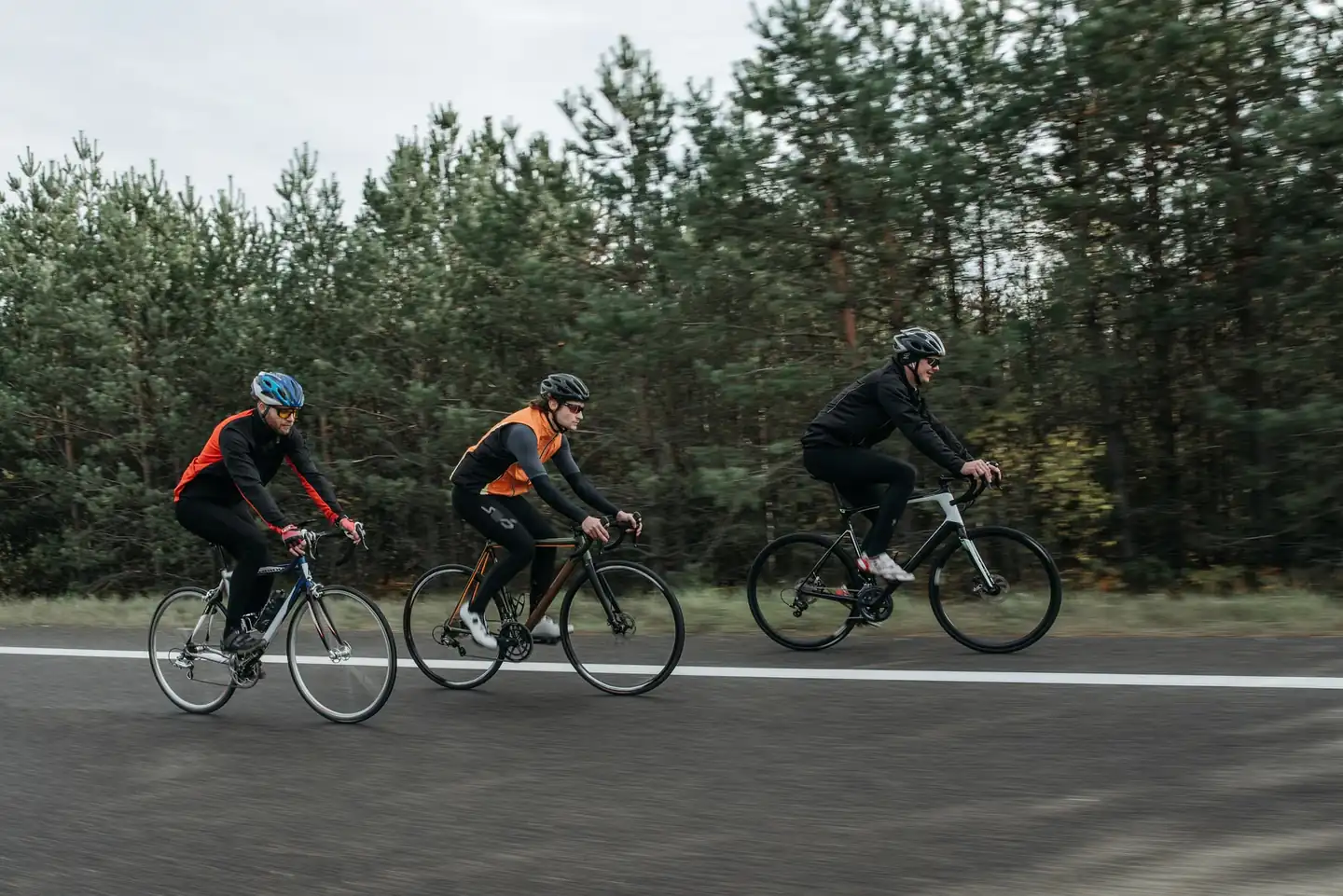
The veteran Vitoria-Gasteiz cycling tour keeps its considerable weight in the cycling calendar of northern Spain intact. With 154 kilometers and start and finish in the capital of Álava, the 2026 edition once again combines the appeal of a long route, a very distinctive identity, and a course that crosses Burgos, La Rioja, Araba, and Navarre before the final return.
Its status as a historic event is not just a decorative label. The organizers present it as the oldest cycling tour in the country, with origins in 1955, a fact that explains why its name remains associated with veteran status, tradition, and a certain open-road epic. In the September calendar, it stands as a reference for those looking for endurance, scenery, and sporting memory in a single day.
A ride with a territorial surname
BLAN is named after the provinces traced by the route: Burgos, La Rioja, Araba, and Navarre. That combination not only explains the name, but also helps define the character of the event. It is not a route confined to a single municipality or a short loop around one city; it is a journey along roads that connect regions, changes in terrain, and different rhythms of pedaling.
The format fits within the tradition of long-distance cycling tours, those days where the value lies not in pure speed, but in sustaining effort, managing energy, and reading the terrain well. In the case of Vitoria-Gasteiz, the route adds a very recognizable element: starting and finishing at the same point, with the feeling of having crossed a small geography in a single outing.
The story also matters. The description of it as the veteran of cycling tours did not appear by chance. In a setting where new rides and formats appear every season, preserving an identity born in 1955 is almost a declaration of permanence. Time, in this case, has not diluted the event; it has turned it into a sporting road heritage.
The 154-kilometer route and its sporting logic
The official distance of 154 kilometers places the ride in demanding but manageable territory for cyclists accustomed to long days. It is not an explosive event or one designed for short, intense effort. Its challenge lies in continuity, in the head and the legs, in knowing how to coexist for hours with asphalt, wind, and the accumulated elevation gain depending on the day’s specific profile.
This type of route requires a very different reading from that of a conventional race. A cyclist facing 154 kilometers must think in effort blocks, in pedaling consistency, and in nutrition that supports without surprises. The long distance also turns small details into meaningful decisions: a poorly judged change of pace, bad heat management, or an overly long stop can completely alter the day.
Start and finish in Vitoria-Gasteiz reinforce the event’s circular sense. The city acts as the axis of a route that opens into the regional surroundings and returns to the same urban heart. This structure is highly appreciated in cycling tours because it simplifies logistics and gives the participant a clear reference: the journey begins and ends in the same setting, with the same mental start-and-finish square.
Vitoria-Gasteiz as the setting for a classic event
Vitoria-Gasteiz provides a particularly suitable setting for a long road event. Its size, its connection with the surrounding area, and its direct relationship with the territory of Álava make the city a natural starting point for this kind of event. Added to this is a deeply rooted cycling culture in the Basque Country, where the bicycle is part of the sporting landscape with an unquestionable intensity.
In September, the context is also usually favorable for an event like this. The reference calendar places the race in a phase of the year when summer is beginning to recede, but there is still room for mild days. This seasonal transition often favors endurance cycling, especially in a ride where thermal management can make the difference between feeling comfortable or suffering more than necessary.
The city is not just a location; it is part of the event’s story. The Basque capital contributes order, accessibility, and an urban identity that blends well with the open-road nature of the event. That combination explains why the race has retained its appeal for decades: it depends not only on the route, but also on the setting in which it is presented to the participant.
What it represents in the cycling-tour calendar
The BLAN event occupies a very specific place within the Spanish cycling-tour world. It does not compete to be the longest or to boast the toughest challenge, but rather to offer a blend of tradition, meaningful distance, and a route that crosses provinces. In the September ride market, that balance between history and effort still has steady demand among both veteran enthusiasts and ambitious first-timers.
Long-running cycling events tend to create a different relationship with participants. They are not taken on simply as another registration on a calendar, but as part of a chain of seasons. Some return out of habit, some choose it for its reputation, and others reserve it as an annual challenge. BLAN works well in that register because its identity is easy to understand: road, endurance, and tradition.
In addition, the fact that the route crosses several provinces gives it added value at a time when many events seek differentiation through extreme elevation gain or technical design. Here, originality does not lie in artificial spectacle, but in the real passage through a broad territory, with a geographic logic that becomes clear as you ride it.
Weather, terrain, and what cyclists can usually expect
September in Vitoria-Gasteiz usually brings a mild atmosphere, with an average high of 19 degrees and a low of 10. Average rainfall of 45 millimeters also appears, a detail that, without making the event a meteorological lottery, reminds us that late summer in the north can alternate between calm and sudden changes. In a long ride, that matters just as much as the route profile.
Moderate weather usually favors endurance events, but cyclists should not be overconfident. A cool dawn can give way to a mild morning and a more demanding central section in terms of temperature, especially if the group stretches out or if airflow changes. On the road, that kind of variation affects hydration, comfort, and the pace that can be sustained for hours.
The northern setting also adds a very recognizable scenic component. The roads linking these provinces often combine flat stretches, gentle transitions, and areas where the horizon suddenly opens up. This is not terrain meant for immediate showiness, but for patient endurance. Beauty, in this case, goes hand in hand with discipline: riding well matters more than attacking hard.
Why history still matters so much
For a ride to date back to 1955 is not just an archival fact. It means that it has survived changes in equipment, sporting habits, participation models, and collective fitness levels. What began as a pioneering event has become a reference point for continuity, and that continuity has growing value in a calendar saturated with new offerings.
Long-standing events tend to condense a kind of shared memory. Each edition carries echoes of the previous ones, even if the context changes. In the case of this ride, that memory translates into a quiet prestige, without the need for grand embellishments. Veteran status here is not used as a promotional flourish, but as part of the explanation for its endurance.
In popular cycling, tradition matters almost as much as the route itself. Participants are not looking only for kilometers; they are also looking for stories, recognizable names, and events that have stood the test of time. That is one of the reasons BLAN remains interesting: it offers an experience that does not need to reinvent itself every year in order to stay relevant.
Registration, status, and a practical reading of the event
The 2026 edition is listed as open in the calendars consulted. The available reference places the event on Saturday, September 12, 2026, with start and finish in Vitoria-Gasteiz and a single official distance of 154 kilometers. No fixed registration fee appears in the documentation reviewed, so that figure cannot be stated with certainty.
In events of this kind, operational information is usually concentrated on the organizer’s official website and in specialized calendars that reproduce the announcement. Even so, it is worth understanding that the key information is not only the date, but the nature of the event: a long, historic road cycling tour with a route crossing several northern provinces.
The absence of multiple distance options also defines the experience. There is no menu of choices for different levels, but rather a single, compact proposal designed for those who accept the full commitment of the day. That organizational decision simplifies the concept and strengthens the event’s personality, which does not disperse itself into parallel formats.
A reference point for understanding northern cycling tourism
BLAN neatly sums up a way of understanding Spanish cycling tourism. Neither empty spectacle nor an extreme challenge built on sheer elevation gain. What it offers is a combination of road, continuity, history, and territory. In times of fast formats and brief sporting consumption, its proposal still appeals to patience, endurance, and the memory of popular sport.
It also reveals something important about the Basque calendar and the Álava surroundings: the bicycle is not just a physical activity, but a way of reading the map. Every long ride organizes the territory differently, and this one does so through four provinces that touch, intersect, and reveal themselves wheel stroke after wheel stroke.
That is why the Vitoria-Gasteiz event retains its appeal year after year. It does not need to present itself as a novelty in order to remain meaningful. It only needs to uphold a very clear promise: 154 kilometers of road, a reference city, and a sporting heritage that began in 1955 and still has its own pulse in September.
In a calendar full of events competing for attention, this ride retains the value of well-established things. Its strength lies in continuity, in a name tied to a territory, and in a distance that commands respect without giving up the pleasure of riding. That is precisely the kind of permanence that gives meaning to major cycling-tour events.



How to prevent thigh chafing: causes and real solutions

Women’s running windbreakers: seven jackets and how to choose

Do more workouts get rid of soreness? A guide for runners

Jaén Half Marathon 2026: Record 3,800 Runners Registered

Men’s short running tights: how to choose the right pair

World Triathlon confirms data breach involving medical data

Izan Edo targets podium at Miyazaki World Cup

María Pérez ranks ninth in World Athletics’ 2026 top ten

Dos Santos, Duplantis and Sawe: World Athlete of the Year finalists

San Silvestre Vallecana 2026: 42,000 places, prices and start times

 Races3 months ago
Valencia Half Marathon 2027: date and registration

 Races3 months ago
Valencia Marathon 2026: entry, ballot and course

 Reviews and Comparisons4 months ago
Asics Gel-Roadmiles 3 for men: review and current price

 Reviews and Comparisons4 months ago
Asics Gel Sonoma 8 Gore-Tex: complete analysis for trail and rain

 Sneakers3 months ago
Saucony Endorphin Pro 4: full review and verdict

 News5 months ago
Strava API 2026: what changes for clubs, challenges and runner apps?

 Reviews and Comparisons5 months ago
Nike Alphafly 3: opinions, sensations, and real key points

 Reviews and Comparisons4 months ago
Under Armour running shoes review 2025-2026: models and key features

 Sports Equipment4 months ago
Shoe sizes in cm: a clear guide to getting the right fit for your footwear

 Sneakers3 months ago
Skechers GO RUN Consistent 2.0 analysis: comfort and limits

 News5 months ago
Valencia Marathon 2026 route: key tips to train and run better

 Sneakers4 months ago
Adidas Adizero Boston 13 for men: review and verdict