Races
Campana Race 2026 in Vacarisses: guide and key points
Vacarisses hosts a mountain race with a mixed route, starting at Joan Bayà and finishing at La Fàbrica.

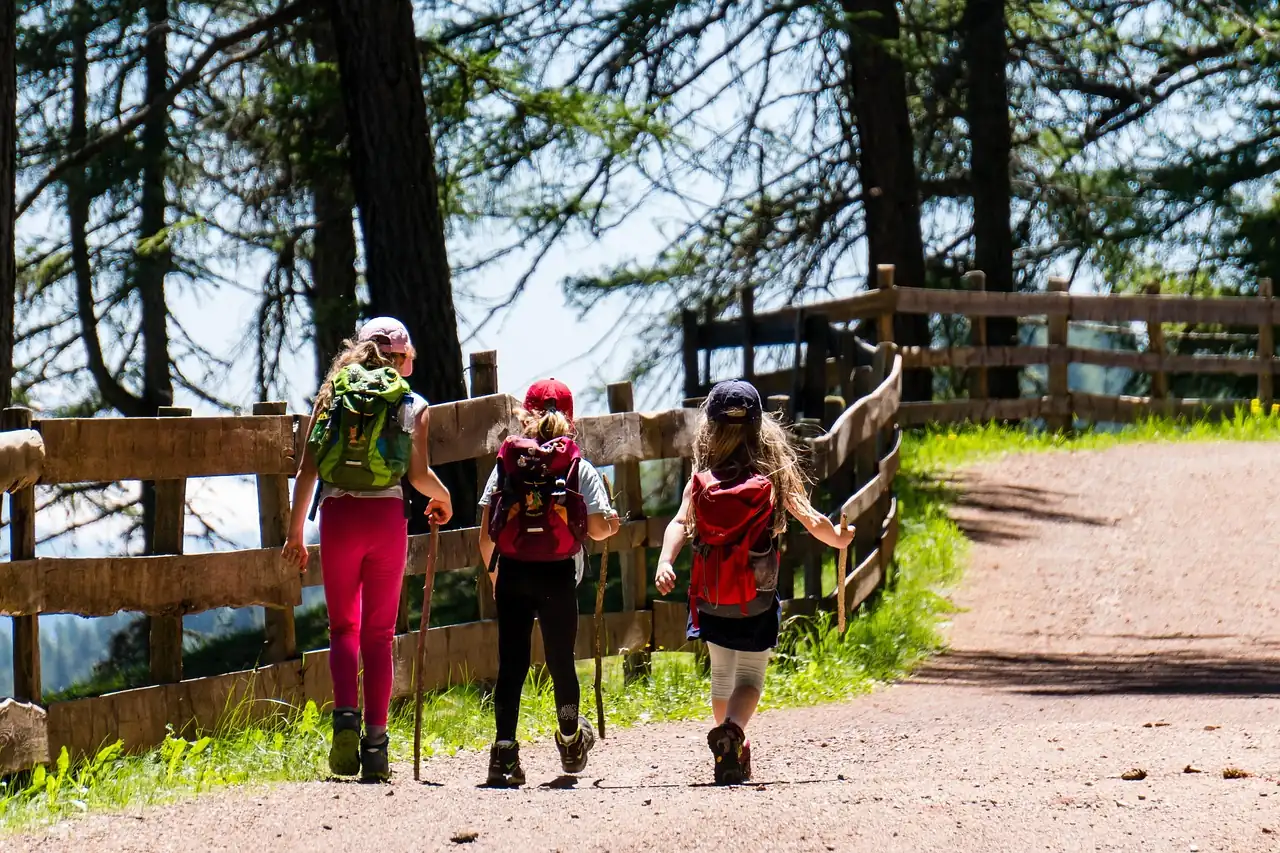
Imagen: MaBraS / Pixabay
Vacarisses looks back to the mountains with a race that combines village, trail, and local heritage. The Cursa de la Campana has established itself as one of the most recognizable events in the Vallès area and, in its 2026 edition, it keeps that profile blending popular sport, accessible mountain running, and a route that cannot be understood without the landscape of Sant Llorenç de Munt i l’Obac.
The main race is held over 15 kilometers and includes 542 meters of positive elevation gain, enough to turn the effort into something more than a quick road run. Alongside it appears Els 10 de La Campana, a 10-kilometer distance designed for a shorter, more compact format, while the popular walk broadens the range for those who prefer to cover the route at a different pace.
A route that explains the character of the race
The start in Joan Bayà Square and the finish at the La Fàbrica building mark the axis of a race that is not limited to linking kilometers together. The route leaves the town center, makes its way along tracks and trails, and enters the Sant Llorenç de Munt i l’Obac Natural Park, one of the area’s major mountain lungs. That transition between village and nature is part of the appeal: the runner goes from the murmur of the square to the crunch of the ground, with the sound of footsteps on earth and rock growing more prominent as the profile rises.
In practice, the event offers a very recognizable layout for anyone looking for a moderately difficult mountain race, without the extreme toughness of other alpine trails or the flatness of a city 10K. The route combines a short stretch of asphalt when leaving and returning to Vacarisses with a clear majority of trails and forest tracks. According to the available technical information, the approximate breakdown is 5% asphalt, 40% track or dirt road, and 55% trail, a proportion that makes it clear where the ground is gained and where the race gets hard.
The elevation gain, the changes in footing, and the uneven terrain matter more than pure speed. This is not a race designed to fly with a smooth, homogeneous stride, but to manage effort, read the ground, and understand that every climb comes at a cost. In that sense, the Cursa de la Campana suits runners who enjoy trail running without needing extreme technical difficulty, although the route does require attention at a few specific, short points.
The 2026 distances and what each one offers
The long distance, at 15 kilometers, is the event’s main reference. With 542 meters of positive elevation gain, it captures the race’s personality quite well: nearby mountains, real challenge, and a reasonable duration for a competitive morning. This is not an endurance race in the long-haul sense, but neither is it a walk with a bib. The runner needs legs, yes, but also patience to avoid emptying the tank too early on the steepest ramps.
Els 10 de La Campana reduces the elevation load to 290 meters positive, with a 10-kilometer distance that sits in an intermediate space between trail running and a demanding popular race. It is a friendlier entry point for those who want to experience the atmosphere of Vacarisses without taking on the full effort of the flagship event. The difference is not just numerical: the way you run changes, as does pulse management and the approach to descents, which in the mountains usually matter more than their profile suggests.
The third option, the popular walk, adds a more social and open approach. With 9 kilometers and 180 meters of positive elevation gain, it broadens the participant range and turns the surroundings into a shared experience, less focused on the clock and more on the route itself. In an event like this, that variety of formats is no minor detail: it speaks of an organization that understands the mountain as a sporting space, but also as a place for coexistence and broad access.
Confirmed date and context of the 2026 edition
The 2026 edition takes place on June 14 in Vacarisses, Barcelona. The date places the race in a favorable time on the calendar for mid-distance trail running, with temperatures that can already be pressing, though still far from the harshest summer heat. That circumstance has a big influence on the runner’s real experience: the Vallès mountains, with clean light and dry terrain, may seem friendly at first glance and demanding on the body if the pace gets out of control from the start.
The race is also listed as its 18th edition, a relevant fact because it speaks of continuity and roots. In the race calendar, reaching that number means more than simply adding years: it implies having found a community, a recognizable route, and an identity that withstands the passage of time. In Vacarisses, the Campana no longer sounds like a novelty; its value lies in having become part of the local sporting landscape.
That sense of belonging is also reflected in the ecosystem surrounding the event. The race does not arrive alone, but as part of a broader program linked to the Campana and the municipality. That framework strengthens the feeling of an event with roots, where the sporting component lives alongside the memory of the place, the work of the organizers, and the intention to showcase the area in an orderly and sustainable way.
What kind of runner fits here best
The Cursa de la Campana is especially well suited to those looking for trail running without technical excess. The elevation gain is real and shapes the race, but the route is not designed to force runners to solve complicated passages over long stretches. That makes it appealing both to runners coming from the road who want to try the mountains in a controlled setting, and to mountain specialists who value races with rhythm and varied terrain more than extreme difficulty.
The available technical information points to a not very high level of difficulty, apart from a brief and specific point or two. That nuance matters because it avoids a simplistic reading of the profile. A race can be manageable overall and still demand concentration on a particular climb or a descent with broken ground. That is part of the charm of trail running: the mountains do not need to be hostile to test your mind.
It is also appealing for those who enjoy events with a local atmosphere and manageable scale. The participant limit, set at 250 in the available information, suggests a contained size, far from the huge mass events. That usually translates into a different relationship with the start, the aid stations, and the day’s logistics. The race feels closer, almost like a big village event that opens onto the mountains.
The route, the pace, and effort management
In a race like this, effort control matters more than boldness in the first few meters. Starting from the urban area usually invites an easy acceleration by inertia, but the real work begins when the ground changes texture and the track appears. There, the prudent runner keeps a reserve that will later be appreciated on the steeper sections and, above all, on the way back, when fatigue disrupts technique.
The distribution of terrain makes you understand your own stride well. The opening asphalt serves as a transition, the track allows for a more regular rhythm, and the trails require adjustments in footing and posture. Over the 15 kilometers, that combination means the final time depends less on a steady pace than on the ability not to lose too many seconds when the body enters uncomfortable terrain. It is a very typical geometry of effort in Catalan trail running: compact and honest.
The cumulative elevation gain, at 542 meters positive in the long distance, is not just a statistic. That figure helps explain why the race cannot be approached as a quick half-hour outing. The elevation gain spreads the fatigue in small doses, as if each change in slope were a partial bill. Those who race it well are usually the ones who manage those payments best, not the ones who go hardest in the first kilometer.
Services, organization, and signs of a well-cared-for race
The presence of liquid and solid aid stations along the route and at the finish indicates an organization attentive to the participant experience. In mountain running, hydration is not a decorative extra: it is part of performance and safety. Even more so when the event takes place in June and temperatures can rise quickly once the sun climbs higher over the valley.
The technical sheet also mentions chip timing, bag drop service, showers, massage, trophies, and a children’s race. These are elements that describe a fairly complete event, not one focused solely on crossing the finish line. The chip adds competitive precision; the bag drop and showers ease the logistical side; the massage and food at the finish round out an experience that aims to be comfortable without losing its sporting character.
The existence of a children’s race reinforces the idea of a day with a community vocation. It is not just a format for those seeking times, but a gathering with several layers of participation. That approach also helps sustain the race’s identity: trail running becomes an activity that the town recognizes as its own and that visitors quickly understand is more than a results list.
Vacarisses, Sant Llorenç de Munt i l’Obac, and the value of the surroundings
The landscape is part of the Cursa de la Campana’s story. Vacarisses does not offer a neutral backdrop, but a gateway to a natural area that is already part of the sporting imagination of the Barcelona metropolitan area. Its proximity to the Sant Llorenç de Munt i l’Obac Natural Park gives the event depth and sets it apart from races that simply move around the urban perimeter.
That context matters because it also changes the perception of effort. In the mountains, distance is measured differently: a kilometer can seem short on a map and long in the legs if it comes after a sustained climb. That is why these kinds of races work so well as a showcase for the territory. The race shows the municipality without turning it into a mere backdrop; it integrates it into the route and turns it into an experience.
In addition, using a recognizable start and finish within the town center helps the event maintain a clear link with everyday life in Vacarisses. The square, La Fàbrica, and the access streets act as a hinge between the community and the mountains. That continuity between the civil and the natural is one of the reasons the race retains its own personality compared with other, more impersonal trails.
What the Cursa de la Campana adds to the mountain-running calendar
The Cursa de la Campana occupies a very specific place in the Catalan trail calendar: it does not aim to compete with the big ultras or the massive showcase events, but it offers something many runners value more than it might seem: a well-defined race, with territory, sufficient elevation gain, and a human scale. That combination makes it useful for gauging fitness, enjoying the mountains without excess, and keeping a local sporting tradition alive.
In 2026, the race arrives with the backing of a consolidated edition, with clear distances and a route that neatly sums up the essence of trail running near Barcelona. Those who choose it will find a morning of contained but real effort, of trail and track, of climbing and control, of a start in the square and a finish in a space that is already part of its identity. Sometimes the strength of a race lies not in the size of its numbers, but in the precision with which it knows how to tell the story of a place.
Vacarisses turns that idea into a race that sounds like mountains, community, and continuity. And in an ever more crowded calendar of events, that mix still carries a lot of weight for anyone looking for more than just running: looking to recognize the terrain, read the profile, and let the landscape also become part of the effort.
You may also like: Els 10 de la Campana: date, route and price for 2026.



How to prevent thigh chafing: causes and real solutions

Women’s running windbreakers: seven jackets and how to choose

Do more workouts get rid of soreness? A guide for runners

Jaén Half Marathon 2026: Record 3,800 Runners Registered

Men’s short running tights: how to choose the right pair

World Triathlon confirms data breach involving medical data

Izan Edo targets podium at Miyazaki World Cup

María Pérez ranks ninth in World Athletics’ 2026 top ten

Dos Santos, Duplantis and Sawe: World Athlete of the Year finalists

San Silvestre Vallecana 2026: 42,000 places, prices and start times

 Races4 months ago
Valencia Half Marathon 2027: date and registration

 Races4 months ago
Valencia Marathon 2026: entry, ballot and course

 Reviews and Comparisons4 months ago
Asics Gel-Roadmiles 3 for men: review and current price

 Reviews and Comparisons4 months ago
Asics Gel Sonoma 8 Gore-Tex: complete analysis for trail and rain

 Sneakers3 months ago
Saucony Endorphin Pro 4: full review and verdict

 News5 months ago
Strava API 2026: what changes for clubs, challenges and runner apps?

 Reviews and Comparisons5 months ago
Nike Alphafly 3: opinions, sensations, and real key points

 Reviews and Comparisons4 months ago
Under Armour running shoes review 2025-2026: models and key features

 Sports Equipment4 months ago
Shoe sizes in cm: a clear guide to getting the right fit for your footwear

 Sneakers3 months ago
Skechers GO RUN Consistent 2.0 analysis: comfort and limits

 News5 months ago
Valencia Marathon 2026 route: key tips to train and run better

 Sneakers4 months ago
Adidas Adizero Boston 13 for men: review and verdict