Races
Challenge Barcelona Triathlon 2026: distances, prices, and key details
Barcelona once again brings together several distances, prices starting at 20 euros, and a route by the sea for all levels.

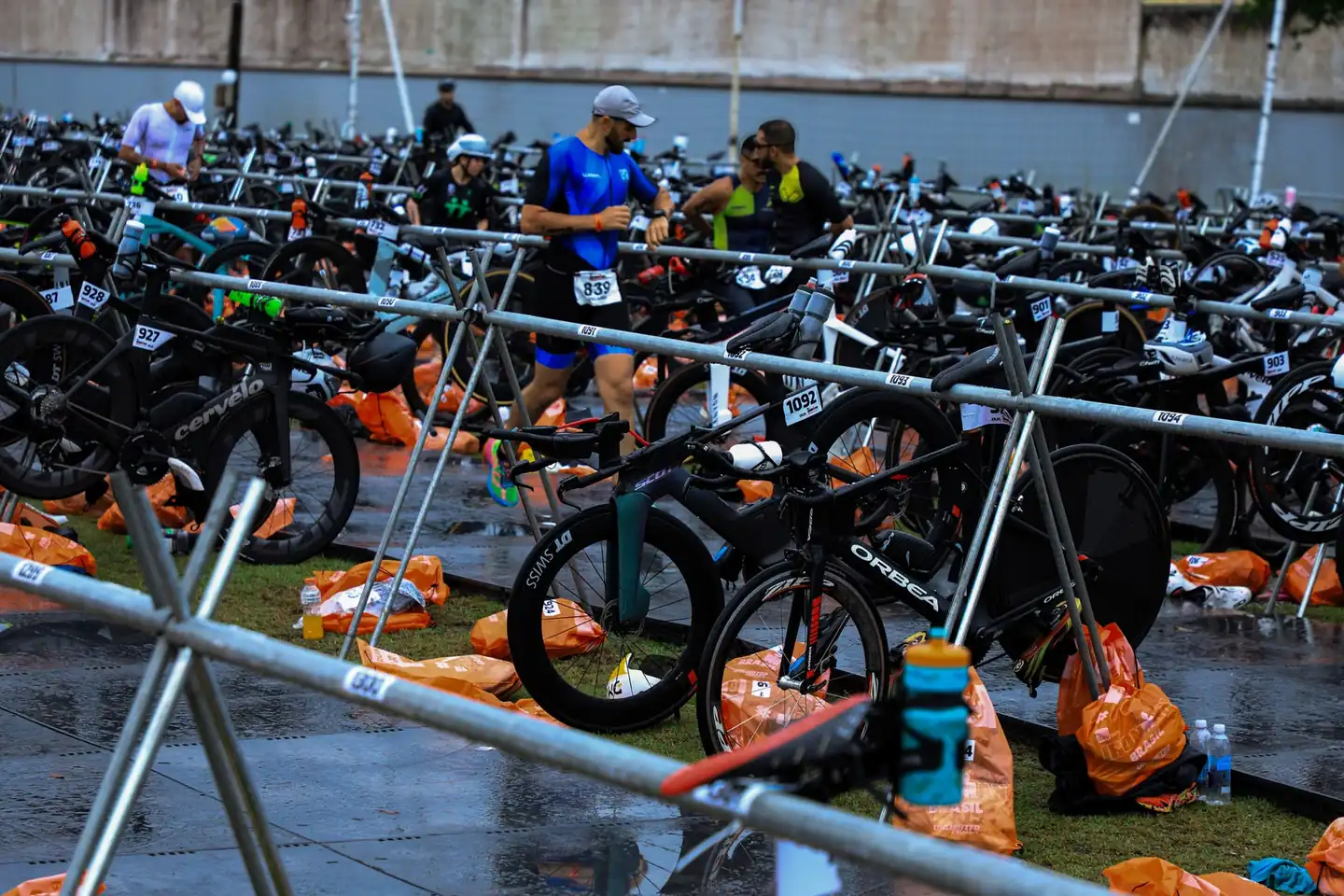
Barcelona will once again host one of the major events on the European triathlon calendar on October 24 and 25, 2026, with a program that combines middle distance, Olympic, sprint, children’s races, and open water swimming. The competition, part of the Challenge Family circuit, maintains its urban and maritime DNA: start and finish in the Mar Bella area, roads closed to traffic, and an atmosphere that turns the city into a first-class sporting stage.
The 2026 edition arrives with figures that explain its appeal: the organizers announced the opening of registrations on November 13, 2025, and by June 2026 they reported that they were nearing 2,000 registered participants. The interest comes as no surprise. The Barcelona triathlon offers a wide range of disciplines, a fast course on asphalt, and the chance to compete in a coastal setting that is as demanding as it is attractive.
A weekend designed for different types of triathletes
The Challenge Barcelona Triatló schedule is not limited to a single main race. The distribution across days is designed to better organize logistics and, at the same time, open the event to different audiences. Saturday, October 24, is reserved for the aquathlon and the two open water swimming events, over 1,900 and 3,800 meters. Sunday, October 25, concentrates the middle distance, Olympic, sprint, and Junior Challenge events.
That setup has a clear meaning: the event is built not only for those looking for a long challenge, but also for those who prefer a shorter experience or want to debut in triathlon without jumping straight into an extreme effort. The variety of distances is one of the race’s great strengths, because it allows elites, age-group athletes, first-timers, relay teams, and developing young athletes to share the same weekend.
The image left by the competition is that of a city that changes pace. In the morning, Mar Bella beach fills with wetsuits, aero bikes, helmets, and transitions measured to the millimeter; in the afternoon, the promenade regains its usual rhythm, though with that echo of racing that lingers a little longer, as if the city were still breathing to the beat of strides.
The official distances and what each one involves
The main event remains the Middle Distance, with 1,900 meters of swimming, 88 kilometers of cycling, and 21.1 kilometers of running. The distance, also known in popular imagination as a half Ironman, demands a balance between power and control. It is not won by the athlete who exits the water the strongest or who pushes hardest on the bike, but by the one who knows how to pace properly without losing speed.
The cycling course for 2026 includes an important change: it now has three laps instead of two, on a route that extends to Vilassar and runs entirely on closed roads. For the athlete, that means a more dynamic circuit, with more frequent references and less sense of isolation, something that usually helps both performance and mental management of the effort.
The Olympic Distance returns to the schedule and becomes one of the most striking new features. With 1,500 meters of swimming, 40 kilometers of cycling, and 10 kilometers of running, it represents the most classic format for those looking for an intense but more contained race. The sprint, with 750 meters of swimming, 20 kilometers of cycling, and 5 kilometers on foot, works as the ideal entry point for runners approaching triathlon from running or for cyclists with strong engines who want to try the discipline without excessive volume.
Alongside them are the Junior Challenge, designed for young athletes aged 12 to 17, and the open water swimming and aquathlon events. The Junior Challenge combines 300 meters of swimming, 7 kilometers of cycling, and 1.5 kilometers of running, a formula that introduces competition with a reasonable physical load and an easy-to-understand structure. The aquathlon, meanwhile, offers 750 meters of swimming and 5 kilometers of running, a pure alternative for those who prefer swimming and running without the bike.
Open water swimming also has its own place in this edition, with distances of 1,900 and 3,800 meters. These are events that attract experienced swimmers, triathletes refining their swim segment, and athletes looking to compete without the technical component of cycling. In a city open to the sea like Barcelona, these distances make good use of the coastline and complete a program that is deeper than it first appears.
Prices, categories, and registration ranges
Entry to the event starts at 20 euros for the Junior Challenge and increases gradually depending on distance and format. The reference information lists 53 euros for the 1,900-meter open water swim, 59 euros for the aquathlon, 68 euros for the sprint, 72 euros for the 3,800-meter swim, 89 euros for the Olympic, 329 euros for the middle distance, and 369 euros for the middle distance relay. Pair and relay formats for the sprint and Olympic also have specific fees, ranging between 126 and 185 euros depending on the category.
That range reflects a common strategy in major-format events: the middle distance concentrates the highest sporting and financial value, while the shorter distances keep the entry barrier relatively accessible. This is no small detail, because much of Barcelona’s appeal lies precisely in that mix of prestigious international event and an offering open to varied profiles.
The organizers also report a partial refund policy within 24 hours after registration, should the participant change their mind. Beyond the fine print, the important point is that the event keeps bibs on sale and, according to the organizers themselves, there are limited spots left in all categories. In races with such high demand, registration pace often serves as a barometer of interest and an indicator of the sporting health of the event.
Pair and relay formats add another layer of meaning. They do not just help distribute the effort; they also allow training teams, groups of friends, or athletes with different profiles to share the same experience. In urban triathlon, that collective dimension often matters as much as the stopwatch.
The course: Mediterranean water, fast asphalt, and the seafront
The swim takes place in the Mediterranean, beside Mar Bella beach, a location that offers good visibility and a recognizable start for the public. The reference to the sea is not decorative. For a triathlete, swimming in Barcelona means entering the race in an open, changing environment that is a little less predictable than a pool, where waves, navigation, and contact with other participants are part of the challenge.
The cycling segment is one of the most talked-about among the triathlon community because it combines flat sections, closed roads, and sustained pace. That usually favors strong cyclists and athletes capable of maintaining continuity without emptying themselves before the run. The 2026 edition also adds an extra lap in the middle distance, a decision that may alter the tactical script of the day: more passes by reference points, more visible crowd support, and a race mentally broken into more manageable blocks.
The run takes place along the waterfront, a setting that offers two very clear advantages: it is easy for spectators to follow and provides athletes with relatively forgiving terrain to hold pace. Even so, asphalt worn by hours of effort does not forgive. When you get out of the water with your heart rate high and then step off the bike miles later, every straight stretch by the sea can feel like an endless corridor.
The start and finish at Dutxa 33, on Mar Bella beach, define much of the event’s identity. Triathlon becomes immediately legible there: transition, chain noise, volunteers, bikes lined up, and that tense silence that appears seconds before the first kilometers. The space is not only an operational point, but the narrative core of the event.
An urban race with international appeal
Challenge Barcelona Triatló has established itself as an event with international ambition. It does not compete only to attract Spanish or Catalan athletes, but to position itself as a destination event, capable of drawing participants from other countries who seek an urban triathlon by the sea and in a city with excellent connectivity. Barcelona also adds the value of a sporting capital where the trip does not end at the finish line.
The tourist and sporting dimensions coexist naturally. The triathlon leverages the city’s brand, but also projects it in return: it turns it into a visible, measurable, and recognizable circuit. That is one of the keys to major urban races. It is not enough to have a good course; the setting must become part of the story. In Barcelona, the coastline and urban layout do exactly that.
From a competitive standpoint, the event maintains a combination that usually works very well: fast courses, clear logistics, and multiple entry points into triathlon. That explains why the middle distance remains the main draw, but also why the sprint, Olympic, and open water events do not feel like secondary add-ons. They are events with their own identity, capable of attracting those who want pure performance without the accumulated fatigue of the long distance.
The presence of relays and pairs also has an interesting social dimension. Triathlon, traditionally seen as an individual discipline, becomes more open to collaboration here. A team can divide the segments, a club can turn the day into a shared experience, and a distance runner can team up with a swimmer or cyclist to complete a challenge that would be more complex alone.
What it brings to the Spanish triathlon calendar
On the national calendar, Barcelona holds a special place. It is not a mountain-style race or an alpine setting, but a fast, maritime, urban race with a very different look from other Spanish middle-distance events. That diversity is useful for the sport because it broadens the map and prevents all races from looking alike. In a healthy calendar, each event should have its own personality, and here that personality is very clear.
The return of the Olympic Distance reinforces that idea. Many competitions have tended to reduce their offerings or focus on a single flagship format, but Barcelona insists on a more plural program. That benefits both the experienced triathlete and the one looking to progress step by step. One year you can race sprint; the next, try the Olympic; later, move up to the middle distance. The event thus works as a kind of sporting staircase by the sea.
The Challenge Family circuit also matters, a brand present in different countries with a highly recognizable identity for triathlon fans. Barcelona fits into that global network without losing its local seal. And that matters, because contemporary triathlon relies heavily on these balances: global event, but with a distinct identity; international standard, but with its own accent.
In practical terms, the organizers also provide services that are now standard for a major event: chips, medical assistance, drink and nutrition stations, bag collection, finisher photos, electronic certificates, official training, and wetsuit or bike rental. This is not just a marketing add-on. In an event of this size, logistical quality is part of the result just as much as the course profile.
Barcelona as a setting: the city also competes
Mar Bella, the promenade, and Barcelona’s coastline are more than just a backdrop. In a race of this kind, the environment shapes the memory of the competitor and the perception of the viewer. The water, the light, the horizontal line of the sea, and the breadth of the urban roads create a very distinctive, almost cinematic image, where athletic effort stands out against a recognizable background.
Barcelona also has an advantage that is hard to replicate: it blends the rhythm of a major city with direct access to the Mediterranean. That allows for a clean and attractive staging, without the need for artifice. The triathlete leaves the water, mounts the bike, starts the run, and moves through a city that seems designed for that three-act choreography. The course does not just measure the body; it also organizes the visual experience.
The city, therefore, competes in its own category. Not against the clock, but against indifference. And on that ground Barcelona usually wins, because it offers participants a very uncommon mix of accessibility, international reach, and recognizable scenery. Those who finish the race remember not only split times; they remember the color of the sea, the tension of the transition, and the feeling of running with the horizon open.
For all these reasons, the 2026 edition arrives on a solid foundation. The dates are set, registrations are progressing, the courses feature important changes, and participation figures point to a highly followed event. More than just another date on the calendar, Barcelona confirms itself as a reference for anyone looking for an urban triathlon with ambition, variety, and a finish by the sea.
A benchmark that gains weight with each edition
Challenge Barcelona Triatló has established itself as one of the most complete races in Spain because it knows how to combine three elements that do not always coexist: a strong location, a broad range of events, and an organization that aims to meet the needs of very different profiles. The middle distance is the flagship, but the event is not held hostage by it. There is room for beginners, for those racing Olympic, for relay competitors, and for those who only want to swim in open water.
That balance explains much of its growth. In a sport where each segment demands different things, a good race is not the one that makes everything hardest, but the one that makes each part make sense. Barcelona understands this well. The beach start, the fast bike, the run along the coastline, and the city’s role as a backdrop make the event a compact, almost perfect experience.
The 2026 edition, with the return of the Olympic Distance, the renewed middle distance, and a very high level of registration already months before the start, confirms that the race relies not only on reputation, but on continuity. In modern triathlon, that counts as much as a good time: sustaining interest, year after year, without losing identity.



How to prevent thigh chafing: causes and real solutions

Women’s running windbreakers: seven jackets and how to choose

Do more workouts get rid of soreness? A guide for runners

Jaén Half Marathon 2026: Record 3,800 Runners Registered

Men’s short running tights: how to choose the right pair

World Triathlon confirms data breach involving medical data

Izan Edo targets podium at Miyazaki World Cup

María Pérez ranks ninth in World Athletics’ 2026 top ten

Dos Santos, Duplantis and Sawe: World Athlete of the Year finalists

San Silvestre Vallecana 2026: 42,000 places, prices and start times

 Races4 months ago
Valencia Half Marathon 2027: date and registration

 Races4 months ago
Valencia Marathon 2026: entry, ballot and course

 Reviews and Comparisons4 months ago
Asics Gel-Roadmiles 3 for men: review and current price

 Reviews and Comparisons4 months ago
Asics Gel Sonoma 8 Gore-Tex: complete analysis for trail and rain

 Sneakers3 months ago
Saucony Endorphin Pro 4: full review and verdict

 News5 months ago
Strava API 2026: what changes for clubs, challenges and runner apps?

 Reviews and Comparisons5 months ago
Nike Alphafly 3: opinions, sensations, and real key points

 Reviews and Comparisons4 months ago
Under Armour running shoes review 2025-2026: models and key features

 Sports Equipment4 months ago
Shoe sizes in cm: a clear guide to getting the right fit for your footwear

 Sneakers3 months ago
Skechers GO RUN Consistent 2.0 analysis: comfort and limits

 News5 months ago
Valencia Marathon 2026 route: key tips to train and run better

 Sneakers4 months ago
Adidas Adizero Boston 13 for men: review and verdict