Routes
Zurich Barcelona Marathon: route, facts, and key details of the race
The Barcelona race combines a fast circuit, great records, and an urban atmosphere that fills the streets of Barcelona.

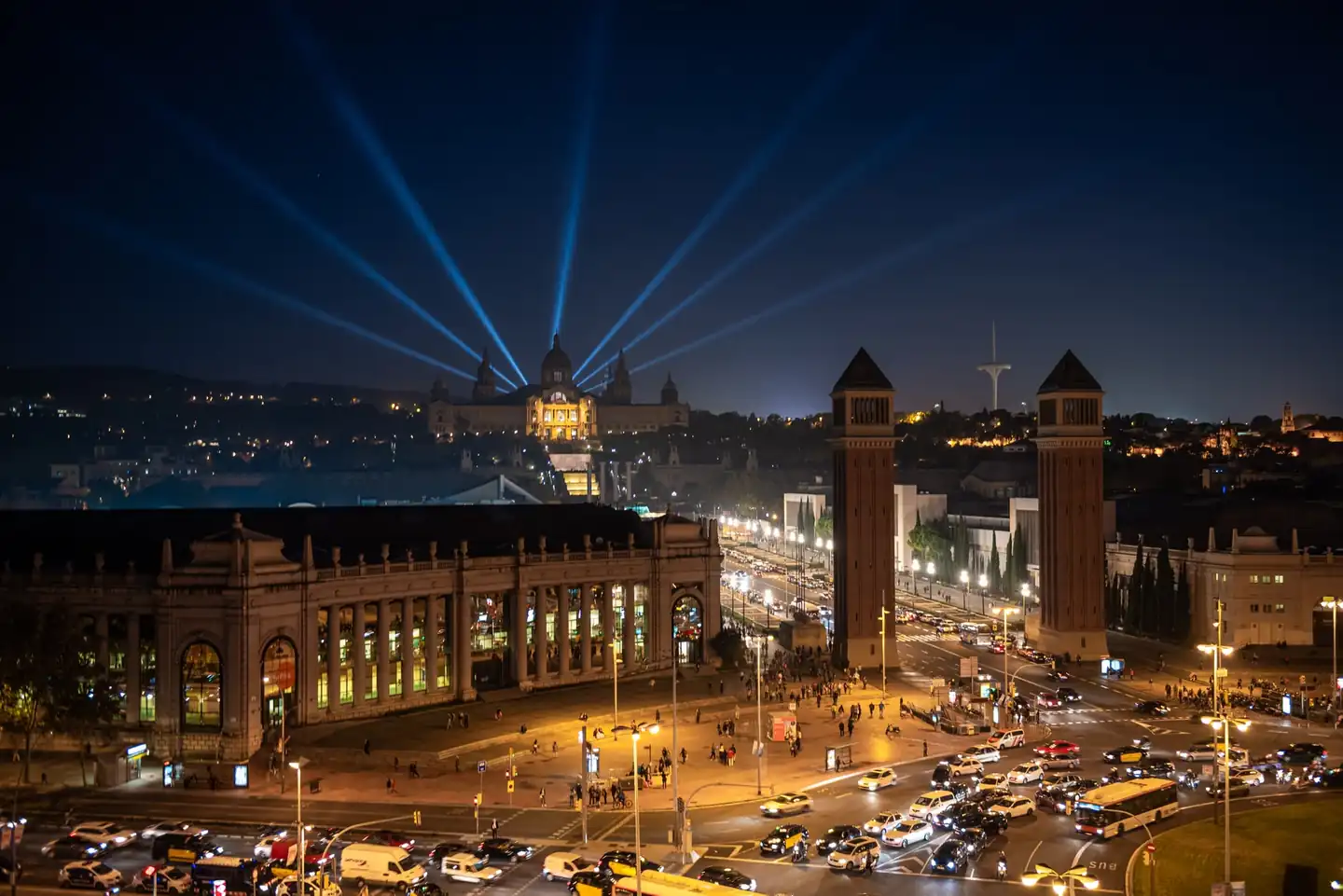
The Zurich Marató Barcelona has become one of the major benchmarks on the European calendar for a very simple reason: it combines a fast course, an instantly recognizable city, and an organization capable of moving thousands of runners without missing a beat. Its urban profile, with almost no visual respite, passes through broad avenues, central neighborhoods, and stretches near the sea that turn effort into a moving postcard.
The race was born in 1978, first outside the city due to a lack of permits and then established in Barcelona, and since then it has grown to rank among the marathons with the greatest international profile. Today it is a 42.195-kilometer race usually held in March and has produced top-level performances, with a men’s record of 2:04:13 and a women’s record of 2:10:51, both achieved in recent editions that have confirmed its athletic prestige.
A marathon with its own history in the city
The Barcelona marathon did not emerge as a major marketing operation, but rather from the drive of a pioneering idea. Ramón Oliu, after running New York in 1976, understood that Spain needed a popular long-distance event and launched a project that broke with the tradition of track races or elite competitions. The first edition took place in Palafrugell in 1978 because Barcelona had not yet authorized street closures, and the following year it was repeated there before moving definitively to the Catalan capital.
That origin explains part of its current personality. It is not just a fast race; it is also an event that helped normalize popular marathons in Spain. Over the decades it changed its name several times until adopting its current title with Zurich as sponsor, and it gained stature as Barcelona consolidated itself as a sports and tourist city. Its evolution reflects that of urban running itself: from an almost handmade initiative to a mass event, televised and with global reach.
There was even one year without a race, in 2005, due to organizational problems, and another serious blow came with the pandemic, which disrupted the 2020 calendar and pushed back later editions. However, the event quickly regained momentum and grew again to figures that two decades ago seemed unreachable. In 2025 it brought together 27,000 registered participants, a number that once again places it among the major marathons on the continent.
A course designed for fast running
If the Zurich Marató Barcelona stands out on the international map, it does so largely because of its route. The start and finish are located in Plaça d’Espanya, at the foot of Montjuïc, in an area of great urban and logistical symbolism. From there, the course links iconic areas such as Camp Nou, the Sagrada Família, the seafront, and the old town before returning to the starting point. It is a city circuit, not a mountain-grind labyrinth, and that shows both in the pace and in the racing feel.
The profile is deceptive. On paper it looks flat, and in practical terms it is for much of the route, but the accumulated elevation gain and some long inclines can take their toll when the clock enters the delicate zone of the marathon. The most uncomfortable stretches usually appear around kilometers 25 to 27 and 39 to 41, precisely when the legs begin to demand payment. Even so, the route encourages steady strides and chasing personal bests rather than merely surviving the course.
The 2019 course overhaul already reduced part of the difficulty and allowed performances to improve. Then, in 2024, an even more refined redesign was introduced, with fewer turns, longer avenues, and a more centralized route. The idea was clear: make the marathon faster, more visible, and smoother. The result was immediate, with a new men’s record in 2024 and a new women’s mark in 2025.
That design explains much of its appeal for elite runners and for amateurs seeking a solid time. An urban marathon with long straights, well-laid asphalt, and a Mediterranean setting usually offers favorable conditions, especially in March, when Barcelona combines mild temperatures, manageable humidity, and enough daylight without the harsh heat of summer. The city acts almost like an open circuit, with the sea as a backdrop and the geometry of the Eixample setting the tempo.
Records, winners, and the imprint of great times
The list of Barcelona winners says a lot about the race’s place in the sport. In its early editions there was European dominance and local presence, but since the 2000s the hegemony has shifted to East African distance runners, a common trend in international marathoning. Kenya, Ethiopia, and Bahrain have claimed the most recent victories, and times have steadily dropped in a very clear sign of the event’s professionalization.
The current men’s record, 2:04:13, belongs to Tesfaye Deriba, set in 2025. A year earlier, Tadesse Abraham had lowered the mark to 2:05:01, and in 2023 Marius Kimutai had already pushed the benchmark to 2:05:06. In the women’s category, Sharon Chelimo produced the best reference at 2:10:51 in 2026, after Zeineba Yimer brought the clock down to 2:19:44 in 2023. Barcelona has become an urban stage for top-level performances, something not all European marathons can say with the same ease.
The historical evolution also offers useful signals. In 2010, Jackson Kipkoech Kotut ran 2:07:30, then the fastest time ever run in Spain. Beyond the statistical anecdote, that mark symbolized a leap in quality for the race and anticipated what would come next: a more refined course, growing participation, and a competitive level that no longer settles for simply being massive. Each route reform has sought the same goal, reducing the energy cost of each kilometer without stripping the city of its character.
The race’s history also includes repeat names such as David Patterson, Allan Zachariasen, Joaquima Casas, and Ana Isabel Alonso, who left a lasting mark in the early decades. That continuity among winners helps explain how the marathon in Spain has changed: from a format deeply rooted locally to an event with international reach, where East African distance running sets the pace and where each edition is read almost as a snapshot of the global marathon moment.
Participation, organization, and big-city atmosphere
Beyond the times, the Zurich Marató Barcelona stands out for its ability to turn a distance race into a broad urban experience. The organization provides refreshments, medical support, split timing, and real-time tracking devices, and also relies on hundreds of volunteers and on an infrastructure that connects the city council, sponsors, and sports organizations. The event has even achieved World Athletics Gold Label status, the top category for road races, which requires high standards in elite competition, anti-doping control, and support for recreational runners.
That organizational level translates into a sense of order that is not always visible to those watching the start from the outside. Electronic chips, app tracking, intermediate timing points, and the coordination of urban services create a silent machine that supports thousands of runners during nearly five hours on average of road closures. The marathon is not only run; it is managed with clockwork precision. And in a densely populated city like Barcelona, that is as important as the pace at the front.
The race has also gained in crowd density. The city experiences it as a large-scale sporting celebration, with stretches where the people’s support becomes extra fuel. The finish, from the toughest kilometers onward, is usually the most intense emotionally: voices, applause, and improvised bands stretch the finish-line atmosphere over several hundred meters. This is not an empty party, but a real boost for those arriving with their bodies in survival mode.
The numbers support that feeling. In recent editions, more than 20,000 runners have been exceeded by a wide margin, with a strong international presence and a rising women’s participation. Barcelona is no longer just a marathon of local prestige; it is an event that competes with other major cities to attract runners looking for time, city, and story. And it does so with a very clear added value: the race moves through recognizable settings, from Gaudí’s modernism to the Mediterranean coastline, without losing the coherence of a major road-running event.
What Barcelona says about the current urban marathon
The Zurich Marató Barcelona works as a barometer of several trends in contemporary running. The first is the search for fast courses, with fewer turns and less urban friction. The second is the consolidation of major cities that turn their urban fabric into a sporting showcase without giving up mobility or everyday life. The third is the growing importance of visible spectacle: a well-produced event no longer measures only times, but also projects image, tourism, and sports culture.
Within that context, Barcelona has found a particularly solid formula. Its March weather, central course, blend of coastline and architecture, accumulated tradition, and ability to attract runners from dozens of countries give the race something of both map and mirror. It reflects how the city runs and how it wants to be seen. Fast, orderly, open, and, at the same time, very much its own.
There is also a less visible but important detail: the city has learned to turn the race into an annual story, almost like a fixed springtime appointment. Route changes, records, and memorable editions are part of a shared memory that goes beyond the final standings. What began as a pioneering adventure in Palafrugell is now an international benchmark that already belongs to Barcelona’s sporting imagination. And in that journey, the Zurich Marató Barcelona has stopped being just a race and has become a permanent fixture on the European calendar, an event that sums up the ambition of the modern marathon in 42.195 kilometers.



How to prevent thigh chafing: causes and real solutions

Women’s running windbreakers: seven jackets and how to choose

Do more workouts get rid of soreness? A guide for runners

Jaén Half Marathon 2026: Record 3,800 Runners Registered

Men’s short running tights: how to choose the right pair

World Triathlon confirms data breach involving medical data

Izan Edo targets podium at Miyazaki World Cup

María Pérez ranks ninth in World Athletics’ 2026 top ten

Dos Santos, Duplantis and Sawe: World Athlete of the Year finalists

San Silvestre Vallecana 2026: 42,000 places, prices and start times

 Races3 months ago
Valencia Half Marathon 2027: date and registration

 Races3 months ago
Valencia Marathon 2026: entry, ballot and course

 Reviews and Comparisons4 months ago
Asics Gel-Roadmiles 3 for men: review and current price

 Reviews and Comparisons4 months ago
Asics Gel Sonoma 8 Gore-Tex: complete analysis for trail and rain

 Sneakers3 months ago
Saucony Endorphin Pro 4: full review and verdict

 News5 months ago
Strava API 2026: what changes for clubs, challenges and runner apps?

 Reviews and Comparisons5 months ago
Nike Alphafly 3: opinions, sensations, and real key points

 Reviews and Comparisons4 months ago
Under Armour running shoes review 2025-2026: models and key features

 Sports Equipment4 months ago
Shoe sizes in cm: a clear guide to getting the right fit for your footwear

 Sneakers3 months ago
Skechers GO RUN Consistent 2.0 analysis: comfort and limits

 News5 months ago
Valencia Marathon 2026 route: key tips to train and run better

 Sneakers4 months ago
Adidas Adizero Boston 13 for men: review and verdict