Races
Challenge Peguera Mallorca 2026: complete race guide
Date, routes, atmosphere, and key details of a very popular middle-distance event in Mallorca.

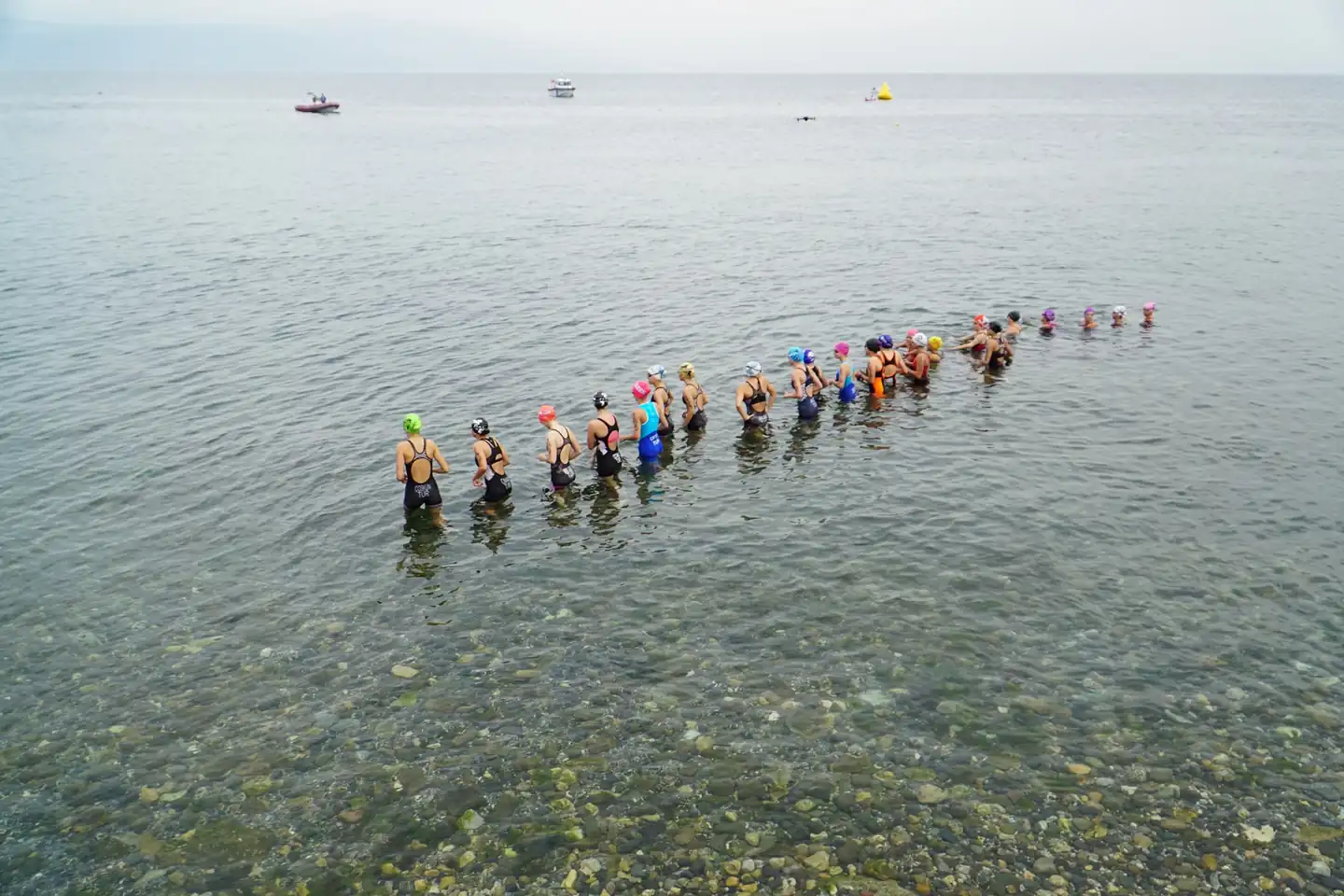
Challenge Peguera Mallorca puts Calvià back on the international triathlon map with a proposal that combines middle distance, Mediterranean weather, and a format designed for fast racing. The 2026 edition is scheduled for October 17, with the main start in Peguera and a program that also includes parallel events such as Challenge Women, Junior Run, Junior Aquathlon, and pre-race entertainment activities.
The event has established itself as one of the most recognizable season finales in Europe for a simple reason: it offers a spectacular yet practical course, with 1.9 km of swimming, 90 km of cycling, and 21.1 km of running, as well as a tourist setting that makes traveling with companions easy. In Peguera, the race is not experienced only as a competition; it also serves as a showcase for the island, its coastline, and an organization that has managed to turn the event into a sporting and social experience.
A middle-distance race with its own identity in Mallorca
The event is part of the Challenge Family universe and has earned a stable place among the most followed middle-distance triathlons on the calendar. The official name of the event has varied in public use between Peguera and Mallorca, but the competitive core is the same: a half-Ironman race with courses that blend sea, road, and seafront promenade in a setting very familiar to any triathlon fan.
Its appeal does not depend solely on the scenery. The race has built a reputation as a well-run event, with abundant pre-race information, careful logistics, and an atmosphere that usually brings together athletes from many countries. The organization itself presents it as a season-ending format with a festive spirit, while participant reviews on various platforms often highlight the water quality, the communication before race day, and the race atmosphere.
In Peguera’s case, the geography helps. The sea is usually one of the event’s biggest attractions, the cycling covers the municipality of Calvià, and the run unfolds through areas heavily used by the public. This creates an experience that alternates fast sections with more scenic ones, almost as if the course were designed so that the athlete never forgets they are racing in a beach destination, not on a sports highway cut off from the world.
The official distances and competitive format
The main middle-distance race features 1.9 km of swimming, 90 km of cycling, and 21.1 km of running. Alongside the individual race, a relay format is also offered on the same course, broadening the participant profile and allowing different teams to share the same experience. That relay format is not a minor add-on: it brings more athletes into the event without changing the essence of the course.
The weekend also includes other events that have been gaining prominence. Challenge Women offers a 4.3 km race on October 16, 2026, while Junior Run and Junior Aquathlon complete the family and development-oriented lineup. The Junior Aquathlon, scheduled for October 18, is aimed at children and teens aged 7 to 17 and reflects one of the event’s hallmarks: it is not limited to elite racing or middle distance, but extends activity to a range of audiences.
There are also parallel activities such as a Zumba masterclass and the correfoc, one of the most distinctive images of the weekend. That mix of sport, local tradition, and complementary programming helps explain why the event is often sold as a sports trip rather than just a single race start. At its core, the event rests on a simple idea: compete, yes, but in an environment with life around it.
What the swim course is like
The swim is contested over a single 1.9 km lap, starting at Playa Torá, one of the most recognizable points on Peguera’s coastline. Different event references place the water segment between two coves highly regarded on Mallorca’s coast and describe a start and finish in separate areas of the same shoreline stretch, with a transition segment leading into the next part of the triathlon.
Water quality repeatedly appears as one of the event’s strengths. That is no small detail in a middle-distance race, because a clear, easy-to-read swim without technical surprises shapes the rest of the day. When the sea cooperates, the triathlete not only gains comfort; they also save precious energy for the cycling, which here is presented as a decisive part of the result.
The bay setting creates a very specific feeling: the water is usually the race’s first emotional filter. If the swim takes place with good visibility and clear landmarks, the event quickly enters that register of days that seem to flow by themselves. At the same time, the open coastline means the day’s conditions must be respected, as in any sea race, where the calendar matters less than the actual state of the Mediterranean.
A fast but not entirely flat bike leg
The bike segment covers 90 km and is organized into two 45 km laps. The route leaves Peguera, moves through the interior and coastline of Calvià, and links areas such as Es Capdellà, Calvià, Son Ferrer, El Toro, and Santa Ponsa before returning to the starting point. It is a course that combines fast stretches with some rolling terrain, without major high-mountain climbs, but with enough elevation change to punish poorly paced legs.
One of the technical references that comes up repeatedly is that the highest point on the course is around 151 meters. That helps explain the character of the segment: it is not a completely flat time trial, but neither is it a high-mountain test. The result usually rewards those who know how to hold power wisely, fuel properly on the bike, and reach the second transition with enough margin to run without paying interest.
Some descriptions place the accumulated elevation gain at around 480-500 meters per lap, reinforcing the idea of a less forgiving circuit than it first appears. The descents and fast straight sections may tempt riders to let loose, but the terrain reminds them that in Mallorca, speed does not always mean rest. In a middle-distance race like this, the bike leg is not solved by power alone; it also demands course reading and patience.
The run, between the boulevard and the sea
The final 21.1 km are designed as a highly visual run, with laps through central Peguera, the boulevard, and the seafront promenade. Different sources agree that the course passes near Torà and La Romana beaches and offers a dense crowd atmosphere, especially in the sections most accessible to spectators. It is a half marathon that can be seen, and that changes the whole feeling of running it.
The profile is usually described as fast and largely flat. The organization and specialized media present it as a course designed to hold pace, with several laps that allow athletes to check splits and keep rivals, supporters, or aid stations in sight. That repetition of turns and passes through lively areas turns the final leg into something like an emotional conveyor belt: each lap brings back noise, music, and human presence.
That detail matters more than it may seem. In a middle-distance race, the last hour of competition is decided as much by the mind as by the legs. A run course that passes through streets and the seafront promenade does not just offer beauty; it also creates a kind of visual support network for anyone who is hanging on. Peguera understands that logic well and exploits it with a race that, while not easy, is rewarding for those who know how to pace themselves.
Dates, registration, and weekend schedule
The 2026 edition is listed with October 17 as the date for the main race. The weekend schedule also includes October 16 for Challenge Women and Junior Run, and October 18 for Junior Aquathlon. This arrangement allows the event to span several days and not be limited to the morning of the long race.
Registration is shown as open in the reference information consulted, although the status may change as the season progresses. The main race keeps both the individual and relay formats, each with the same segment structure. In addition, the organization publishes specific information about fees, categories, check-in, rules, aid stations, and event schedule, which is standard for races of this size.
Beyond the registration process, the value of the weekend lies in the complete plan. The agenda includes bib pickup, an expo, pasta party, and complementary activities that turn the event into a small international triathlon gathering. In events like this, race day does not begin with the starting horn, but with arriving on the island, walking through the race area, and sensing that the whole municipality is revolving around sport.
What participants usually highlight
Reviews from those who have raced in Peguera repeat some patterns quite clearly. On specialized platforms, high scores appear for aspects such as pre-race communication, water quality, and the overall atmosphere. The mix of urban setting and nature is also mentioned frequently, a combination that not all triathlons manage so smoothly.
Another strong feature is the festival-like character. It is not just a hard, well-organized race, but an experience in which the public, volunteers, and parallel activities help keep the weekend constantly in motion. That atmosphere does not replace the sporting effort, but it surrounds it with a warmer, less mechanical tone.
There is also a very useful takeaway for any athlete planning their calendar: Peguera is usually a season-ending race. That changes the psychology of registration. Some come looking for a personal best, others want to close the year with a major event, and others simply want to race in an attractive tourist destination. The event accommodates all three layers without losing its identity.
An event that also sells the destination
The race has successfully leaned on Mallorca’s value as a travel destination, but not in a superficial way. Peguera and the municipality of Calvià offer roads, sea, services, and a landscape varied enough that companions are not left waiting around. That is why the event is often described as a mix of competition and getaway, something very typical of middle-distance triathlon in island destinations.
The official website and the event’s supporting information mention official hotels, transport, travel packages, and other associated services. This ecosystem is not a commercial extra; in an event with international athletes, logistics are part of performance. Sleeping nearby, moving around easily, and knowing the course reduces friction. In an October calendar, the island’s weather can also be either an ally or a very elegant trap.
There is also an important institutional component: the race is presented as being funded with resources linked to the Balearic Government’s sustainable tourism tax, a detail that fits its role as an event with territorial projection. The triathlon does not just fill a sporting morning; it also leaves a mark on destination promotion and on the local mid-season economy.
The race in numbers, without losing context
The most immediate figure is clear: 1.9 km of swimming, 90 km of biking, and 21.1 km of running. Added to that are a confirmed date for 2026, October 17, and a specific venue, Peguera, within the municipality of Calvià, in Mallorca. The rest of the story is in the details: start at Playa Torá, cycling through the coast and interior, and a final half marathon with strong crowd support.
But the numbers alone do not explain why this race attracts so much interest. What matters is the balance between speed, scenery, and organization. Those looking for a very hard course may find other, hillier references; those wanting a technical, striking, and competitive triathlon find a very solid answer here. And those who are mainly looking at the atmosphere discover a race with a life of its own, sustained by multiple activities and a fairly loyal international community.
That is why Challenge Peguera Mallorca occupies a peculiar place: it is not just a date on the calendar, but a very specific way of understanding middle distance. The sea opens the day, the bike adds structure, and the run turns it into a tense stroll through the Mediterranean. In October, when many seasons are already fading, Peguera keeps the light on for a triathlon that still has something of a showcase and something of a celebration.
The value of a race that ends the season with personality
In the European triathlon ecosystem, Peguera has achieved something difficult: being recognizable without overdoing it. Its proposal rests on elements that athletes understand immediately, such as a well-measured middle-distance course, a friendly swim, a fast bike with nuances, and a final run that does not give up on the crowd. The combination produces a race remembered both for how it is raced and for how it is experienced beyond the clock.
The result is a race that works as a sporting showcase and as a portrait of the territory. Mallorca appears here not as a backdrop, but as part of the script. The sea shapes the swim, the terrain shapes the bike, and the seafront promenade gives form to the decisive part of the effort. Everything fits with a precision that is quite unusual in events that aim to mix tourism and performance.
That balance is the key to its continuity. Challenge Peguera Mallorca does not need to sell itself as an extreme adventure or as an empty postcard. It simply offers a serious course, an attractive setting, and an organization able to sustain the interest of athletes of many profiles. In the October calendar, that combination still carries more weight than any slogan.



How to prevent thigh chafing: causes and real solutions

Women’s running windbreakers: seven jackets and how to choose

Do more workouts get rid of soreness? A guide for runners

Jaén Half Marathon 2026: Record 3,800 Runners Registered

Men’s short running tights: how to choose the right pair

World Triathlon confirms data breach involving medical data

Izan Edo targets podium at Miyazaki World Cup

María Pérez ranks ninth in World Athletics’ 2026 top ten

Dos Santos, Duplantis and Sawe: World Athlete of the Year finalists

San Silvestre Vallecana 2026: 42,000 places, prices and start times

 Races3 months ago
Valencia Half Marathon 2027: date and registration

 Reviews and Comparisons4 months ago
Asics Gel-Roadmiles 3 for men: review and current price

 Races3 months ago
Valencia Marathon 2026: entry, ballot and course

 Reviews and Comparisons4 months ago
Asics Gel Sonoma 8 Gore-Tex: complete analysis for trail and rain

 Sneakers3 months ago
Saucony Endorphin Pro 4: full review and verdict

 News5 months ago
Strava API 2026: what changes for clubs, challenges and runner apps?

 Reviews and Comparisons5 months ago
Nike Alphafly 3: opinions, sensations, and real key points

 Reviews and Comparisons4 months ago
Under Armour running shoes review 2025-2026: models and key features

 Sports Equipment4 months ago
Shoe sizes in cm: a clear guide to getting the right fit for your footwear

 Sneakers3 months ago
Skechers GO RUN Consistent 2.0 analysis: comfort and limits

 News5 months ago
Valencia Marathon 2026 route: key tips to train and run better

 Sneakers4 months ago
Adidas Adizero Boston 13 for men: review and verdict