Races
Infinitri 113 Peñíscola triathlon: complete race guide
Peñíscola hosts a middle-distance race with the sea, a Templar castle, and a fast but demanding course along the Mediterranean.

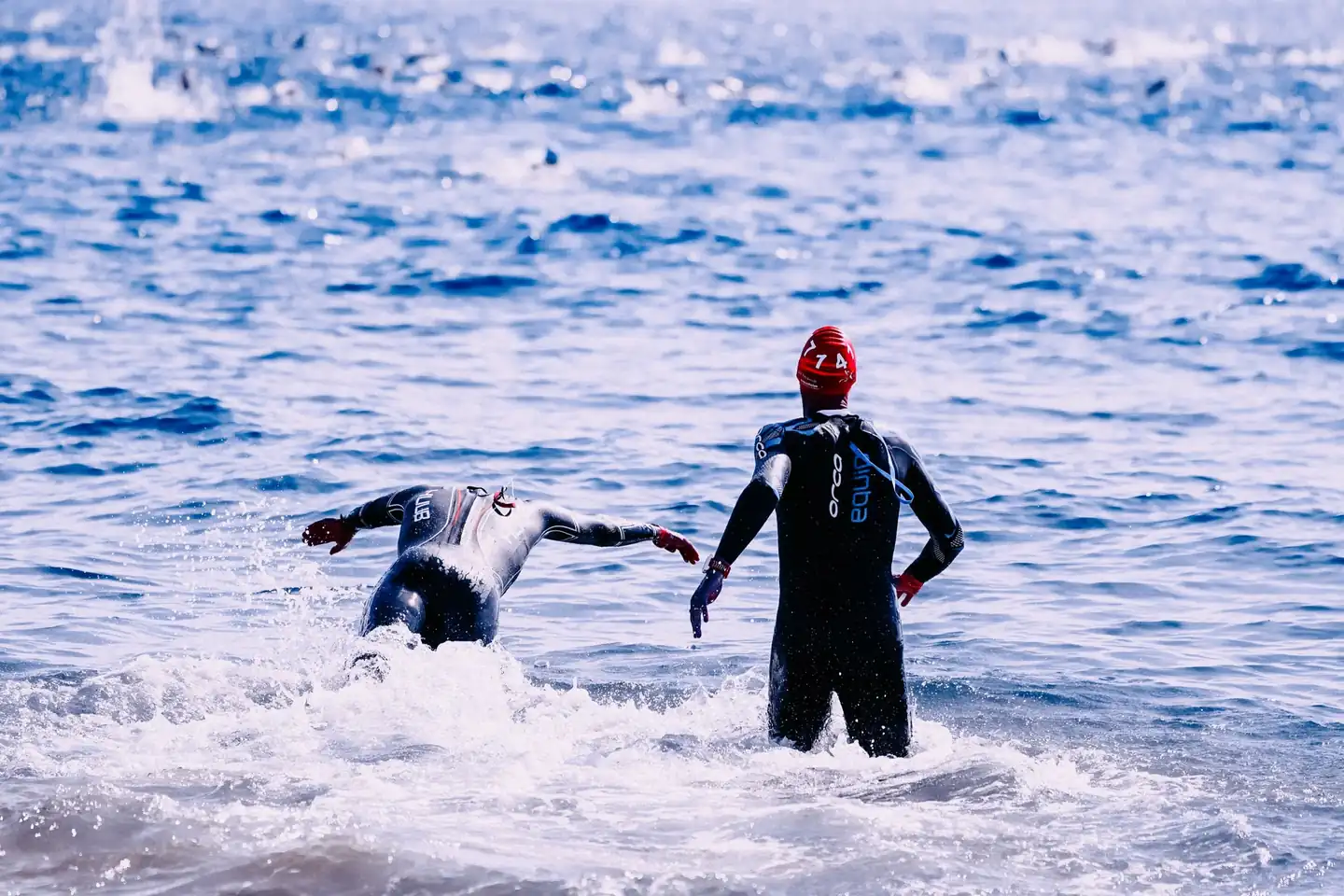
The Infinitri 113 in Peñíscola has established itself as one of the most distinctive middle-distance races on the Spanish calendar: 1,900 meters of swimming, 90 kilometers of cycling, and 21 kilometers of running in a setting that blends beach, old town, and roads open to the Mediterranean landscape. It is not just a tough event; it is a race that turns the course into a changing postcard, with the Templar castle watching over the start and finish as if they were two ends of the same scene.
Its appeal comes from that uncommon combination of sport and place. Peñíscola is not merely a backdrop, but part of the challenge: the sea embraces the swim, the Serra d’Irta gives the bike leg character, and the seafront promenade, with its flat sections and pace changes, shapes the final half marathon. The race also usually opens the season with mild temperatures and a brightness that already hints at summer on the Castellón coast.
A middle-distance race with its own identity on the Castellón coast
Peñíscola has a natural connection with triathlon. Its instantly recognizable silhouette helps explain why the event has steadily gained prestige: a walled town above the sea, a coastline with calm waters on many days of the year, and a network of inland roads that makes it possible to design a fast circuit without giving up elevation gain. The result is a competitive experience with local flavor and international reach.
The race takes place in a municipality listed among the Most Beautiful Villages in Spain and one with a strong tourist vocation. That shows in the logistics, in the long-weekend atmosphere, and in the way the event blends into city life. The race is understood not only as a competition, but also as a sporting occupation of the territory, with athletes, families, and companions moving between beaches, hotels, and the old town.
The name 113 is no coincidence: it refers to the approximate sum of the race distances, designed for the half format. In Peñíscola, that format takes on a different personality because the course does not try to hide the terrain or soften the landscape. The swim circles the tombolo next to the castle; the bike leg links inland towns in the northern part of the province; and the run combines the seafront promenade, urban areas, and stretches near untouched coves.
Swimming beside the Templar castle
The water segment is probably the most visually striking feature of the race. The start is set on North Beach, with the Templar castle as the immediate reference point and a course that circles the fortress clockwise before returning toward the transition area. Few races offer such a recognizable image: swimming beside a medieval structure on the Mediterranean coast is not a decorative detail, but part of the story of the day.
The course is marked with visible buoys at each turn and includes a section toward South Beach that helps define the end of the first segment. The organization also plans an alternative route if sea conditions do not allow the intended course, something common in coastal races where safety takes priority over any other consideration. The date of the event also makes wetsuit use likely, although whether it is mandatory depends on water temperature.
The swim start demands both orientation and calm. The Mediterranean may seem gentle, but a swim with such powerful visual references also requires concentration. The combination of sand, walkways, support boats, and the turn around the tombolo creates a highly photogenic setting, though for the triathlete the important thing is something else: keeping pace, not going out too fast, and arriving with a low enough heart rate to face a demanding bike leg.
A fast, rolling, no-drafting bike course
The bike leg defines much of the competitive character of the Infinitri 113. It is 90 kilometers long, starting in the area around Akra Leuka Street and Station Avenue, before leaving Peñíscola behind on a long initial straight that helps stabilize effort. From the CV-1340 onward, the first elevation changes appear, with a gentle but sustained incline toward Càlig, where the course begins to show its rolling character.
From there, the route links Càlig, Sant Jordi, Cervera del Maestre, and Sant Mateu in a back-and-forth pattern that requires careful effort management. It is not a bike course with major mountain passes or extreme shocks, but it is not an easy ride either. The circuit moves between approximate elevations of 100 and 330 meters and rewards those who can sustain power continuously without unnecessary surges. In middle distance racing, that difference between riding and chasing impossible paces is often felt more than it seems.
The no-drafting rule changes the tactical reading of the race. The minimum distance between bikes must be maintained at 12 meters, so the effort depends less on the group and more on individual management. That favors disciplined riders who can read the terrain and avoid overexerting themselves in the early hours. The organization also emphasizes that it is a safe race, with the presence of Civil Protection, the Civil Guard, and the Local Police, plus partial road closures and traffic control at the most sensitive points.
There is also a practical element worth keeping in mind: the road surface is good and the area is usually less congested than other urban zones. That makes the course flow better, though it does not make it easy. The Mediterranean wind, elevation shifts, and the need to return to Peñíscola with fresh legs make the bike leg function as a kind of bridge between two races: the swim and the final half marathon.
The run between the seafront promenade and the coves
The 21.1-kilometer segment is where the race finally tells the truth. The course alternates between the northern part of the city, with the faster and more uniform seafront promenade, and the southern area, where the terrain becomes rolling as it approaches the Serra d’Irta. During the first kilometers, the profile helps you settle into your stride; afterward, the changing scenery forces you to keep your running mechanics intact when the legs are already heavy from the bike.
The sequence is very familiar to anyone racing middle distance: a first controlled section, a second section of fatigue, and a gradual return to the city center to finish beside the castle. The first eight kilometers are completely flat on the northern side, with a 180-degree turn around kilometer four. Then come about six rolling kilometers to the south, in terrain closer to the sea, with an almost dry-stone-and-salt-air feel. The return to the historic center adds one last emotional layer to the effort.
The finish in Santa María Square gives the whole event meaning. You do not arrive at a neutral space, but at a place that belongs to Peñíscola’s visual memory. The run ends the way the day began: with the castle in the background, the coast breathing nearby, and the feeling of having covered much more than a sum of kilometers. That ending has clear symbolic weight and helps explain why so many triathletes return year after year.
An event designed both to compete and to stay
The Infinitri 113 does not sell only a stopwatch; it sells an experience. The usual program includes a finisher medal, goodie bag, technical T-shirt, photo and video service, timing control, medical support, aid stations, bag check, showers, and post-race food. These are not minor extras: in a middle-distance event, the quality of services genuinely changes how the race is experienced and how comfortable the participant feels.
The organization has also cultivated a full weekend atmosphere, with live music, local gastronomy, and a setting that encourages extending the stay. That explains part of its appeal among athletes looking for more than just a bib number. Peñíscola offers beaches, an old town, a coastal route, and a tourist infrastructure broad enough to turn a race into a sporting getaway with multiple layers.
The event usually attracts a large and very varied field, with experienced racers, first-timers at the distance, and triathletes who see this course as an early-season test. The aquabike format also adds an option for those who want to race the swim and bike without completing the half marathon. This variety of formats broadens the participant profile and strengthens the event’s standing on the national calendar.
Registration, schedules, and details that usually make the difference
The 2026 race was held on Sunday, April 26, at 7:30 a.m. and was expected to finish around 2:45 p.m., with registrations open from September 2025 to April 20, 2026 according to the information available on reference portals. Bib pick-up was organized for Friday afternoon and Saturday at noon, while bike check-in was scheduled for Saturday afternoon. These are simple logistical details, but decisive in avoiding setbacks in an event of this kind.
It was also stated that registration was non-refundable and that no sign-ups would be accepted on race day, a rule that often applies to events of this format. The organization provides direct contact for registration issues, payment problems, data changes, requests for certificates, or general questions about schedules, regulations, and services. In races with so much demand, that support system helps organize the lead-up and reduce confusion in the critical hours.
The 2027 edition is announced for April 25, confirming the continuity of the project and its stable place on the calendar. In sporting terms, that regularity matters as much as the course’s spectacle. An event that repeats, adjusts, and maintains a clear identity eventually becomes a benchmark, and Peñíscola has been moving in that direction for years with a coherent message: sea, heritage, and a course that gives nothing away.
Why this race matters so much on the Mediterranean calendar
The Infinitri 113 in Peñíscola has found a difficult balance. It is neither a big urban celebration like other mass events nor an extreme landscape race; it sits somewhere in between, where the beauty of the setting and the demands of the course reinforce each other. That mix explains its media reach and its ability to remain among the most sought-after races at the start of the season.
In addition, the territorial context works in its favor. Castellón does not always dominate the athletic conversation like other provinces with a larger number of events, but here the proposal has clear uniqueness: the Mediterranean, medieval history, inland villages, and a coastline that makes it possible to build a full day without losing the competitive essence of triathlon. The result is a race with its own identity, easily recognizable to anyone who follows the national circuit.
Its value also lies in the coherence of the story. What you see on the website, what you experience on the course, and what you remember afterward line up remarkably well. The swim around the castle, the bike leg along quiet roads, and the run with sea views are not marketing promises, but the sporting translation of a place with a strong personality. In a discipline where so many races resemble one another, that difference matters.
Peñíscola offers, in short, a middle-distance race that combines precise organization, memorable scenery, and a straightforward course. It does not disguise the difficulty or replace it with artifice. That is why it works: because the effort leaves its mark and, at the same time, the setting makes it beautiful. In that corner of the Castellón coast, triathlon is not only raced; it is remembered.
You may also like: Infinitri 226 Peñíscola Triathlon: course, date, and key details.



How to prevent thigh chafing: causes and real solutions

Women’s running windbreakers: seven jackets and how to choose

Do more workouts get rid of soreness? A guide for runners

Jaén Half Marathon 2026: Record 3,800 Runners Registered

Men’s short running tights: how to choose the right pair

World Triathlon confirms data breach involving medical data

Izan Edo targets podium at Miyazaki World Cup

María Pérez ranks ninth in World Athletics’ 2026 top ten

Dos Santos, Duplantis and Sawe: World Athlete of the Year finalists

San Silvestre Vallecana 2026: 42,000 places, prices and start times

 Races3 months ago
Valencia Half Marathon 2027: date and registration

 Races3 months ago
Valencia Marathon 2026: entry, ballot and course

 Reviews and Comparisons4 months ago
Asics Gel-Roadmiles 3 for men: review and current price

 Reviews and Comparisons4 months ago
Asics Gel Sonoma 8 Gore-Tex: complete analysis for trail and rain

 Sneakers3 months ago
Saucony Endorphin Pro 4: full review and verdict

 News5 months ago
Strava API 2026: what changes for clubs, challenges and runner apps?

 Reviews and Comparisons5 months ago
Nike Alphafly 3: opinions, sensations, and real key points

 Reviews and Comparisons4 months ago
Under Armour running shoes review 2025-2026: models and key features

 Sports Equipment4 months ago
Shoe sizes in cm: a clear guide to getting the right fit for your footwear

 Sneakers3 months ago
Skechers GO RUN Consistent 2.0 analysis: comfort and limits

 News5 months ago
Valencia Marathon 2026 route: key tips to train and run better

 Sneakers4 months ago
Adidas Adizero Boston 13 for men: review and verdict