Races
Córdoba Half Marathon 2026: date, route, and key details
The Cordoban race heads into its 40th anniversary with bibs sold out, an urban route, and the finish line next to the Roman Bridge.

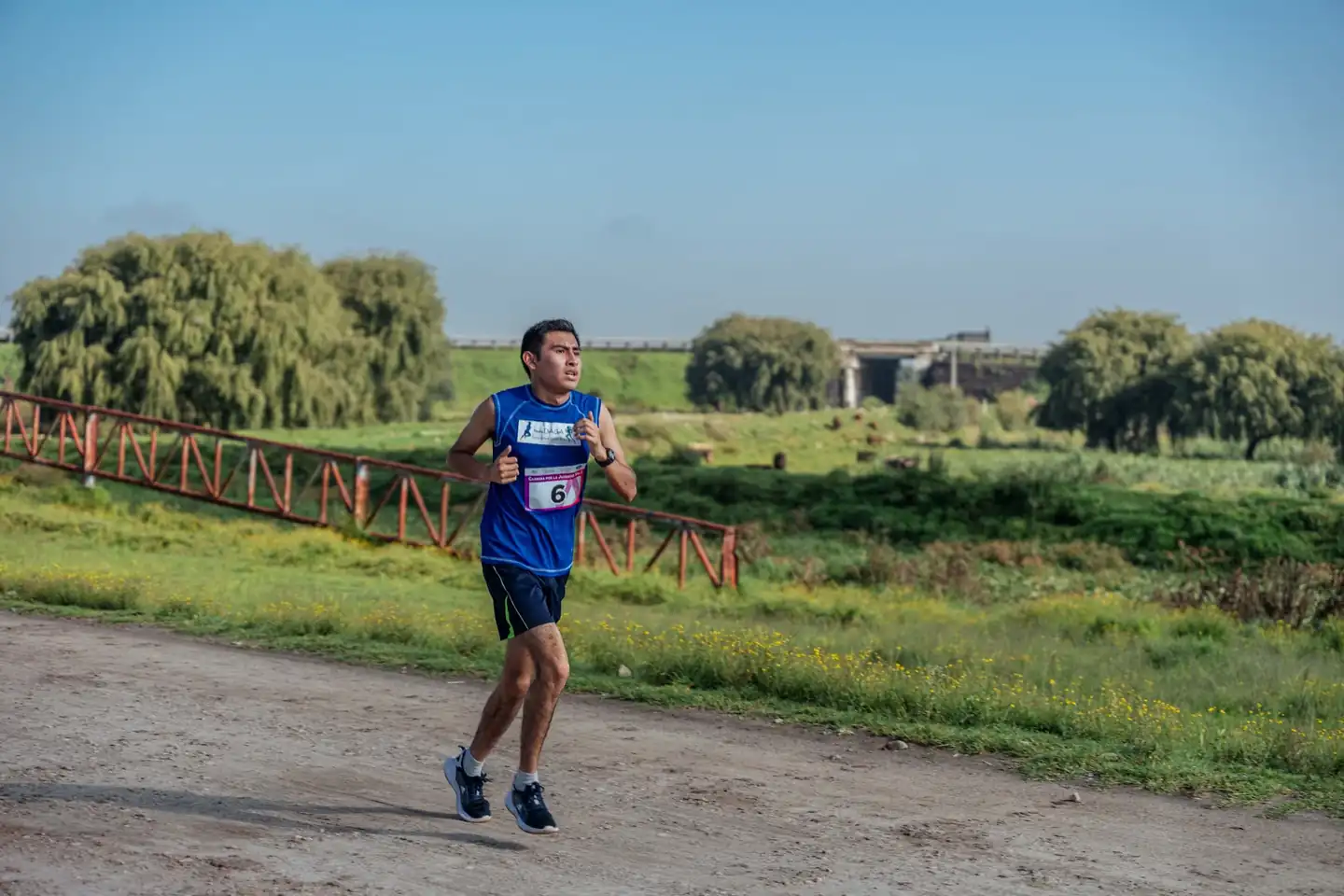
The 40th edition of the Córdoba Half Marathon has already hung up the sold-out sign with 7,800 bibs gone, a figure that confirms the pull of a race that is now firmly established on both the Andalusian and national calendars. The race will take place on November 29, 2026, starting on Avenida de Vallellano and finishing, true to its identity, at the Puente Romano gate, on the banks of the Guadalquivir.
The interest is not explained only by the number of entrants. Córdoba turns this half marathon into a large-format urban scene: streets packed with people, heritage at asphalt level, spectators along the edges of the course, and a finish line that feels almost like a postcard. It is a fast, massive, and highly recognizable race, with a route designed to combine sporting performance and a showcase of the city.
An anniversary edition with all eyes on Córdoba
The fortieth installment arrives with the symbolic weight of a round-number milestone. Four decades after its first edition, the half marathon still holds a special place among recreational runners thanks to its blend of tradition, atmosphere, and urban course. In 1985, the race name was already etched into the record books with the victory of Juan José Rosario and the women’s win of Laura Blanco G., and since then the race has continued to build a distinct identity.
The 2026 context adds a layer of sporting and organizational significance. The cap set by the Córdoba Municipal Sports Institute, 7,800 places, responds to safety and event-control criteria. Demand has been so high that registrations sold out in less than a week, a fact that speaks both to the prestige of the event and the loyalty of a participant base that returns every year.
The coincidence in date with other benchmark half marathons has not reduced Córdoba’s appeal. On the contrary, the overwhelming response reinforces the idea that the race is enjoying a very strong period of relevance. The race remains a magnet for local, national, and also international athletes, with a call that goes beyond the provincial sphere and projects itself as a sporting event of broad reach.
Date, start location, and finish by the Guadalquivir
The date is marked in red on the runner’s calendar: Sunday, November 29, 2026. As usual, the race is held on the last Sunday of the month, a tradition that has become part of its personality. The start time is set for 10:00, a slot that favors mass participation and spectator presence on the streets.
The start will once again be on Avenida de Vallellano, a strategic point for organizing the opening and giving way to a course that crosses the city with a showcase spirit. The finish at the Roman Bridge is one of the race’s great hallmarks. It is not just a beautiful finish; it is a finish loaded with historical context, with the silhouette of the Mosque-Cathedral and the bridge as the backdrop to a closing stretch that stays in any runner’s memory.
That closing stretch over the river is part of the race’s story. In a discipline where images matter as much as the stopwatch, Córdoba offers a scene that needs no embellishment. The finish line becomes a visual reward, almost cinematic, for the 21.097 meters that separate the start from the end.
Course & elevation Edition 2026
Per-kilometre table
| Km | Elevation | Grade |
|---|---|---|
| 1 | 100 m | -1.1 % |
| 2 | 96 m | -0.4 % |
| 3 | 98 m | 0.2 % |
| 4 | 102 m | 0.4 % |
| 5 | 101 m | -0.1 % |
| 6 | 103 m | 0.2 % |
| 7 | 108 m | 0.5 % |
| 8 | 111 m | 0.3 % |
| 9 | 115 m | 0.4 % |
| 10 | 119 m | 0.3 % |
| 11 | 134 m | 1.6 % |
| 12 | 130 m | -0.4 % |
| 13 | 127 m | -0.3 % |
| 14 | 134 m | 0.7 % |
| 15 | 131 m | -0.4 % |
| 16 | 125 m | -0.6 % |
| 17 | 117 m | -0.8 % |
| 18 | 120 m | 0.3 % |
| 19 | 115 m | -0.5 % |
| 20 | 97 m | -1.8 % |
| 21 | 93 m | -0.4 % |
| 22 | 94 m | 1.2 % |
Plan your pace on this course →
Route source: GPX
An urban course that combines speed and heritage
The Córdoba Half Marathon has earned a reputation as a flat, certified course, a condition especially valued by those looking to improve their time or run at a steady pace. The route crosses the city from north to south and east to west, passing along wide avenues, central areas, and some of the most recognizable landmarks in the Córdoba capital.
Among the most anticipated points on the route are the San Rafael Bridge, Plaza de las Tendillas, and, of course, the final stretch toward the Roman Bridge. The coexistence of performance and scenery is one of the race’s great strengths. It is not a mountain course or a technically punishing race; it is an urban half marathon, with a clear pacing profile and an atmosphere that pushes the runner from the sidelines.
The organizers also plan slight adjustments aimed at safety and smoother flow, without changing the essence of a highly recognizable race. In a race with so many participants, those nuances matter. A poorly handled turn or a badly placed aid station can make a difference to an athlete’s comfort; that is why maintaining a practical and readable route is as valuable as beautifying the scenery.
Sold-out registrations, waiting list, and bib control
Registration closed quickly and made one thing clear: demand far exceeded the planned limit. The organizers opened a waiting list, a common solution in events with such high participation pressure and a way to cover possible withdrawals or dropouts. The speed at which the bibs sold out also suggests that interest in the race remains high even in an increasingly crowded calendar.
The bib is not assigned immediately when registration is completed, but once the process is closed and the performances are validated for wave distribution. After that, each participant receives an email with their assigned number. This system helps organize the start and reduce the usual bottlenecks in the first kilometer, a critical point in such large races.
The organizers also offer bib mailing, an optional service available between September 1 and November 8 for a cost of 10 euros. It is a logistical detail that avoids travel for those who cannot collect it in person and fits the profile of a race that is increasingly professional in its management.
Aid stations, cutoff times, and the real demands of the effort
The race maintains split-time controls that shape the day’s progress. Cutoffs are set at 5 kilometers in 35 minutes, 10 kilometers in 1 hour and 10 minutes, 15 kilometers in 1 hour and 45 minutes, and the finish in 2 hours and 27 minutes. These are important benchmarks because they structure the race and make it clear that, even if the event is popular, it is still a half marathon with real demands.
Race services are also being expanded. There will be aid stations at kilometers 5, 10, 15, and 17, as well as post-finish refreshments. Pacers, kilometer markers, medical support, baggage check, changing rooms, showers, restrooms, finisher medal, technical T-shirt, runner’s bag, and sports massage are also planned. The sum of these elements changes the runner’s experience, especially in a race where the volume of participants requires each logistical piece to work precisely.
In high-attendance urban races, hydration and checkpoint locations are much more than an add-on. They are the line between a smooth day and an uncomfortable one. That is why it matters that the course is properly measured and that services are distributed sensibly. In Córdoba, the commitment is clear: a massive race, yes, but one that aims not to lose control or quality in the details.
A race also designed for the public and for the city
The Córdoba Half Marathon does not only test the runner’s endurance; it also tests the city’s ability to become a large sporting stage for a few hours. Thousands of people take to the streets to watch the athletes pass by, and that presence changes the emotional temperature of the event. The sound of applause, shouts of encouragement, and the busiest areas of the course create a distinctive soundtrack.
That effect has sporting and urban value. The race projects Córdoba’s image as a city open to recreational running and capable of integrating heritage, tourism, and street sport. The race acts as a showcase for the city, but also as a meeting point for generations, clubs, individual runners, and fans who are not chasing a time, but rather want to be part of the day.
The impact goes beyond the final result. Each edition leaves its mark on hospitality, retail, and the overall pulse of the historic center and surrounding areas. In a city with such a dense heritage, a half marathon like this works as a long-stride choreography, where each corner adds a postcard and each stretch calls for focus, patience, and legs.
Prizes, recognition, and the 40th-anniversary medal
The race maintains prizes for the top three male and female finishers in each category, along with other recognitions provided by institutions and partner companies. The prize distribution follows the usual logic of this type of event, where the podium draws the spotlight, but the symbolic value extends to the thousands of runners who complete the distance.
The main material novelty of this edition is the 40th anniversary commemorative medal, along with the official race T-shirt. These are two elements that go beyond the practical and become tangible memories of participation. In races with so much tradition, the medal is not a simple accessory; it is physical proof of having crossed the city through effort.
Participation remains open to people with disabilities, both on foot and in a wheelchair, a decision that broadens the race’s meaning and gives it a more inclusive profile. The race is not limited to elite times or to experienced runners. Its strength lies in the diversity of the field, in the coexistence of very different paces and goals on the same asphalt.
What explains the staying power of a historic half marathon
Some races survive out of habit, and others survive because they remain useful to runners. The Córdoba Half Marathon belongs to the second category. It offers a recognizable distance, a fast course, an unforgettable finish, and an organization that has refined its proposal over the years. In a highly competitive sporting market, that is worth a lot.
The figure of 7,800 bibs sold out in a few days confirms that reading. Runners look for races where the trip is worth it, where the city is supportive, and where the effort has a visible reward. Córdoba offers those conditions without needing to exaggerate anything. Its strength lies in the combination of tradition, scale, and setting, three factors that do not always come together in the same race.
November 29, 2026, will thus stand as another date marked on the Andalusian recreational running calendar. Not only because of the round-number anniversary, but also because of the image of a city that knows how to turn 21 kilometers into a collective story. The Córdoba Half Marathon remains, at its core, a race where the clock matters, but the city weighs as much as the time.
A race that measures the pulse of recreational running in Andalusia
The Córdoba Half Marathon works as a barometer of long-distance running in Andalusia because it brings together several trends at once: high demand, organizational control, tourist interest, and loyalty from the local community. In an increasingly saturated calendar, few races preserve that balance between mass participation and personality. Here the race does not fade into the noise; it is defined by it.
The 2026 edition also adds a note of maturity. It is not just about celebrating forty years, but about checking that the race is still capable of attracting runners without losing its identity. Sold-out registrations, the waiting list, and the announced services outline a half marathon that no longer needs introducing. Its name is enough to draw interest, and in a city with so much sporting and cultural competition, that is no small thing.
With the start in Vallellano, the finish at the Roman Bridge, and a course that crosses some of Córdoba’s most emblematic places, the race keeps its main argument intact: running here is not only about covering 21.097 meters. It is about crossing an entire city in motion, with the noise of the crowd, the weight of history, and the feeling, when crossing the finish line, of having entered a scene that has already become part of recreational running memory.
Where to stay in Córdoba
Hotels available 27–30 November 2026.
Affiliate links: if you book through this map we earn a commission, at no extra cost to you.



How to prevent thigh chafing: causes and real solutions

Women’s running windbreakers: seven jackets and how to choose

Do more workouts get rid of soreness? A guide for runners

Jaén Half Marathon 2026: Record 3,800 Runners Registered

Men’s short running tights: how to choose the right pair

World Triathlon confirms data breach involving medical data

Izan Edo targets podium at Miyazaki World Cup

María Pérez ranks ninth in World Athletics’ 2026 top ten

Dos Santos, Duplantis and Sawe: World Athlete of the Year finalists

San Silvestre Vallecana 2026: 42,000 places, prices and start times

 Races3 months ago
Valencia Half Marathon 2027: date and registration

 Races3 months ago
Valencia Marathon 2026: entry, ballot and course

 Reviews and Comparisons4 months ago
Asics Gel-Roadmiles 3 for men: review and current price

 Reviews and Comparisons4 months ago
Asics Gel Sonoma 8 Gore-Tex: complete analysis for trail and rain

 Sneakers3 months ago
Saucony Endorphin Pro 4: full review and verdict

 News5 months ago
Strava API 2026: what changes for clubs, challenges and runner apps?

 Reviews and Comparisons5 months ago
Nike Alphafly 3: opinions, sensations, and real key points

 Reviews and Comparisons4 months ago
Under Armour running shoes review 2025-2026: models and key features

 Sports Equipment4 months ago
Shoe sizes in cm: a clear guide to getting the right fit for your footwear

 Sneakers3 months ago
Skechers GO RUN Consistent 2.0 analysis: comfort and limits

 News5 months ago
Valencia Marathon 2026 route: key tips to train and run better

 Sneakers4 months ago
Adidas Adizero Boston 13 for men: review and verdict