Races
Costa Barcelona Maresme Half Marathon 2026: date and distance
Start in Pineda, finish in Calella: 21 flat km and tiered prices in an event designed to fly along the sea.

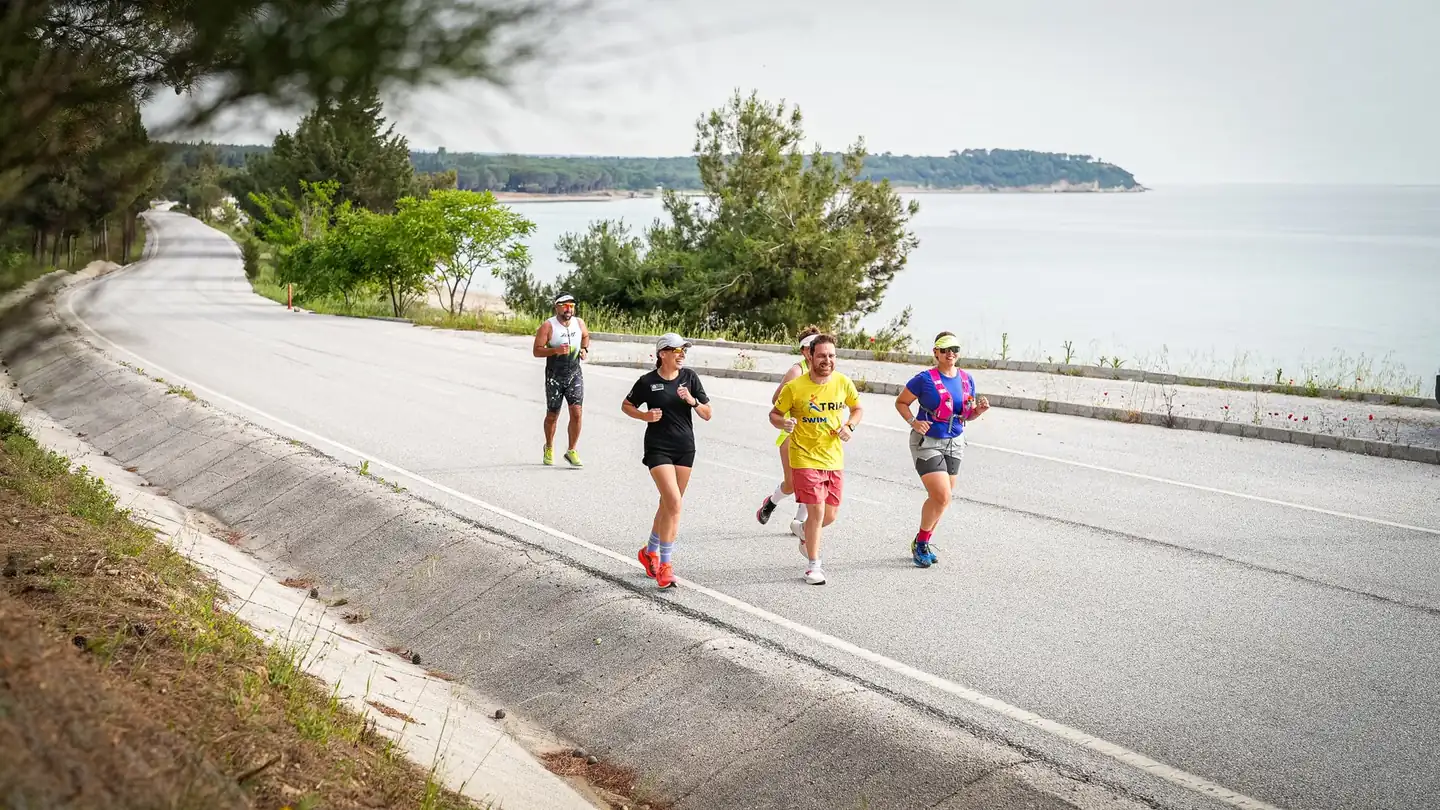
Imagen: Ozan Yavuz / Pexels
The 17th edition of the Mitja Marató Costa Barcelona Maresme will once again bring together 2,000 runners on a friendly course, almost at sea level, with the start in Pineda de Mar and the finish in Calella. The event is scheduled for Sunday, October 25, 2026, at 8:30 a.m., and it retains the quality that has made it a benchmark on the Catalan calendar: a 21-kilometer course designed for fast running, with very little elevation gain and a coastline that accompanies much of the effort.
The race takes place in the heart of Alt Maresme and connects Pineda de Mar, Santa Susanna, Malgrat de Mar and Calella in a certified half marathon whose popularity comes not from a formal label, but from something simpler and more tangible: it combines atmosphere, convenient logistics and a course that invites runners to chase a personal best without giving up the scenery. At a time when many races promise speed, here the selling point is visible from the very first kilometer: straight stretches by the sea, little change in elevation and a finish where the final stretch is run almost with the smell of salt in the air.
A fast course between Pineda and Calella
The route is the main attraction of this half marathon. The organizers describe it as completely flat, with an approximate elevation gain of 20 meters and a first line of the sea that acts as a natural corridor for runners. That does not mean it is effortless, because 21 kilometers always demand pace, focus and effort management, but it does reduce sharp turns, unexpected ramps and sudden changes that break stride. For anyone looking for a clean race, the kind that lets you read the watch clearly kilometer by kilometer, this profile makes almost mathematical sense.
The start is located at Plaça del Sol in Pineda de Mar, in the Poble Nou district, on the seafront promenade itself. The finish awaits at carrer Església 333, in Calella, between Cervantes and Mossèn Cinto Verdaguer streets. The two points are only 400 meters apart, a short distance that, in practice, makes it easier for companions to arrive, reduces transfers and concentrates the final atmosphere in a very manageable area. The organization also places the final refreshments area and the awards ceremony at Plaça Lluís Gallart, very close to the finish arch.
That urban and coastal layout has a clear effect on the runner’s experience. There are no major scenery changes or mountain passes, but rather a sequence of towns linked like stations along the same shoreline. Pineda de Mar, Santa Susanna, Malgrat de Mar and Calella share the spotlight in a course that allows runners to find their rhythm early, maintain it and finish with less accumulated punishment than in other more undulating half marathons. For those coming to gauge their form or attempt a serious time, that detail matters as much as the date.
The date, the start and what to keep in mind
The start is scheduled for 8:30 a.m. on Sunday, October 25, 2026. The time is not just an administrative detail; in a coastal autumn race, an early start helps avoid lingering daytime heat and offers more stable running conditions. October usually brings milder temperatures than summer on the Catalan coast, although the marine humidity is still there, clinging to the skin, and it should be taken into account in the warm-up and hydration strategy.
The race is open to people aged 16 and over, an important detail because it broadens the participant profile and allows the event to combine experienced runners with others making their debut at the distance. The field is capped at 2,000 bibs, a number that keeps the race at a reasonable scale: large enough to create atmosphere, but not so massive as to turn logistics into an obstacle course. Registration remains open until Thursday, October 22, 2026 at 8:00 a.m., unless bibs sell out before then.
The schedule also gives a clue as to how demand is managed. There is no same-day registration, so the race is really decided before race day, during that booking window when participants secure their place, choose their shirt size and, in some cases, finalize travel or accommodation plans. In coastal events with a good reputation, that window usually closes quickly, and here the limit of 2,000 places sets the pace of the entry process with unusual clarity.
Course & elevation Edition 2026
Per-kilometre table
| Km | Elevation | Grade |
|---|---|---|
| 1 | 7 m | -0.2 % |
| 2 | 7 m | 0.0 % |
| 3 | 6 m | -0.1 % |
| 4 | 4 m | -0.2 % |
| 5 | 7 m | 0.3 % |
| 6 | 7 m | 0.1 % |
| 7 | 4 m | -0.3 % |
| 8 | 6 m | 0.2 % |
| 9 | 3 m | -0.3 % |
| 10 | 5 m | 0.2 % |
| 11 | 11 m | 0.6 % |
| 12 | 6 m | -0.4 % |
| 13 | 9 m | 0.2 % |
| 14 | 8 m | -0.1 % |
| 15 | 7 m | -0.1 % |
| 16 | 7 m | 0.0 % |
| 17 | 4 m | -0.4 % |
| 18 | 4 m | 0.1 % |
| 19 | 7 m | 0.3 % |
| 20 | 4 m | -0.3 % |
| 21 | 12 m | 0.8 % |
| 22 | 12 m | -0.3 % |
Plan your pace on this course →
Route source: Google My Maps
Tiered pricing and the real cost of entry
The pricing policy is tiered and rewards early entry. Registration costs 23 euros until February 28, 2026 with a yellow chip, rises to 25 euros until April 30, then to 27 euros until June 30 and reaches 29 euros until October 22 or until bibs sell out. If needed, there is also a 2-euro chip rental fee. The structure is clear and straightforward: the earlier you sign up, the lower the cost.
In the context of a coastal half marathon with a personalized T-shirt, finisher medal, Championchip timing and extensive race services, the price remains competitive for recreational runners. It also acts as a gentle filter: it rewards those who plan ahead, reduces last-minute chaos and helps organize demand for bibs and sizes. In addition, as of September 25, the T-shirt will still be included, but it will no longer be possible to reserve a size or personalize it with a name, because the organizers close the final factory order based on size planning.
That seemingly minor detail matters to anyone who values the physical keepsakes of a race. The T-shirt becomes more than a giveaway and becomes part of the day’s memory, as happens with the medal or the bib tucked away in a drawer. In that sense, the race is not just selling a route; it is selling a collection of physical signs that help preserve the experience.
Race services: beyond the bib
The organizers have made the services a central part of the event’s identity. All entrants receive a personalized bib, a personalized T-shirt with their name and a finisher medal for those who cross the line. This is complemented by individual accident insurance, official chip timing and a baggage drop service near bib collection and the finish. The logistics are designed so that the race does not end at the finish line, but in a sequence of basic comforts that ease the transition out of the effort.
At the finish, the refreshments area brings together several elements that are almost a hallmark of the event: water, fresh fruit from Ametller Origen, cola, Aquarius and Powerade soft drinks, plus a frankfurt sandwich with Millàs sauce that serves as a post-finish reward. The combination is no accident. In popular races, the finish is very much a ritual, and offering drinks, fruit and something salty or warm helps close the effort with a fuller feeling than a simple glass of water.
The baggage drop service, music along the course and the awards ceremony in the podium area add a layer of order and atmosphere that does not depend solely on the stopwatch. There is also a courtesy detail that has attracted attention: the first 300 runners to collect their bib on Saturday afternoon will receive a hair band from the Mitja Marató Costa Barcelona Maresme, provided they come in person to pick it up. In races like this, those small incentives help ease congestion on race morning and, at the same time, shape the event’s identity.
Refreshments, pace groups and reading the effort
The refreshments schedule is designed to sustain fast paces without losing control. The organizers plan approximate aid stations at kilometer 5, liquids only; at 10, liquids and solids; at 15, also liquids and solids; and at 19.5, liquids again. The setup is sensible for a fast half marathon: it offers frequent hydration, adds some energy once muscular debt starts to accumulate and provides one last boost near the end, where fatigue often makes time feel slower.
The Corredors.cat pace groups cover finish times of 1:20, 1:25, 1:30, 1:35, 1:40, 1:45, 1:50, 1:55 and 2:00 hours. That range reflects the event’s profile well: it is not only a race to finish, but one in which specific goals can be targeted. The pace groups organize the pack, help runners find stable references and reduce improvisation, which is usually a bad advisor when the watch is pressing and the heart rate spikes after an overambitious start.
The music along the course also serves a purpose beyond atmosphere. In a flat race, where runners spend much of the time managing similar sensations, sound adds emotional relief. It does not change the elevation, but it changes the perception of the stretch. It is a reminder that pavement, at times, can also have rhythm.
Rules, categories and a race open to different profiles
The rules are strict on one key point: registration fees will not be refunded and there will be no name changes, unless the race is canceled by the organizers for reasons attributable to the organization itself. It is a common policy in the popular running circuit, but it should be read carefully because it defines the participant’s real margin in the face of unforeseen events. In other words, registration is a final commitment except in very specific circumstances.
The sport categories include general, junior for those born between 2001 and 2009, open for those born between 1991 and 2000, master for those born between 1976 and 1990, veterans for those born in 1975 or earlier, and a mixed team category for the most participatory group. Prizes are awarded to the top three male and female finishers overall and in each category, while overall winners are not counted in other classifications. It is a classic system, but well organized, avoiding overlaps and giving more runners visibility.
The race is also open to people with different motivations and ability levels. Those who come to compete seriously will find a fast, controlled race; those who simply want to experience an easy 21K will find a generous setting; those looking for a first major challenge will find a course without major traps. That range of profiles explains part of the event’s longevity: it is not limited to the amateur elite, nor does it cater only to a very specific kind of runner.
Bib collection, the finish and the practical geography of the day
Bib collection is centered at Plaça Lluís Gallart in Calella. On Saturday, October 24, 2026, it will be available between 5:00 p.m. and 8:00 p.m., and on Sunday, October 25, between 7:00 a.m. and 8:15 a.m. This schedule allows participant flow to be split between the eve of the race and the morning itself, which is essential when the start and finish are in different places and the race requires some planning. The very fact that bib pickup is closer to the finish than to the start helps explain the event’s overall design.
The organization also indicates that there are several parking options near both the start and the finish, including at least one free parking area close to the starting point and another near the end. Runners arriving by car usually appreciate this information for very simple reasons: less uncertainty, less unnecessary walking with a bag on their shoulder and less stress before the starting gun. In flat races, what happens outside the course also matters.
The stretch between start and finish, only 400 meters, gives a very clear picture of the race. There is no chaotic crossing or long jump between opposite ends of town; there is proximity that helps concentrate the atmosphere and makes movement easier for family and companions. In journalistic terms, that detail matters because it defines an experience: that of a coastal race where almost everything happens within a manageable and easy-to-read area.
A half marathon that continues to mark the Catalan coastline
The Mitja Marató Costa Barcelona Maresme has not lost its main virtue: running with a sea view and the stopwatch in mind. Its formula combines a recognizable setting, refined logistics and a course that punishes no more than necessary. That is why it remains a key date in the autumn calendar for those looking for fast half marathons in Catalonia and, more broadly, around Barcelona. It does not need flashy extras to justify its place: it is enough that it offers a clean 21K, well organized and with clear services.
There is also a broader reading. At a time when recreational runners value both performance and experience, events like this work because they balance those two interests. They allow runners to watch the clock without giving up a pleasant setting, offer prizes and services without turning the race into an effort theme park, and maintain a competitive tone that remains accessible. That balance, well tuned, is what usually explains why races survive over the years.
The 17th edition arrives, then, with a familiar map and a simple promise: 21 kilometers by the sea, a start in Pineda, a finish in Calella and an organization designed so the runner can focus on the essentials. The rest will come from the legs, the watch and that coastal landscape that, without needing to raise its voice, keeps accompanying every stride.



How to prevent thigh chafing: causes and real solutions

Women’s running windbreakers: seven jackets and how to choose

Do more workouts get rid of soreness? A guide for runners

Jaén Half Marathon 2026: Record 3,800 Runners Registered

Men’s short running tights: how to choose the right pair

World Triathlon confirms data breach involving medical data

Izan Edo targets podium at Miyazaki World Cup

María Pérez ranks ninth in World Athletics’ 2026 top ten

Dos Santos, Duplantis and Sawe: World Athlete of the Year finalists

San Silvestre Vallecana 2026: 42,000 places, prices and start times

 Races3 months ago
Valencia Half Marathon 2027: date and registration

 Races3 months ago
Valencia Marathon 2026: entry, ballot and course

 Reviews and Comparisons4 months ago
Asics Gel-Roadmiles 3 for men: review and current price

 Reviews and Comparisons4 months ago
Asics Gel Sonoma 8 Gore-Tex: complete analysis for trail and rain

 Sneakers3 months ago
Saucony Endorphin Pro 4: full review and verdict

 News5 months ago
Strava API 2026: what changes for clubs, challenges and runner apps?

 Reviews and Comparisons5 months ago
Nike Alphafly 3: opinions, sensations, and real key points

 Reviews and Comparisons4 months ago
Under Armour running shoes review 2025-2026: models and key features

 Sports Equipment4 months ago
Shoe sizes in cm: a clear guide to getting the right fit for your footwear

 Sneakers3 months ago
Skechers GO RUN Consistent 2.0 analysis: comfort and limits

 News5 months ago
Valencia Marathon 2026 route: key tips to train and run better

 Sneakers4 months ago
Adidas Adizero Boston 13 for men: review and verdict