Races
DEKA Vigo 2027: dates and formats
Two days of competition in Vigo, with individual and team formats combining running and strength-based exercise.

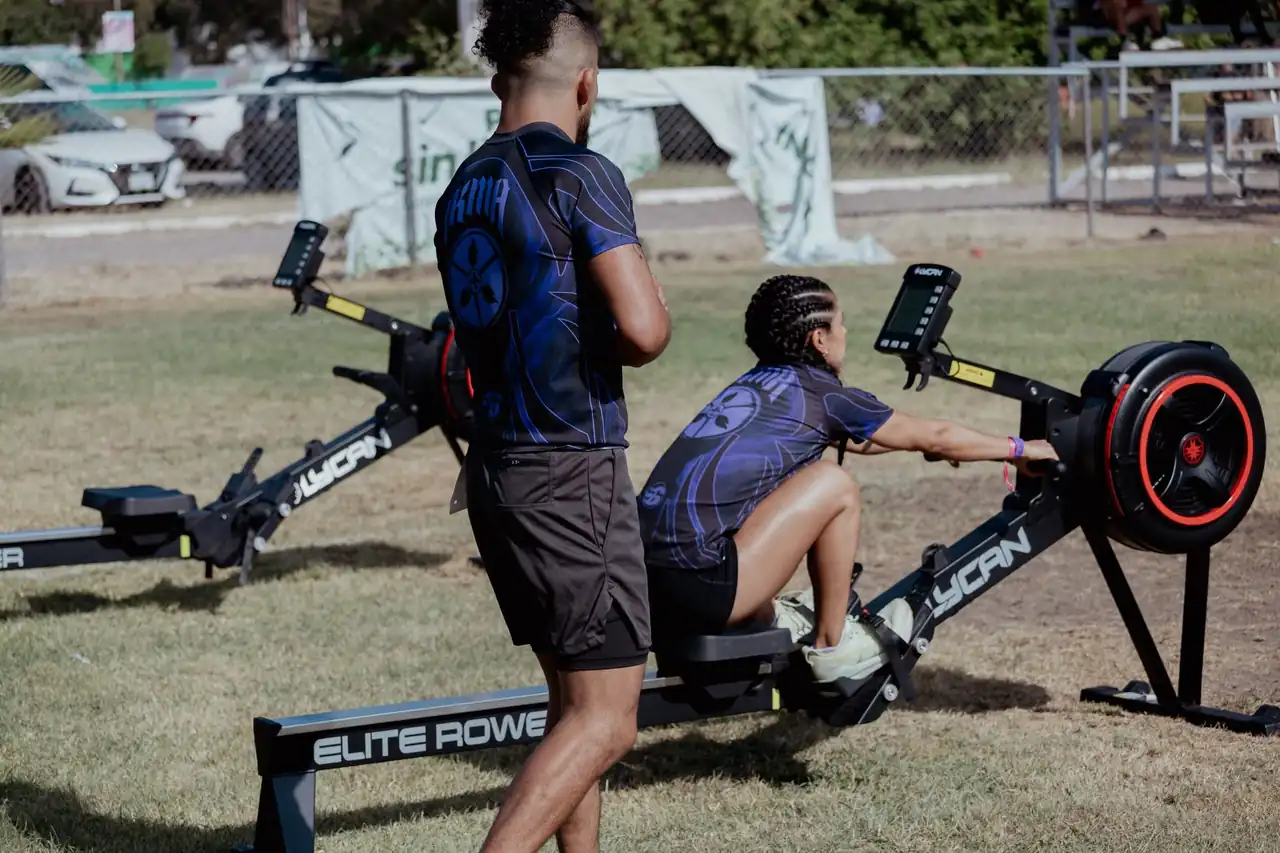
Vigo has confirmed its DEKA event for June 26 and 27, 2027, a weekend combining running and fitness exercises in individual and team formats. The published schedule places DEKA FIT Teams and DEKA MILE Teams on Saturday, June 26, with individual DEKA FIT and DEKA MILE events on Sunday, June 27. The event belongs to the DEKA circuit, which is associated with Spartan.
The FIT format includes 5 kilometers of running and 10 exercise zones, but the available information does not yet specify the Vigo venue, start times or entry fees. Those gaps matter: the date establishes the event’s place in the calendar, but it is not enough to finalize travel arrangements or calculate costs. The supplied material also provides no published details on entry limits, minimum ages or included services.
This is a different proposition from a conventional road race. Progress is not measured through running alone: sections of running alternate with physical tasks that change breathing patterns, fatigue the muscles and require athletes to run again under different conditions. That alternation between running and strength is central to the experience and explains why a strong road-racing performance does not automatically translate into an equivalent result here.
The two-day schedule already makes two separate choices clear: entering individually or as a team, and selecting FIT or MILE. These are four announced competition formats, not four interchangeable names. Each combination changes how participants approach the effort and organize their weekend. Edition-specific information will need to clarify participation requirements before assigning categories or rules that do not appear in the available event announcement.
Saturday, June 26, brings together the team options: DEKA FIT Teams and DEKA MILE Teams. According to the published program, Sunday, June 27, is reserved for individual events. This separation helps with planning, but does not confirm entry compatibility for anyone considering more than one event. Start times, registration conditions and the applicable rules will determine whether combining entries across the weekend is possible.
DEKA Spain’s communications also use the opening date as a reference for the Vigo event. However, the detailed event listing covers two days, an important distinction for anyone seeking the individual competition: individual FIT is listed for Sunday, not Saturday. A shortened reference to June 26 identifies the start of the weekend, but it does not replace the format-specific schedule or establish that every race starts that day.
The confirmed location is Vigo, in the province of Pontevedra. The supplied information does not name a starting address, sports hall or other specific venue. Therefore, the exact venue remains unspecified in this documentation. It would be inaccurate to associate the event with facilities used in previous editions or assume the course will pass through recognizable city streets. The municipality’s name does not yet describe the competition setting.
That detail will affect practical questions such as venue access, public transportation, parking and the distance between accommodation and the competition area. For runners traveling from Spain’s Valencian Community, knowing the municipality allows broad travel planning, but does not settle local logistics. The location and surface of the running sections are also unknown, and both could influence footwear choices and how participants assess the course.
In its standard structure, DEKA FIT combines 10 running sections of 500 meters with 10 fitness zones. Together, those sections make up the advertised 5 kilometers, distributed throughout the competition. What sets it apart from a continuous 5K is the interruption of the running effort: each station introduces a different task before athletes return to running. The total distance is known; the sensations and distribution of fatigue differ from those of a running-only race.
A simple example illustrates the distinction. In a road race, maintaining a pace of 5 minutes per kilometer for 5 kilometers produces a running time of 25 minutes. In FIT, that calculation would account for only part of the work: exercises and transitions must be added, and running pace could change after each zone. As a result, a standalone 5K time cannot, by itself, predict a finishing time in a hybrid competition.
The challenge involves both aerobic capacity and the ability to keep moving after muscular effort. Legs may feel heavy on the next running section in a way they did not at the start; the arms and torso also contribute to the fitness tasks. Maintaining an effective stride under fatigue becomes part of the competition, alongside performing movements correctly and pacing the overall effort.
DEKA MILE reduces the running volume compared with FIT while retaining the concept of 10 zones. Its standard format totals one mile of running, approximately 1.6 kilometers, distributed between the exercises. That shorter total running distance shifts the balance between the components, but does not necessarily make the event easy. Someone with more running experience than strength-training experience may face substantial muscular demands despite covering fewer meters.
Choosing between FIT and MILE does not have to be framed as a hierarchy of prestige. They are two ways of combining endurance and fitness, with running contributing differently to the result. For some participants, FIT’s 5 kilometers will better match their sporting background; others may prefer shorter running between exercises. The appropriate format depends on familiarity with both components, not just the distance someone typically runs each week.
Team events add another dimension: performance no longer depends solely on individual pacing. Coordination, understanding the rules and dividing the work as permitted all become important. However, the Vigo announcement does not specify team composition or the relay system. The Teams name confirms participation in a collective format, but does not justify assuming that each member will complete half the running or half of every exercise.
It would also be premature to apply men’s, women’s or mixed categories mentioned in general circuit materials to this edition without checking its specific conditions. The supplied information includes references to team-format explanations, but does not set out the Vigo rules. To understand the format correctly, work-sharing rules matter as much as distance: they determine who runs, who performs each task and which actions must be completed together, where required.
In individual competition, responsibility for execution and pacing rests with each participant. That highlights a familiar distinction between training and racing: knowing an exercise is not the same as performing it correctly when tired. The event listing mentions an athlete guide and refereeing resources, but does not reproduce their contents. The standards for valid movement, possible penalties and applicable loads must come from the current rules, not from a generic event description.
Weights, repetitions and category-specific adjustments can substantially change the experience. They are not detailed in the available information for this event, so it would be inappropriate to specify them here. Training with a familiar load may be useful as general practice, but does not establish rules-specific readiness. The decisive reference will be the documentation applicable to the format and category in which a participant registers.
The Spartan connection can cause confusion among people familiar with its obstacle races. DEKA is presented as a fitness competition with interspersed running; it should not automatically be described as a course featuring mud, wire, walls or mountain trails. Those features have not been published for Vigo. The identity of the wider circuit does not, on its own, establish the terrain or turn every event into an obstacle race with the same structure.
The FIT listing displays an average duration of 44 minutes and 10 seconds. That figure appears in the format’s presentation, but the sample, participants’ ability levels and calculation conditions are not explained. It should be treated as a reference without statistical context, rather than a universal target. Moreover, an event scheduled for June 2027 and not yet held cannot have its own average finishing time calculated from its results.
Two runners with similar 5K times could finish several minutes apart if their proficiency at the stations differs. The reverse can also happen: a slower runner may regain time through efficient movement and orderly transitions. The result reflects the balance of overall performance, not a single ability. This is one reason comparisons between running-only results and hybrid fitness times require caution.
Registration presents another clear information gap. The listing includes the phrase starting price, but the supplied content does not show an amount in euros. Consequently, there is no verifiable entry fee to publish. Nor is it possible to calculate a team’s entry cost, claim that pricing tiers exist or apply discounts advertised for other Spartan events. A general circuit promotion does not establish that the same terms apply to the Vigo competitions.
The final participation cost may also extend beyond the headline entry price when one is published. Any processing fees, change conditions and entry inclusions will need to be specified during registration. In the current information, the event date is confirmed, but there is no unambiguous statement about available places, registration closure or capacity. Calendar confirmation and commercial availability are separate matters.
The event information mentions ticket transfers and deferrals without supplying their conditions. That reference establishes that there is a section dedicated to the subject, not that every change is free or permitted until any chosen date. No change deadlines or charges are known for Vigo. The same applies to potential refunds: there is no basis for promising one or assigning participants contractual rights that have not been detailed.
For travelers, the assigned competition day matters more than any estimated race time. An individual entry scheduled for Sunday may affect the previous night’s accommodation and return journey, while a Saturday team event requires different arrangements. Even so, without a start time it is impossible to calculate the actual travel time window. The event date does not establish when participants must collect documentation, enter the venue or be ready to compete.
From a sporting perspective, general preparation for a hybrid race retains much of running’s foundation: consistency, sensible progression and recovery. The difference comes when muscular work is introduced alongside running sessions. Combining both components without adjusting the workload can increase fatigue and reduce training quality. The goal is not simply to accumulate more work, but to handle different types of effort within the same sporting activity.
Running after a strength task can feel different from starting fresh: breathing may be elevated, legs less responsive or the intended pace harder to regain. Gradual familiarization with that transition provides insight into individual responses without always reproducing a full competition. Demanding sessions require recovery; training fatigued every day is neither a requirement of the format nor a guarantee of improvement. Consistency has more value than a succession of extreme race simulations.
Technique is also part of performance, even when it is not reflected in the pace shown on a watch. A well-executed movement avoids unnecessary effort and makes control easier as fatigue builds. In competition, it must also meet the rulebook’s standards. For runners accustomed to counting kilometers, this attention to movement execution introduces a different variable: completing a task quickly is not enough if the work does not meet the required standard.
Equipment presents a similar balancing act. Comfortable running shoes do not always provide the same stability during strength tasks, while gym-focused footwear may feel different on the running sections. Without knowing Vigo’s flooring, recommending a specific outsole would be premature. As general considerations, fit and stability matter, alongside running comfort and familiarity with the shoes used in training.
Environmental conditions will also depend on the venue and course eventually announced. A late-June date does not establish the temperature or whether all activity will take place indoors. Hydration and pacing should respond to the actual setting, rather than relying on untested decisions on race day. With chest pain, severe dizziness or unusual breathlessness, stopping the effort takes priority, followed by seeking medical attention.
The announcement also refers to volunteering and refereeing. The general text states that supporting the circuit as a volunteer or referee earns a code for competing at DEKA events during the season in Spain. However, it does not specify shifts, requirements or Vigo-specific conditions. This is an opportunity advertised by the circuit, not automatic free entry for anyone or confirmation that volunteer places are available at this particular edition.
For readers in the Valencian Community, the Galicia event follows DEKA’s Valencia weekend, announced for April 3 and 4, 2027. These are separate weekends on the national calendar, almost three months apart. That sequence places Vigo within the season, but does not establish joint standings, a points system or a qualification relationship between the events. Such arrangements would require specific information that has not been supplied.
Results and standings appear as sections in the event listing, although they cannot yet contain results from a future competition. Once it takes place, interpreting a time will require identifying the relevant format and category. Directly comparing FIT with MILE, or an individual event with a team event, would mix different efforts. Sporting value lies in comparing equivalent competition entries, accounting for each format’s rules and conditions rather than only the number on the clock.
The appeal lies in that meeting point between disciplines. Running remains recognizable, but every return to the course carries the work performed at the previous station. For some runners, it will broaden their competitive experience; for participants coming from the gym, it offers a chance to measure their response to interspersed running. In both cases, the combination defines the challenge: neither speed alone nor strength alone explains the entire event.
Vigo already has the essential elements of its announcement: two days, four formats and a 5-kilometer FIT event with 10 zones. The remaining details require specific documentation, particularly the venue, schedule, fees and participation conditions. The 2027 edition has a set date, not every detail. Keeping those separate allows an accurate assessment: a confirmed hybrid competition in June whose actual experience will depend on both its rules and each participant’s response.
Where to stay in Vigo
Hotels available 25–27 June 2027.
Affiliate links: if you book through this map we earn a commission, at no extra cost to you.



How to prevent thigh chafing: causes and real solutions

Women’s running windbreakers: seven jackets and how to choose

Do more workouts get rid of soreness? A guide for runners

Jaén Half Marathon 2026: Record 3,800 Runners Registered

Men’s short running tights: how to choose the right pair

World Triathlon confirms data breach involving medical data

Izan Edo targets podium at Miyazaki World Cup

María Pérez ranks ninth in World Athletics’ 2026 top ten

Dos Santos, Duplantis and Sawe: World Athlete of the Year finalists

San Silvestre Vallecana 2026: 42,000 places, prices and start times

 Races3 months ago
Valencia Half Marathon 2027: date and registration

 Races3 months ago
Valencia Marathon 2026: entry, ballot and course

 Reviews and Comparisons4 months ago
Asics Gel-Roadmiles 3 for men: review and current price

 Reviews and Comparisons4 months ago
Asics Gel Sonoma 8 Gore-Tex: complete analysis for trail and rain

 Sneakers3 months ago
Saucony Endorphin Pro 4: full review and verdict

 News5 months ago
Strava API 2026: what changes for clubs, challenges and runner apps?

 Reviews and Comparisons5 months ago
Nike Alphafly 3: opinions, sensations, and real key points

 Reviews and Comparisons4 months ago
Under Armour running shoes review 2025-2026: models and key features

 Sports Equipment4 months ago
Shoe sizes in cm: a clear guide to getting the right fit for your footwear

 Sneakers3 months ago
Skechers GO RUN Consistent 2.0 analysis: comfort and limits

 News5 months ago
Valencia Marathon 2026 route: key tips to train and run better

 Sneakers4 months ago
Adidas Adizero Boston 13 for men: review and verdict