Races
Elche Half Marathon 2027: date, course, and key details
The Ilicitano race retains its historical significance with a start at 9:00 and two certified routes.

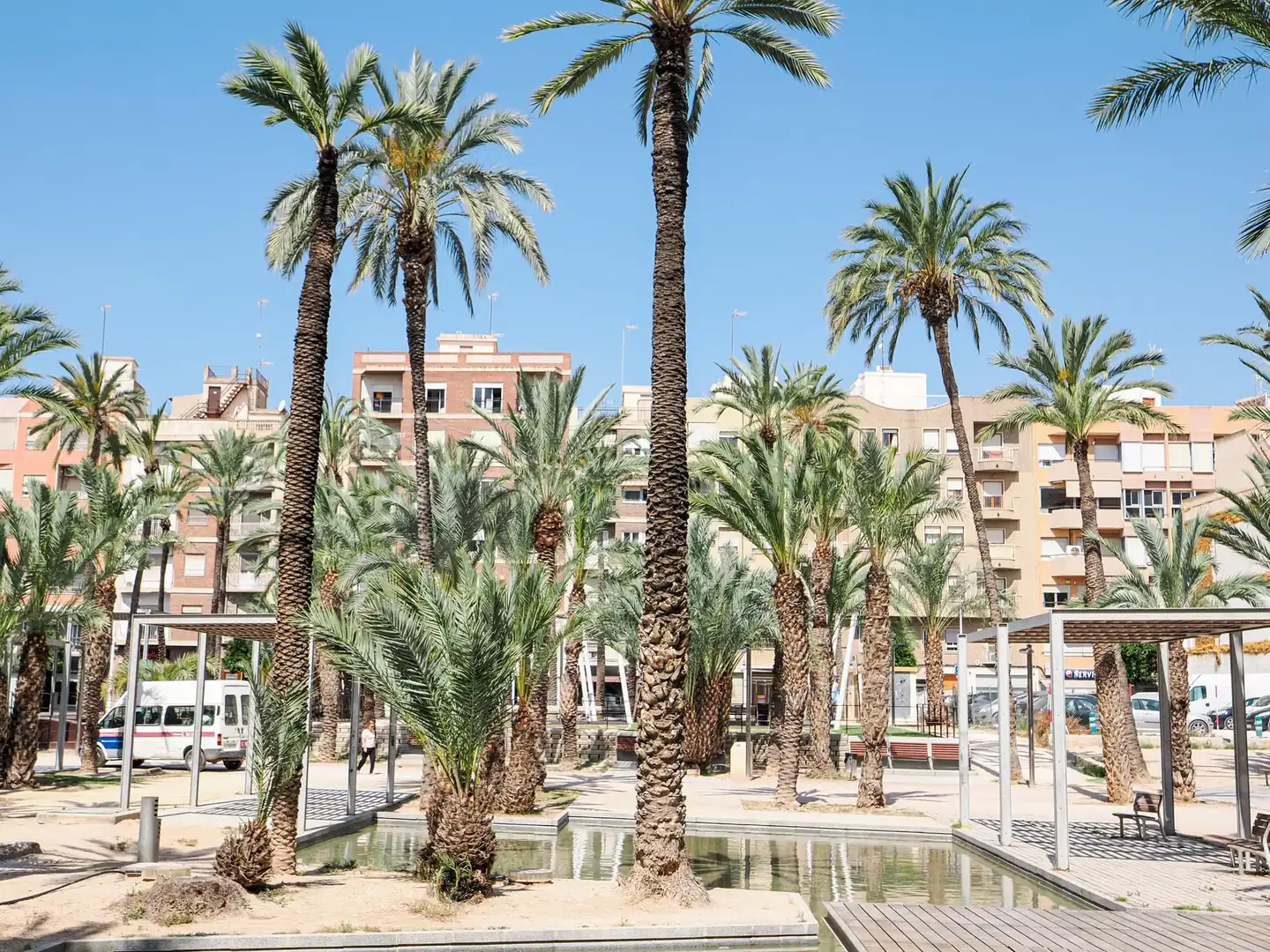
The Elche Half Marathon holds a unique place in the Spanish calendar: it is not just a fast, urban race, but an event with historical significance, local roots, and a very strong identity shaped by the Palmeral and the city center. The next edition is set for April 11, 2027, with a joint half marathon and 10K start at 9:00 a.m., next to the Elche Parque train station.
Elche once again offers a certified race designed to suit different runner profiles: those looking for a classic half marathon of 21.097 meters and those who prefer the 10K along the same major urban route. That format, easy to understand and appealing to recreational runners, has established the race as one of the most recognizable references in southeastern Spain, with a course that blends avenue, neighborhood, history, and race pace.
A race with its own identity and a long history
The Elche race did not start yesterday. Its history goes back to 1964, when Manuel Jaen, a key figure in local athletics, imagined a marathon in the City of Palms. That idea eventually evolved into a race of 21 kilometers and 97 meters, a distance that over time became a hallmark. The first edition took place on the first Sunday of April 1968 and was won by José Sempere Quesada.
That origin explains why the race retains a certain aura of tradition even in its current form, which is much more modern in terms of organization, services, and certification. It is not just any half marathon: it carries sporting memory, continuity, and a distinctive story that few popular races can present with the same clarity. In an increasingly crowded calendar, that historical weight matters, because it makes the entry fee about more than just a bib number.
The organizers have managed to preserve that legacy with a formula that combines practicality and symbolism. The result is a race that works well for runners chasing a time, but also for those who value the atmosphere, the city, and the character of an event that has adapted without losing its personality. Elche’s half marathon does not rely on folklore; it uses it as a foundation for a solid competitive experience.
Date, start, and two certified distances
The next edition will take place on April 11, 2027 and will keep the unified start at 9:00 a.m. from the area around Elche Parque train station. The event offers two official distances: 21,097 meters for the half marathon and 10,000 meters for the shorter race, both overseen by the Royal Spanish Athletics Federation.
That certified status is no minor detail. For runners, it means competing on a measured and officially recognized course, something essential when the goal is to compare times, prepare for other races, or race in a reliable setting. The accuracy of the course gives the event sporting value and places it in a different category from improvised races or events with unclear routes.
The joint start also creates a very recognizable image: two groups of athletes setting off at the same time, but with different goals, in the same human wave that spreads out according to pace. That decision helps smooth the flow and avoids some of the usual chaos of large recreational starts. Elche goes for order, and that shows from the very first meters.
A course designed for real running
The urban route passes through the city and part of the historic Palmeral, one of Elche’s great symbols and a UNESCO World Heritage site. That passage is not decorative; it defines the race. Runners move through a city that combines wide avenues with more recognizable sections, all while constantly seeing palm trees, partial shade, and an aesthetic very different from other flatter, more anonymous Mediterranean half marathons.
The half marathon features a new certified course of 21,097 meters, while the 10K shares the same route as the first ten kilometers of the longer race. That choice simplifies logistics and gives the whole event coherence. Those running the 10K are not taking part in a smaller version, but in a real segment of the same competitive course.
The urban character of the route usually translates into a profile suited to lively paces, although each edition depends on small details of the route, wind, and temperature. Elche, because of its geography and April climate, tends to offer pleasant running conditions, but the race is not just about the weather. What makes it valuable is the combination of setting, route, and continuity.
The role of the Palmeral and the city in the runner’s experience
The historic Palmeral is not just a backdrop. It acts as a kind of visual backbone for the race and reminds runners that they are competing in a city with a very distinctive heritage. Few popular races can boast of passing through an urban environment so closely tied to the identity of the place. That mix of asphalt and cultural landscape adds a narrative layer that runners perceive even without stopping.
Elche also does not present itself as a cold setting for competition. Its urban offering relies on the city center, tradition, and a topography that is friendly for distance running. The result is a race where runners can sustain effort with some continuity, without the interruptions of overly complex courses. The city supports the race more than it gets in the way, and that is always good news for anyone looking for a serious time.
There is also an emotional component. Racing in a city with three UNESCO World Heritage inscriptions in different categories, including the Palmeral, the Misteri d’Elx, and the Pusol Museum, adds an unusual cultural depth. The half marathon thus becomes a gateway to the territory, not just a finish line.
Services, logistics, and everything surrounding the bib number
The organizers take care of the whole experience beyond the stopwatch. Usual services include aid stations, baggage drop, technical T-shirt, runner’s bag, medical support, changing rooms and showers, as well as timing. These are now considered standard infrastructure for a well-run event, and Elche integrates them naturally.
Race bib pickup is planned at the Congress Center, with extended hours in the days leading up to the race and also an option on race day up to one hour before the start. That flexibility helps reduce logistical stress and keeps the race from starting before the gun goes off. In events of this size, small organizational details matter just as much as the course design.
The time limit to complete the half marathon is set at 2 hours and 30 minutes, a reasonable cutoff that fits the general profile of recreational participation. A cap of 4,000 runners has also been set, a number that helps maintain a certain quality of experience without excessive overcrowding. In urban races, the balance between atmosphere and congestion often makes the difference between a pleasant event and an uncomfortable one.
Registrations, prices, and a race that usually fills up quickly
Registration opens in May 2026 for the 2027 edition, and the reference price range for the half marathon is between 24 and 34 euros. For the 10K, other reference sources place prices from 16 euros, depending on the time of purchase. As with almost all established popular races, the cost usually varies according to the registration period and availability.
That range places the event in the middle of the Spanish market: neither cheap nor especially expensive for what it offers. The combination of history, certification, and services helps justify the price compared with less complete races. In addition, the fact that the race offers two formats on the same day broadens its appeal and makes the sporting logistics more efficient for families, clubs, and runners of different levels.
The existence of waiting lists in some editions also points to real demand. That is no small detail, because in races with local pull and historical prestige, runners are not just buying an entry; they are buying access to an experience that is not always open until the last day. In that sense, the Elche Half Marathon follows its own logic and has a very lively participation ecosystem.
Which runner is best suited to this race
The half marathon attracts very different profiles. It suits runners looking to improve their time over a classic distance, clubs traveling with large groups, and athletes who value an urban course without technical excess. It also works well for recreational runners who have already moved beyond the 10K and want to make the natural step up to 21 kilometers without leaving a familiar, manageable city environment.
The 10K, meanwhile, works as both an entry point and an independent race. It is not just a parallel event; it has its own weight, ideal for those seeking speed, control, and a shorter competitive experience. By sharing the start, atmosphere, and part of the route with the half marathon, it gains context without losing autonomy. That is one of the format’s strengths.
The dual offering also explains why the race remains appealing to runners of different profiles. A half marathon-focused athlete can share the day with a family member or teammate who prefers the 10K. That broadens participation and reinforces the sense of an event, not just an isolated competition.
Elche as a sporting and urban setting
Elche has a kind of beauty that does not need to be overemphasized. Its strength lies in the mix of Mediterranean city, heritage, historical footprint, and an urban layout that allows room to breathe. For a race, that translates into an atmosphere that supports without overwhelming, with enough width to run and enough character to keep the experience from dissolving into soulless buildings.
The city also offers a very useful narrative for the race. Runners are not just covering kilometers; they are moving through a city with a clear identity, recognizable landmarks, and a deeply rooted historical relationship with athletics. That continuity between city and race adds value to the whole event and helps explain why this half marathon still holds so much prestige on the national calendar.
The organizers themselves sum it up with a simple idea: Elche is not only the start and finish point, but an active part of the race. From the Palmeral to the city center, the course works like a series of postcards linked by running stride. The landscape does not interrupt the race; it defines it.
A reference that remains relevant on the Spanish calendar
The Elche Half Marathon has managed to stand the test of time without becoming a museum piece. It retains history, yes, but it does not live off it. It has incorporated certification, services, two distances, modern organization, and a broader understanding of the event as both an urban and sporting experience. That allows it to keep competing in a very demanding market, where runners compare routes, prices, logistics, and overall feel.
Its strength lies precisely in the combination of factors: tradition, a certified course, a recognizable city, the Palmeral, a limited field, and a spring date that is usually pleasant for running. It does not need excessive embellishment to explain its appeal. Just looking at its basic facts and history is enough to understand why it still appears among the country’s best-known half marathons.
In a time when many races look alike, Elche keeps its own voice. That is its true value: offering a half marathon that is still competitive, useful for recreational runners, and faithful to a story that began more than half a century ago and continues to create a very recognizable start on the streets of Elche.
What this half marathon reveals about popular running in Spain
The sustained success of the Elche race says a lot about the state of popular running. Runners are no longer looking for kilometers alone; they want context, identity, reliable organization, and an experience worth talking about. Elche meets that demand with a formula that combines heritage, asphalt, and the racing calendar, doing so without fanfare, almost with Mediterranean ease.
It also shows how the half marathons that stay alive are the ones that have understood that tradition is not enough unless it translates into good logistics, certified courses, and clear services. The Elche race has managed to modernize without breaking its story, and that is why it remains relevant for those who look at the calendar with competitive intent or simply with an appreciation for well-established races.
With a 9:00 a.m. start, two distances, an urban route, and a history dating back to the 1960s, the race remains one of those events that shape the spring running season in eastern Spain. Elche does not need to reinvent itself every year to remain important. It is enough for it to keep supporting what made it great in the first place: a half marathon with soul, craftsmanship, and an entire city as its race backdrop.
Where to stay in Elche
Hotels available 9–12 April 2027.
Affiliate links: if you book through this map we earn a commission, at no extra cost to you.



How to prevent thigh chafing: causes and real solutions

Women’s running windbreakers: seven jackets and how to choose

Do more workouts get rid of soreness? A guide for runners

Jaén Half Marathon 2026: Record 3,800 Runners Registered

Men’s short running tights: how to choose the right pair

World Triathlon confirms data breach involving medical data

Izan Edo targets podium at Miyazaki World Cup

María Pérez ranks ninth in World Athletics’ 2026 top ten

Dos Santos, Duplantis and Sawe: World Athlete of the Year finalists

San Silvestre Vallecana 2026: 42,000 places, prices and start times

 Races3 months ago
Valencia Half Marathon 2027: date and registration

 Reviews and Comparisons4 months ago
Asics Gel-Roadmiles 3 for men: review and current price

 Races3 months ago
Valencia Marathon 2026: entry, ballot and course

 Reviews and Comparisons4 months ago
Asics Gel Sonoma 8 Gore-Tex: complete analysis for trail and rain

 Sneakers3 months ago
Saucony Endorphin Pro 4: full review and verdict

 News5 months ago
Strava API 2026: what changes for clubs, challenges and runner apps?

 Reviews and Comparisons5 months ago
Nike Alphafly 3: opinions, sensations, and real key points

 Reviews and Comparisons4 months ago
Under Armour running shoes review 2025-2026: models and key features

 Sports Equipment4 months ago
Shoe sizes in cm: a clear guide to getting the right fit for your footwear

 Sneakers3 months ago
Skechers GO RUN Consistent 2.0 analysis: comfort and limits

 News5 months ago
Valencia Marathon 2026 route: key tips to train and run better

 Sneakers4 months ago
Adidas Adizero Boston 13 for men: review and verdict