Races
Elche de la Sierra MTB Ride 2026: route and schedule
The Elche de la Sierra race returns with a tough route, set schedules, and key details to understand it well.

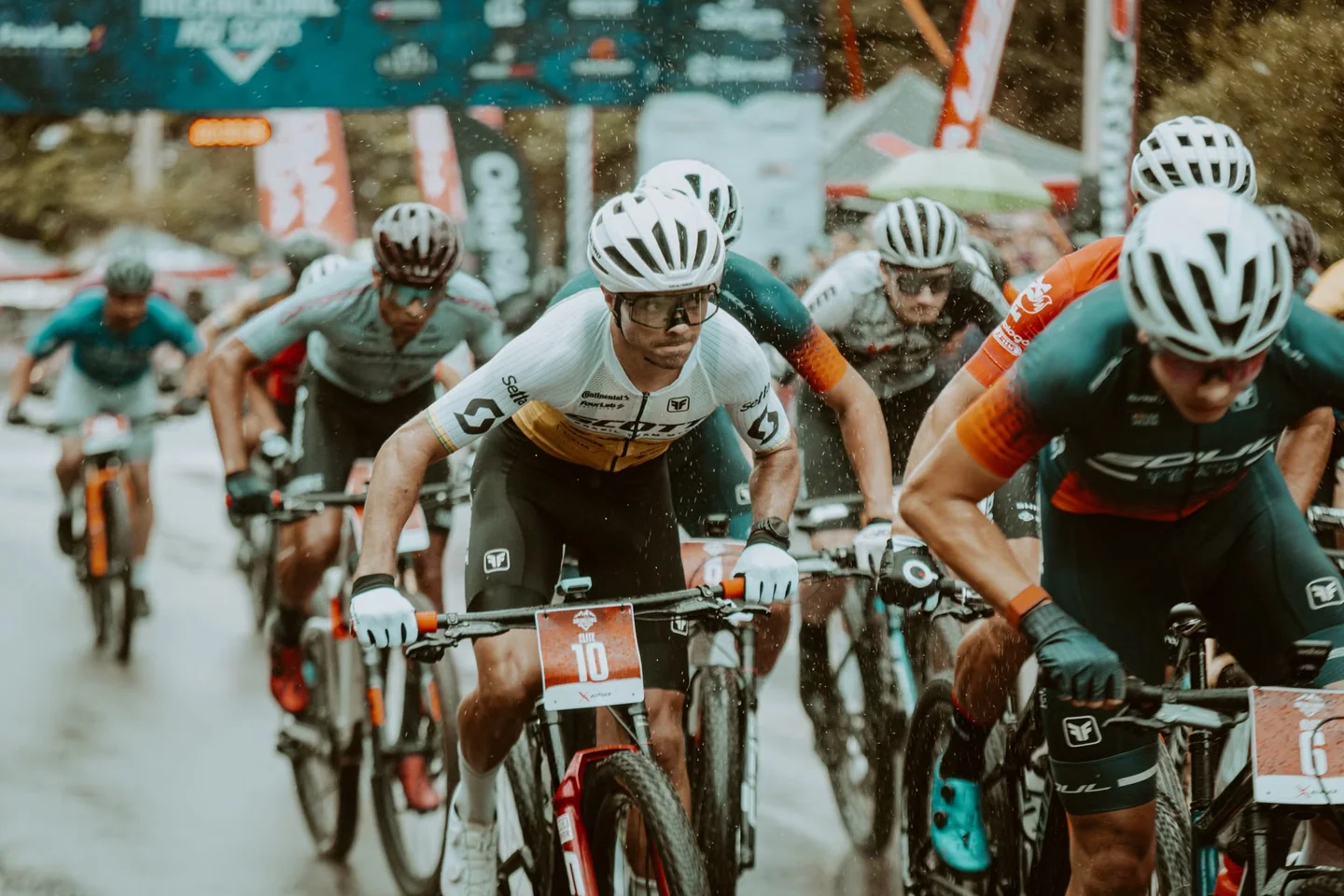
Elche de la Sierra is once again putting itself on the mountain biking map with an event that combines physical demands, changing terrain, and the appeal of an environment that is very familiar to the MTB rider. The race, part of the Albacete provincial circuit, has established itself as one of those days when the calendar does not lie: anyone looking for pace, elevation gain, and technical riding will find a real setting here, with no makeup.
The 2026 edition is scheduled for November 8, with start and finish at very specific points in the municipality and an organization that separates the main race from the shorter version, designed for those taking on a less demanding but equally competitive route. The course stands out for its mid-mountain profile, its changes of pace, and that mix of tracks, trails, and technical sections that punish the legs and reward a sharp reading of the terrain.
A race with circuit identity and its own weight
The Elche de la Sierra ride is not an isolated event, but a recognizable part of the Albacete Provincial MTB Circuit. That detail matters more than it may seem, because it shapes the atmosphere, participation, and also the level of the race. In this kind of event, the peloton is usually large, references among riders are constant, and every second counts with its own logic, almost like a small laboratory of effort on wheels.
The event’s historical and sporting relevance is also reflected in the interest it arouses both inside and outside the province. We are not talking about a simple ride through the mountains, but about a route that demands legs, control, and mature bike handling. Anyone who sets out to ride here knows there will be climbs that bite, descents where the line is worth its weight in gold, and sections where the group stretches like a rope at its limit.
The news value of the event lies precisely in that duality: on one hand, the accessibility of a popular ride with formal organization; on the other, the real toughness of a route designed for cyclists with endurance and experience. That combination explains why the event retains momentum year after year and why it continues to be searched for under very specific names related to Elche de la Sierra, MTB, and the mountains themselves.
Timetables, start, and finish: what shapes the day
The main 2026 race is set for 09:30, with the start from the football field and the finish on Paseo de la Libertad. They are simple but essential details, because in an MTB day the clock matters long before the first gear change is heard. The trophy presentation is scheduled for 13:30 and the finish line closes at 14:00, a window that helps explain the overall pace of the competition and the arrival margin handled by the organization.
Bib pickup is located at the sports hall, between 08:30 and 09:30, a tight schedule that forces riders to arrive early and without improvisation. In this kind of event, the start often has something of a practical ceremony about it: families, teams, bikes on the ground, last pressure adjustments, and that brief tension that appears when the morning is still cold and the body prepares for several hours of pedaling.
The shorter rural bike version has a start announced for 09:45 and its own effort logic, with a 20-kilometer course. The organization thus sets out two ways of experiencing the same environment: one for those seeking a long challenge, and another for riders who prefer a shorter distance without giving up demanding terrain. That coexistence broadens the event’s reach and explains why the word ride coexists with a race structure that is perfectly recognizable.
Two routes and the same landscape of toughness
The long route is around 58.7 kilometers in the official 2026 entry, while other previous circuit references have placed the main distance at around 55.5 or 56 kilometers. That small variation does not change the essence of the matter: this is a long route, with enough volume to separate the strongest from those who are simply carried along by momentum. In MTB, those kilometers weigh differently than on asphalt, because the terrain breaks the rhythm and forces energy to be spent on every turn, every ramp, and every tight trail.
The short format is designed around 20 kilometers and keeps the same competitive spirit. Even with less distance, it is not a mere formality. The entry includes a checkpoint at kilometer 11, with a cutoff time of 3 hours and 15 minutes, as well as a clear notice of an alternative route for those who do not meet that limit. That detail clearly reveals the organization’s approach: ensuring safety, order, and fluidity without turning the race into an endless bottleneck.
The presence of feed stations also helps explain the event’s character. In the long race, four support points are distributed at kilometers 9.5, 32.5, 45.5, and 50. This sequence not only relieves fatigue but also mentally organizes the race. The cyclist is not pedaling only toward the finish line; they are pedaling toward the next reference point, as if the internal road were broken into small intermediate goals.
Terrain, demands, and rider profile
The route becomes tougher as it leaves the urban center and enters the valley of the river that gives the mountains their name. That passage from town to countryside is one of the most attractive features of the race, because it turns the landscape into a kind of moving narrative. First there is openness, then the climbs appear, and little by little the mechanics of effort take over: climb, control, breathe, climb again.
This kind of route does not only punish the legs. It also punishes the mind, which in the mountains always ends up playing its own game. Long climbs, technical terrain, and sections where the wheel seems to search for its place among rocks, dust, or compact earth require constant attention. The difference between a good day and a bad one is usually found in tiny details: a late brake, a poor line, an overexertion at the wrong moment.
The event’s own presentation points to a rider profile with endurance and control, someone who is not just looking for raw speed but for the ability to manage effort. The race is compelling both for the landscape and for the endurance it demands. It is no coincidence that the circuit includes broad categories and very different participant profiles, from elite to master and under-23, because the route has room for several ways of competing, though not all with the same margin for error.
Registration, ages, and participation limits
The official 2026 registration fee is set at 12 euros for registered riders and 15 euros for those who are not previously registered, a very common range in provincial circuits of this kind. The amount, modest compared with other events of greater logistical complexity, should not be misleading: behind it there is timing, checkpoints, feed stations, signage, and an organizational setup that supports the day from the early morning.
The participant limit is set at 500, a cap that says a lot about the balance the race seeks between overcrowding and control. In a mountain race, too many riders can affect safety and worsen the experience; for that reason, the quota has a practical function, not just an administrative one. Keeping the group to a reasonable size improves the start, reduces bottlenecks, and allows for a clearer reading of the route.
The minimum age changes depending on the category: 18 years for the long race and 16 for the rural bike version. This difference responds to the nature of each route and how effort is distributed. There is also a zero price for the kids’ area, a small detail in appearance but useful for showing the family and social structure that accompanies many sporting days in medium and small municipalities.
Checkpoints, trophies, and the value of logistics
The checkpoints are not administrative decoration. In the long race they appear at kilometer 42.5 and at 50.1, and they perform a decisive function in organizing the competition. They monitor passage, track times, and help prevent the race from falling apart into a chaotic succession of paces. On a route like this, each checkpoint acts as a hinge between ambition and the reality of the terrain.
The trophy presentation at 13:30 and the finish line closing at 14:00 complete a tightly choreographed sequence, typical of events that aim to combine dynamism with precision. There is no room to prolong the end endlessly. Riders arrive, results are recorded, prizes are awarded, and the day closes with the ease of knowing that logistics are also part of the sport. In events like this, the schedule is almost as important as the competition time.
Bib pickup at the sports hall and the start from the football field build the basic geography of the race that riders quickly recognize. They are functional spaces, without pretension, but highly effective for a race that needs to move hundreds of people quickly. The finish on Paseo de la Libertad provides the urban touch and leaves the final image of bikes entering a familiar axis in the municipality.
Why this event matters so much to MTB followers
The appeal of the Elche de la Sierra ride lies in the mix of local identity and sporting toughness. It needs no embellishment. The place name, the mountains, the valley, and the route do the contextual work on their own. For mountain biking fans, that setting has obvious value: it offers a race where the landscape does not soften the challenge, but frames it with a rugged, almost mineral beauty.
In addition, the event allows riders to gauge form within the provincial circuit. In these races, results matter, but so do sensations, the ability to sustain effort, and the adaptation to a route that does not forgive distractions. There is something of an endurance chronicle in each edition, as if the municipality were transformed for a few hours into a small capital of endurance and technique.
The presence of classifications, podiums, and varied categories reinforces that competitive dimension without breaking the event’s popular character. The strongest MTB races usually live precisely in that balance: enough appeal and level to attract ambitious riders, enough closeness for the municipality to recognize the race as its own. Elche de la Sierra fits that formula well.
What a race like this leaves in a rider’s calendar
In the autumn calendar, a ride of this profile works as an honest test. It is not raced on a straight line or on a forgiving surface; it is raced through changes in gradient, technical control sections, and efforts that force every meter to be negotiated. Those who arrive with rhythm can benefit. Those who arrive without endurance end up paying the price in a race that gives nothing away, but does not hide its rules either.
There is also a broader, almost territorial reading. Events like this help establish the sporting value of inland regions, where mountain biking finds a very powerful natural setting and a notable social response. The combination of sport, landscape, and organization means the event goes beyond its own day and becomes part of the local story. It is not just a race; it is a way of measuring the territory again on two wheels.
The Elche de la Sierra MTB ride neatly sums up the logic of these events: clear data, a serious route, limited participation, time control, and a presentation that does not seek to decorate itself, but to function. In the end, that is a large part of its strength. When the bike enters the mountains, the terrain is what matters; when the rider reaches the finish, what remains is the imprint of a demanding, clean, and perfectly recognizable day for anyone who closely follows mountain biking in Spain.
You may also like: Salinas Bike 2025: route, schedule and regulations.



How to prevent thigh chafing: causes and real solutions

Women’s running windbreakers: seven jackets and how to choose

Do more workouts get rid of soreness? A guide for runners

Jaén Half Marathon 2026: Record 3,800 Runners Registered

Men’s short running tights: how to choose the right pair

World Triathlon confirms data breach involving medical data

Izan Edo targets podium at Miyazaki World Cup

María Pérez ranks ninth in World Athletics’ 2026 top ten

Dos Santos, Duplantis and Sawe: World Athlete of the Year finalists

San Silvestre Vallecana 2026: 42,000 places, prices and start times

 Races3 months ago
Valencia Half Marathon 2027: date and registration

 Races3 months ago
Valencia Marathon 2026: entry, ballot and course

 Reviews and Comparisons4 months ago
Asics Gel-Roadmiles 3 for men: review and current price

 Reviews and Comparisons4 months ago
Asics Gel Sonoma 8 Gore-Tex: complete analysis for trail and rain

 Sneakers3 months ago
Saucony Endorphin Pro 4: full review and verdict

 News5 months ago
Strava API 2026: what changes for clubs, challenges and runner apps?

 Reviews and Comparisons5 months ago
Nike Alphafly 3: opinions, sensations, and real key points

 Reviews and Comparisons4 months ago
Under Armour running shoes review 2025-2026: models and key features

 Sports Equipment4 months ago
Shoe sizes in cm: a clear guide to getting the right fit for your footwear

 Sneakers3 months ago
Skechers GO RUN Consistent 2.0 analysis: comfort and limits

 News5 months ago
Valencia Marathon 2026 route: key tips to train and run better

 Sneakers4 months ago
Adidas Adizero Boston 13 for men: review and verdict