Races
Brujas Bike long course 2026: date and route
Jabaloyas hosts 70 km of MTB with a 9:00 a.m. start and a demanding mountain route in June.

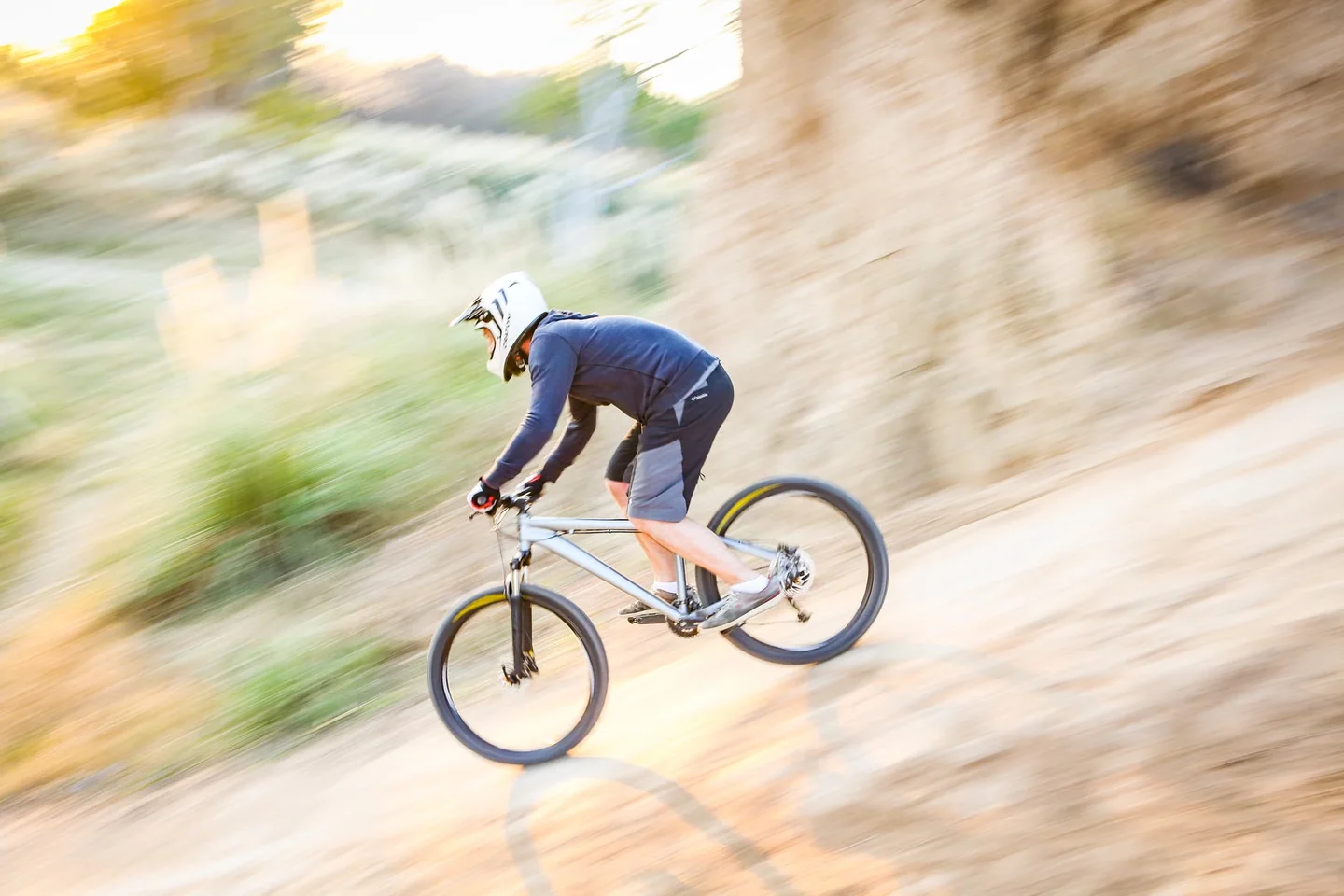
The X Brujas Bike in its long distance already has a date marked on the calendar: it will be held on June 20, 2026 in Jabaloyas, Teruel, with a start at 09:00 and a 70-kilometer route designed for cyclists with endurance, technique, and mountain experience. The event is associated with MTB cycling and keeps registrations open in the information consulted, with a price of 40 euros for the long distance category.
This is not a routine ride. The very structure of the event makes it clear that the terrain will be mountainous, with the rugged and beautiful landscape of the Sierra de Javalambre and the surroundings of the Sierra de Albarracín as the setting. In this kind of route, the clock matters, but above all, effort management takes priority: smooth pedaling, a cool head on the climbs, and caution on the rough sections where a bad line is paid for immediately.
Jabaloyas, a setting that shapes the race
Jabaloyas is not a neutral backdrop; it is part of the challenge. The municipality in Teruel, nestled in a mountainous environment, provides the kind of terrain that turns an MTB event into something closer to a crossing than a conventional competition. Forest tracks, trails, and loose-stone areas usually force riders to alternate pace and control, a combination that punishes both the legs and concentration.
The area invites you to read the race calmly before riding it. In June, the dry heat of Teruel can intensify as the morning goes on, although the early hours still retain some freshness. That contrast is important: starting at 09:00 means beginning with some thermal advantage, but it does not remove the need to hydrate well or regulate effort from the outset. In the mountains, the usual mistake is not going too slowly; it is almost always burning too many matches too early.
Anyone who knows the province knows its landscape has something austere and forceful about it. There is no asphalt to soften the experience, nor a succession of easy straight sections to gift you a rhythm. The Brujas Bike long distance relies precisely on that: on a route that demands reading the terrain, accepting the elevation gain, and living with the feeling of pedaling over land that does not forgive distractions.
The 70 kilometers of the long distance category
The long distance adds up to 70 kilometers, a figure that already places the event in a demanding range within medium- and long-distance MTB. The reference information does not include the official elevation gain, but the geographical context itself suggests a mountain route, with chained short climbs, technical descents, and sections where speed depends as much on technique as on strength.
In a race like this, aerobic endurance alone is not enough. Cadence also matters, as does the ability to recover on descents and the muscular resistance to keep pushing when the legs begin to stiffen. The distance may seem manageable on paper, but in a mountain event the map can be misleading: 70 kilometers on tracks and trails, with elevation changes and varying surfaces, usually feel very different from 70 flat kilometers.
The long distance category is announced alongside two other distances, 51 and 32 kilometers, which confirms that the organization is working with a variety of participation profiles. Even so, the 70-kilometer version is the one that concentrates the greatest physical and technical commitment. It is the option for those looking for a full MTB day, the kind where the bike stops being a sporting means of transport and becomes a tool for elegant survival.
The route and the type of terrain that usually appears
The available information does not publish the final track in the reference listing, but it does provide enough clues to understand the type of race. It is described as an MTB event in the mountains and, in addition, the organization’s blog has shared tracks for the different distances. In the long route, the logic of the territory prevails: wide tracks for rolling, trails for precision, stones to make things uncomfortable, and descents where every corner can separate a clean run from an unnecessary scare.
This cocktail forces riders to think of the race as a continuous exercise in adaptation. The track sections invite a sustained pace, almost like a metronome. By contrast, trails and uneven areas demand agility, a far-ahead gaze, and a stable position on the bike. Riding well in the mountains is not just about going fast; it is about knowing when to spend energy and when to save it, even if the group pulls away a few meters on a long climb.
The Sierra de Javalambre and the Jabaloyas surroundings are known for offering dry terrain, with stretches of gravel, hard ground, and surfaces that punish cornering grip when dust rises. If the weather cooperates, the feeling will be that of a fast race in some sections and a tricky one in others. If humidity or an afternoon storm appears, the terrain changes and the technical challenge grows. In both cases, the long route calls for riding with judgment and descending with respect.
Registration, price, and event calendar
Registration appears open in the references consulted, although the RockTheSport listing itself already shows that the deadline closed on June 17, 2026. In the available information, the long distance category is listed at a cost of 40 euros, the same price as the other published distances. It is a useful detail because it allows comparison with other MTB events in the area, where costs can vary greatly depending on services, logistics, and date.
The race takes place on Saturday, June 20, 2026, an important detail for those arranging travel and accommodation. The 09:00 start leaves a reasonable margin to get into race mode without an extreme early wake-up, although in mountain events it is always wise to arrive early: check the bike, take in the atmosphere, mentally set your aid stations, and make sure nothing has been left loose in the car or backpack.
The organizer is listed as Brujas Bike, and registration management is handled through sports event platforms. The consulted material also mentions that the organization reserves the right to modify the route. In the mountains, that clause is not an empty formality; it is a logical safeguard against works, weather, permits, or terrain conditions that can alter a course almost up to the last moment.
E-Bikes, classification, and event particularities
E-Bikes can participate in all three distances, according to the information gathered from the official reference. That point adds an interesting layer to the event, because it opens the door to very different rider profiles, from those seeking a classic endurance challenge to those who prefer to take on the mountains with electric assistance. The coexistence of both realities is already part of the competitive landscape of modern MTB.
Even so, it is worth not oversimplifying things. Assistance does not erase effort or turn 70 kilometers of mountain terrain into a leisurely ride. Managing battery, pace, and traction has its own complexity, and in a mountain route the range becomes a strategic variable. The long distance remains a demanding event, and the existence of an electric option does not reduce the intrinsic toughness of the terrain or the need to take care of the equipment.
The reference also specifies that there is only a separate classification with trophies in the 51-kilometer route. That detail is useful because it helps explain how the event organizes its different categories. In the long distance, therefore, the focus is less on the podium anecdote and more on the sporting challenge of completing a broad, tough, and changing route, where simply finishing well already carries merit.
Equipment and technical preparation to suffer less
A well-tuned mountain bike can make a bigger difference than an extra week of fitness. In an event like this, the condition of the brakes, drivetrain, and tires matters almost as much as the legs. The rocky terrain and the possibility of fast sections on track make a balanced setup advisable, with tires that provide lateral grip and carefully adjusted pressure so traction is not lost on rough stretches.
Tubeless setup makes particular sense on routes with loose stones and possible cuts. Likewise, a drivetrain in good condition, with enough gearing to tackle long climbs without bogging down when fatigue hits. The mountains do not reward mechanical improvisation: a dry chain, an out-of-adjustment derailleur, or worn-out brake pads can turn a reasonable race into a series of unnecessary stops.
In terms of gear, the helmet, gloves, and glasses are not accessory items, but part of basic safety. Dust, gravel, and low vegetation make eye protection and hand grip especially important. Bringing a light layer for the start is also worthwhile, because in Jabaloyas the temperature contrast between early morning and mid-morning can be noticeable even at the end of June.
Hydration, food, and effort management in the mountains
Hydration deserves special attention in this event because of the combination of distance, relative altitude, and dry climate. In June, the mountains can be deceptive: the clear sky gives a pleasant feeling while the body loses water without dramatic signs. In that context, waiting until you feel thirsty is usually too late. Carrying two bottles or an equivalent solution makes much more sense than relying on instinct alone.
Nutrition during the race should also be planned with the logic of long efforts. Bars, gels, or small solid snacks can sustain pace better than an improvised strategy. In long-distance MTB events, the problem is rarely a lack of desire to eat; it is usually the difficulty of doing so properly when the heart rate is high, breathing dominates, and every bite feels like a small administrative task.
Pacing from the start is probably the best possible investment. Starting too hard in a 70-kilometer mountain race usually comes with a bill in the final third, when the body no longer negotiates and the mind starts doing the math. The Brujas Bike long distance favors those who understand patience as a competitive skill: it is not about going slowly, but about arriving intact at the end.
What the surroundings bring to a race like this
Jabaloyas and its region bring authenticity, an overused word in sports but one that remains fully valid when the setting has real weight. There is no artificial circuit here, nor an urban grid that softens the experience. There are mountains, rocks, pines, tracks, and silence. And that silence, when you are out riding through such an open area, has an almost physical presence, as if it accompanied every change of pace.
Teruel often has that understated quality that rewards the patient visitor. For the cyclist, the reward lies in the variety of the terrain and the sense of sporting isolation: a race where the landscape is not just background, but an essential part of the effort. In a long event, that environment helps explain why so many MTB races find in the mountains not a difficulty, but a reason to exist.
The 70-kilometer distance, in that sense, works like a long conversation with the territory. There are moments of pushing, moments of doubt, some descents where the air comes in cleanly, and sections where the sound of the wheels on the ground becomes almost hypnotic. That mix of toughness and beauty explains why this kind of event continues to attract cyclists looking for more than just a bib number and a finish time.
The Brujas Bike long distance as a snapshot of modern MTB
The X Brujas Bike long distance sums up modern MTB quite well: real mountains, different distances, E-Bike presence, fixed price, clear start time, and a setting that requires respect for the terrain. It is an event that speaks the classic language of MTB, but does so in a contemporary context, where managing information, tracks, and registrations coexists with the very physical experience of riding through the mountains.
It also reveals something important: in mountain biking, toughness is not always measured by an elevation gain number published in large print. Sometimes the challenge lies in the succession of small decisions, in the quality of the surface, in accumulated fatigue, and in the ability to maintain technique when nothing is left to spare. The Jabaloyas long route belongs to that family of events where the body rides, but the mind does too.
That is why, more than just a date on the calendar, the June 20, 2026 event is presented as a full mountain day, with the kind of landscape and challenge that turn a race into a local benchmark for MTB. Jabaloyas provides the terrain; Brujas Bike, the challenge. And between the two, a 70-kilometer long route that leaves no shortcuts.
What an event like this leaves on the cycling calendar
The X Brujas Bike long distance needs no embellishment to explain its appeal. It has a date, a distance, mountains, and the element of uncertainty typical of any well-designed event in a real environment. That is enough to make it an interesting date within the MTB scene in Aragon and, especially, in the province of Teruel, where mountain races continue to maintain a very distinct identity.
In an increasingly crowded season of events, this proposal stands out for its combination of route, location, and format. The registration fee, start time, and the possibility of participating with an E-Bike complete a clear, useful, and easily understandable entry for anyone following the cycling calendar. What matters most, however, remains where it should: in a mountain route that demands respect and gives a great deal in return.
Jabaloyas will once again be the point where effort and landscape meet. In the long distance, every kilometer will carry its own weight. And that, in MTB, is almost always the best guarantee that the race will leave a mark.
You may also like: X Brujas Bike short course in Jabaloyas: route, schedules, and prices.



How to prevent thigh chafing: causes and real solutions

Women’s running windbreakers: seven jackets and how to choose

Do more workouts get rid of soreness? A guide for runners

Jaén Half Marathon 2026: Record 3,800 Runners Registered

Men’s short running tights: how to choose the right pair

World Triathlon confirms data breach involving medical data

Izan Edo targets podium at Miyazaki World Cup

María Pérez ranks ninth in World Athletics’ 2026 top ten

Dos Santos, Duplantis and Sawe: World Athlete of the Year finalists

San Silvestre Vallecana 2026: 42,000 places, prices and start times

 Races3 months ago
Valencia Half Marathon 2027: date and registration

 Races3 months ago
Valencia Marathon 2026: entry, ballot and course

 Reviews and Comparisons4 months ago
Asics Gel-Roadmiles 3 for men: review and current price

 Reviews and Comparisons4 months ago
Asics Gel Sonoma 8 Gore-Tex: complete analysis for trail and rain

 Sneakers3 months ago
Saucony Endorphin Pro 4: full review and verdict

 News5 months ago
Strava API 2026: what changes for clubs, challenges and runner apps?

 Reviews and Comparisons5 months ago
Nike Alphafly 3: opinions, sensations, and real key points

 Reviews and Comparisons4 months ago
Under Armour running shoes review 2025-2026: models and key features

 Sports Equipment4 months ago
Shoe sizes in cm: a clear guide to getting the right fit for your footwear

 Sneakers3 months ago
Skechers GO RUN Consistent 2.0 analysis: comfort and limits

 News5 months ago
Valencia Marathon 2026 route: key tips to train and run better

 Sneakers4 months ago
Adidas Adizero Boston 13 for men: review and verdict