Races
Fenix Trail Gran Canaria 2027: route, distances and registration
The La Culata race returns in February with two mountain routes, a high elevation gain, and volcanic scenery.

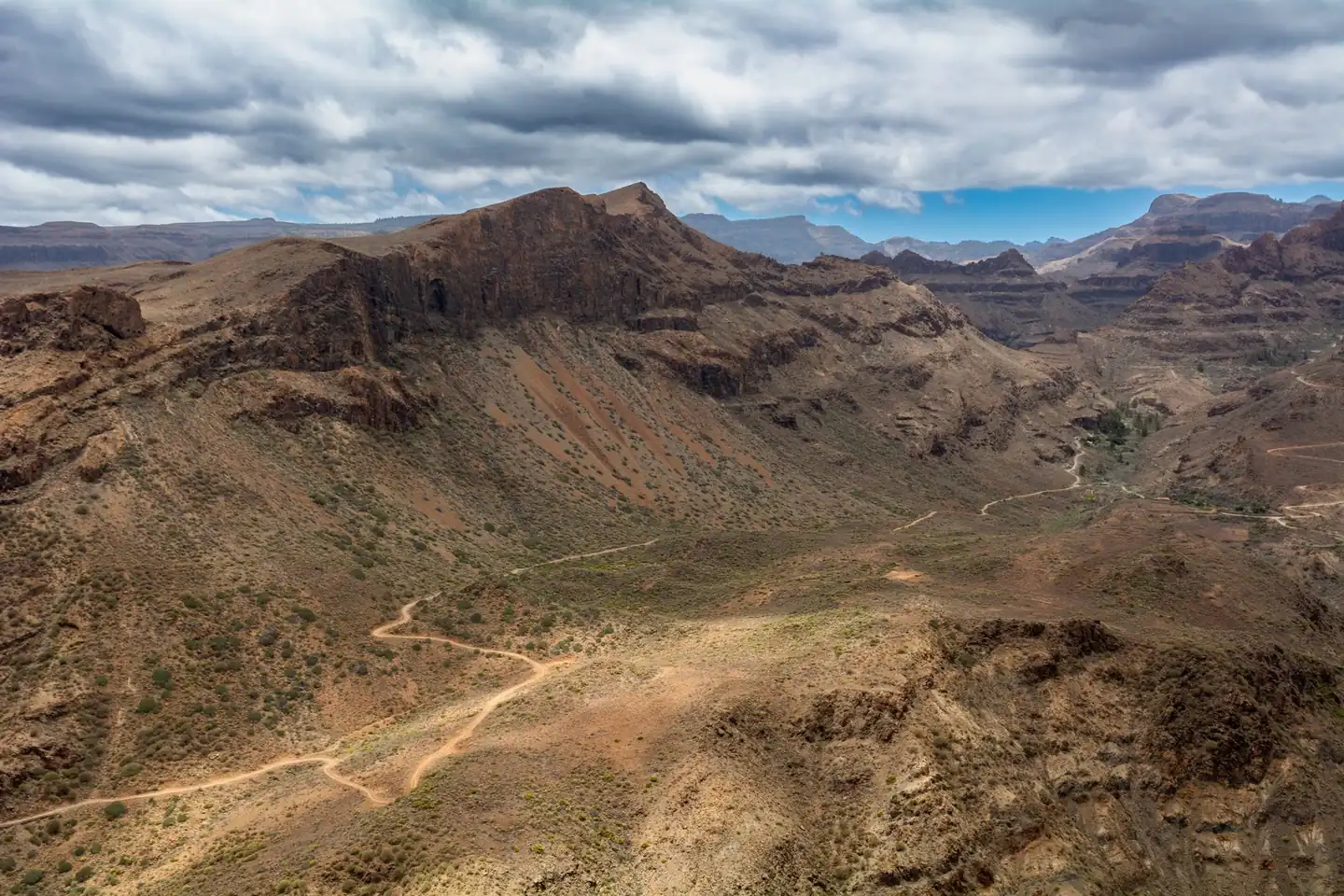
The Fenix Trail Gran Canaria once again puts La Culata on the map of Spanish trail running with a proposal that is short in kilometers, but intense in elevation gain, technicality, and scenery. The edition scheduled for early February 2027 keeps the same structure that has cemented its identity: two routes, one short and one long, both laid out over mountain terrain and with start and finish at the El Garañón camp.
In an increasingly crowded calendar of races, this event stands out for a very precise combination: volcanic surroundings, contained toughness over distance, and a very clear reading of effort. It is not a race to measure only average pace; it is a race to read the mountain, pace yourself, and understand that in Gran Canaria elevation gain weighs as much as the official meters.
A trail marked by the relief of Gran Canaria
The Fenix Trail Gran Canaria does not sell a friendly, flat postcard. Its appeal comes from the opposite: mountain paths, sustained climbs, technical descents, and a geography that changes face in just a few kilometers. The location itself, in La Culata, already points to terrain that demands constant attention and turns each section into a small negotiation with the slope.
The setting is not just a backdrop. Passing through emblematic areas of the island’s interior, with references such as Roque Nublo and the El Garañón area, gives the race a very recognizable identity within Canarian trail running. The rock, the altitude, and the wind can change the day’s script quickly. That is precisely one of the reasons the race has gained interest among those looking for demanding routes without needing to tackle an ultradistance.
Gran Canaria has something that few trail venues offer so clearly: the feeling of an island within another island. On the same route, dry slopes, summit forests, and open stretches with wide views appear. The variety of the landscape does not soften the race; it makes it more complete. Each section seems written with a different texture, as if the runner moved from one rough page to a lighter one without ever losing the sense of height.
Two distances, two ways of reading the mountain
The 2027 edition is built around two official distances: 12.3 kilometers and 24.9 kilometers. The short one packs 919 meters of positive elevation gain, while the long one climbs to 1,570 meters of positive elevation gain. These are figures that immediately help you understand the type of race: here, elevation gain does not accompany the course, it dominates it.
The short format, despite its name, is anything but comfortable. In trail running, 12 kilometers can turn into a full endurance day if the climb keeps coming without relief. It is a distance that attracts both runners who want an intense effort without stretching exposure too much and those who prefer a more manageable technical challenge in terms of time, but not in terms of demand. The elevation gain per kilometer defines the true character of the route.
The long distance, on the other hand, moves into the territory of races that punish miscalculation. With 24.9 kilometers and that accumulated elevation gain, effort management becomes decisive from the very first climb. It is not enough to run well on the flat; you have to know how to hike fast, save energy on the climbs, and protect your legs for the descents. In this kind of profile, performance is measured not only in speed, but in movement economy.
The comparison between both options is useful because it reveals two ways of facing the same mountain. The short one is more explosive, more concentrated, with almost no room for distraction. The long one gives more space to strategy, but it also multiplies the wear and tear. Both share one common trait: the terrain rules above any overly rigid prior plan.
Start and finish at El Garañón, the heart of the route
Having the start and finish at El Garañón is no small detail. That point works as the logistical and emotional center of the race, and it also makes it possible to build a circular route with a very clear narrative: start, climb, link trails, return. That kind of format is usually popular in trail running because it avoids the feeling of a linear course and makes for a fuller reading of the surroundings.
Circular routes have an added advantage: they allow the runner to somehow recognize the return. It does not mean the final stretch is easy, but it does mean the race is organized around a common point that gives coherence to the effort. The idea of returning to the same place where everything began adds an almost symbolic dimension, very much in tune with the race’s name, evocative of rebirth and resilience.
In addition, El Garañón places the race in a mountain area closely associated with Canarian trail running. From there, the runner enters fully into an environment that blends high altitude, rock, and trail. It is a setting that does not allow for long distractions, because the mountain naturally changes the rhythm: a steep ramp breaks the inertia, a descent forces precision, a change in terrain demands that every foot placement be chosen carefully.
A race with its own identity within Canarian trail running
The Fenix Trail Gran Canaria was born as part of a broader sports weekend, also linked to mountain biking. That initial connection helps explain its spirit: it is a race designed to live with effort, not to disguise it. Since its first edition, the event has been building a reputation as a compact, visual race very closely tied to the territory.
The known historical information shows a modest but solid participation base in its early editions, something common in mountain races that prefer to consolidate identity rather than grow in a disorderly way. That kind of evolution is often more valuable than the noise of the numbers: a trail race earns its place when the runner remembers the route, the toughness, and the location. And here the landscape leaves a mark.
It also helps that it is part of an island calendar that has managed to turn trail running into a way of reading the territory. In Gran Canaria, the mountain is not a geographical exception, but part of the island’s sporting character. The Fenix Trail fits into that map as a race that does not just add kilometers, but proposes an experience clearly anchored in the local orography.
Registration, price, and expected status
In information from previous editions, differentiated fees were used depending on the category and combinations with the cycling part of the event. For the trail portion, the prices observed were 25 euros for the short distance and 30 euros for the long one. There were also combined options with cycling, at higher amounts. These amounts serve as a historical reference, not as a guarantee for the 2027 edition, because any fee update depends on the organization and on when registration opens.
The race status is presented as open in the announced 2027 edition, although that condition may change as the date approaches or places fill up. In mountain races like this one, registration depends not only on sporting interest, but also on the venue’s logistics, the capacity of the routes, and safety needs. That is why the registration window usually has a real impact on final participation.
In this kind of race, it is worth paying more attention to the official information for each year than to the reference figures from previous seasons. Trail running changes quickly: the price may vary, the format may vary, even small details of the route or the services included. What remains constant, however, is the race profile: mountain, elevation gain, and an environment that forces you to arrive with both your legs and your head in the same state of alertness.
What kind of runner fits best here
The Fenix Trail Gran Canaria favors those who enjoy changing terrain and do not need a predictable route to feel comfortable. Runners used to elevation gain, quick transitions between climbing and descending, and prolonged effort in the mountains will find a very natural setting here. It is also a good reference for anyone wanting to move up from shorter distances to a more technical trail without yet entering long-format races.
The short distance is especially appealing for profiles looking for intensity. In races like this, the runner can maintain a high level of concentration for longer, with less room to drift. The long one, by contrast, requires a calmer distribution of effort. It is not wise to start at the pace of a road race or to assume the body will respond the same in the second half. The mountain charges for every excess, with interest.
There is also a very useful component for anyone wanting to test themselves in an environment different from the mainland. Running in Gran Canaria means adapting expectations to the climate, the relief, and the toughness of the terrain. That turns the race into a formative experience, even for runners with experience. It is not just about competing: it is about checking how well the body knows how to move through a volcanic landscape that changes in surface, grip, and incline almost without warning.
The sporting value of the volcanic setting
Gran Canaria offers a very recognizable kind of trail because the island combines altitude, abrupt relief, and geology visible to the naked eye. The rock, loose sand, dry hills, and summit trails create a setting that feels physical, almost tactile. It is not a neutral mountain; it is a mountain with texture, and that changes the perception of effort.
The runner does not just see the landscape, they also step on it. That difference matters. On a route like the Fenix Trail, the terrain can shift from a compact trail to a looser area, from a gentle slope to a short but persistent wall. The body has to read small signals: where to place the foot, when to push, when to ease off. The race is decided as much in the legs as in attention.
That is why this race has a special interest within the island calendar. It brings together in a single day many of the virtues of Canarian trail running: open scenery, serious elevation gain, technical sections, and a mountain atmosphere that needs no artifice. Anyone arriving looking for a clean experience, without embellishment, will find here a proposal very much in line with the identity of the sport on the islands.
What a race like this leaves in the race calendar
The Fenix Trail Gran Canaria occupies a particular place among early-season races. Its celebration in early February makes it a race that appears early in the year, when many runners are still fine-tuning sensations after the holiday break or adjusting winter training load. That gives it strategic value without needing to present it as a decisive event: above all, it is a very honest test.
In races of this profile, the sporting story matters almost as much as the clock. The runner usually remembers the climb, the scenery, the toughness of the descents, or the feeling of arriving back at El Garañón with a body much more worked than expected. These are races you do not forget because they leave precise marks. A climb, a bend, an open view over the summit… and suddenly the bib number stops being a number and becomes memory.
Gran Canaria has shown that it can offer quality trail running with a very marked personality, and the Fenix Trail fits into that line with a compact, visual, and demanding proposal. Its appeal does not depend on the grandeur of the distance, but on the intensity of each kilometer. And that is where much of its journalistic and sporting interest lies: in a territory small in meters, but huge in sensations.
A race that sums up Canarian mountain running well
The Fenix Trail Gran Canaria does not need to present itself as the longest or the most media-friendly race to justify its place. Its strength lies in the clarity of the concept: two distances, plenty of elevation gain, shared start and finish, and a geography that turns each section into a different scene. It is a race where the landscape does not accompany the effort: it multiplies it.
That balance between toughness and beauty explains why the event keeps its appeal year after year. Those who run it are not only looking to set a time; they are looking to measure themselves against a specific mountain, a specific island, a terrain that forces you to run intelligently. In an increasingly broad calendar, that kind of race retains a special value because it reminds us that trail running is still, above all, a conversation between the body and the relief.
The edition planned for 2027 keeps that promise intact. The Fenix Trail Gran Canaria will very likely continue to be a reference event for those who see trail running as a way of reading the territory. Between La Culata, El Garañón, and the slopes of Gran Canaria, every stride has something of a journey and something of a test, a mix that explains better than any slogan why this race continues to draw attention.
You may also like: Trail Ruta de los Molinos 2026: route, times and key details.



How to prevent thigh chafing: causes and real solutions

Women’s running windbreakers: seven jackets and how to choose

Do more workouts get rid of soreness? A guide for runners

Jaén Half Marathon 2026: Record 3,800 Runners Registered

Men’s short running tights: how to choose the right pair

World Triathlon confirms data breach involving medical data

Izan Edo targets podium at Miyazaki World Cup

María Pérez ranks ninth in World Athletics’ 2026 top ten

Dos Santos, Duplantis and Sawe: World Athlete of the Year finalists

San Silvestre Vallecana 2026: 42,000 places, prices and start times

 Races3 months ago
Valencia Half Marathon 2027: date and registration

 Races3 months ago
Valencia Marathon 2026: entry, ballot and course

 Reviews and Comparisons4 months ago
Asics Gel-Roadmiles 3 for men: review and current price

 Reviews and Comparisons4 months ago
Asics Gel Sonoma 8 Gore-Tex: complete analysis for trail and rain

 Sneakers3 months ago
Saucony Endorphin Pro 4: full review and verdict

 News5 months ago
Strava API 2026: what changes for clubs, challenges and runner apps?

 Reviews and Comparisons5 months ago
Nike Alphafly 3: opinions, sensations, and real key points

 Reviews and Comparisons4 months ago
Under Armour running shoes review 2025-2026: models and key features

 Sports Equipment4 months ago
Shoe sizes in cm: a clear guide to getting the right fit for your footwear

 Sneakers3 months ago
Skechers GO RUN Consistent 2.0 analysis: comfort and limits

 News5 months ago
Valencia Marathon 2026 route: key tips to train and run better

 Sneakers4 months ago
Adidas Adizero Boston 13 for men: review and verdict