Races
Trail Ruta de los Molinos 2026: route, times and key details
Three distances, Gran Canaria landscapes and a tenth edition defined by elevation gain.

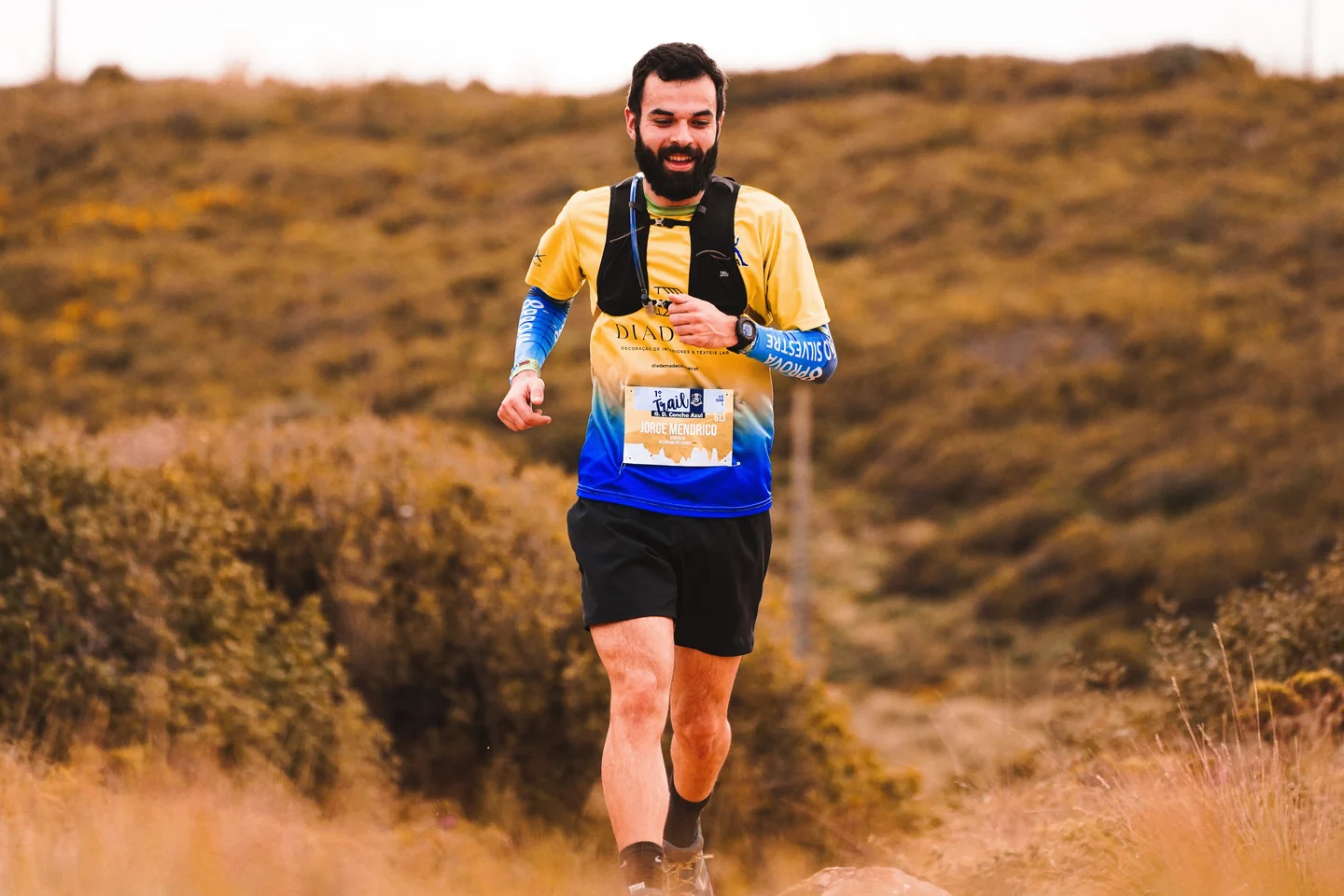
The Ruta de los Molinos 2026 will hold its tenth edition on Saturday, October 10, in Vega de San Mateo, Gran Canaria. The mountain race keeps its 26- and 12-kilometer courses and includes a short 7-kilometer option, with staggered starts from 8 a.m. The program combines rural tracks, mountain trails and areas of major natural value in one of the island’s highest municipalities.
The event is organized by Arista Eventos and the Vega de San Mateo Town Council, with the support of the Government of the Canary Islands’ Vice-Ministry for Physical Activity and Sports. Registration for this tenth edition opened June 25 through the Arista Eventos website, while the regulations set out the participation conditions, mandatory equipment and safety rules. Information about the event can also be found in the popular races calendar and the race map.
A tenth edition established in Gran Canaria’s mountains
The race reaches 2026 as a regular fixture on Gran Canaria’s trail calendar. Its setting is Vega de San Mateo, a mid-altitude area where the landscape changes quickly: crops, ravines, local tracks and forest areas require runners to shift pace and read the terrain carefully. This is not an urban race moved into the hills, but a competition built around the area’s topography and rural heritage.
The 2025 edition featured three distances of 25, 13 and 7 kilometers. For 2026, the organization presents 26-, 12- and 7-kilometer courses, with 1,455, 685 and 380 meters of positive elevation gain, respectively. This combination brings together different types of runners in one event: experienced long-distance competitors, participants looking for an intermediate course and people approaching trail running for the first time.
The race name refers to the old mills and to the historic relationship between water, agriculture and local settlements. During the race, that heritage is integrated into a course crossing natural areas and traditional paths. Its appeal is not limited to competition: it also lies in running through a landscape where farming and mountain life still share the same space.
Courses, distances and elevation gain
The long course covers 26 kilometers and 1,455 meters of positive elevation gain. It is the most demanding option in the program and contains the greatest climbing load, making careful effort management essential from the opening kilometers. In a mountain race, distance alone does not explain difficulty: gradients, surface and the succession of climbs and descents can turn an apparently short course into an intense day.
The middle distance reaches 12 kilometers and accumulates 685 meters of positive elevation gain. Its length may seem accessible to runners used to road racing, but the elevation changes the entire course profile. Sustained climbs and technical descents may require walking in some sections, especially when the ground is wet or weather conditions increase fatigue. The organization also includes this distance for the youth category aged 17 and 18.
The 7-kilometer short race includes 380 meters of positive elevation gain and is designed as an entry point into mountain competition. It should not be mistaken for an easy walk: the accumulated climbing requires some adaptation to hills and changing surfaces. The cadet categories, aged 15 and 16, and children aged 13 and 14, can take part, alongside the absolute categories set out in the regulations.
The courses cross paths and tracks in the Vega de San Mateo area, including sections near forests and places of ecological interest. Laurel forest in the surrounding area adds a distinctive landscape element, although runners must remain focused on the surface, markings and foot placement. The mountain offers open views and enclosed sections, as if the course alternated island-wide balconies with green corridors.
Course & elevation Edition 2026
Per-kilometre table
| Km | Elevation | Grade |
|---|---|---|
| 1 | 904 m | 6.5 % |
| 2 | 973 m | 6.9 % |
| 3 | 1,074 m | 10.2 % |
| 4 | 1,081 m | 0.7 % |
| 5 | 1,254 m | 17.3 % |
| 6 | 1,353 m | 9.9 % |
| 7 | 1,383 m | 3.0 % |
| 8 | 1,496 m | 11.3 % |
| 9 | 1,496 m | 0.1 % |
| 10 | 1,683 m | 18.7 % |
| 11 | 1,712 m | 2.8 % |
| 12 | 1,745 m | 3.3 % |
| 13 | 1,760 m | 1.5 % |
| 14 | 1,858 m | 9.8 % |
| 15 | 1,926 m | 6.8 % |
| 16 | 1,841 m | -8.4 % |
| 17 | 1,728 m | -11.3 % |
| 18 | 1,485 m | -24.4 % |
| 19 | 1,374 m | -11.1 % |
| 20 | 1,354 m | -2.0 % |
| 21 | 1,314 m | -4.0 % |
| 22 | 1,167 m | -14.6 % |
| 23 | 1,073 m | -9.4 % |
| 24 | 985 m | -8.9 % |
| 25 | 850 m | -13.5 % |
| 26 | 839 m | -2.0 % |
Plan your pace on this course →
Route source: GPX
Start times and the day’s schedule
The long-distance start is scheduled for 8 a.m. on Saturday, October 10, 2026. The middle distance will begin at 9 a.m. and the short course at 9:30 a.m. This spacing helps manage traffic through the opening sections and organizes different paces, although all participants must remain attentive to instructions from the organizers and to the checkpoints.
Race-bib collection will take place Thursday, October 8, from 11 a.m. to 6 p.m. at the Arista Eventos headquarters, and Friday, October 9, from 10 a.m. to 4 p.m. at the San Mateo Sociocultural Center on Calle del Agua. The program schedules the awards ceremony for 2 p.m. Saturday. These times may be changed by the organization, so the final schedule should be checked before travelling.
Registration reserves a place in the selected distance, while changes of distance or ownership are only allowed up to 15 days before the event, provided places remain available. Each administrative change costs 5 euros. If a participant cancels, the regulations also set the same 15-day deadline before registration closes and deduct 5 euros as a management fee.
Mandatory equipment and race regulations
The regulations require a water container holding at least 0.5 liters and an operational mobile phone with a charged battery. This is not a symbolic requirement: a mountain race may include sections with limited coverage, sudden weather changes and areas far from main access roads. The organization may add mandatory items if weather conditions make them necessary.
A photo ID, cap or equivalent protection, jacket or windbreaker, and footwear suitable for mountain running are also recommended. Each participant must carry their own container at aid stations because there will be no cups at the supply points. This reduces waste and requires better planning of hydration between checkpoints.
Outside assistance is only allowed at the Camaretas 1 aid station for the middle and long distances. Receiving food or drink elsewhere may lead to a penalty or disqualification. The same applies to being accompanied by people outside the competition, except in an emergency. The race bib and timing chip must remain visible and in use throughout the event.
The course will be marked, and participants must pass through the checkpoints. Cutting the course, leaving waste, ignoring officials’ instructions, blocking another participant or using unauthorized equipment may have sporting consequences. Environmental rules are particularly important in this setting: waste must be carried to designated points, and crops, livestock, paths and private property must not be damaged.
Who can participate and how the classification works
The absolute categories are open to people over 18. The event also includes youth groups: juniors in the middle distance, and cadets and children in the short course. This distribution encourages a gradual entry into trail running, with distances and demands better suited to each age group.
All three distances include men’s and women’s absolute categories, as well as the M45 subcategory for participants aged 45 or older during 2026. The first male and female resident of San Mateo are also recognized. The short distance includes children’s and cadet categories, while the middle course includes the junior category.
Team classification is available to mixed groups of three to six people, with at least one person of each sex. The three fastest times count toward the score, provided that condition is met. Teams must be formed no later than 15 days before the race, a deadline that coincides with other registration procedures.
Complaints about provisional classifications must be submitted in writing within 30 minutes after the finish closes for the relevant distance. The regulations set a 50-euro deposit, refunded only if the organization considers the complaint justified. Attendance at the awards ceremony is required; otherwise, the participant loses the right to claim the trophy and prizes.
A race shaped by weather and terrain
Gran Canaria’s terrain makes it important to monitor the weather forecast. Temperatures can change between elevations, and the surface changes after rain, especially on paths with soil, loose stones or wet vegetation. A dry, fast section can become slippery hours later, increasing the risk on descents more than on climbs.
The organization may add mandatory equipment, alter the course, shorten or stop the race for safety reasons. The regulations include severe weather, official alerts and changes in water flow among the possible causes. The event may also be suspended or cancelled due to force majeure, without the regulations guaranteeing refunds for entry fees or travel expenses.
Safety is a shared responsibility. Anyone who finds an injured participant must provide assistance and report the situation to the nearest checkpoint or the emergency phone number shown on the race bib. Withdrawals should preferably take place at aid stations, where the bib is handed in and transport to the finish can be coordinated when necessary.
Beyond the rules, the essential principle is simple: a mountain race is not measured only by the stopwatch. Pace choice, hydration, footwear and the ability to reject a risky move are all part of performance. On San Mateo’s trails, running well also means moving respectfully through a landscape that leaves no room for shortcuts.
The value of an event connecting competition and territory
The tenth edition of the Ruta de los Molinos offers a recognizable format: three distances, demanding elevation gain and a course linked to Vega de San Mateo’s rural identity. The introduction and consolidation of the 7-kilometer option broadens access without taking attention away from the long course, which retains the event’s strongest mountain character.
For Gran Canaria’s trail calendar, the race represents more than a competitive date. Its paths connect sport, heritage and nature, while the regulations establish the obligations needed for that relationship to remain sustainable. The final experience will depend on the result, but also on how participants cross the territory: leaving behind no more than the sound of footsteps and wind moving through the trees.



How to prevent thigh chafing: causes and real solutions

Women’s running windbreakers: seven jackets and how to choose

Do more workouts get rid of soreness? A guide for runners

Jaén Half Marathon 2026: Record 3,800 Runners Registered

Men’s short running tights: how to choose the right pair

World Triathlon confirms data breach involving medical data

Izan Edo targets podium at Miyazaki World Cup

María Pérez ranks ninth in World Athletics’ 2026 top ten

Dos Santos, Duplantis and Sawe: World Athlete of the Year finalists

San Silvestre Vallecana 2026: 42,000 places, prices and start times

 Races3 months ago
Valencia Half Marathon 2027: date and registration

 Races3 months ago
Valencia Marathon 2026: entry, ballot and course

 Reviews and Comparisons4 months ago
Asics Gel-Roadmiles 3 for men: review and current price

 Reviews and Comparisons4 months ago
Asics Gel Sonoma 8 Gore-Tex: complete analysis for trail and rain

 Sneakers3 months ago
Saucony Endorphin Pro 4: full review and verdict

 News5 months ago
Strava API 2026: what changes for clubs, challenges and runner apps?

 Reviews and Comparisons5 months ago
Nike Alphafly 3: opinions, sensations, and real key points

 Reviews and Comparisons4 months ago
Under Armour running shoes review 2025-2026: models and key features

 Sports Equipment4 months ago
Shoe sizes in cm: a clear guide to getting the right fit for your footwear

 Sneakers3 months ago
Skechers GO RUN Consistent 2.0 analysis: comfort and limits

 News5 months ago
Valencia Marathon 2026 route: key tips to train and run better

 Sneakers4 months ago
Adidas Adizero Boston 13 for men: review and verdict