Races
Finistère Marathon – La Transléonarde 2026: complete guide
The great Côte des Légendes event blends marathon, trail running, and a festive atmosphere on a seaside route.

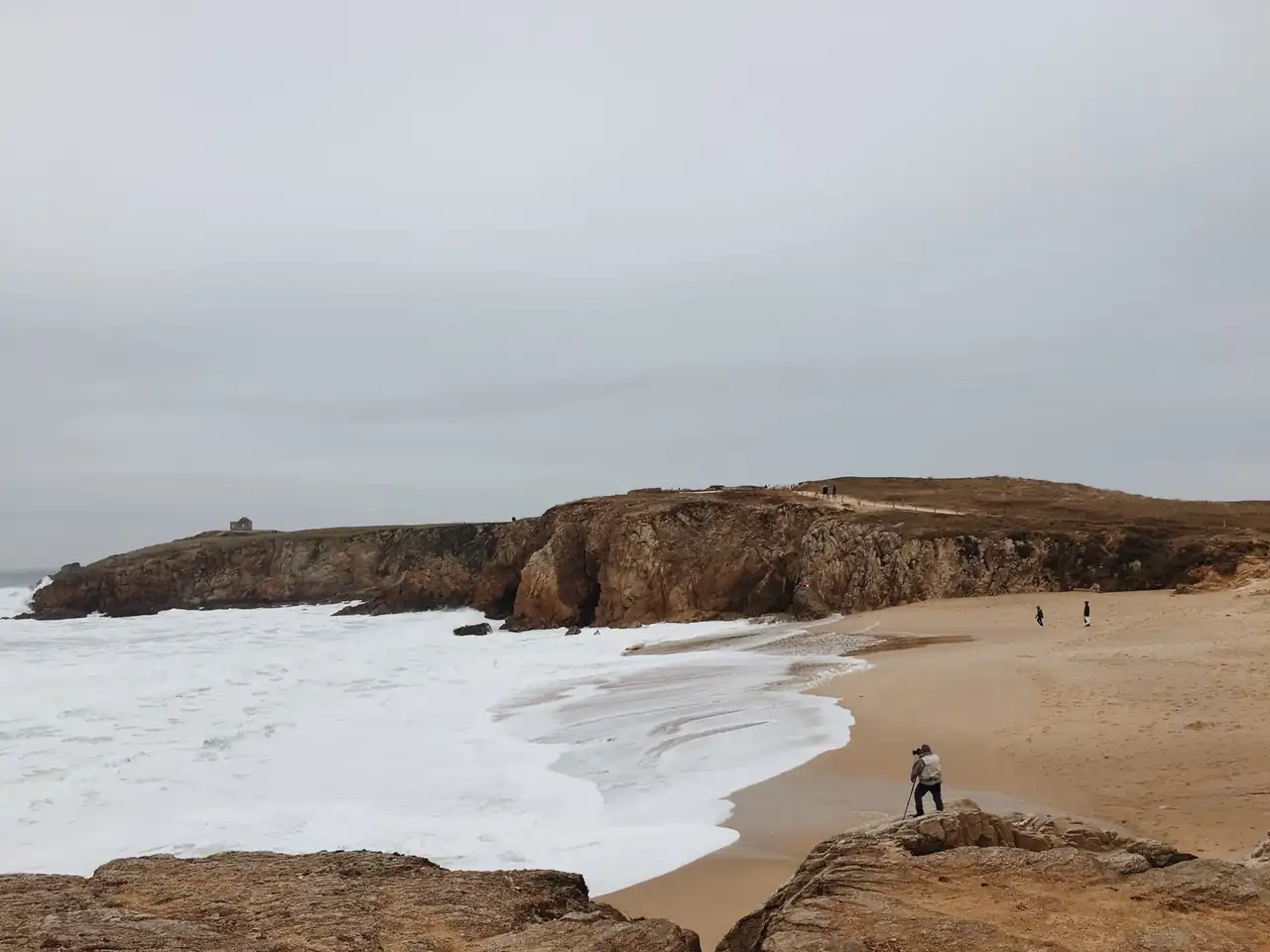
La Transléonarde once again turns the north coast of Brittany into a stage of ridge, wind, and sea spray. The Marathon du Finistère, its flagship event, connects Plouescat and Guissény in a 42.195-kilometer point-to-point route that runs largely alongside the ocean, with a profile that is friendly for those looking for speed and a landscape that gives no visual respite. In 2026, the event reaches its 24th edition and keeps that unusual blend of serious sport and local festival atmosphere that has made it recognizable within the French calendar.
The race is not limited to the marathon. Around it orbit a relay marathon, a 21-kilometer handisport event, the Trail des Naufrageurs, two coastal walks, and family activities, all with a popular pulse that ranges from the pasta party to the finish-line kig ha farz. This mix of formats explains why the Transléonarde has become something more than a competition: it is a long, open, and deeply territorial day designed to showcase the Côte des Légendes as a moving postcard.
A marathon that runs right next to the sea
The route of the marathon in Brittany starts at the Halles de Plouescat, a 16th-century building that gives the event a historically flavored start, and finishes in the center of Guissény. Between the two points, the course stretches along the coastal strip on generally favorable ground, alternating local roads, open stretches, and expansive seascapes. The organizers insist that it does not present major difficulties and that around three quarters of it runs by the shoreline, a feature that makes it especially attractive to runners who prefer sustained effort rather than sharp climbs.
That fast, linear character does not mean it is a cold or mechanical marathon. On the contrary: the runner moves between beaches, rocks, low meadows, and small villages of the more Atlantic-facing Brittany, under a light that changes constantly and a wind capable of altering both sensation and pace. The sea is there almost all the time, as a liquid reference that accompanies the stride and also challenges it. In races like this, the landscape is not decoration; it is part of the endurance.
The flagship event is designed to be completed in a maximum of 5 hours and 30 minutes, a limit that matches its popular and accessible approach. It does not seek extreme toughness or stopwatch elitism, but rather a long-distance experience with local identity. That is why the event retains such a strong personality within the European scene: the participant does not only cover 42.195 kilometers, but also crosses a territory that recognizes itself at every aid station, along every stretch of coast, and in every cheer from the crowd.
Schedules, start, and logistics that shape the day
The 2026 edition is set for Sunday, June 28, with the marathon starting at 8:30 from Plouescat. The organization concentrates bib pickup on Saturday the 27th, between 14:00 and 19:00 at the Plouescat sports complex for all events, and on Sunday morning, with specific windows for the marathon, duo, walk, and trail. This setup reduces improvisation and structures a day in which hundreds of runners, walkers, volunteers, and supporters move through several points along the coast.
The shuttles are a central part of that machinery. On Sunday they depart from Guissény toward the various starting locations, with schedules adapted to the marathon, the trail, and the relay. For the individual race, transport to Plouescat runs from 6:30 to 8:00; for the Trail des Naufrageurs, to Meneham, from 8:00 to 9:00. In a point-to-point race, this infrastructure is as important as a good aid station: without it, logistics would turn into a tangle of cars, idle time, and rushed arrivals.
The organizers also plan the post-race return. The shuttles back for marathon runners are scheduled at 14:30 and 16:00, a practical solution in an event where start and finish do not coincide. That seemingly minor detail actually defines the runner’s full experience: the body finishes, but the day does not break apart; it continues through a system designed so that each event has continuity without losing the collective atmosphere.
An athletic celebration with a Breton accent
The Transléonarde preserves a highly recognizable atmosphere built on community, landscape, and local culture. The Saturday night pasta party, with Breton music, sea shanties, and a fanfare band, sets the mood before the race; afterward, the traditional dish kig ha farz takes over as the post-finish meal. This is not a decorative folkloric detail: in this race, gastronomy is part of the event’s identity, just like the coast or the names of the towns.
The organizers have also made informality part of their signature, to the point of inviting participants to come in costume. This nod to playfulness does not diminish the sporting seriousness; rather, it softens it and opens the event to a wider audience. In other races, the marathon is a test of self-sufficiency; here, it is also a local-style celebration, a race where a serious runner and a humorous costume-clad group can seem equally at home.
The sports and play workshops for children, the long coast walk, and the guided bus tour through the Pays du Léon complete the picture. All of this places the race within a broader, almost tourist-like weekend, where running is not an isolated act but the centerpiece of a small territory getaway. That dimension explains part of the event’s success: it asks participants not only for performance, but also for presence.
The relay, the trail, and the walks broaden the audience
The distance structure means that the Transléonarde attracts very different profiles. The Marathon Duo splits the 42.195 kilometers between two runners and is presented as an ideal bridge to the full distance or as a shared way to experience it, with legs of 19.5 and 22.5 kilometers according to the organizers’ reference. The relay element adds a strategic layer: the effort is divided, but the adventure remains one single journey.
At the same time, the Trail des Naufrageurs moves into a more technical and natural register. In 2026 it is listed at 14 kilometers, starting from Meneham, in Kerlouan, a place closely tied to the coastal imagination of the area. The route, rougher and with constant changes of pace, contrasts with the marathon’s relative smoothness. Here the terrain bites a little more, and the legs feel it in the rhythm changes, turns, and less cooperative surface.
The coastal walks, over 12 and 18 kilometers, complete the program with a less competitive and more contemplative proposal, but one that is no less important. In an era when many events try to grow by adding formats, the Transléonarde understands something fundamental: not all participants want to run in the same way, or at the same intensity. Opening the door to walkers, families, and companions is, here, a way of broadening the meaning of the day without diluting its personality.
Registrations, prices, and the status of the 2026 edition
The reference information shows several events as full at the start of the 2026 edition, especially the solo marathon, the duo, and the trail, while registration for the handisport event and the walks was still available through the platform indicated by the organizers. In this type of event, the status of entries tends to change quickly, because demand is concentrated in a few highly valued distances and the organizers keep limited quotas for several of them.
The known reference prices place the marathon at 39 euros before April 30 and 47 euros after; the Marathon Duo at 48 euros per pair before April 30 and 56 euros after; the Trail des Naufrageurs at 14 euros before April 30 and 16 euros later; the coastal walks at 7 euros; the handisport event at 10 euros; the pasta party at 15 euros; and the post-race meal also at 15 euros. These are moderate figures for an event that combines several experiences at once and includes organization, transport, and entertainment services.
In 2025, Klikego referred to the 23rd edition; in 2026, the organizers themselves place the event at its 24th anniversary. That continuity helps explain the race’s credibility: it is neither an improvised happening nor a passing novelty, but an event built on an association, volunteer work, and a steady evolution since its launch in 2002. That longevity is evident in the logistical details, the stability of the program, and the way each edition is communicated.
Which type of runner fits the Transléonarde best
The marathon of the Côte des Légendes usually attracts runners who value fast courses, the sea, and the travel experience. It is not a race designed to suffer on mountain passes or battle major elevation changes; its appeal comes from the combination of runnable terrain, open surroundings, and an organization that understands the marathon as a full day. Those looking for a fast time may find potentially favorable conditions, provided the wind does not decide otherwise; those looking for atmosphere will find one of those races where the crowd does not feel like an accessory, but like an extension of the event itself.
The trail runner, on the other hand, finds a different profile in the sentier côtier of the Naufrageurs. Here the charm lies not in steady speed, but in reading the terrain, in the ability to change footing, and in the tension of the constant surges. The race is not long, but it is lively enough to demand attention. It is a short distance with the spirit of a wild coastline, and that makes it very different from the marathon, even though both share the same setting and name.
There is also an audience that comes to the Transléonarde for less competitive and more experiential reasons: to walk, accompany, eat, discover the coast, and mix with the local community. That breadth of vision is perhaps the event’s most notable trait. Where other races draw a clear boundary between competitor and spectator, this one prefers the productive gray area of encounters. The result is an event more like a small athletic festival than a simple mass start.
The Côte des Légendes as a sporting stage
The name of the area is not decorative. The Côte des Légendes stands out as a stretch of coastline with memory, changing geography, and a very direct relationship with the sea. Towns like Plouescat, Goulven, Kerlouan, and Guissény mark the route with a cadence that blends heritage and landscape. In distance races, the territory is not only crossed: it is interpreted. And here that reading is almost unavoidable, because the runner moves from one place to another as if traveling through a real-time coastal album.
The surroundings add a very particular texture to the effort. Sand, windows of open sea, the shadows of dunes and rocks, a low or clear sky depending on the day, all of it creates a shifting scene that can resemble a film shot at stride speed. That sensory quality makes the Marathon du Finistère a very photogenic race, but above all a very memorable one for those who experience it from within, with tired legs and the horizon still wide.
The support of volunteers and local associations reinforces that impression. The race starts in a sporting framework, yes, but also within a network of people who know the territory and put it at the service of the event. That commitment explains why the Transléonarde has kept its identity over the years: it does not depend on a trend, but on a community that sustains it like a well-learned custom.
What a race leaves behind when the landscape is also competing
The Transléonarde does not try to sell artificial epic drama or disguise its nature with grand effects. Its strength lies elsewhere: in a coastal marathon that is sober, well put together, and full of local soul, capable of bringing together different distances under one shared idea of community. The sea, the wind, and the Breton light do not act as a slogan, but as race elements, just like asphalt, turns, or aid stations. And that honesty makes it more interesting than many events that promise a lot and deliver little.
For the runner, the 2026 edition confirms a race that has already come of age: clear start, well-organized logistics, a broad offer, and a personality that has not been diluted by growth. In a season crowded with urban marathons and mass events, this race continues to bet on a more human scale, with Atlantic flavor and a direct relationship with the territory. The result is an experience that does not end with the final time, because it also leaves behind the smell of seaweed, the echo of a fanfare, and the feeling of having run through a strip of country that looks out to sea without hurry.
You may also like: Bay of Fundy International Marathon 2026: route, prices, and key details.



How to prevent thigh chafing: causes and real solutions

Women’s running windbreakers: seven jackets and how to choose

Do more workouts get rid of soreness? A guide for runners

Jaén Half Marathon 2026: Record 3,800 Runners Registered

Men’s short running tights: how to choose the right pair

World Triathlon confirms data breach involving medical data

Izan Edo targets podium at Miyazaki World Cup

María Pérez ranks ninth in World Athletics’ 2026 top ten

Dos Santos, Duplantis and Sawe: World Athlete of the Year finalists

San Silvestre Vallecana 2026: 42,000 places, prices and start times

 Races3 months ago
Valencia Half Marathon 2027: date and registration

 Races3 months ago
Valencia Marathon 2026: entry, ballot and course

 Reviews and Comparisons4 months ago
Asics Gel-Roadmiles 3 for men: review and current price

 Reviews and Comparisons4 months ago
Asics Gel Sonoma 8 Gore-Tex: complete analysis for trail and rain

 Sneakers3 months ago
Saucony Endorphin Pro 4: full review and verdict

 News5 months ago
Strava API 2026: what changes for clubs, challenges and runner apps?

 Reviews and Comparisons5 months ago
Nike Alphafly 3: opinions, sensations, and real key points

 Reviews and Comparisons4 months ago
Under Armour running shoes review 2025-2026: models and key features

 Sports Equipment4 months ago
Shoe sizes in cm: a clear guide to getting the right fit for your footwear

 Sneakers3 months ago
Skechers GO RUN Consistent 2.0 analysis: comfort and limits

 News5 months ago
Valencia Marathon 2026 route: key tips to train and run better

 Sneakers4 months ago
Adidas Adizero Boston 13 for men: review and verdict