Races
Bay of Fundy International Marathon 2026: route, prices, and key details
A unique cross-border test between Maine and New Brunswick, with prices, schedules, and clear border rules.

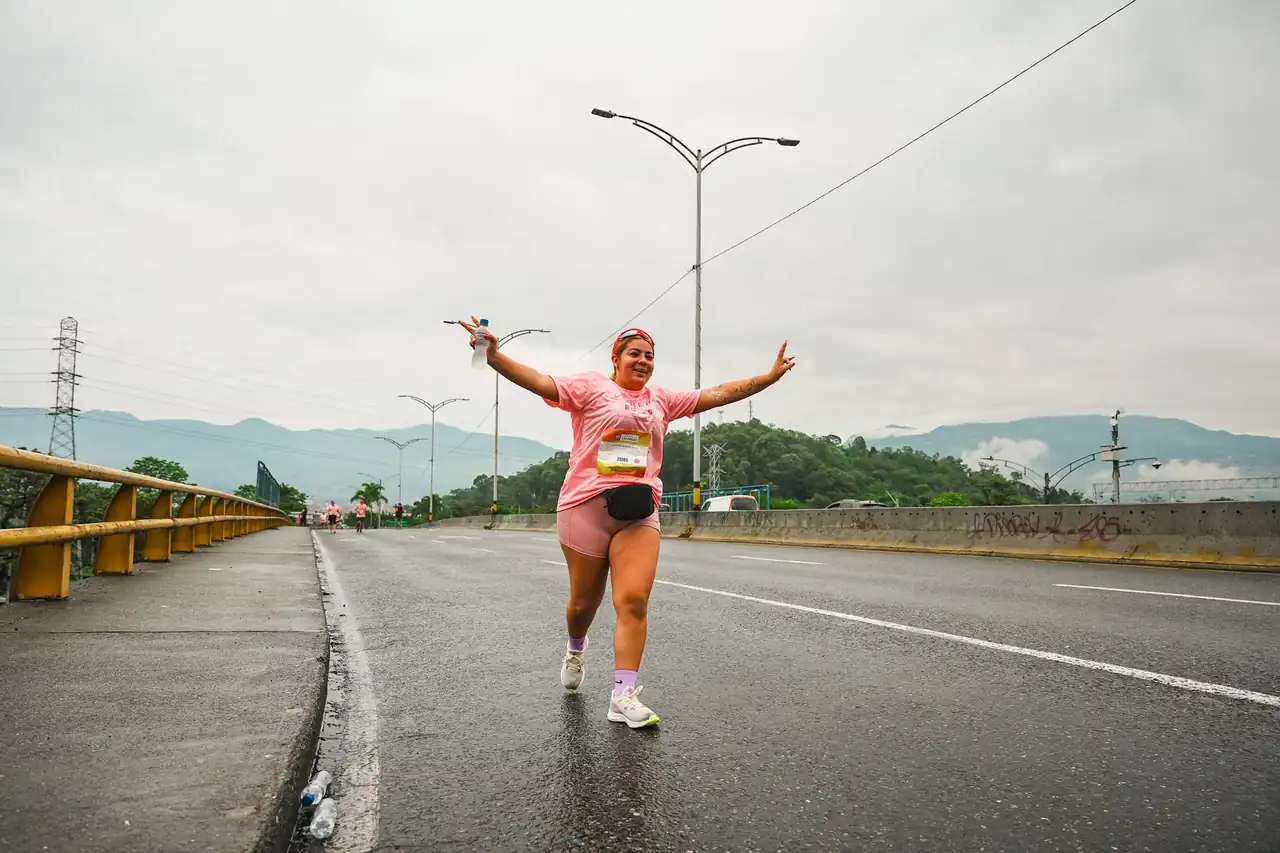
The Bay of Fundy International Marathon puts Lubec and Campobello back on the running map with an unusual proposition: running between the United States and Canada in the same race, without stopping at the border crossing during the competition. The 2026 edition will take place on Sunday, June 21, and will bring together the marathon, the half marathon, and the 10K in a setting of Atlantic coastline, quiet roads, and landscapes marked by lighthouses, water, and the border.
The event has established itself as a race with a character of its own, closer to a crossing than to a simple loop. The marathon and half marathon share the appeal of crossing two countries with documentation already verified before race day, while the 10K offers a course entirely in the United States, from West Quoddy Head Lighthouse to downtown Lubec. The result is an event with little noise, a lot of territory, and a very specific logistics setup.
A race that moves between two countries
The defining feature of this race is not just its course, but the setting in which it unfolds. The start and finish are not in a big city or a closed urban environment, but in a coastal strip where the Atlantic, bridges, and border posts are part of the everyday landscape. That gives the event a unique texture and explains why it attracts runners looking for something more than a medal and a split time.
The organizers note that the marathon and half marathon cross the border between Maine and New Brunswick without requiring the runner to stop during the race. That said, this smoothness does not exempt participants from meeting the usual entry requirements for both countries. A valid passport or travel document must be registered in advance, and pre-clearance with the border agencies is mandatory in order to collect the bib and start these distances.
That condition turns registration into more than a sporting formality. In this race, documentation and administrative deadlines weigh almost as much as physical preparation. Anyone who has not been pre-cleared will not be able to collect their bib or take part in the marathon or half marathon, a detail that sets this competition apart from most road races and forces participants to look at the calendar with clockmaker precision.
The courses: lighthouses, bridges, and packed-dirt stretches
The marathon starts at the easternmost point in the United States, next to West Quoddy Lighthouse, and follows a route certified by Athletics Canada and USATF. The course offers water and harbor views, quiet roads, and a passage through Roosevelt Campobello International Park before returning over the FDR Memorial Bridge and finishing on Water Street, in the heart of Lubec. It is a mix of open coastline, rural calm, and an almost cinematic moment as runners cross from one country to another.
The half marathon keeps that same idea of two nations linked by a stride. The route includes about 7.7 kilometers of dirt road within the international park, adding a more rustic, leg-friendly layer, but also a change in surface underfoot. This is not a pure asphalt race; it has the feel of back roads, sea breezes, and the firmness of well-trodden paths.
The 10K, by contrast, concentrates the entire experience on the U.S. side. It also starts at West Quoddy Head Lighthouse and finishes in downtown Lubec, with a point-to-point layout that preserves the same coastal scenery but removes the border complexity. For many runners, that distance serves as a natural entry point to the event because it retains the festival’s aesthetic without the immigration component of the marathon and half marathon.
Distances, time limits, and real demands
The three official distances are reasonably endurance-based, but they are not designed for improvisation. The marathon sets a 7-hour limit and requires maintaining at least 16:02 per mile, or 9:58 per kilometer. The half marathon shortens the window to 4 hours and asks for 18:20 per mile, or 11:24 per kilometer. The 10K allows up to 2 hours and sets a minimum pace of 20:00 per mile, or 12:26 per kilometer.
These figures are not just administrative decoration. They serve as a practical guide for organization, transportation, and safety in an event that depends on border schedules, shuttle buses to the start, and spread-out sections. They also outline the race profile: it is a visually pleasant weekend, but more serious than it first appears in logistical terms. Anyone who signs up should know the event is not built on scenery alone; behind it lies a fairly strict chain of timing.
In the marathon, there is also an early start for those who need 6 hours and 30 minutes or more. That decision fits a race that wants to accommodate different runner profiles without disrupting the event’s operation. The organizers also provide bus transport to the start for the main distances, an essential piece when the route is not a loop and the finish is far from the starting point.
Registration, prices, and the 2026 calendar
General registration opened on November 1, 2025, and the deadline for the cross-border events came on May 31, 2026 at 11:59 p.m. The race calendar sets Friday, June 19 as the final registration deadline, with online sign-up already marked as closed on the sales platform. Bib pick-up and in-person border clarifications begin on Saturday, June 20 in the afternoon and continue until early Sunday morning.
The prices published on the platform varied according to the date. The marathon went from 114.33 dollars in the initial window to 125.03, 141.08, and 146.43 as the price tiers advanced. The half marathon started at 87.58 dollars and increased to 108.98. The 10K began at 39.44 dollars with an early-bird rate and rose to 50.14 in later stages. In all cases, the pricing structure reflects the pressure of a race with a cap and cross-border logistics.
There were also charity options. The organizers offered charity bibs in limited numbers for the marathon and half marathon, with a minimum fundraising commitment of 250 dollars for community organizations. This model, increasingly common in mid- and high-profile races, connects the bib with local support and broadens the event’s impact beyond the clock.
Border rules and documentation: the less visible side
The most delicate element of this race does not appear in the scenery, but it decides whether the runner can take part or not. The marathon and half marathon require a passport or other valid document for travel to both Canada and the United States, and the review must be completed before the race at the checkpoints in Lubec and Campobello. During the race, the bib acts as a temporary pass, but only within the event framework.
The organizers also warn of an important nuance: the bib’s validity for crossing the border is limited to race day. If the runner needs to travel at another time, even to get to the start or return to the accommodation, they must carry the normal documentation. This is an important detail because the route may involve movements before and after the race on both sides of the border, and the sporting exception should not be confused with immigration rules.
In practical terms, the process requires sending document information in advance, going to the border posts on the previous Friday or Saturday, and collecting the necessary confirmation there. The bureaucracy is part of the bib here. It may sound cold, but it is exactly what allows a race like this to function naturally over asphalt and dirt, as if geography and law had agreed to a truce for a few hours.
What makes the event special for recreational runners
The Bay of Fundy International Marathon does not compete with the major majors in scale, nor does it aim for the aesthetic of a capital city packed with spectators. Its strength lies elsewhere: in the feeling of running inside a geographical story. The bridge crossing, the lighthouse, the international park, and the small downtown of Lubec create a linear narrative, almost like a road novel, in which each kilometer changes little in elevation and a lot in atmosphere.
That identity explains part of the positive feedback the organizers have highlighted in recent years. Runners talk about a beautiful, challenging, and well-organized course. It is not a fast race in the classic sense, but it is very rewarding for those who value the combination of scenery, relative isolation, and a sense of travel. In that sense, the event feels more like a coastal expedition than a mass urban race.
The difficulty should not be underestimated either. Although the profile is not presented as mountainous, the quiet roads, the surface change in the half marathon, and the possible Atlantic wind can turn the day into an elegant battle, without drama, but serious. For an intermediate runner, that adds interest; for someone chasing a personal best, it forces a reassessment of expectations. Here, the scenery does not just accompany the race, it shapes it.
The official distances and their internal logic
Marathon, half marathon, and 10K are not separate pieces, but three ways of entering the same universe. The long distance offers the full experience of the binational crossing and the return over the bridge. The half keeps the heart of the route and adds the dirt stretch in the international park. The 10K condenses the visual essence and makes it more accessible in both time and effort.
The certification of the marathon and half marathon courses by Athletics Canada and USATF adds an important element for those looking beyond the postcard. A certified route means precise measurement and a guarantee that the official distance meets the established standards. In events like this, where geographical uniqueness could overshadow the technical side, that certification restores order and competitive credibility.
The race also takes care of the finish experience with medals for finishers, aid stations every 2 miles with water and electrolytes in the longer races, and transportation to the start. These may seem like minor organizational details, but in a race with two countries and multiple checkpoints they take on special value. Without them, the beauty of the course would remain only surface-level.
Lubec, Campobello, and life around the bib
The race cannot be understood without its host communities. Lubec, in Maine, and Campobello, in New Brunswick, experience the event as both a showcase and a piece of local fabric. The organizers have supported community foundations, libraries, food banks, and local services, and that component gives the event a clear social dimension beyond sporting leisure.
The area also encourages early booking. The organizers themselves recommend reserving accommodations early and remind participants that the local border crossings are open 24/7, which gives flexibility to stay on either side. For those coming from afar, the surroundings may seem remote, but that is precisely part of the charm: it is a border corridor, a place where the coast and the frontier seem drawn with a fine ruler on the map.
Participants usually find options in Lubec, Campobello, Eastport, St. Stephen, Machias, and Cobscook Bay State Park. That dispersed lodging network fits the race’s character: nothing here has the scale of a stadium or a compact city. Everything happens within a road-and-sea radius, with a sense of low density that contrasts with the bustle of other, better-known marathons.
What to keep in mind from a finished edition and what it leaves for the future
The 2026 edition ended with results published on June 23, but the event’s informational value does not end once the calendar has run its course. For those following international running, the race remains a curious case of coexistence between sport, border, and community. Its blend of official certification, binational logistics, and coastal scenery makes it a distinct reference within the landscape of mid-sized marathons.
It also offers a lesson about the kinds of events that become established on North America’s Atlantic edge: races without major media spotlights, but with such a strong identity that they end up building loyalty. The Bay of Fundy International Marathon does not sell noise; it sells place. And in an increasingly homogeneous circuit, that matters more than it seems.
For the runner, the lasting image is clear: a sunrise at the lighthouse, the open road, the bridge over the international line, and the finish in Lubec with a tired body and a head full of coastline. It is a race that turns geography into a story, and that is an increasingly valuable rarity in the global running calendar.



How to prevent thigh chafing: causes and real solutions

Women’s running windbreakers: seven jackets and how to choose

Do more workouts get rid of soreness? A guide for runners

Jaén Half Marathon 2026: Record 3,800 Runners Registered

Men’s short running tights: how to choose the right pair

World Triathlon confirms data breach involving medical data

Izan Edo targets podium at Miyazaki World Cup

María Pérez ranks ninth in World Athletics’ 2026 top ten

Dos Santos, Duplantis and Sawe: World Athlete of the Year finalists

San Silvestre Vallecana 2026: 42,000 places, prices and start times

 Races4 months ago
Valencia Half Marathon 2027: date and registration

 Races4 months ago
Valencia Marathon 2026: entry, ballot and course

 Reviews and Comparisons4 months ago
Asics Gel-Roadmiles 3 for men: review and current price

 Reviews and Comparisons4 months ago
Asics Gel Sonoma 8 Gore-Tex: complete analysis for trail and rain

 Sneakers4 months ago
Saucony Endorphin Pro 4: full review and verdict

 News5 months ago
Strava API 2026: what changes for clubs, challenges and runner apps?

 Reviews and Comparisons5 months ago
Nike Alphafly 3: opinions, sensations, and real key points

 Reviews and Comparisons4 months ago
Under Armour running shoes review 2025-2026: models and key features

 Sports Equipment4 months ago
Shoe sizes in cm: a clear guide to getting the right fit for your footwear

 Sneakers3 months ago
Skechers GO RUN Consistent 2.0 analysis: comfort and limits

 News5 months ago
Valencia Marathon 2026 route: key tips to train and run better

 Sneakers4 months ago
Adidas Adizero Boston 13 for men: review and verdict