Races
2026 Villa de Fuente Álamo International Triathlon: key points and results
Noelia Juan and David Cantero dominated a tough edition, with wind, excitement, and a huge burden on the volunteers.

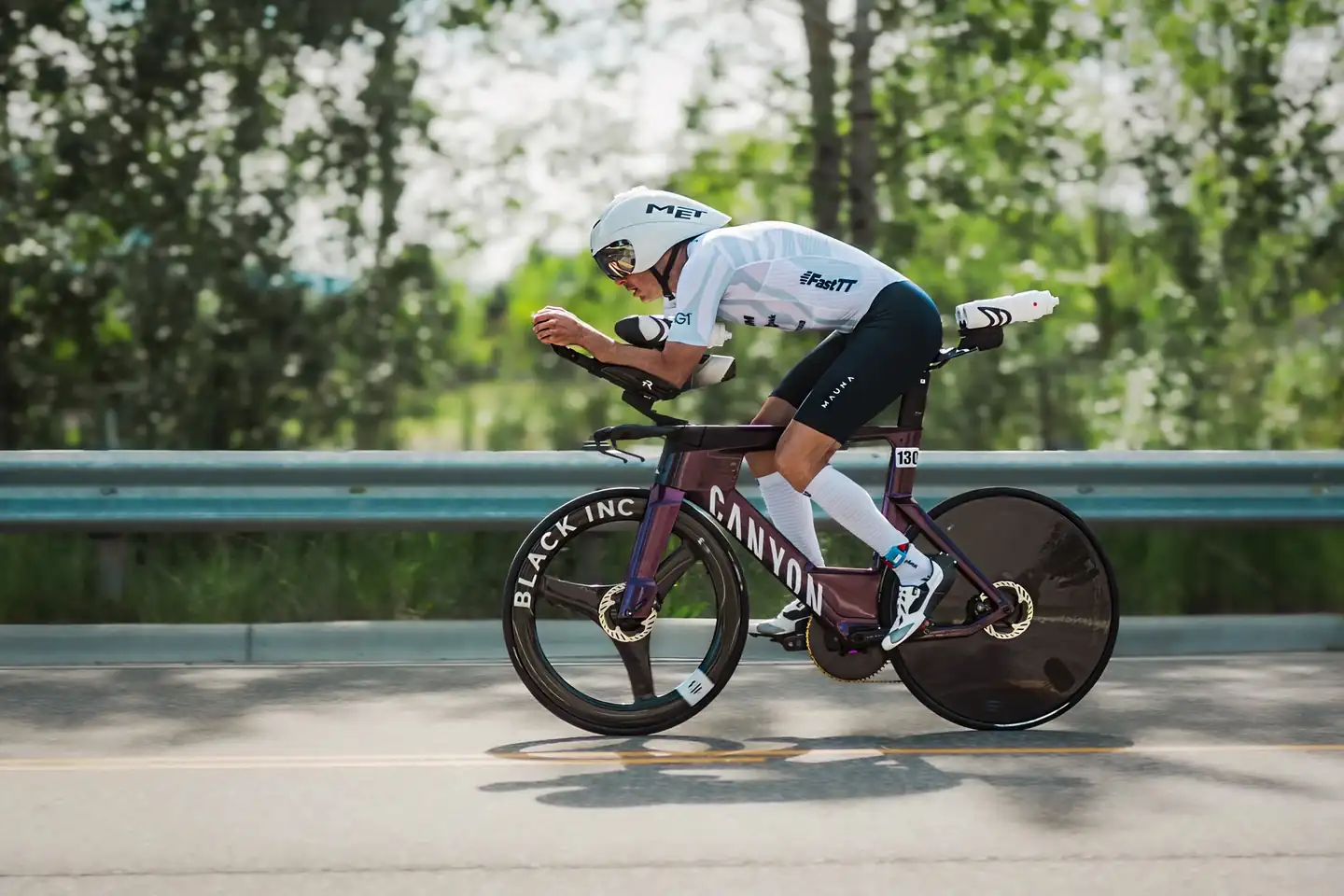
The Villa de Fuente Álamo International Triathlon once again offered a very familiar snapshot of the Spanish calendar: toughness, tactical tension, and a finish decided in the run. In its 34th edition, held with more than 900 participants, the event confirmed its status as a benchmark in the Region of Murcia and delivered a script true to its recent history: the wind dictated the cycling section, the groups never fully broke apart, and the leading names ended up prevailing in the final kilometers.
Noelia Juan and David Cantero were the winners of a day that rewarded patience and punished any excess ambition on the bike. Juan settled the women’s duel in a sprint against Marta Pintanel, while Cantero claimed his fourth consecutive victory in Fuente Álamo with authority, a record that is already part of the event’s sporting memory. Context mattered as much as legs: the weather toughened the afternoon and reminded everyone why this race is known as a serious test for complete triathletes.
A edition true to Fuente Álamo’s identity
Fuente Álamo does not need gimmicks to attract interest. Its value lies in continuity, in the blend of a fast yet demanding course, and in that feeling that each year the race can change its script without losing its essence. The 34th edition kept the classic format of 750 meters of swimming, 25 kilometers of cycling, and 5 kilometers of running, a sprint distance that, in this event, is rarely decided in straightforward fashion.
The day brought together more than 900 athletes and once again filled the town with a competitive atmosphere. The event not only retains its importance within national triathlon; it has also managed to preserve a very distinct identity, with an organization that combines sporting demands and popular participation. That balance explains much of its longevity: Fuente Álamo is not just another date on the calendar, but a recurring scene every spring where triathlon is shown without embellishment, with its virtues and its punishments.
There is also a symbolic element in that continuity. The race remains a qualifier for the Spanish Triathlon Championship, which raises competitive pressure and attracts very different athlete profiles. Some are chasing points, others visibility, others simply want to measure themselves on a course where tactics matter as much as power. That mix helps explain why Fuente Álamo is so often mentioned when talking about the most recognizable races on the Spanish circuit.
Noelia Juan settles the women’s battle in a sprint
The women’s race was an exercise in control, reading the course, and composure in the decisive stretch. A group of twelve triathletes set off in the cycling leg at a high pace, but the wind prevented the race from splitting open too early. The climb to Cuesta de las Ruices and the passage through Las Palas whittled down the lead group until six contenders remained with real chances of victory in the final section. Among them were Noelia Juan and Marta Pintanel, last year’s winner.
The outcome came in a very tight finish, almost knife-edge, with the Valencian athlete prevailing by just two seconds. That detail captures well the nature of sprint triathlon when the course and the wind combine to keep several contenders together. Noelia Juan, of CEA Bétera, returned to the top step of the podium after her 2023 triumph, a comeback that adds weight to her victory because it places her on a stage where she had already proven her consistency.
Marina Muñoz completed the women’s podium in a race that left the impression that any mistake, in the swim, in a transition, or in positioning within the group, could cost the win. The women’s race in Fuente Álamo usually punishes hesitation. It is not enough to run faster; you have to run better, anticipate when to push, and know when to hold back. Juan understood that script before anyone else in the final straight.
David Cantero extends a historic dominance
David Cantero’s victory had a different tone: it was not a surprise, but a display of authority. The Valencian triathlete earned his fourth consecutive win in Fuente Álamo, an unprecedented streak in the event’s history. In a race with so many years of tradition, stringing together four victories says much more than having a good day; it speaks to a very refined relationship with the course, the effort, and the kind of race that is decided on the edge of exhaustion.
Jonay Álvarez, Spanish duathlon champion, was the first to emerge from the water in the men’s category, a detail that underscores the competitiveness of the start. However, the wind once again prevented any solid breakaway on the bike and pushed the race toward a tightly packed second transition. There, at that point where momentum breaks and the race returns to running, Cantero took advantage of his ability to sustain a high pace without losing technical sharpness.
The final five kilometers were the true stage of the verdict. Wearing bib number 1, under-23 world champion in 2024 and recent winner of the 2026 Triathlon World Cup in Lanzarote, Cantero crossed the finish line 26 seconds ahead of Ely Canales and 33 ahead of Andrés Hilario. The gap was not huge, but it was enough to leave no doubt about his superiority. In races of this kind, dominating without drama is often the clearest sign of competitive form.
The wind as the silent judge of the day
The wind does not appear in the standings, but it changes every meter of the race. In Fuente Álamo, its influence was especially visible in the cycling segment, where it prevented clean breakaways from succeeding and forced everyone to constantly negotiate effort. When the air pushes from the side or hits head-on, triathlon stops feeling like a linear sum of disciplines and becomes a kind of moving board where no one can relax.
The result was clear: the race stayed more compact than usual and the outcome was left to the run. In a sprint event, that finish has a very specific meaning. The swim creates small gaps; the bike can widen or erase them; and the final leg, if the field remains together, becomes a test of nerve. Fuente Álamo offered exactly that, a race in which mental endurance weighed as much as power.
The weather also brought the unpredictability that has made the event famous. When a race gains prestige, it usually does so because it gives nothing away. In this case, the wind acted like a natural filter, separating those who can compete in uncomfortable conditions from those who only shine when everything is clean. The 2026 edition reinforced that reputation with a sequence of long efforts, repeated accelerations, and the constant feeling of racing against something more than rivals.
More than a race: an event woven by volunteers
The sporting story of Fuente Álamo would not be complete without its human dimension. This edition’s poster paid tribute to the work of the volunteers, an invisible network that supports logistics, guides the public, covers intersections, and gives meaning to an event that mobilizes hundreds of people. In events of this scale, organization is as important as the clock; without it, the show does not exist.
The race director, Ginés Bermúdez, summed it up with an idea that captures the spirit of the competition well: it is the triathlon of triathletes, but also of volunteers. That phrase is not an empty formula. In Fuente Álamo, volunteering is not a decorative support role, but a structural piece. It brings order, closeness, and that sense of belonging that turns a race into a local tradition.
The 2026 tribute also had special value because of the involvement in the design by Juana Valcárcel and María Clemente, a member of the organizing committee and an ALS patient, who featured her wheelchair in the image used on the poster and the T-shirts. That gesture added another layer of meaning to an already symbolic edition, because it reminded everyone that grassroots sport and elite sport do not live separately, but coexist within the same social fabric.
A Spanish triathlon classic that retains its weight
Fuente Álamo continues to occupy a prominent place on the national triathlon map because it combines history, demand, and continuity. It is not an event inflated by novelty or sustained by nostalgia. Its relevance remains because each edition offers something recognizable and, at the same time, competitive. Riders know there are few tricks here and many decisions. Spectators know the ending is usually saved for the final meters.
That mix has allowed the event to survive changes in calendar, generations, and formats, always with a very marked identity. Juan’s and Cantero’s victories do not just add to the 2026 roll of honor; they also extend a historical line in which the big names in Spanish triathlon usually leave their mark. Fuente Álamo is a race that watches time pass without losing its character as a serious, almost ceremonial, event for elite competitors.
The fact that the race continues to attract more than 900 participants and maintains its link with the national championship says a lot about its sporting health. In an increasingly crowded calendar, preserving that pull is no coincidence. It is the result of a reputation earned meter by meter, edition after edition, with a race that is no stroll and a public that understands the value of a job well done.
What an edition decided on the edge of effort leaves behind
The 34th edition of the Villa de Fuente Álamo International Triathlon confirmed a simple but powerful idea: big races are not always decided by margins, but by character. Noelia Juan won in a razor-thin finish and David Cantero once again imposed sustained superiority, but behind both victories there was more than talent. There was race reading, emotional control, and the ability to withstand a course that, because of the wind and its own structure, rewards competitive intelligence.
It also left behind an image of community that is hard to fake. The public, the volunteers, the organizers, and the athletes shared the same day, each in their role. In that sense, Fuente Álamo works as a small radiograph of Spanish triathlon: sporting ambition, organizational expertise, and a very direct connection to the territory. It is not just an event that delivers results; it builds memory, and that is what keeps it alive year after year.
That is why its appeal goes beyond the podiums. Fuente Álamo remains an event where the state of national triathlon is measured, where established names appear, and where the conditions force athletes to compete with their heads as well as their legs. The 2026 edition added another page to that history with two high-profile winners and a race that once again reminded everyone that, in this sport, controlling chaos is almost as valuable as speed.
You may also like: Frómista Triathlon: history, routes, and key points of the race.



How to prevent thigh chafing: causes and real solutions

Women’s running windbreakers: seven jackets and how to choose

Do more workouts get rid of soreness? A guide for runners

Jaén Half Marathon 2026: Record 3,800 Runners Registered

Men’s short running tights: how to choose the right pair

World Triathlon confirms data breach involving medical data

Izan Edo targets podium at Miyazaki World Cup

María Pérez ranks ninth in World Athletics’ 2026 top ten

Dos Santos, Duplantis and Sawe: World Athlete of the Year finalists

San Silvestre Vallecana 2026: 42,000 places, prices and start times

 Races4 months ago
Valencia Half Marathon 2027: date and registration

 Reviews and Comparisons4 months ago
Asics Gel-Roadmiles 3 for men: review and current price

 Races4 months ago
Valencia Marathon 2026: entry, ballot and course

 Reviews and Comparisons4 months ago
Asics Gel Sonoma 8 Gore-Tex: complete analysis for trail and rain

 Sneakers4 months ago
Saucony Endorphin Pro 4: full review and verdict

 News5 months ago
Strava API 2026: what changes for clubs, challenges and runner apps?

 Reviews and Comparisons5 months ago
Nike Alphafly 3: opinions, sensations, and real key points

 Reviews and Comparisons4 months ago
Under Armour running shoes review 2025-2026: models and key features

 Sports Equipment4 months ago
Shoe sizes in cm: a clear guide to getting the right fit for your footwear

 Sneakers3 months ago
Skechers GO RUN Consistent 2.0 analysis: comfort and limits

 News5 months ago
Valencia Marathon 2026 route: key tips to train and run better

 Sneakers4 months ago
Adidas Adizero Boston 13 for men: review and verdict