Races
Gijón Half Marathon 2026: route, schedule, and key information
Date, start, flat profile, refreshments and services of the Gijón event that returns in 2026.

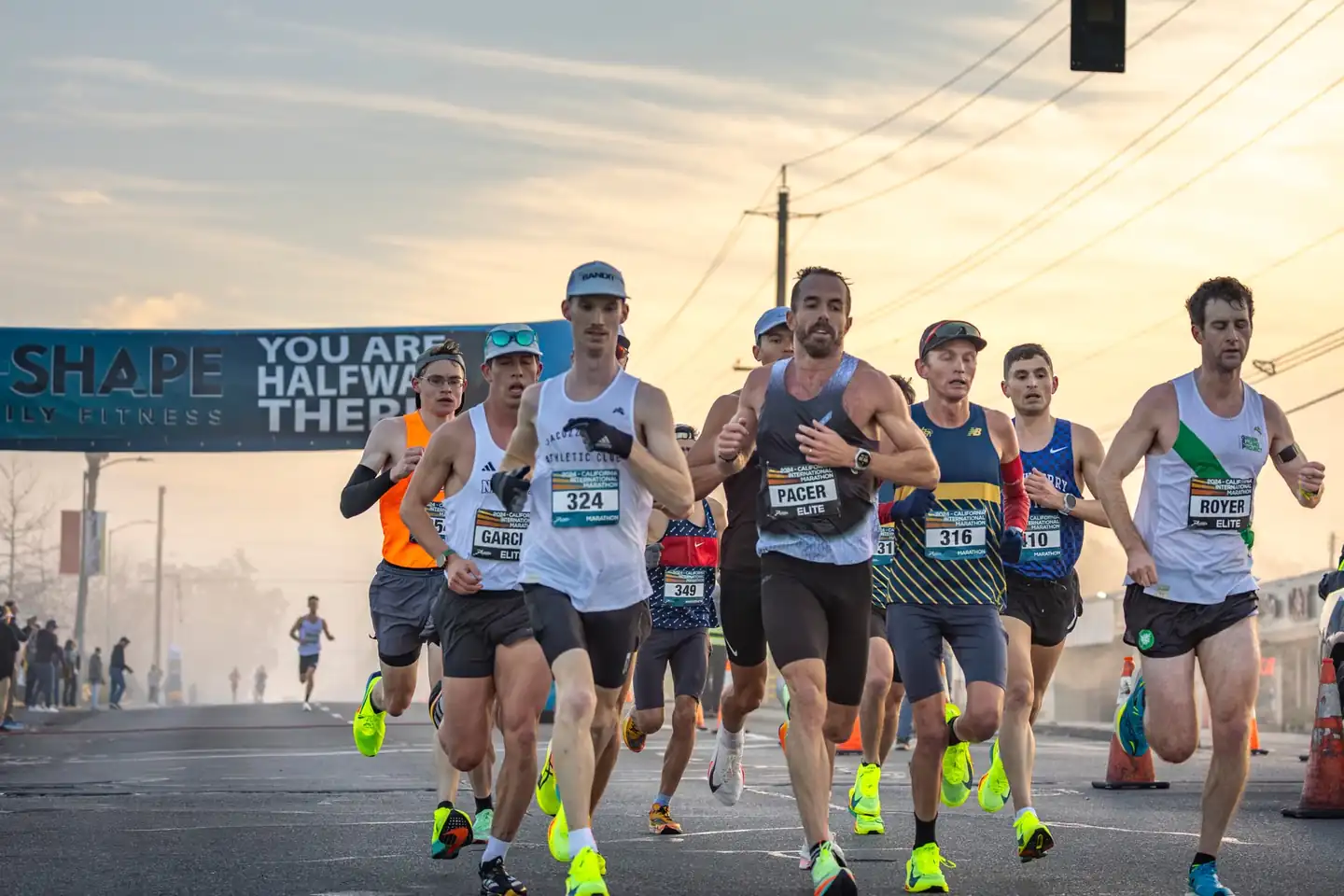
Imagen: Stephen Leonardi / Pexels
The Gijón half marathon will once again bring together thousands of runners on October 10, 2026, with a start at 5:30 p.m. from Albert Einstein Avenue and a finish at Las Mestas. The race, known as Villa de Jovellanos, reaches its fifteenth edition as one of the fastest road events in northern Spain, with a certified, urban course that is very favorable for chasing a personal best.
Its flat profile, the certified distance of 21,097 meters, and the limit of 3,000 race bibs explain much of its appeal. It is not a race for hiding mistakes: the course rewards steady pacing, punishes overly ambitious starts, and relies on a clean, sea-level layout where consistency matters more than heroics.
A coastal race designed for fast running
Gijón offers a very unusual combination: a lively city, an Atlantic atmosphere, and a course that invites sustained speed for almost the entire race. The organization and the setting have made this half marathon a benchmark for those looking for a great autumn afternoon with a stopwatch, a crowd, and a route that gives nothing away. The Spanish Athletics Federation seal also adds extra value for those chasing official, comparable times.
The race has built a very clear identity. It does not rely on big hills or terrain changes, but on a sequence of avenues and urban stretches where the runner can find constant references. In a race like this, effort management is the real common thread: starting under control, not losing pace at the turns, and saving legs for the final stretch are usually the factors that separate a good time from a difficult second half.
The late-afternoon start time also shapes the day. October on the Cantabrian coast usually brings mild temperatures, around 12 to 18 degrees Celsius, although humidity and wind can change the feeling within minutes. That detail matters more than it may seem. A fast course in a city open to the sea can seem forgiving from a distance, but the Cantabrian Sea quickly reminds you that running by the water has its own character.
Date, start time, and limits for the 2026 edition
The 2026 edition is set for October 10, with a start at 5:30 p.m. The course begins on Albert Einstein Avenue and ends at the Las Mestas sports complex, a finish very familiar to regular runners in Gijón. The organizers have set a maximum time of 2 hours and 30 minutes, a figure that gives finishers plenty of room but also requires pace control if you want to finish comfortably.
In addition to the overall time, the race includes split checkpoints at kilometers 5, 10, 15, and 20, along with the finish line. That detail structures the race almost like a series of fast train stations: each marker forces you to confirm whether the plan is still on track or whether adjustments are needed. For first-time half marathoners, this structure provides security; for those chasing a personal best, it turns the race into a sequence of very measurable splits.
The maximum number of participants is set at 3,000, enough to create atmosphere without turning the course into a permanent bottleneck. It is a crowd large enough to feel the support of the public, yet still manageable enough to run at your own pace. That middle ground is usually an advantage: there is company, there is noise, there is urban energy, but also room to breathe and find your place in the race.
A certified course with very little room for improvisation
The Gijón half marathon is run on asphalt, over a certified distance of 21,097 meters and on an almost completely flat profile. The route is designed so that your stride is not affected by long climbs or sudden changes. Even so, it should not be imagined as a perfectly smooth track with no obstacles. There are turns, visual crossings, long straight sections, and the classic urban mix of wide avenues and corners that require smart pacing.
The altitude near sea level favors the sensation of speed, and that is one of the reasons the race attracts runners chasing a personal best or a first half marathon with confidence. When a course allows you to repeat paces cleanly, the body responds more easily, provided the runner does not get carried away by the excitement of the start. The trap in this race is not the elevation, but overconfidence.
Liquid aid stations are located at kilometers 5, 10, 15, 20, and at the finish. These are sufficient reference points for a race of this kind, as long as hydration strategy is not left until the last minute. On a humid and cool day, drinking may seem less important, but the distance and sustained effort usually prove otherwise. Regular water stations help keep the second half from becoming an improvised struggle.
Runner services and atmosphere at Las Mestas
The Runner Expo takes place the day before at the Las Mestas facilities, on Jesús Revuelta Diego Street, with commercial brands present and the usual pre-race activity of major mass-participation events. Bib pickup is scheduled for Friday, October 9, from 6:00 p.m. to 9:00 p.m., and on race day itself, from 11:00 a.m. to 5:00 p.m. That time window makes logistics easier and reduces last-minute pressure, which is always stressful in races with large fields.
The runner pack includes a bib with timing chip, technical shirt, and sponsor gifts. Services such as baggage storage, changing rooms, showers, toilets, and medical assistance are also announced, matching the standard expected of a well-established race. For runners, these details are not decorative: the race experience is shaped before the start and in the minutes after crossing the finish line as well.
Las Mestas also serves as a meeting point that gives the race its identity. Starting and finishing in a familiar sports setting organizes the day, concentrates the crowd, and simplifies participant flow. In a city where the relationship between sport and urban life is so visible, the sports complex acts as a small center of gravity. It is not just a transit point; it is part of the half marathon’s story.
Prizes, federated category, and participation requirements
The race awards cash prizes to the top finishers, with a total purse of 9,200 euros. That figure places the event at a competitive level that goes beyond the purely popular aspect. The Gijón half marathon combines the buzz of the streets with the interest of athletes chasing a reward, which raises the average level and sharpens the competition at the front.
As part of the official road-running calendar, the race requires attention to federation licensing. Those who do not have a valid national or regional license on race day must obtain a day license during registration. There is also a minimum age requirement, with participation reserved for runners aged 18 and over. These are simple requirements, but decisive if you want to avoid administrative problems.
Entry fees range from 22 to 33 euros, depending on when registration is completed, and the deadline is set for October 6, 2026, unless bibs sell out earlier. Together, the date and price outline a race that does not aim for unrestricted mass participation, but rather for a reasonable balance between popularity, logistics, and service quality. That also explains why the organization limits entries and maintains a clear set of rules.
What it usually feels like to run in Gijón in October
Gijón in October usually offers a friendly competitive setting, but with nuances. The moderate temperature helps sustain long efforts without the stifling heat that ruins so many summer half marathons. In return, Cantabrian humidity demands a finer sense of effort. The body sweats, the air feels heavy, and clothing can stick easily, even when the thermometer does not seem threatening.
Wind is the most deceptive factor. It does not always blow strongly, but when it comes in from the coast, it turns comfortable straightaways into small endurance tests. Holding a steady pace becomes harder if the runner is carried away by the group’s sensations or tries to fight every meter alone. On this kind of course, good positioning saves energy and protects the final stretch.
The presence of the sea, even if not always continuously visible, is felt in the overall atmosphere. There is something about the north that changes the sound of the asphalt, the behavior of the air, and even the way splits are perceived. Gijón is not a postcard half marathon; it is a real city, with noise, humidity, crowds, and an Atlantic aesthetic that weighs on both the legs and the mind at the same time.
Which type of runner is best suited to this half marathon
The race is especially well suited to those looking for a fast half marathon in an urban setting without elevation surprises. It also attracts first-timers who prefer a friendly-profile race with full services, as well as experienced runners who want to gauge their level on a certified course. The balance between route and atmosphere allows very different paces to coexist without the event losing coherence.
For those chasing a time, Gijón offers a solid foundation: a reasonable start time, asphalt surface, official distance, and an organization used to managing runners smoothly. For those who simply want to finish feeling good, the race provides enough support so that success does not depend on guesswork. It is a half marathon with the spirit of a city and the logic of competition, two traits that do not always come together.
The experience also works well for runners who have moved up from the 10K to the half marathon and need a race that does not punish them too much. The course helps, but it does not perform miracles. A solid plan is still necessary, even if it is a general plan rather than a personalized training program. The body appreciates the predictability of the terrain; the mind appreciates clear references. In Gijón, that combination usually shows.
The value of a half marathon that has already found its place
There are races that live off the sparkle of a single edition, and others that consolidate themselves by repeating what works. The Gijón half marathon belongs to the second group. Its growth cannot be understood without the loyalty of runners, municipal support, and a simple formula: fast course, good logistics, urban setting, and a coastline that gives each edition its personality.
The fifteenth edition also arrives with that sense of maturity that no longer needs grand speeches. The race presents itself as what it is: a solid, federated, competitive, and popular half marathon, with a reasonable entry fee, an iconic finish, and a course designed to make the clock matter. In the national calendar, it holds its own place thanks to practical merits rather than gimmicks.
That is perhaps its main journalistic and sporting appeal. It does not sell smoke, it does not promise a miracle, and it does not require mountain scenery or extreme feats. It offers an afternoon of asphalt, control, and pace by the Cantabrian Sea. For many runners, that is worth more than a spectacular backdrop: a clear, measurable, and honest race, where what happens depends largely on preparation and mindset. In that sense, Gijón does not decorate the half marathon; it makes it work.
A race that tests legs, mind, and experience
The Gijón half marathon is best understood as a test of experience rather than an unpredictable adventure. The runner who arrives with defined paces, planned hydration, and the patience not to burn out too early usually finds a rewarding race. The one who starts without a plan, trusting the ease of the course, quickly discovers that a flat route can still take its toll.
That is why the date, the time, and the profile matter as much as the atmosphere or the prizes. Everything about this event points to an organized experience, with room to perform and enjoy, but without hiding the demands of the distance. The Gijón half marathon rewards consistency and leaves little room for improvisation. That balance, rare when a race grows, is part of its value.
In the Spanish racing calendar, Gijón has earned a stable place because it has managed to combine the essentials: a reliable organization, a fast course, and a city that understands the race as something of its own. The result is a half marathon with identity, able to attract both runners chasing a fast time and those who simply want to see how far their legs can take them on an October afternoon by the sea.



How to prevent thigh chafing: causes and real solutions

Women’s running windbreakers: seven jackets and how to choose

Do more workouts get rid of soreness? A guide for runners

Jaén Half Marathon 2026: Record 3,800 Runners Registered

Men’s short running tights: how to choose the right pair

World Triathlon confirms data breach involving medical data

Izan Edo targets podium at Miyazaki World Cup

María Pérez ranks ninth in World Athletics’ 2026 top ten

Dos Santos, Duplantis and Sawe: World Athlete of the Year finalists

San Silvestre Vallecana 2026: 42,000 places, prices and start times

 Races3 months ago
Valencia Half Marathon 2027: date and registration

 Races3 months ago
Valencia Marathon 2026: entry, ballot and course

 Reviews and Comparisons4 months ago
Asics Gel-Roadmiles 3 for men: review and current price

 Reviews and Comparisons4 months ago
Asics Gel Sonoma 8 Gore-Tex: complete analysis for trail and rain

 Sneakers3 months ago
Saucony Endorphin Pro 4: full review and verdict

 News5 months ago
Strava API 2026: what changes for clubs, challenges and runner apps?

 Reviews and Comparisons5 months ago
Nike Alphafly 3: opinions, sensations, and real key points

 Reviews and Comparisons4 months ago
Under Armour running shoes review 2025-2026: models and key features

 Sports Equipment4 months ago
Shoe sizes in cm: a clear guide to getting the right fit for your footwear

 Sneakers3 months ago
Skechers GO RUN Consistent 2.0 analysis: comfort and limits

 News5 months ago
Valencia Marathon 2026 route: key tips to train and run better

 Sneakers4 months ago
Adidas Adizero Boston 13 for men: review and verdict