Races
Oviedo Half Marathon 2026: date, start and route
Oviedo fine-tunes a 21.1 km race with the start at the Palacio de los Deportes and the finish on Uría, right in the city center.

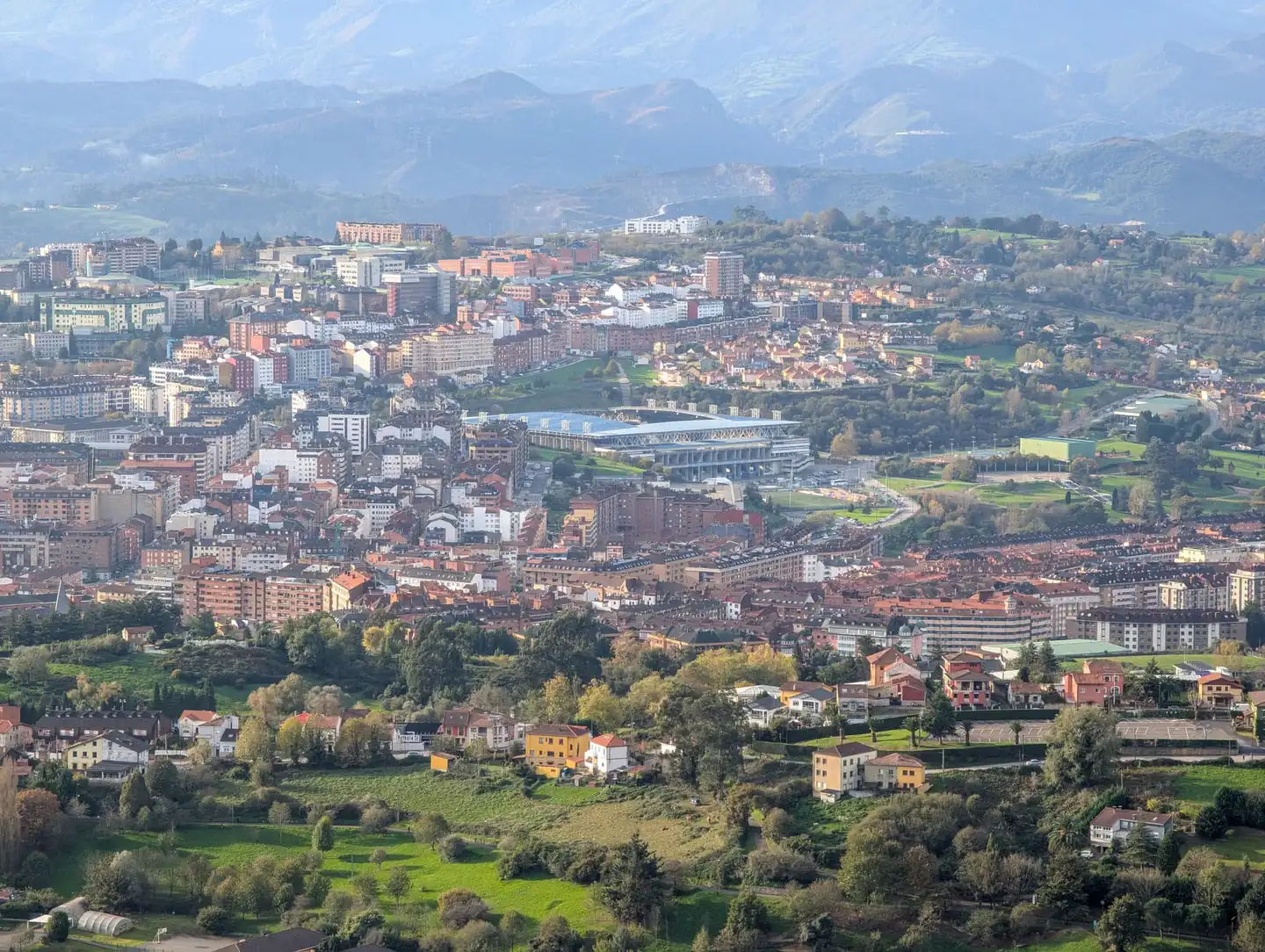
The VII Oviedo Half Marathon already has a date marked on the calendar: October 11, 2026. The race will keep the classic half marathon format, with 21.1 kilometers on asphalt and a route that once again links the Sports Palace with the heart of the city, on Uría Street, at the level of Escandalera Square.
The event arrives with the stamp of a race that has been gaining importance within the popular Asturian calendar. The organization, linked to the Más o Menos Sports Club, insists on an idea that clearly defines the project: it is not just about running, but about doing so on a course that shows Oviedo through a very recognizable mix of avenues, green areas, and high-visibility urban stretches.
An edition that consolidates an already recognizable race
The seventh edition is not just another step in a local event. In Oviedo’s case, the race has built its own identity around a course that is welcoming for popular runners and, at the same time, demanding because of the pace imposed by the urban profile. That balance partly explains why the race has managed to attract athletes from both inside and outside Asturias.
The half marathon has established itself as a sporting day with more layers than just the stopwatch. There is competitive participation, of course, but also a very marked urban-experience component. The runner is not only adding kilometers: they are moving through a city that alternates stone, parks, avenues, and emblematic spots that act almost like a moving backdrop.
That approach has given the event a stable presence on the Spanish running map. In an increasingly crowded calendar, the races that endure usually offer a very specific combination: a clear date, understandable logistics, and a strong visual identity. Oviedo meets those three conditions with a proposal that puts the route and its relationship with the city front and center.
Start at the Sports Palace and finish on Uría
The official course places the start at the Oviedo Sports Palace and the finish on Uría Street, at the level of Escandalera Square. That layout is no coincidence. The start relies on a broad and familiar facility, while the finish is reserved for one of the most recognizable areas in the center, where the arrival has greater symbolic and visual weight.
The race is thus built as a journey between urban extremes. It begins in a wide, functional space more tied to logistics, and ends on a central artery, with the city’s pulse on the other side of the finish tape. For the runner, that contrast changes the perception of effort: the start brings order, the finish brings emotion.
There is also an obvious sporting reading. A finish in the center favors the atmosphere, concentrates spectators, and creates a more intense sense of closure. It is not the same to finish in a peripheral area as it is to do so on a street that breathes city. In the Oviedo half marathon, that detail is part of the event’s story and reinforces its personality.
The route: a city covered stride by stride
Oviedo is presented in this race as a city that combines heritage, open spaces, and urban flow. The route is designed to pass through different environments without losing competitive continuity, something especially valuable in a half marathon where pace matters as much as the visual reference of the surroundings.
The organization has described the course as a route that alternates green areas with urban spaces and passes some of the most recognizable points of the Asturian capital. That turns the race into a kind of moving map, where each section brings a different texture. There are wide streets that help stretch the pack, tighter corners where the noise multiplies, and passing zones where the architecture seems to accompany the runner.
From an effort perspective, this type of route is usually appealing to those looking for a fast race, though not one that feels completely flat. Asphalt provides consistency, and the city, at the same time, introduces small variations that break the monotony. For many popular runners, that combination matters more than a purely technical profile.
The race also suits those who enjoy urban events with personality. Instead of hiding the city, it uses it as the main stage. There is no artifice: the course rests on Oviedo’s everyday geography and turns it into a mid-distance sporting experience that demands consistency, composure, and good pace control.
Registrations, prices, and deadlines: what is already known
Registrations open on February 1, 2026 and close on October 4, 2026, according to the information released by the organization and reflected in the reference calendars. The registration window is therefore wide, although there is a fee change midway through the process that should be kept in mind by those planning to take part in advance.
The starting price is set at 31 euros and rises to 41 euros from September 21, 2026. This stepped pricing is common in popular races with some demand and follows a simple logic: reward early registration and adjust logistical planning as race day approaches.
Registration is handled online, something now fully integrated into this type of event. Although the publicly available information does not detail the maximum participant limit or other administrative nuances, it does make clear that the race operates with a defined registration schedule and a pricing structure that changes depending on the registration date. In a race like this, decision time is also part of the competition process.
In practical terms, that places the 2026 edition in a very clear bracket: anyone who wants to be on the start line should not wait until the last minute, not so much because of artificial urgency as because of straightforward administrative logic. Races with fixed dates and tiered fees usually reward planning and punish indecision.
A race designed for popular runners, but with city ambition
The Oviedo Half Marathon is not presented as an exclusive event for elites, nor as a simple urban stroll. Its strength lies in the mix. On one hand, it offers a distance fully recognized within popular athletics; on the other, it builds an experience with civic weight, capable of mobilizing volunteers, sponsors, fans, and participants with very different profiles.
The organization also highlights an inclusive approach, with participation by people with disabilities in accordance with the event regulations. That detail matters because it places the event within a broader logic than that of a conventional race. It speaks of an open competition model, where the city does not just watch runners pass by, but gets involved in a sporting activity with a community vocation.
That open character is also reflected in the image the race projects. Oviedo does not appear here as a distant backdrop, but as a city that naturally lends itself to popular sport. The half marathon uses that disposition to its advantage and, in doing so, gains something that money cannot buy through advertising: a sense of belonging that makes each edition more recognizable.
What kind of runner is best suited to this event
The 21.1 kilometers in Oviedo are a distance that demands endurance, but also judgment. The race suits runners looking for an asphalt half marathon in a medium-sized city, with enough atmosphere to support the effort without the pressure of the giant names on the calendar. It is an appealing format for anyone who wants to compete, enjoy the surroundings, or assess their form in autumn.
It is also attractive to those who value finishes in the urban center. Reaching Uría, with Escandalera as a reference point, changes the perception of the final effort. The decisive stretch stops being an anonymous straight and becomes a recognizable scene, with more spectators, more noise, and a stronger sense of a real finish. In endurance races, that detail matters almost as much as split times.
In addition, the fact that the route combines green areas and urban stretches keeps the race from feeling monotonous. Anyone running a half marathon usually wants more than a certified distance: they want sensations, references, a storyline. Oviedo offers exactly that, a city narrative that unfolds with every kilometer.
Oviedo as an endurance setting: heritage, pace, and everyday scenery
The Asturian city offers a clear advantage: it has identity without needing to overstate it. Its streets, parks, and historic center create an atmosphere very different from impersonal circuits. For the runner, that difference translates into constant stimuli, small changes in light, sound, and urban texture that make the passage of minutes more bearable.
Urban races with character tend to work better when the city does not merely host the race, but participates in it. In Oviedo, that idea is easy to understand. The route does not seem designed to isolate the runner from the surroundings, but to integrate them into it. Asphalt is the thread, but the city is the full fabric.
That approach connects with a growing trend in popular running: beyond a personal best, many participants are looking for an experience that leaves a memory. Not just a time in the standings, but an image. A street crossing, a finish in the center, a sense of autumn in the north. The Oviedo Half Marathon offers exactly that kind of memory.
Logistics, accommodation, and a city preparing to welcome runners
The race also moves a small race economy around the date. The organization has announced accommodation agreements with different establishments, something common in events that attract visitors from other provinces. That logistical dimension helps explain the real scope of the half marathon: it is not just a sports morning, but a weekend that activates bookings, travel, and advance planning.
Among the published references are options with specific discounts for participants and companions during the race dates. That type of information is usually relevant for those traveling from outside Oviedo, because the convenience of accommodation, access to the start, and proximity to the finish can strongly affect the overall experience. In a half marathon, sleeping well is also part of the route.
The presence of sponsors and collaborators completes the portrait of a race that already operates with a certain organizational maturity. Behind the bib number there are figures, permits, volunteers, signage, aid stations, and communication. None of that is visible in the final photo, but it sustains the day. When an event grows, the challenge is not only to add runners, but to preserve the clarity of the event.
Why this edition matters in the autumn calendar
The October 11 date places the race in a very competitive time of year within running. Autumn is usually fertile ground for mid-distance events: the heat eases, times become more reasonable, and the body appreciates a friendlier temperature. Oviedo fits into that with a solid proposal and an especially photogenic setting for runners.
In that context, the VII edition works as an event that does not need flashiness to draw attention. It is enough for it to have a universal distance, a clear course, and a city that offers a different experience. It is a race that speaks the language of popular runners without giving up a certain organizational ambition.
The Oviedo half marathon is no longer seen as a novelty. It is understood as its own date within an increasingly demanding calendar, where the races that survive best are those with identity, good access, and a finish with character. In Oviedo, the arrival on Uría neatly sums up that idea: a long effort that ends where the city becomes most visible.
A route that leaves its mark on the calendar and in memory
The VII Oviedo Half Marathon 2026 brings together the ingredients that usually explain a race’s loyalty: a fixed date, a well-known distance, identifiable organization, and a course with personality. Added to that are a finish in the city center and a start in a large facility, a combination that streamlines logistics and gives meaning to the route.
What sets it apart is not a single number, but the sum of details. The 21.1 kilometers, the start at the Sports Palace, the finish on Uría, the tiered prices, the inclusive nature, and Oviedo’s urban landscape form a coherent whole. On the running map, that coherence is worth much more than it might seem.
That is why the race remains interesting beyond the announcement of a new edition. It does not depend on noise or exaggeration. It stands on a simple and effective idea: running a half marathon in a city that recognizes itself while the pack moves through it. And that image, in autumn, weighs as much as the clock.
You may also like: Oviedo Green Half Marathon 2026: route, schedule, and key details.



How to prevent thigh chafing: causes and real solutions

Women’s running windbreakers: seven jackets and how to choose

Do more workouts get rid of soreness? A guide for runners

Jaén Half Marathon 2026: Record 3,800 Runners Registered

Men’s short running tights: how to choose the right pair

World Triathlon confirms data breach involving medical data

Izan Edo targets podium at Miyazaki World Cup

María Pérez ranks ninth in World Athletics’ 2026 top ten

Dos Santos, Duplantis and Sawe: World Athlete of the Year finalists

San Silvestre Vallecana 2026: 42,000 places, prices and start times

 Races3 months ago
Valencia Half Marathon 2027: date and registration

 Races3 months ago
Valencia Marathon 2026: entry, ballot and course

 Reviews and Comparisons4 months ago
Asics Gel-Roadmiles 3 for men: review and current price

 Reviews and Comparisons4 months ago
Asics Gel Sonoma 8 Gore-Tex: complete analysis for trail and rain

 Sneakers3 months ago
Saucony Endorphin Pro 4: full review and verdict

 News5 months ago
Strava API 2026: what changes for clubs, challenges and runner apps?

 Reviews and Comparisons5 months ago
Nike Alphafly 3: opinions, sensations, and real key points

 Reviews and Comparisons4 months ago
Under Armour running shoes review 2025-2026: models and key features

 Sports Equipment4 months ago
Shoe sizes in cm: a clear guide to getting the right fit for your footwear

 Sneakers3 months ago
Skechers GO RUN Consistent 2.0 analysis: comfort and limits

 News5 months ago
Valencia Marathon 2026 route: key tips to train and run better

 Sneakers4 months ago
Adidas Adizero Boston 13 for men: review and verdict