Races
Gijón women’s race 2026: date and distance
Date, 5 km route, prices and practical information for the women’s race that will once again fill Gijón in June 2026.

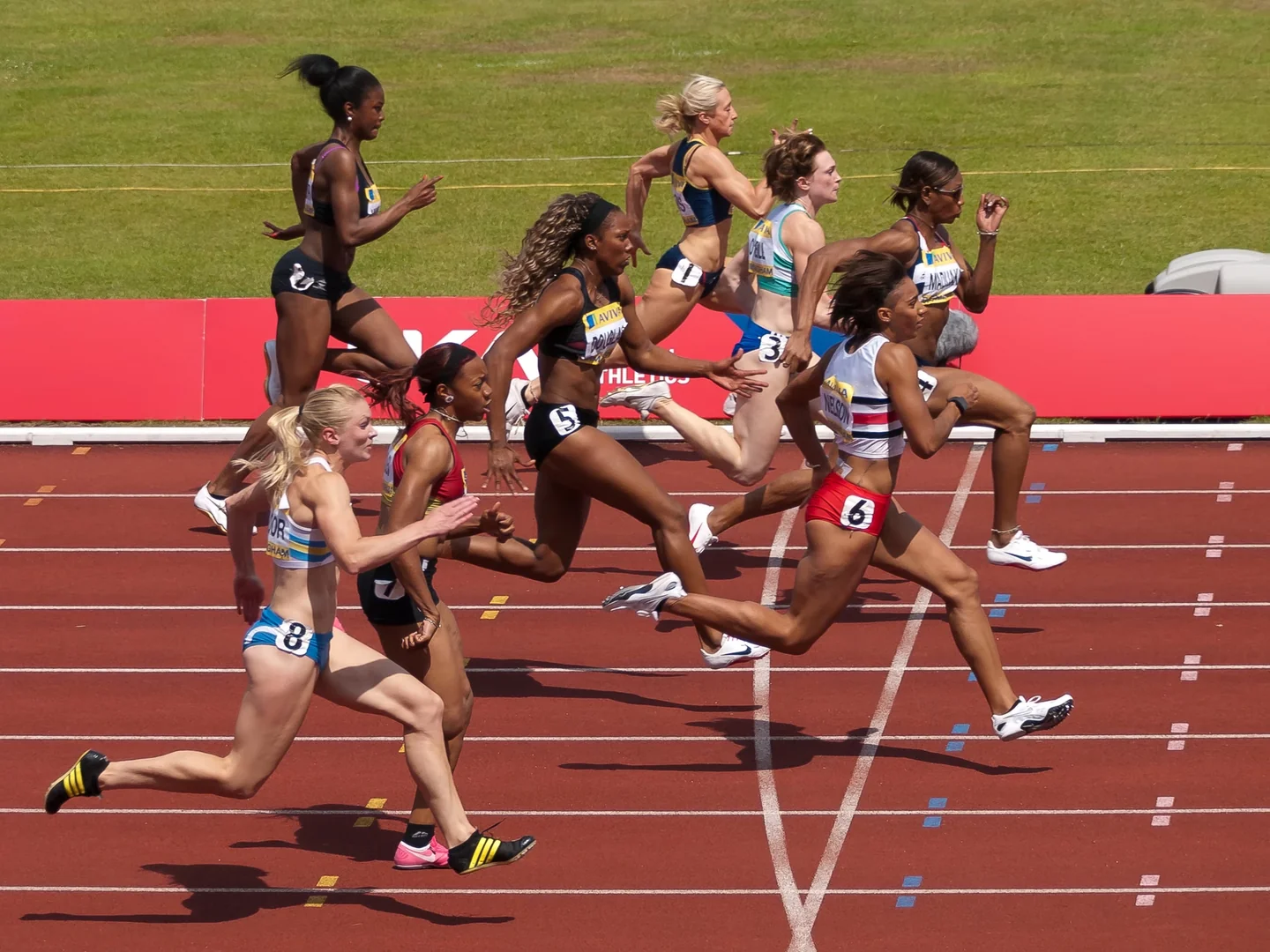
Gijón will once again turn pink on Sunday, June 21, 2026, when the Carrera de la Mujer Central Lechera Asturiana makes a stop in the city as the fifth race of the national circuit. The race will start at 10:00 a.m. and will keep its usual format of a popular 5K race, a short, accessible distance designed to bring together thousands of participants on a morning that blends sport, social visibility, and the atmosphere of a major urban event.
The 2026 edition comes with two registration options and a clearly charitable focus. The general entry fee is 14.95 euros until June 19, while the solidarity registration, benefiting the Galbán Association, rises to 20.95 euros for the same period. In both cases, the race is aimed at runners aged 8 and up and retains the participatory spirit that has made it one of the major events on the women’s calendar in Spain.
An event that blends sport, the street, and a social cause
The Carrera de la Mujer in Gijón is not just a 5-kilometer race. It is an urban scene with music, matching T-shirts, groups of friends, whole families, and a tide of runners that turns the seafront promenade and the city streets into a continuous ribbon of movement. Its strength lies not only in the number of registrations, but in its ability to bring together women of very different ages at the same start line, at very different paces, with one common goal: to take part in a popular event with a charitable purpose.
The Central Lechera Asturiana Carrera de la Mujer circuit keeps its structure of eight venues in 2026, with stops in Gran Canaria, Madrid, Vitoria, València, Gijón, A Coruña, Zaragoza, Seville, and Barcelona. On that map, Gijón holds a particularly visible place because of the event’s appeal in the north and because of its timing, already well into summer, when the city is at one of its most active points in the year. The fact that it is the fifth race of the XXII Circuit also reinforces its competitive value within the season as a whole.
The organizers repeat a formula that has worked for years: an accessible distance, simple logistics for most participants, and a collective experience that goes beyond the clock. That is why the race attracts both experienced runners and women taking part in a race environment for the first time. The sporting dimension coexists with a festive tone, without losing sight of the importance of a cause that grows more visible with every edition.
Date, time, and distance of the Gijón edition
The event is set for Sunday, June 21, 2026, and the start will be at 10:00 a.m. The official distance will be 5 kilometers, a measure that places it among the most manageable urban races and makes broad participation easier, from regular runners to women who prefer walking or alternating light jogging with brisk walking. That format also helps ensure the experience depends less on fitness level than on the willingness to be there.
The course, as is usual in this type of event, is based in the urban core of Gijón and follows a route designed for massive flow. The race is defined as popular, which means the focus is on participation rather than the elite. In practice, that changes the tone of everything around it: less competitive tension and more of a feeling of a city taken over by a shared event, with aid stations, entertainment, and a steady stream of runners moving as a group.
The distance also has a strategic reading. The 5 kilometers allow the event to remain open while retaining its race identity. It is not just a walk, but neither is it an event reserved for those who train every day. That balance explains much of its success: it is short without being trivial, accessible without being shallow. In the June calendar, it also offers an ideal opportunity for those who want to take part without facing complex preparation.
General registration and charity option
Registration for the Carrera de la Mujer Gijón 2026 offers two clear paths. The first is standard individual registration, with in-person pickup and a price of 14.95 euros until June 19. The second is individual solidarity registration, with in-person pickup and a cost of 20.95 euros, also available until that same date. The 6-euro difference goes to the Galbán Association, the organization that channels the race’s charitable component.
That solidarity option is not just a decorative add-on. It is a central part of the race’s story and explains why many participants choose to pay a little more. The gesture is built into a very simple mechanism: one registration, one bib, one T-shirt, and the feeling that individual effort contributes to a shared cause. In popular sport, that kind of connection has real impact because it turns a recreational activity into a tangible act of support.
The race also includes team registrations for 2 and 3 participants, likewise with in-person pickup and a price of 14.95 euros. This format reinforces the social dimension of the event and makes it easier for groups of friends, coworkers, or family members to sign up together. The physical pickup at the Runner’s Fair also adds a layer of pre-race experience that is already part of the event’s identity.
In-person pickup and the role of the Runner’s Fair
The organizers keep an in-person pickup system for Gijón, a decision that places the Runner’s Fair at the center of the lead-up to the race. Bib, T-shirt, and the rest of the registration materials are handed out there, which means participants must set aside a specific time before race day. For many runners, that pickup is almost a small ritual: the first physical contact with the event before the official start.
In-person pickup has clear operational advantages. It reduces issues, concentrates material distribution in a controlled space, and allows organizers to manage the volume of entries more efficiently. It also gives the event a recognizable texture, similar to other major popular races where the pre-race fair is almost as visible as the race itself. For an event of this size, that kind of logistics matters as much as the course.
The importance of this format is easier to understand when looking at the race’s scale. We are talking about an event with strong demand and very large potential participation, so the distribution of materials needs a solid framework. In that context, in-person pickup acts as a stabilizing piece. It is a practical mechanism that supports the festive tone without losing organizational control.
The urban course and the logic of a mass-participation race
Although the exact route map may vary slightly from one edition to another, the spirit of the Gijón course usually follows a very clear idea: to offer a flat, urban circuit capable of absorbing thousands of runners without breaking the collective rhythm. That choice is not accidental. In an event of this kind, safety, wide streets, and ease of passage matter just as much as the beauty of the setting.
In Gijón, the urban setting also adds a very recognizable visual dimension. The coastal city brings light, openness, and a direct relationship with the landscape, something that is especially noticeable in a race held in late June, with longer daylight hours and weather that can range from Atlantic breeze to the mild warmth of early summer. That combination helps the event maintain an open, crisp atmosphere, almost like a sports postcard.
For participants, the 5-kilometer course offers a specific experience: a quick start, a compact group, varied paces, and a finish that usually feels more like celebration than relief. It is not a distance that demands complex planning or long preparation, but it does require common sense in managing effort. The simplicity of the course is part of its success, because it allows the race to keep its inclusive tone without giving up a large-scale organization.
An event also designed for first-timers
The Carrera de la Mujer in Gijón often works as an entry point into popular running. The fact that it admits participants from 8 years old broadens its reach even further and reinforces a simple idea: this is a race designed to bring people in, not to filter them out. Many runners arrive with very little sporting background, while others use it as a date on the calendar with friends, with no competitive pressure or expectation of a personal best.
That diversity of profiles is one of the event’s key strengths. At the same start line, women seeking faster times run alongside others who only want to complete the route. The result is an atmosphere closer to a major sporting gathering than to a traditional race, and that defines the tone of the day. The clock matters less than being there, even though the event remains officially a race and not a walk.
That balance also has added value in terms of public health and sports participation. Events like this help keep the conversation about exercise, prevention, and healthy habits alive without turning preachy. The structure of the circuit itself, with several venues throughout the year, reinforces that continuity and turns each stage into part of a broader story about women’s physical activity and social visibility.
The charitable dimension and the link with the Galbán Association
The solidarity option in Gijón allocates part of the fee to the Galbán Association, a key organization in Asturias for supporting families affected by childhood cancer. That connection gives the race a layer of meaning that goes beyond the bib and the calendar. It is not just about signing up for an event, but about taking part in a form of support tied to a well-known organization in the region.
In popular sport, solidarity works best when it does not interfere with the experience, but is naturally woven into it. That is exactly what happens here. The runner can choose a standard registration or a solidarity registration without changing the event’s general mechanics, while knowing that part of the fee supports a specific cause. The price difference is modest and the gesture carries notable symbolic weight.
That component also helps explain the loyalty the race inspires. Many participants return year after year because of the mix of atmosphere, scheduling, and charitable purpose. In a city like Gijón, where the relationship with the street and the sea is part of urban identity, the Carrera de la Mujer fits naturally into the local calendar and gains visibility that goes beyond pure competition.
Sponsors, institutional support, and the event structure
The 2026 edition keeps a broad sponsorship structure, with Central Lechera Asturiana as title sponsor and a network of brands and institutions supporting the event’s scale. That backing partly explains the race’s ability to deploy significant logistics without losing its popular-race character. In an event of this size, sponsorship is not a commercial ornament, but the framework that makes the whole thing possible.
The presence of sponsors, logistics providers, and local collaborators also reveals the complexity of a mass-participation race. There is transportation, setup, material distribution, signage, runner services, and coordination with the city. All of that happens while thousands of people move within the same time window. The race’s apparent simplicity is, in reality, the result of a very precise machine.
That support also helps the event maintain a recognizable identity year after year. The T-shirt, the bag, the fair, the mass start, and the festive finish create a shared code that many participants instantly recognize. The Carrera de la Mujer is understood not just as a standalone event, but as a sports brand with continuity, memory, and its own calendar.
How to read the race within the 2026 calendar
The race’s place becomes clearer when seen alongside the rest of the 2026 calendar. Between March and November, the circuit travels through different Spanish cities with a pattern that combines coastal areas, inland capitals, and major urban centers. Gijón appears in June, on a date that places the event in the heart of the transition into summer and makes it one of the most visible milestones of the Asturian season.
For local audiences, that timing has obvious advantages. Temperatures usually favor an early start, the city sees more activity around the seafront promenade, and the morning of the event takes on a special rhythm. For those coming from elsewhere, the calendar also offers a chance for a sporting getaway in a comfortable, easy-to-recognize setting, with the city and the coast as a backdrop.
In journalistic terms, the event confirms a clear pattern: it is not competing to be the toughest race, but one of the most visible and participatory. That is its natural place. Gijón 2026 arrives with that hallmark intact, a defined start time, a fixed price, a specific charity option, and a proposal that combines mass sport and social narrative with unusual effectiveness.
What this event leaves behind: a street turned into a shared celebration
The Carrera de la Mujer Gijón 2026 is once again shaping up to be a major draw, built on a simple and powerful idea: running together to occupy public space with sport, solidarity, and visibility. The date, price, distance, and registration options already make the event’s workings clear, moving between rigorous logistics and a celebratory atmosphere.
Its appeal does not depend on a single factor. It lies in the short course, easy access, the solidarity option, the minimum age requirement, in-person pickup, and that wave-like collective effect that turns a June morning into a very specific image of the city. Gijón then becomes a major sports stage, but also a barometer of women’s participation and popular running culture.
With all that in mind, the 2026 edition arrives clearly defined and equipped with the ingredients that have made this event strong for years: large-scale organization, an established name, and a direct connection to a social cause. The result is a race that needs no embellishment to explain why it continues to hold its own place on the Spanish running calendar.



How to prevent thigh chafing: causes and real solutions

Women’s running windbreakers: seven jackets and how to choose

Do more workouts get rid of soreness? A guide for runners

Jaén Half Marathon 2026: Record 3,800 Runners Registered

Men’s short running tights: how to choose the right pair

World Triathlon confirms data breach involving medical data

Izan Edo targets podium at Miyazaki World Cup

María Pérez ranks ninth in World Athletics’ 2026 top ten

Dos Santos, Duplantis and Sawe: World Athlete of the Year finalists

San Silvestre Vallecana 2026: 42,000 places, prices and start times

 Races3 months ago
Valencia Half Marathon 2027: date and registration

 Races3 months ago
Valencia Marathon 2026: entry, ballot and course

 Reviews and Comparisons4 months ago
Asics Gel-Roadmiles 3 for men: review and current price

 Reviews and Comparisons4 months ago
Asics Gel Sonoma 8 Gore-Tex: complete analysis for trail and rain

 Sneakers3 months ago
Saucony Endorphin Pro 4: full review and verdict

 News5 months ago
Strava API 2026: what changes for clubs, challenges and runner apps?

 Reviews and Comparisons5 months ago
Nike Alphafly 3: opinions, sensations, and real key points

 Reviews and Comparisons4 months ago
Under Armour running shoes review 2025-2026: models and key features

 Sports Equipment4 months ago
Shoe sizes in cm: a clear guide to getting the right fit for your footwear

 Sneakers3 months ago
Skechers GO RUN Consistent 2.0 analysis: comfort and limits

 News5 months ago
Valencia Marathon 2026 route: key tips to train and run better

 Sneakers4 months ago
Adidas Adizero Boston 13 for men: review and verdict