Races
Gomera Paradise Trail 2026: distances, route, and key details
The Gomera race combines mountains, elevation gain, and scenery across various distances for very different profiles.

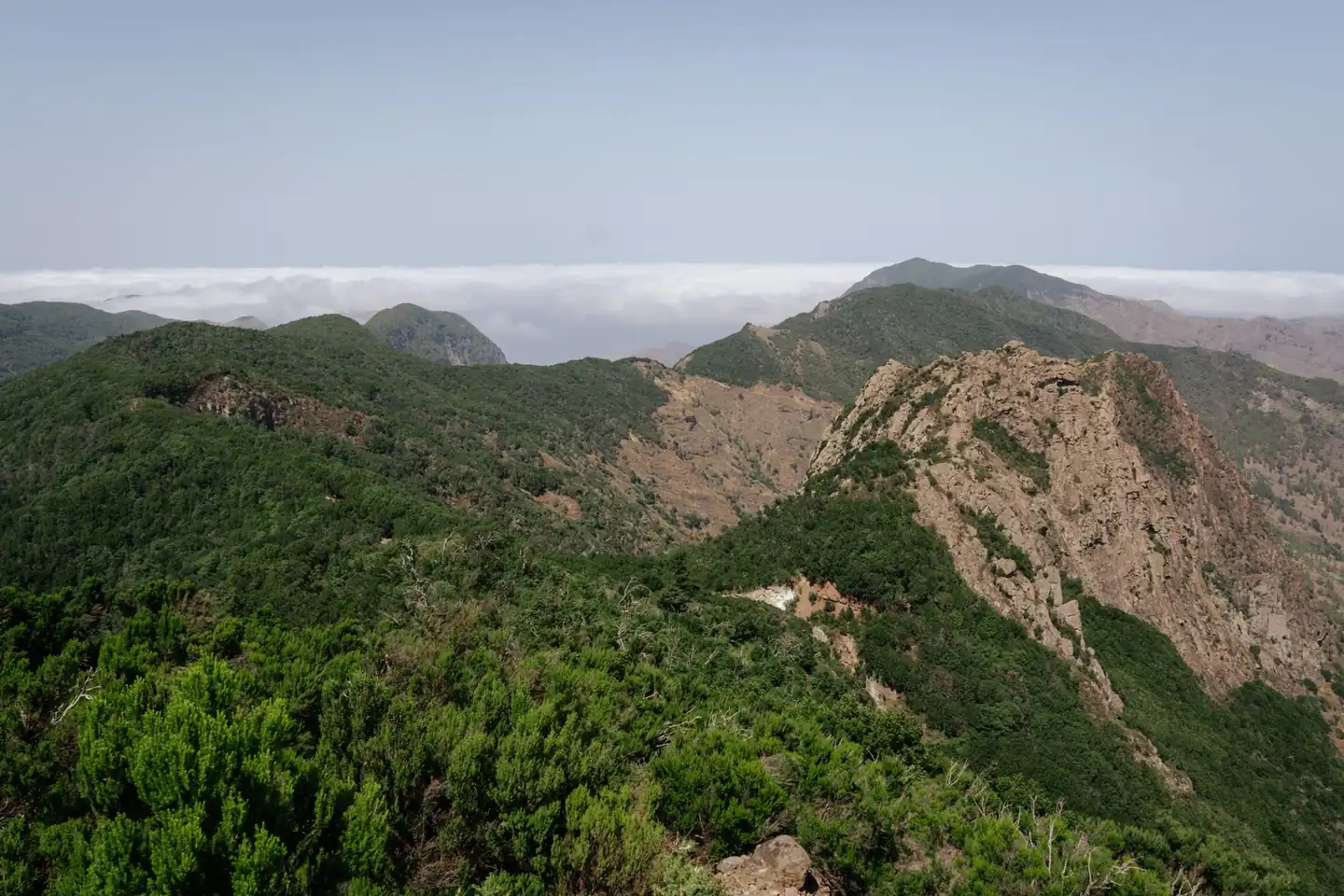
La Gomera once again places itself on the international trail map with an event that combines Atlantic scenery, serious elevation gain, and terrain as changeable as the island itself. The event brings together several distances and, over just a few days, draws the attention of runners looking for authentic mountains, not a gentle backdrop. Here, the clock matters, yes, but so does the ability to read the terrain: dry ravines, damp areas, windy ridgelines, and trails that demand constant concentration.
The most visible reference point of the race is its main 30-kilometer format, but the program opens up to different profiles with shorter, more accessible options. That combination explains much of its appeal: this is not just one race, but a small trail festival in a volcanic and green setting, with start and finish in San Sebastián de La Gomera. The attraction is not only sporting; it also has a territorial dimension, because the island presents itself as a technical, wild, and less crowded destination.
A race that sums up the island’s geography
The sporting value of Gomera Paradise Trail lies in the contrast of the course. In very few kilometers, steep climbs, tracks, mountain paths, and sections where humidity completely changes the grip underfoot all appear. This back-and-forth makes the race a very different experience from a linear road race or a trail with a more uniform profile. The island behaves like a folded map: just when everything seems to settle down, another ramp, another technical descent, or another section exposed to the wind appears.
The flagship event, the Sky 30K, features 2,536 meters of positive elevation gain over 30 kilometers. The figure is enough to understand the toughness of the day, but it does not tell the whole story. In La Gomera, elevation gain does not come in isolation; it is accompanied by heat in the ravines, humidity in the laurel forest, and exposure in the higher sections. That constant shift punishes the legs and also decision-making. Time is gained or lost not just by running faster, but by knowing when to slow down, when to walk, and when to conserve energy.
The setting of Garajonay National Park adds its own layer to the whole. The laurel forest, with its dense vegetation and sometimes slippery ground, offers an almost humid image of ancient woodland, very different from the mineral harshness of other parts of the island. This duality makes the race especially complete from a technical point of view. Whoever finishes one of its distances has not only run; they have also crossed several landscapes in a single morning or afternoon.
The distances and the profile of each race
The official program is organized into three formats: Sky 30K, Short Sky 16K, and Starter 10K. The first is the most demanding and the one with the greatest elevation gain; the second acts as a bridge between recreational mountain racing and more serious skyrunning; the third opens the door to runners who want to experience the event without facing extreme vertical load. That hierarchy of distances is well designed, because it means the race is not reserved for a very specific elite.
The 16-kilometer Short Sky adds 993 meters of positive elevation gain, a figure that already requires smart effort management. It is not an entry-level distance in the loose sense, although it is more accessible than the 30K for those seeking an intense race without the physical commitment of the longer format. Even so, it retains the spirit of the event: mountain terrain, changes in pace, and a constant reading of the surroundings.
The 10-kilometer Starter, with 367 meters of positive elevation gain, works as a gentler introduction to the race atmosphere. It should not be mistaken for a simple stroll; in trail running, a short distance can become demanding if the gradient bites and the terrain punishes the stride. Its appeal lies precisely in that: it allows runners to experience the island from the inside without jumping straight into the toughest zone of skyrunning.
In the case of the main Sky 30K distance, the challenge is not only the total elevation gain. The distribution of effort also matters, because the runner may encounter sections where the heart rate is high but real progress is slow. That feeling, common in mountain trail running, becomes more intense on an island where the ground and weather change over very short stretches. The result is a race that rewards all-around runners, not only the fastest on flat ground.
Dates, venue, and the sporting context of 2026
The 2026 edition takes on special significance because La Gomera hosts the International Skyrunning Federation World Championship. That detail raises the competitive level and also the event’s international visibility. The competition takes place between September 18 and 19, 2026, according to the information accompanying the main race, with an event program that the island’s event ecosystem extends from September 17 to 20. The geographic reference is clear: San Sebastián de La Gomera, the island capital and the starting and finishing point of the event.
The choice does not seem accidental. La Gomera has something that other islands do not offer with the same intensity: a mosaic of ravines, peaks, humid forests, and natural viewpoints in a relatively compact space. For skyrunning, that is pure gold. The International Federation has chosen a territory where difficulty does not depend only on slope, but on the variety of the setting. A runner can go from dry heat to fog in very little time, and that transition completely changes the race.
The capital of La Gomera also offers reasonable logistics for an event of this kind. Its status as the island’s administrative and transport hub makes it a natural gathering point. For the runner, that means the experience is not limited to the starting line: the entire island comes into play, from the journey to accommodation, including transfers and the planning of the days leading up to the race. In an island race, every move matters as much as the distance itself.
A course that gives no respite
The variety of the terrain is the most recognizable hallmark of the course. Dry ravines, narrow paths, wind-exposed high sections, and laurel forest create a sequence of stimuli very different from an urban race. The feeling is almost cinematic: the runner drops between rock walls, enters a shady, humid area, and later climbs again under a hot sun. That mix explains why the race is considered one of the most complete on the Canary Islands calendar.
In the ravines, heat can build up quickly, and the lack of shade turns every effort into a small negotiation with the body. In the higher areas, by contrast, breeze and humidity can chill someone suddenly if they sweat too much or stop for too long. This interplay of temperatures forces runners to dress and race intelligently, even though the rules and mandatory kit already anticipate some of those needs. The race does not simply reward fitness; it also demands practicality.
The Garajonay forest provides the most valuable contrast of all. Its dense vegetation, damp trails, and almost sponge-like texture under light rain or fog make that section a scene hard to forget. But beauty does not soften the difficulty. A poorly placed foot or a badly managed descent can translate into lost seconds, or worse. That is why the course has a reputation for being technical: here, the eyes work as much as the legs.
Equipment and safety in such a changeable trail
The organizers require a windbreaker, a charged mobile phone, a reusable cup or soft flask, and an emergency whistle in certain formats according to the rules consulted by competitors. The list sums up the race’s character well: mountains, distance, possible sudden weather changes, and the need for self-sufficiency. This is not a race for improvisation. On an island where a cloud can cover a summit in a matter of minutes, gear is not an extra; it is part of the strategy.
The windbreaker makes sense because of the higher sections and the possibility of fog or cold during the race, even when the day starts warm. The reusable cup or soft flask reflects a trend that is increasingly common in trail running: reducing waste and making aid stations easier to use without relying on disposable cups. The whistle, for its part, is a reminder that the natural environment has its own rules and that a loss of direction, a fall, or a minor incident can become more complicated in the mountains faster than desired.
In races of this kind, runners also tend to think about hydration systems, sun protection, and footwear. Not out of fashion, but out of pure logic. Terrain with rock, wet sections, and prolonged climbs is harder on shoes with poor soles than on those with aggressive traction. Likewise, a race with exposed ravines and long hours of sun means sunscreen, sunglasses, and light clothing are not accessories, but choices that affect performance and well-being during the event.
What really matters on an island like La Gomera
La Gomera is not run with the legs alone. It is also run with the head, with patience, and with a sharp reading of the conditions. The island has an orography that forces effort to be thought of in blocks. The same logic does not apply to a fast downhill on a track as to a damp trail in the laurel forest or a prolonged climb under the sun. The runner who adapts best is not always the most explosive, but the one who can change gears without falling apart.
The island context adds another layer. La Gomera is small, yes, but not simple. Its roads are winding, journeys can take longer than expected, and logistics become more delicate when the schedule brings together runners, companions, and organizing staff over just a few days. That feeling of a compact island, where everything seems close on the map but takes real time, is part of the experience. Deep down, it is also a reminder that mountain trail running is not just competition, but territory.
The cultural dimension is no smaller. The Silbo Gomero, local cuisine, and volcanic landscape make the visit much more than a bib registration. Many mountain races rely on that destination factor; in La Gomera, moreover, the setting has a very distinctive personality. Visitors from outside do not find a generic Canary Islands postcard, but an island with its own identity, marked by humid forest, black rock, and the Atlantic in the background.
The impact of the Skyrunning World Championship
The presence of the 2026 ISF World Championship multiplies interest in the edition. This is not just another race on the calendar, but a first-rate showcase for a discipline that has gained weight in recent years. Skyrunning thrives on demanding races, extreme landscapes, and courses that leave no room for shortcuts. La Gomera hosting that championship puts it in the spotlight for runners, brands, and fans interested in the most technical mountain events.
That context can raise the competitive level of the long format and also increase attention on the shorter distances. In events with global reach, the race becomes a story: favorites are followed, elevation gain is examined, the type of terrain is analyzed, and times are compared. But behind all that lies a very concrete reality: each runner experiences their own version of the same course. For some, it will be a battle for positions; for others, a way to reach the finish and keep a singular route in memory.
The combination of championship and landscape also has symbolic value. Modern trail running seeks authenticity, and few things are more authentic than racing in a territory that truly forces adaptation. La Gomera does not hand out easy meters or monotonous weather. That is why its race stands out: it does not smooth over the mountain, it shows it with its edges and mood swings, almost as if the island were breathing to the rhythm of the person crossing it.
An event that leaves a mark beyond the clock
Gomera Paradise Trail perfectly sums up what many runners seek today in a mountain race: real challenge, a recognizable landscape, and several distances for different levels. The 30-kilometer format commands respect; the 16-kilometer one balances toughness and accessibility; the 10-kilometer one offers an entry point without losing character. All of this takes place on an island that concentrates ravines, forest, and peaks in a compact and photogenic space, but above all a hard one.
The race is best understood when viewed as the sum of several factors. Elevation gain, temperature, humidity, navigation, equipment, and logistics are not separate pieces, but one puzzle. That is why the event appeals both to those who follow skyrunning and to those seeking a different trail experience, with more personality than many standard-profile mainland races. In this format, La Gomera does not function as a mere venue: it acts as the protagonist.
With the Skyrunning World Championship as a backdrop, the 2026 edition strengthens its place among the key Atlantic autumn events. For the calendar, it is a benchmark. For the island, a showcase. And for the runner, a lesson in pure mountain running: one that forces you to watch the trail, the sky, and your body at the same time, as if every kilometer were a conversation with the terrain.
The race makes it clear that the most memorable trail is not always the fastest, but the one that offers a complete reading of the place. In La Gomera, that means running among volcanic rock, laurel forest, and wind, with the sea on the horizon and elevation gain as a permanent companion. Few races capture so well the idea of going to an island only to discover that, in reality, the island is measuring you too.
You may also like: 3 Days Trail Trebol 2024: complete guide to the race in La Gomera.



How to prevent thigh chafing: causes and real solutions

Women’s running windbreakers: seven jackets and how to choose

Do more workouts get rid of soreness? A guide for runners

Jaén Half Marathon 2026: Record 3,800 Runners Registered

Men’s short running tights: how to choose the right pair

World Triathlon confirms data breach involving medical data

Izan Edo targets podium at Miyazaki World Cup

María Pérez ranks ninth in World Athletics’ 2026 top ten

Dos Santos, Duplantis and Sawe: World Athlete of the Year finalists

San Silvestre Vallecana 2026: 42,000 places, prices and start times

 Races3 months ago
Valencia Half Marathon 2027: date and registration

 Races3 months ago
Valencia Marathon 2026: entry, ballot and course

 Reviews and Comparisons4 months ago
Asics Gel-Roadmiles 3 for men: review and current price

 Reviews and Comparisons4 months ago
Asics Gel Sonoma 8 Gore-Tex: complete analysis for trail and rain

 Sneakers3 months ago
Saucony Endorphin Pro 4: full review and verdict

 News5 months ago
Strava API 2026: what changes for clubs, challenges and runner apps?

 Reviews and Comparisons5 months ago
Nike Alphafly 3: opinions, sensations, and real key points

 Reviews and Comparisons4 months ago
Under Armour running shoes review 2025-2026: models and key features

 Sports Equipment4 months ago
Shoe sizes in cm: a clear guide to getting the right fit for your footwear

 Sneakers3 months ago
Skechers GO RUN Consistent 2.0 analysis: comfort and limits

 News5 months ago
Valencia Marathon 2026 route: key tips to train and run better

 Sneakers4 months ago
Adidas Adizero Boston 13 for men: review and verdict