Races
Gran Maratón Benasque Mountains 28K direct to Pico Estivafreda
The 28K distance in Benasque combines toughness, altitude, and a very technical course in the heart of the Pyrenees.

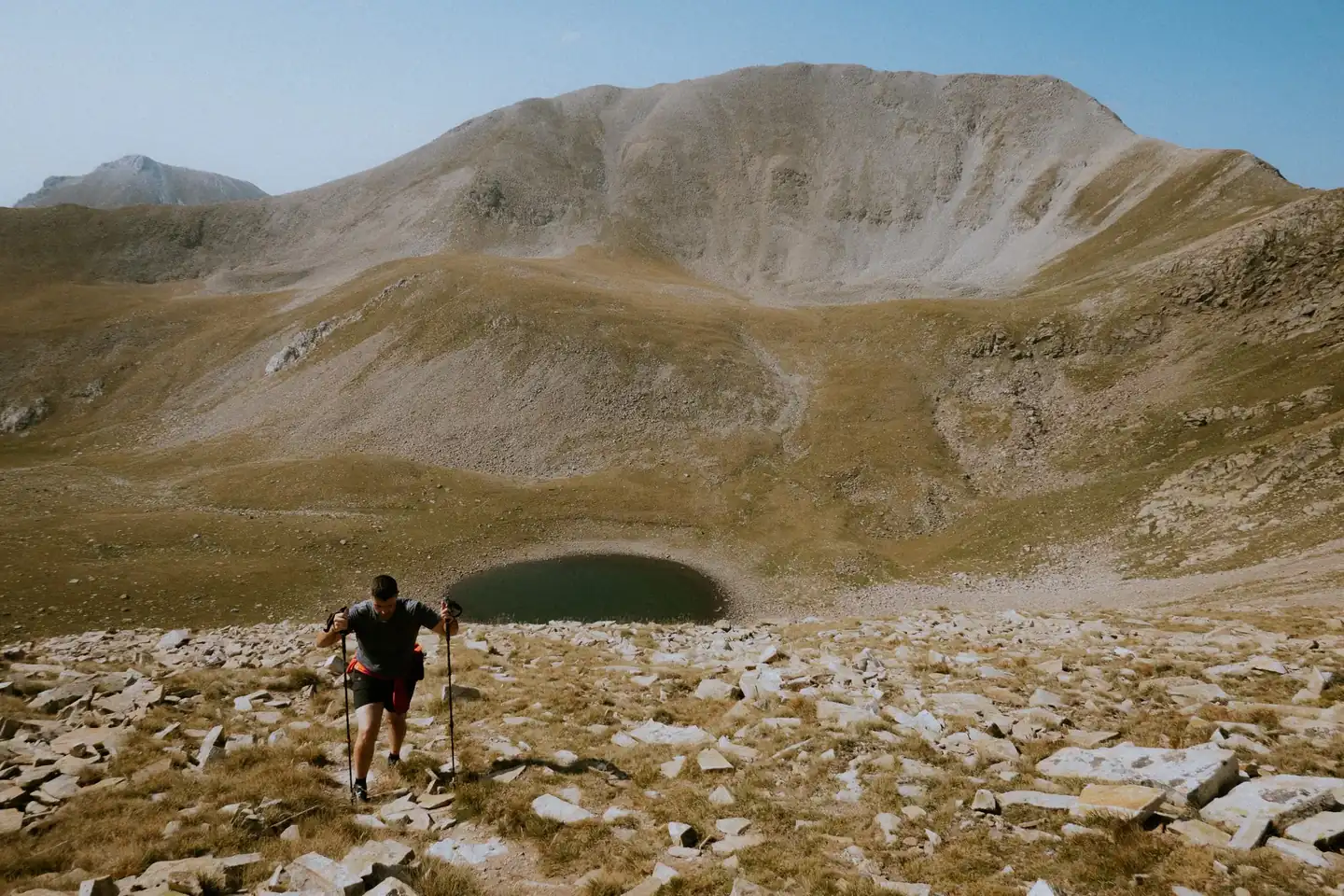
The 28-kilometer distance of the Gran Maratón Montañas de Benasque has established itself as the most balanced route between challenge and accessibility within one of the most renowned trail events in the Aragonese Pyrenees. It is not merely a short section of the main marathon: it is a race with its own identity, marked by the climb toward the Pico Estivafreda area, a serious elevation gain, and a profile that forces you to run smart from the very first kilometer.
In the 2026 edition, this category is listed at 28.9 kilometers and 1,630 meters of positive elevation gain, a figure that already makes the tone of the day clear. The start and finish are in Benasque, with Avenida de los Tilos as the main setting, and the race will take place on June 13. The result is a high-mountain course where effort is measured not only by pace, but by heart-rate management, terrain, and accumulated fatigue.
A race that is short only in appearance
The 28 kilometers in Benasque can fool the less attentive eye. On asphalt, they might sound like a moderate distance; in the mountains, and especially in the Benasque valley, they amount to a hard day’s work over rock, trail, incline, and altitude. The presence of the Pico Estivafreda as a reference point for the route explains much of its appeal: the runner not only moves forward, but also ascends into an environment where the landscape becomes harsher, more open, and more exposed.
The race retains the DNA of the main event. It comes from an organization that has turned the valley into a showcase for high-mountain trail running, with the same mix of toughness and beauty that defines the full marathon. But the 28K has a different nuance: it is more compact, more direct, and, in a way, more intense per unit of time. Those who run it often feel they cannot let their guard down for a single moment, as if the course demands total attention from the very first climb.
The 1,630 meters of positive elevation gain are not just a decorative number. They define the type of effort and the kind of runner who tends to perform well at this distance: profiles capable of maintaining a good stride on runnable terrain, but also of handling technical sections with poles, short steps, and precise reading of the ground. In Benasque, running fast is not enough; you need to know when to run, when to walk, and when to save energy.
The value of the route: uncompromising high mountain
The setting of the Posets-Maladeta Natural Park shapes the entire experience. The 28K does not pass through a friendly, uniform backdrop, but through a space where the mountain sets the pace. In June, the valley may combine green meadows, lingering snowfields, abundant water, and trails with rocky sections. That combination gives the course an almost cinematic texture, but it also adds technical demands that should not be underestimated.
The reference to Pico Estivafreda perfectly sums up the personality of this distance: a climb that organizes the race, separates efforts, and turns each kilometer into a small negotiation with the gradient. The runner who reaches the top strong not only gains time; they also gain mental margin to face the final part more cleanly. In these races, a bad decision costs more than a few seconds lost at an aid station or around a corner.
The beauty of the landscape does not soften the difficulty; it makes it more memorable. That is one of the keys to Benasque’s success on the trail calendar. While other races are marketed for speed or sheer spectacle, here the appeal lies in the mix of Pyrenean scenery, altitude, and real demands. The 28K is the perfect middle ground for anyone seeking a serious challenge without committing to the full marathon.
What the 28K demands from the runner
The key to this distance is not just climbing, but sustaining the effort after the climb. A mountain race of nearly 29 kilometers with 1,630 positive meters usually breaks down into two dimensions: the physical and the technical. The physical side depends on the ability to endure prolonged elevation gain without emptying the tank too early; the technical side is measured by the ability to move safely on descents, narrow trails, and uneven terrain.
In a setting like this, the runner who manages energy well usually gets more out of the race than the one who starts too enthusiastically. The first common mistake in races like this is running as if it were a flat 20K; the second, more common than it seems, is giving in too soon when a long ramp appears. Benasque punishes both extremes. The course rewards consistency, reading the profile, and the patience needed to tackle the steepest sections.
Altitude adds another layer of difficulty. Although each runner experiences it differently, competing at high altitude changes breathing, sharpens or disrupts sensations, and forces you to pay more attention to hydration and nutrition during the race. The 28K is not an exercise in improvised heroics; it is a test of discipline. Those who arrive with a simple but sensible strategy usually fare better than those who rely only on their legs.
A course designed to leave a mark
The Gran Maratón Montañas de Benasque has built its prestige on a very specific idea: running in a territory that makes no attempt to disguise itself. The 28K shares that philosophy. It does not try to appear easier than it is, nor does it soften the elevation gain with overly friendly sections. Its value lies precisely in the honesty of the route, in the feeling of facing a race that respects itself and respects the mountain it traverses.
The runner leaves Benasque expecting a demanding race and returns with an experience that combines toughness, open views, and the memory of terrain that changes at every moment. On the same day, you can encounter summer-bright meadows, damp passages, stony stretches, and walls where the silence weighs as much as the fatigue. It is a race that leaves sharp, almost tactile images: the sound of shoes on rock, the panting on a climb, and the breadth of the valley in the distance.
That emotional impact is not a decorative extra. In trail running, the races that are remembered are usually the ones that offer more than a stopwatch. Benasque’s 28K achieves that naturally. It does not need artifice. It only needs a distinctive name, a powerful setting, and a course that keeps the tension alive from start to finish.
The relationship with the queen marathon and the rest of the program
The 28-kilometer race occupies a strategic place within the event. It is close enough to the spirit of the 42K marathon to inherit its character, yet it retains its own personality, appealing to those who prefer a more contained distance. Compared with the 42 kilometers and five valleys of the queen distance, the 28K acts as a more compact version of the same mountain language.
The other major reference in the program, the 19K, is often seen as the gateway to the Estós Valley and the high-mountain experience. The 28K, by contrast, sits in an intermediate and very interesting space for experienced runners who do not want such an extended endurance race, but do want an event with substance, elevation, and sections where the terrain is in charge. It is, in a sense, the distance that most clearly translates the spirit of Benasque without demanding the full effort of a marathon.
That balance explains its popularity. The distance allows for ambitious competition, but also for a degree of caution. It gives room to experienced mountain runners who are not yet comfortable with the marathon and to veterans looking for a technical, intense, and well-organized race. It is no coincidence that this category draws so much interest around the event.
Key facts to keep in mind before the start
The 2026 edition takes place on Saturday, June 13, with Benasque serving as the logistical and emotional center of the entire day. The 28.9-kilometer course and 1,630 positive meters leave little room for improvisation, especially because high-mountain terrain can change quickly depending on the weather. In June, the valley usually shows its brightest face, but also its most alive: water everywhere, snow still present in higher areas, and a mountain that does not behave like a closed circuit.
The event organizers have emphasized several elements that are already part of the race’s hallmark: well-distributed aid stations, reinforced safety, and a broad volunteer network. More than 200 people collaborate in each edition, a figure that gives an idea of the race’s community weight. In an event like this, the volunteer is not a background figure: they are the one who keeps the system running at aid stations, crossings, the finish line, and checkpoints.
There is also a logistical component that runners should not overlook. The mountain course requires gear suited to the terrain, attention to mandatory equipment if the organizers require it, and a realistic assessment of one’s own level. The Benasque 28K is not designed for those looking for a leisurely outing, but for those who accept that trail running, when it becomes serious, always involves a somewhat rough conversation with the body.
Why this distance stands out in Aragonese trail running
Aragon has a deep relationship with the mountains, but few races capture that identity as well as Benasque. The 28K offers a mix that is very hard to replicate: altitude, clean scenery, physical demand, and a constant feeling of running in an environment that cannot be reduced to numbers. That combination has made it one of the most recognizable races on the regional calendar.
In addition, the category fits a runner profile that is increasingly common: someone who wants a long race to feel part of a major event, but not so long that it becomes an absolute endurance undertaking. The 28K offers a complete experience in less time, with enough mountain to leave a mark and enough difficulty to avoid trivializing it.
The event’s profile also rests on its atmosphere. The start in Benasque, the presence of runners from different countries, the work of the organizers, and the response from the public turn the day into something closer to a trail celebration than a simple competition. There are races you run through and races you inhabit; this one clearly belongs to the second group.
A distance for runners seeking truth in the mountains
The 28K of the Gran Maratón Montañas de Benasque gives nothing away, but it gives a lot back. It gives scenery, intensity, learning, and a very specific experience of what it means to compete in the Aragonese Pyrenees. The climb toward the Pico Estivafreda area, the accumulated elevation gain, and the mix of technical terrain with open landscapes create a race that shapes both the calendar and the memory.
At a time when many races are trying to become friendlier, Benasque continues to defend another language: that of the mountain as the protagonist, not the backdrop. That is why the 28K is so appealing. Because it does not promise ease and, precisely for that reason, it feels credible. Before the start, the runner already knows they are going to find effort, altitude, and beauty in generous doses.
That is where its journalistic and sporting strength lies: in being a race that does not need exaggeration to attract attention. The name Benasque, the route toward Estivafreda, and the well-measured toughness are enough to explain why this distance has earned its place among the most attractive in national trail running.
The image of Benasque left by this race
Those who complete the 28K usually remember three things: the climb, the landscape, and the moment when the body begins to realize the mountain has imposed its law. That blend turns the experience into something more than a result. The bib ends, but the profile, the altitude, and the feeling of having crossed a territory that demands respect remain.
The Gran Maratón Montañas de Benasque has managed to turn that idea into a solid narrative, and the 28K is one of its clearest chapters. It is not the longest distance in the program, but it is one of the most expressive. It captures the event’s character well: technique, scenery, toughness, and an unvarnished beauty that, in the mountains, is worth as much as the stopwatch.
That is why the 28K continues to grow in interest. Because it offers a direct way into the essence of Pyrenean trail running without giving up competitive ambition. And because Benasque, with Pico Estivafreda as one of its symbols, keeps reminding us that running in the mountains is not just about getting there, but about understanding where you are running.



How to prevent thigh chafing: causes and real solutions

Women’s running windbreakers: seven jackets and how to choose

Do more workouts get rid of soreness? A guide for runners

Jaén Half Marathon 2026: Record 3,800 Runners Registered

Men’s short running tights: how to choose the right pair

World Triathlon confirms data breach involving medical data

Izan Edo targets podium at Miyazaki World Cup

María Pérez ranks ninth in World Athletics’ 2026 top ten

Dos Santos, Duplantis and Sawe: World Athlete of the Year finalists

San Silvestre Vallecana 2026: 42,000 places, prices and start times

 Races3 months ago
Valencia Half Marathon 2027: date and registration

 Races3 months ago
Valencia Marathon 2026: entry, ballot and course

 Reviews and Comparisons4 months ago
Asics Gel-Roadmiles 3 for men: review and current price

 Reviews and Comparisons4 months ago
Asics Gel Sonoma 8 Gore-Tex: complete analysis for trail and rain

 Sneakers3 months ago
Saucony Endorphin Pro 4: full review and verdict

 News5 months ago
Strava API 2026: what changes for clubs, challenges and runner apps?

 Reviews and Comparisons5 months ago
Nike Alphafly 3: opinions, sensations, and real key points

 Reviews and Comparisons4 months ago
Under Armour running shoes review 2025-2026: models and key features

 Sports Equipment4 months ago
Shoe sizes in cm: a clear guide to getting the right fit for your footwear

 Sneakers3 months ago
Skechers GO RUN Consistent 2.0 analysis: comfort and limits

 News5 months ago
Valencia Marathon 2026 route: key tips to train and run better

 Sneakers4 months ago
Adidas Adizero Boston 13 for men: review and verdict