Races
Grandma’s Marathon 2027: history and route
Duluth combines history, coastline, and a great week of racing in an event with its own signature and enormous popular appeal.

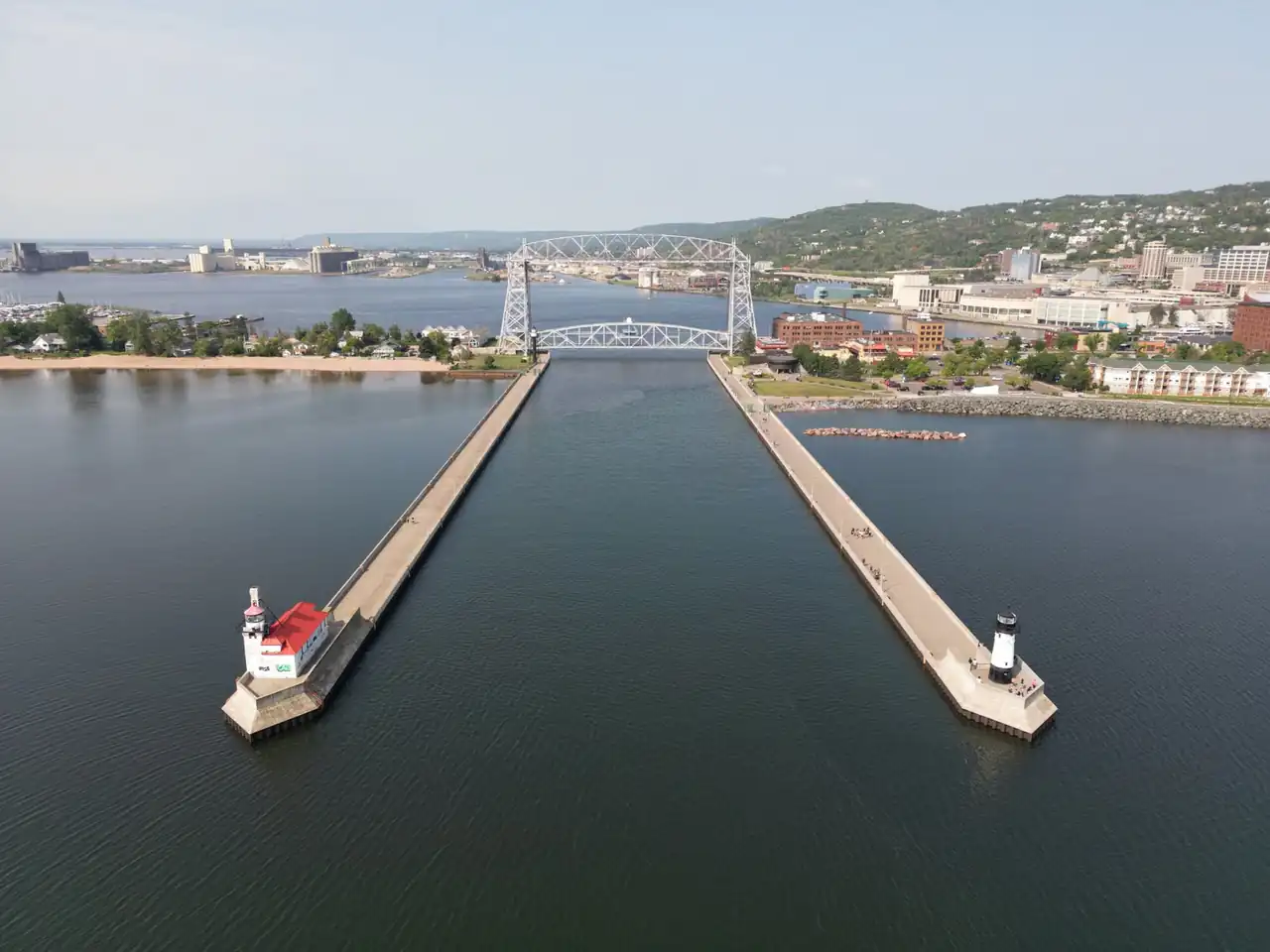
Grandma’s Marathon began as a local race and ended up becoming one of the big names on the American calendar. Every June, Duluth, Minnesota, fills with runners, volunteers, and spectators for a week that combines pavement, festival atmosphere, and a finish near Canal Park that is already part of road running lore.
Its appeal does not depend only on its size. The course, the geography, and a very recognizable identity also matter: start in Two Harbors, finish by Lake Superior, and a closing stretch that blends effort, wind, and sidewalk applause. That balance between toughness and beauty explains why many consider it a fast, well-organized race with a personality of its own.
A race that grew with the city
The first edition was held in 1977, with just 160 participants, and the project then seemed almost handcrafted. There was little budget, roads shared with traffic, and logistics very far from today’s scale. The initial push came from a small group of local runners and the decisive support of Grandma’s Restaurant, which eventually gave the race its name.
What began as an experiment on the North Shore became a regional reference and later a national one. Over the years, the race expanded its week of activities, adding the half marathon, the 5K, kids’ races, and other associated events. Today the race environment works like a well-oiled machine, with thousands of people moving through the city and an atmosphere that recalls a major summer sporting gathering.
Growth also had an economic and tourism impact. Duluth does not just receive runners: it receives families, companions, volunteers, and fans who fill hotels, restaurants, and public spaces. The race has become a showcase for the city and for the scenic route that borders Lake Superior, with the straightforwardness of a classic event and the visual magnetism of an inland coastal destination.
A course famous for being fast and scenic
The main marathon covers the classic distance of 42.2 kilometers, with a USATF-certified point-to-point course. The start is in Two Harbors and the finish in Canal Park, very close to the Aerial Lift Bridge and the area around Grandma’s Restaurant. Between those two ends, runners travel beside Lake Superior on a road with open stretches and others more sheltered, alternating broad views with small rhythm changes.
The race has a reputation for being fast, though it is not flat like an airport runway. There are gentle rolling sections and a few stretches that can punish the legs just as fatigue starts to make itself felt. That mix is especially appealing to those seeking a strong time without giving up a memorable race setting. In participants’ stories, the start among the trees and the finish in the urban core are two scenes that are easy to remember.
The course itself explains much of its prestige. The shoreline, the fresh air, and the continuity of the landscape help the race retain a sense of linear, almost cinematic travel. It is not a closed circuit or a technical route: it is a long, bright, exposed road, where runners feel they are moving toward a city waiting for them at the end with noise, banners, and a very recognizable finish line.
The half marathon and 5K complete the experience
The Garry Bjorklund Half Marathon has earned a starring role on Friday and early Saturday. It began in 1991 and over time has even drawn more entrants than the full marathon. It is 21.1 kilometers with the same lakeside backdrop and a particularly emotional finish in Canal Park, where the arrival often takes on the tone of a collective celebration.
The half marathon has built a distinct identity of its own. Many runners choose it because of the combination of accessibility and prestige, since it offers the feel of a major event without the full demands of 42.2 kilometers. In addition, its early start and huge turnout make it a kind of high-voltage prologue that opens the weekend with a very particular tension.
The William A. Irvin 5K serves as the opening gun for the competitive program. It is a 5-kilometer race with start and finish around the historic William A. Irvin ore ship in Canal Park, and a route designed to show the city to less experienced runners or to those who prefer a short distance within a bigger weekend. That variety is one of the organization’s great strengths: it allows marathoners, first-timers, families, and young athletes to coexist without breaking the event’s shared spirit.
Schedules, atmosphere, and a weekend unlike any other
The program is not limited to race morning. During the week there is an expo, a spaghetti dinner, kids’ races, the music festival, and a network of activities that makes the event something broader than just a start and a finish. For many runners, that feeling of a city taken over by running is part of the charm.
The organizers have worked hard to preserve the family-friendly character of the event even as participation has grown to around 20,000 over the weekend as a whole. There is ample volunteer support, a runner transportation system, spectator services, and a culture of encouragement that can be felt from the first kilometer. It is not an anonymous big city hosting another race, but a community that seems to have grown accustomed to living for that specific weekend.
The visual presentation matters too. The Aerial Lift Bridge, the lakeside promenade, and Canal Park appear again and again in photos, videos, and participants’ memories. The result is a race that almost functions like a moving postcard. Those who come from elsewhere are not only running: they are also discovering an inland maritime city, a kind of borderland between water, port, and asphalt.
What makes it different within the American calendar
In a country full of major marathons, Grandma’s Marathon stands out for its combination of tradition, size, and closeness. It does not have New York’s urban scale or Boston’s media aura, but it does have a very marked road-race identity, reinforced by decades of history, a loyal crowd, and a special relationship with northern Minnesota’s landscape.
The competitive profile also matters. The event has hosted top-level winners and very fast performances, including the men’s record of 2:09:06 and the women’s record of 2:23:52. Those times are not just numbers: they show that the course, on the right day, allows ambitious racing. The mix of straightaways, popular support, and weather that often favors long efforts has fueled that reputation as a race where it is possible to perform well.
The organizers have refined the race over the years. At different points they introduced changes in timing, competition rules, logistics, and runner services. They also broadened their social focus with youth programs, scholarships, and community projects. That evolution helps explain why the race is seen less as an isolated product and more as a local sporting institution with real ties to the community.
The weight of history and the figures that shaped it
The race holds episodes that are very different from one another, from the first edition, won by Garry Bjorklund and Wendy Hovland, to more recent milestones such as victories by international elite runners and the growth in participant numbers. Over the years, the race has seen names that left their mark, double wins, and performances that remain in the event’s memory.
The history also includes unusual moments, such as the 2020 stoppage caused by the COVID-19 pandemic, when the marathon, half marathon, and 5K were canceled for the first time. That broke a 44-year streak and made clear just how much the race is part of the city’s emotional calendar. In 2021 it returned strongly and kept adding stories, participation records, and new generations of finishers.
Another striking feature is the creation of its own mythology. The character Grandma Rosa, who greets runners at the finish, works as an affectionate symbol of the event. It is not just a decorative detail: it gives the finish a human face, turning the end into an almost theatrical scene where exhaustion meets public recognition.
Pavement, community, and sports tourism in one package
The race fits into that category of major road events that, in addition to competition, shape a city’s life for several days. Runners arrive for the challenge or the prestige, but they leave with a broader experience: the coast, the harbor, local food, Duluth’s hospitality, and the atmosphere of an event that turns participation into a temporary form of belonging.
For the local area, the impact is significant. Hotel occupancy, spending in bars and restaurants, the need for volunteers, and the presence of companions all multiply the event’s effect. In journalistic terms, Grandma’s Marathon is as much an athletic competition as it is a sports-tourism machine that runs with Swiss-watch precision and a very American tone of open community.
That is why its shorter distances do not reduce its prestige; they broaden it. The 5K, the half marathon, and the grassroots races allow the weekend to be open not only to elites or seasoned marathoners. It is an event structure designed so that every profile finds its place, from the debut runner to the athlete chasing a personal best, as well as the fan who comes for the city or the history.
What its latest stage reveals: more participants, more memory, and greater reach
Recent editions have confirmed its relevance. The weekend has reached historic finisher totals, with a volume that shows organizational health and steady demand. In that maturity lies an interesting paradox: the more it grows, the more the race insists on preserving a close, almost small-town feel, where runners still sense that someone is calling them by name rather than being absorbed into an indistinct crowd.
It has also expanded its symbolic dimension through gestures toward diversity, community programs, and a broader representation within the race’s official narrative. That places it in step with contemporary running, which is no longer understood only as performance, but as access, belonging, and shared celebration. In that transition, Duluth has managed to keep its accent.
Grandma’s Marathon remains, above all, a road race with memory. Its appeal does not come from a marketing manual, but from a concrete combination of elements: a start with a horizon, a road beside the lake, a city that embraces the runner, and a history that has been written continuously since 1977. On the map of American running, few events combine the epic of effort and the warmth of a race that seems built on a human scale so naturally.



How to prevent thigh chafing: causes and real solutions

Women’s running windbreakers: seven jackets and how to choose

Do more workouts get rid of soreness? A guide for runners

Jaén Half Marathon 2026: Record 3,800 Runners Registered

Men’s short running tights: how to choose the right pair

World Triathlon confirms data breach involving medical data

Izan Edo targets podium at Miyazaki World Cup

María Pérez ranks ninth in World Athletics’ 2026 top ten

Dos Santos, Duplantis and Sawe: World Athlete of the Year finalists

San Silvestre Vallecana 2026: 42,000 places, prices and start times

 Races3 months ago
Valencia Half Marathon 2027: date and registration

 Races3 months ago
Valencia Marathon 2026: entry, ballot and course

 Reviews and Comparisons4 months ago
Asics Gel-Roadmiles 3 for men: review and current price

 Reviews and Comparisons4 months ago
Asics Gel Sonoma 8 Gore-Tex: complete analysis for trail and rain

 Sneakers3 months ago
Saucony Endorphin Pro 4: full review and verdict

 News5 months ago
Strava API 2026: what changes for clubs, challenges and runner apps?

 Reviews and Comparisons5 months ago
Nike Alphafly 3: opinions, sensations, and real key points

 Reviews and Comparisons4 months ago
Under Armour running shoes review 2025-2026: models and key features

 Sports Equipment4 months ago
Shoe sizes in cm: a clear guide to getting the right fit for your footwear

 Sneakers3 months ago
Skechers GO RUN Consistent 2.0 analysis: comfort and limits

 News5 months ago
Valencia Marathon 2026 route: key tips to train and run better

 Sneakers4 months ago
Adidas Adizero Boston 13 for men: review and verdict