Races
Half Menorca 2026: date and venue
Dates, routes, prices, and services for an event that combines triathlon, island, and logistics in Fornells.

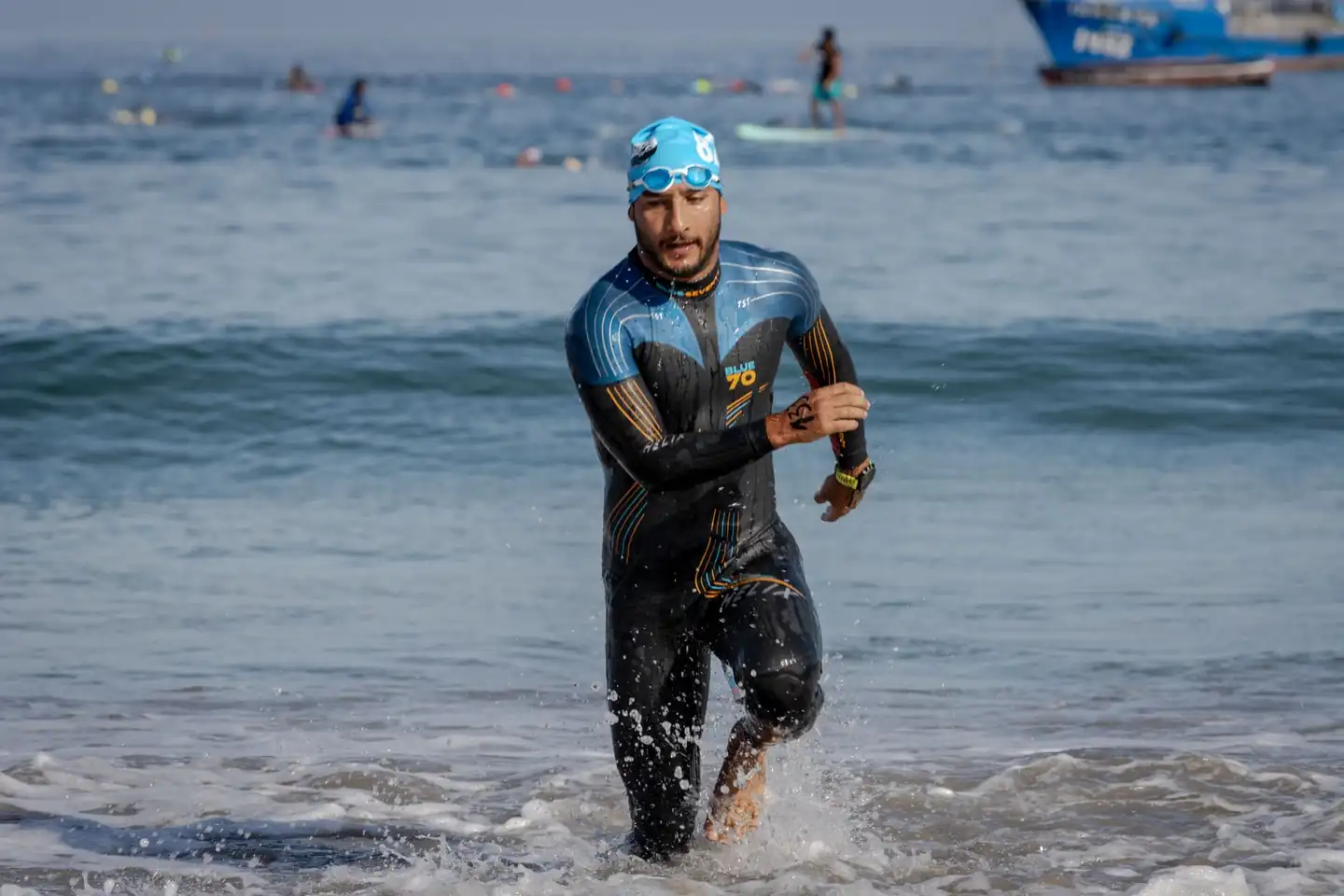
Fornells will put Menorca back on the triathlon map with an event that blends sport, scenery and meticulously planned logistics. The event known as ARTIEM Half Menorca has established itself as a middle-distance and short-distance experience in a very recognizable setting: harbor, open sea, island roads and an organization centered on participant comfort.
The 2026 edition is scheduled for September 27, with the start in the harbor of Fornells and an offering designed for triathletes who want to compete, but also enjoy a full weekend in Menorca. The format includes middle distance and short distance, as well as relays in both modalities, with a program that concentrates the main activity on Sunday morning and the pre-race procedures on Saturday.
A race that sells scenery, but demands a cool head
The strength of this event lies not only in the name of the hotel brand behind it, but also in the contrast between its vacation atmosphere and the real toughness of the effort. 1,900 meters of swimming, 90 kilometers of cycling and 21.1 kilometers of running in the long format make up a demanding half ironman, while the short distance reduces the load to 1,000 meters of swimming, 34 kilometers of cycling and 9 kilometers of running.
This balance has made the race a highly recognizable product within the Balearic calendar. Fornells offers a postcard-worthy image, yes, but the triathlon is decided by much less photogenic details: heat management, hydration, reading the wind and the ability to hold a steady pace when the island starts to take its toll. In races like this, the beauty of the setting does not soften the effort; often it makes it more memorable.
The course is mixed, with sections of asphalt and a route with several turns and open-air exposures that require constant concentration. On the bike, the triathlete is not competing against an extreme mountain profile, but against terrain that seems gentle and yet can become punishing if the wind or poor pacing takes over. In middle distance, that kind of circuit punishes the impatient more than the fast.
Fornells as the operational hub and sporting showcase
The core of the event is the Fornells Port, Paseo Marítimo Poeta Gumersindo Riera, both for the start and the finish. That choice is no small matter: it simplifies access, streamlines logistics and allows runners to clearly identify the start and return points. The race is not spread across different municipalities, but rather concentrates its pulse in a very specific, almost theatrical space, where every transition has a defined place.
The 2026 date, moreover, falls at a point in the calendar when summer has already eased and the island offers a milder climate than in July or August, although it can still be a demanding day. The appeal lies not only in the temperature, but in the feeling of running within a setting that retains light, sea and tourist activity without the noise of the peak months.
Menorca brings a quality that other destinations cannot easily copy: the impression that everything is close, yet nothing is lived in a hurry. That fits well with a triathlon that does not aim to be massive, but controlled, carefully prepared and focused on the participant’s full experience. The island is not just a backdrop; it also becomes part of the sporting story.
Distances, formats and what changes from one race to the next
The long format is the one that draws the greatest competitive interest. The middle distance adds up 1.9 kilometers of swimming, 90 of cycling and 21.1 of running, requiring an intelligent distribution of effort from the very first stroke. The start is set for 08:00, and the maximum time to complete the race is 8 hours, a reference that gives room, but does not allow for long improvisations.
The short distance, with 1,000 meters of swimming, 34 kilometers by bike and 9 kilometers on foot, starts at 08:35 and has a limit of 4 hours. It is a more accessible option for those who do not want such a long day, although that does not mean it is easy. In triathlon, fewer kilometers do not automatically mean less tension; sometimes they simply condense the intensity better.
Relays add another layer of interest. In both distances, teams can be male, female or mixed, and are made up of three people. This format opens the door to a shared competition, with a more strategic and less individualistic dynamic, in which each segment has a clear owner. It also helps make the event an entry point for different profiles within the same training group or club.
Registration, prices and deadlines worth keeping an eye on
The reference information places the opening of registrations on December 20, 2024 at 12:00 and the closing on September 24, 2025 at 23:59 in the official database consulted, although the sales platforms for 2026 already show the September 27, 2026 edition. That difference in calendars reflects something common in events with international reach: information is updated through different channels and not always at the same pace.
As for prices, the available references for 2026 show a clear range. The individual short distance appears from 73 euros at the reduced rate and 93 euros as the reference price. The individual middle distance ranges between 148 euros at the promotional rate and 173 euros as the base. In relays, the federated version of the short distance is listed from 102 euros and the non-federated version from 122 euros; in middle distance, prices are set at 203 euros for federated athletes and 223 euros for non-federated athletes.
It is also indicated that registration may include a 3 euro fee for the timing chip in individual and federated events, while the non-federated option includes the cost of the license or insurance for the three team members in relay events. In addition, the organization offers a refund policy within 24 hours after registration, and allows distance changes until September 15, 2026 with a management fee of 10 euros.
Pre-race logistics: bib, briefing and access control
One of the clearest features of the race is its internal order. Bib pickup is concentrated on Saturday, September 26, between 15:00 and 19:00, at the Fornells Sports Centre, alongside the participant expo and information point. Bib collection is not allowed on race day, a decision that reduces improvisation and better organizes the flow of people before the start.
The same Saturday, the briefing takes place between 16:30 and 17:15, followed by the bike check-in between 17:30 and 19:30. On Sunday, the bike park opens between 06:30 and 07:45, so the morning is designed to ensure participants arrive with time and without surprises. That sequence matters because in triathlon the tension rarely begins at the gun; it usually starts much earlier, with the chip, the helmet, the wetsuit and the transition.
The organizational side also includes mechanical service at check-in and on Sunday morning, a particularly valuable detail in island events. In an event like this, the smallest problems can quickly grow: a wheel with the wrong pressure, a dry chain, a poorly adjusted fit. Having technical support nearby reduces a source of stress that, in competition, weighs as much as a bad night’s sleep.
What the entry includes and why it matters more than it seems
The participation package is not limited to the bib and timing. The organization announces a finisher medal, participant bag, event T-shirt, photo and video service, post-race meal, hydration and nutrition stations, medical assistance, lockers, restrooms, showers, changing rooms, accident insurance and a personalized bib. The list says a lot about the event’s approach: it does not want to sell just a start by the sea, but rather a complete and comfortable day.
In the context of a middle-distance race, those extras are not just decoration. The recovery meal, access to showers and medical attention are elements that transform the runner’s experience before, during and after the finish line. They also provide a sense of structure, something especially appreciated when traveling to race outside the mainland and everything depends on schedules, transfers and very specific time windows.
The organization also emphasizes the existence of aid and nutrition stations distributed along the course. In the long distance, the run has a very broad support network, while the bike segment adds enough points along the way to prevent the runner from becoming shipwrecked by their own strategy. In races of this profile, aid stations are not accessory: they are part of performance.
Wetsuit, bike and rules that set the competitive tone
The competition makes clear what type of bike is mandatory: road or time trial. That precision removes doubts and places the event within the usual standards of middle- and short-distance triathlon. The use of wetsuits in swimming is also regulated, with nuances by age and water temperature. In the short distance, wetsuits are forbidden above 22 ºC and become mandatory below 15.9 ºC. In the middle distance, the thresholds rise to 24.6 ºC for prohibition and drop to 15.9 ºC for mandatory use.
That kind of rule is not jargon for specialists; it directly affects how the participant prepares. A wetsuit can completely change buoyancy, initial energy expenditure and thermal sensation. In a sea start, small prior decisions have a visible effect later, when the body is already running and fatigue has settled into the legs like wet sand.
There is also an important rule for teams: the relay is done through the chip and box access is supervised by judges. It is not an anecdotal ceremony, but a part of the race that requires precision. A well-executed relay keeps the group’s pace; a poor one turns an orderly race into a chain of mistakes. That is why the team format, though it may seem friendlier, still requires real discipline.
An experience designed to stay in the memory, not just the stopwatch
ARTIEM has turned this race into a sporting product with its own identity. The message surrounding the event emphasizes the idea of experiencing Menorca through sport, with an associated stay at ARTIEM Audax, transfers to the event, early breakfast, a pre-race clinic and daily access to the Blue Spa. This combination aims to ensure that participants do not come to the island just to race and leave; it wants them to stay a few more hours, breathe in the place and associate the race with a feeling of orderly rest.
The accommodation proposal in a premium room with terrace, with a minimum stay of three nights and half board, fits that approach. So does the energy breakfast from 05:30 on race day and the post-race recovery lunch. They are pieces of hospitality applied to performance, a kind of safety belt for the traveling triathlete who needs to reach the start line with a clear head.
The brand also relies on the Blue Spa in Cala Galdana, presented as the largest and most complete thermal circuit in Menorca. Beyond the promotion, the journalistic reading is clear: the race sells an idea of sport integrated with well-being. That explains why it attracts both experienced triathletes and those looking for a setting less harsh than other races on the calendar, without giving up the competitive element.
Menorca, the wind and that kind of triathlon that does not fool anyone
Some races are remembered for the finishing time and others for the place. ARTIEM Half Menorca belongs to the second category, even if the clock also matters. Fornells, Cala Galdana and northern Menorca offer a sense of openness that accompanies the athlete from start to finish. The sea shines, the road has rhythm and the air, when it picks up, reminds you that no scenery races for you.
That is why the appeal of this race goes beyond its commercial name. It is an event that blends sports tourism, precise organization and a very clear format, with official distances, defined schedules, public prices and services that solve many of the usual problems of traveling to compete. In a calendar crowded with similar events, that mix of location and logistical care is what gives it personality.
The 2026 edition is presented, then, as a very recognizable triathlon event: a Sunday morning in Fornells, an open sea that forces you to think, a bike leg that demands consistency and a run that clearly separates the disciplined from the overhasty. Menorca, in this context, is not just a destination. It is part of the test.



How to prevent thigh chafing: causes and real solutions

Women’s running windbreakers: seven jackets and how to choose

Do more workouts get rid of soreness? A guide for runners

Jaén Half Marathon 2026: Record 3,800 Runners Registered

Men’s short running tights: how to choose the right pair

World Triathlon confirms data breach involving medical data

Izan Edo targets podium at Miyazaki World Cup

María Pérez ranks ninth in World Athletics’ 2026 top ten

Dos Santos, Duplantis and Sawe: World Athlete of the Year finalists

San Silvestre Vallecana 2026: 42,000 places, prices and start times

 Races3 months ago
Valencia Half Marathon 2027: date and registration

 Reviews and Comparisons4 months ago
Asics Gel-Roadmiles 3 for men: review and current price

 Races3 months ago
Valencia Marathon 2026: entry, ballot and course

 Reviews and Comparisons4 months ago
Asics Gel Sonoma 8 Gore-Tex: complete analysis for trail and rain

 Sneakers3 months ago
Saucony Endorphin Pro 4: full review and verdict

 News5 months ago
Strava API 2026: what changes for clubs, challenges and runner apps?

 Reviews and Comparisons5 months ago
Nike Alphafly 3: opinions, sensations, and real key points

 Reviews and Comparisons4 months ago
Under Armour running shoes review 2025-2026: models and key features

 Sports Equipment4 months ago
Shoe sizes in cm: a clear guide to getting the right fit for your footwear

 Sneakers3 months ago
Skechers GO RUN Consistent 2.0 analysis: comfort and limits

 News5 months ago
Valencia Marathon 2026 route: key tips to train and run better

 Sneakers4 months ago
Adidas Adizero Boston 13 for men: review and verdict