Races
Hortaleza Popular Race 2025: date, route and key details
Hortaleza regains its athletic event with 5K and 10K races, a June start, and a route closely tied to the neighborhood.

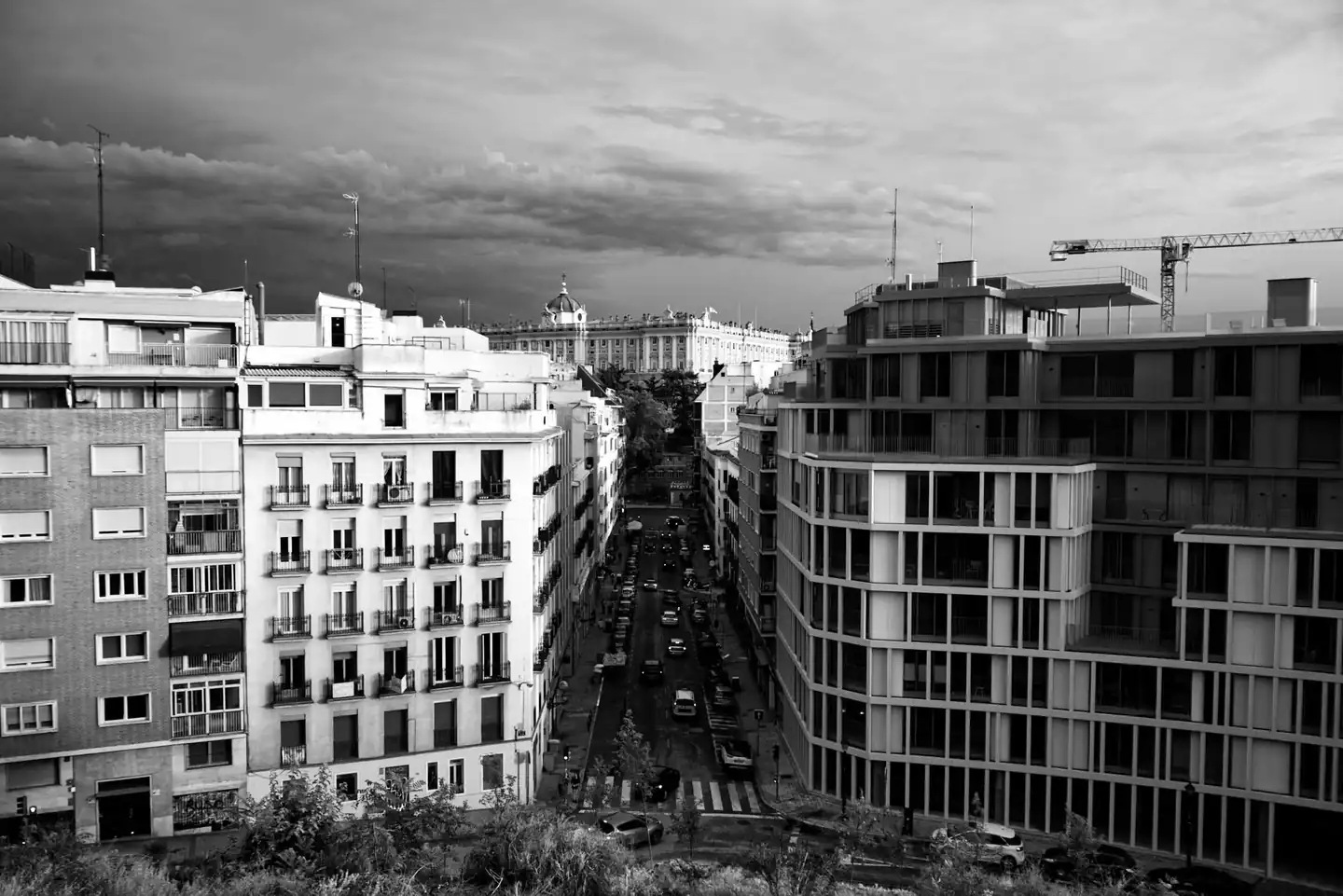
The Hortaleza popular race of 2025 appears on the Madrid calendar as one of the district’s most recognizable events, with a planned start on June 2 and a 10 km format that keeps the neighborhood’s sporting and community spirit alive. In the municipal information consulted, the race is listed in Hortaleza and retains that popular-event profile that combines broad participation, a neighborhood atmosphere, and logistics closely tied to the local festivities.
The available reference places the start in Hortaleza and includes it within the official list of urban races in Madrid for 2025, a calendar that moves with the same rhythm as the city itself: districts, avenues, partial closures, and a network of events that runs through the year from January to December. On that map, Hortaleza’s event holds its own place because of its district identity, its connection with the festivities, and the simplicity of a distance that suits both regular runners and those looking for an accessible race at the very beginning of June.
A neighborhood event with its own weight in Madrid’s calendar
Hortaleza is no ordinary setting within Madrid’s popular racing circuit. The event is part of a district that has spent years supporting a very active calendar, with races, school cross-country events, and charity runs that help shape a close-to-home running culture. That foundation explains why this race remains interesting beyond the bib number: it works as a piece of local life, almost like a snapshot of the neighborhood in motion.
The 2025 edition also comes at a particularly sensitive time of year for urban races. June usually brings higher temperatures, longer days, and a type of effort that requires careful timing, hydration, and pacing. In this context, a 10 km road race is not just a distance; it is also a small negotiation with the heat, the pavement, and the clock. That is why the event’s informative value is not limited to the date: it also includes the kind of experience it offers.
The essential fact, the one that matters most to anyone planning their season, is already on the table: June 2, 2025, with a start in Hortaleza and a distance of 10 kilometers. From there, everything else — course, pace, turnout, atmosphere — completes the picture. It is not a marathon or a half marathon; it is a popular race with a practical purpose, the kind that helps gauge fitness without the strain of a long-distance event.
What is known about the race: date, distance, and setting
The municipal information published in Madrid’s 2025 urban race calendar lists this event as the Hortaleza neighborhood festivities popular race, with a single distance of 10 km and its venue in the district itself. The start is associated with Hortaleza’s urban fabric, which suggests a route designed for local traffic and for the inevitable coexistence with residents, traffic, and public space. That balance is very common in district races in Madrid and is part of both their appeal and their limitations.
The absence of details such as the exact time or the specific start address in the municipal source does not reduce the value of the main fact, but it does require a cautious reading of the event. The official calendar confirms the race and its general location, while other specialized outlets expand on times, registration, or starting points once the organizer has released that information. In this case, what is verifiable and certain is that the race is scheduled for Hortaleza on June 2, 2025 and that its official distance is 10 kilometers.
That format suits the profile of the popular runner looking for a concrete spring or early-summer goal. An urban 10K does not demand the volume of a half marathon, but it does require a reasonable training base, some tolerance for sustained pace, and a minimum ability to manage effort if the heat builds. In June, too, the body no longer runs in winter’s coolness; it heads onto an asphalt track that holds heat like a frying pan at midday.
Course & elevation Edition 2025
Per-kilometre table
| Km | Elevation | Grade |
|---|---|---|
| 1 | 706 m | -0.7 % |
| 2 | 691 m | -1.6 % |
| 3 | 678 m | -1.3 % |
| 4 | 661 m | -1.6 % |
| 5 | 642 m | -1.9 % |
| 6 | 631 m | -1.1 % |
| 7 | 618 m | -1.4 % |
| 8 | 616 m | -0.2 % |
| 9 | 633 m | 1.7 % |
| 10 | 637 m | 0.4 % |
Plan your pace on this course →
Route source: Google My Maps
Why this race matters to runners in Madrid
District races have a special value because they offer something that is often lost in big events: closeness. In Hortaleza, the runner is not only chasing a time, but also an experience that retains a human scale. The logistics are usually more manageable, the route more familiar, and the relationship with the surroundings more direct. There are no grand effects; there are streets, neighbors, barriers, and a neighborhood that makes its way between effort and celebration.
There is also a calendar component. Hortaleza’s 10K appears at a time of year that works well as a bridge between spring goals and summer plans. Those coming off a half marathon, or those preparing for an autumn race, will find it a useful test of how they feel. Those who want an accessible target, on the other hand, can use it as their first 10K of the year. That versatility explains why popular races continue to draw interest even in an increasingly crowded sports market.
Another important feature is its connection with the Hortaleza festivities. It is not just an isolated race on the calendar, but an event that is part of a broader celebration of the district. That relationship gives it character and helps explain why these events work as a local barometer: they do not just measure legs, they also measure belonging. On a Sunday or Monday in June, running through the neighborhood is not only about running; it is about recognizing yourself in streets that change pace for a few hours.
How it fits into Madrid’s 2025 calendar
Madrid’s 2025 urban race program shows notable density, with events spread across all districts and a mix of distances ranging from school miles to the marathon. Within that structure, Hortaleza appears several times throughout the year, confirming its weight as a runner-friendly area. The June event is not alone: it shares the spotlight with other district references, such as autumn races or charity events that keep the local sporting flow alive.
This continuity matters because it helps us understand the June race as part of a tradition, not as an improvised novelty. In practice, that usually translates into an organization that knows the terrain, a loyal runner base, and a course that is already part of the neighborhood’s sporting imagination. For runners, that context brings a familiar feeling: arriving at a place that already has memory of bib numbers, stride, and refreshment stations.
It is also worth placing it on the broader Madrid map. June is a month packed with urban races, charity runs, and nighttime events, but Hortaleza stands out for its simplicity and district-scale nature. Compared with the big events in the city center, this is all about neighborhood fabric. That difference matters a lot in the final experience: less monumental postcard, more closeness; less showcase, more lived-in street.
What an urban 10K usually demands in June
An urban 10-kilometer race in June calls for caution and judgment. The asphalt increases the perceived temperature, the sun can harden the pace, and the body arrives with less cool-weather reserve than it would in March or April. Even when the race is well organized, runners need to read the environment almost domestically: drink before they are thirsty, start a bit more conservatively than ego would like, and accept that heat changes the geometry of effort.
In races like Hortaleza’s, the participant profile is usually very varied. There are habitual bib runners, others chasing a personal best, and also those who come for the social or neighborhood aspect. That mix defines the popular spirit very well: not everyone is competing for the same thing, but everyone shares the same ground. The sporting value depends not only on the final time, but also on the way the effort is sustained within a city that never stops.
On a tactical level, a June 10K usually rewards consistency more than impulsive starts. The first kilometers, if the heat is already pressing, can be deceptive. The body wants to go faster than is wise, and that is where an important part of the race is lost. That simple but forceful logic defines the kind of race Hortaleza is: a 10K of endurance and management, not early showmanship.
The available information on registrations and routes
The municipal source consulted confirms the race’s existence, date, and distance, but does not detail in that section the full information about registration, bib pickup, or the exact route. That does not mean those details do not exist, only that the official reference used for the calendar focuses on organizing Madrid’s season rather than laying out every logistical element of each race. In district races, this is common: first comes the calendar placement, and then the specific conditions are expanded.
In Madrid’s popular-race ecosystem, the finer details usually appear as the organizer opens registration and publishes the full regulations. Until then, the solid fact is the one that does appear in the calendar: a 10 km race in Hortaleza, scheduled for June 2, 2025. For the reader, that means it can already be placed on the agenda with enough precision, without confusing it with other district events held in autumn or winter.
Journalistic caution here is essential. In such a broad calendar, mixing up events from different editions or of different types leads to easy-to-avoid mistakes. That is why it is important to separate confirmed information from what is merely likely. Confirmed: date, district, and distance. Likely, but not assured in this source: the exact route, the precise time, and the registration fee. That distinction does not reduce interest; on the contrary, it gives the useful data credibility.
Hortaleza, a district with a strong grassroots running culture
The district of Hortaleza has built a steady presence on Madrid’s running map. Popular races, school cross-country events, and charity runs are not isolated episodes, but part of a grassroots sports culture that has endured over time. In that ecosystem, each event serves a different function: some develop future athletes, others bring families together, others help assess fitness. June’s race mixes a bit of all of that.
In urban terms, Hortaleza offers a very recognizable setting for this kind of event. It is a space where residential areas, wide roads, and neighborhood zones make it possible to stage popular races without turning the city into an inaccessible scene. That compatibility between daily life and sport is one of the keys to these events’ success: the street remains a street, but for a few hours it takes on a different rhythm, slower, louder, more athletic.
There is also an emotional component that should not be underestimated. Running in the neighborhood where you live, work, or train creates a special kind of bond. The runner moves through places they know by heart and, at the same time, rediscovers them. The corner, the turn, the avenue, the shade of a tree. Everything changes scale when it passes under the pulse of a popular race. Hortaleza, in that sense, is not only organizing a race; it is watching itself run.
An event that says a lot about Madrid’s racing season
The Hortaleza popular race of 2025 neatly sums up one of the strengths of Madrid running: the ability to combine big city and neighborhood without losing identity. Madrid has half marathons, marathons, and mass-participation events, but a large part of its real athletic life happens in these district races, where atmosphere matters as much as the clock. They are road races, yes, but also races of calendar, community, and routine.
The fact that the race takes place on June 2 puts it in a part of the year where the season has already matured. The first spring goals are behind, and a more irregular period opens up, with heat, holidays, and changing routines. Precisely for that reason, a 10 km race like Hortaleza’s works as an anchor: a fixed point in the middle of weeks that begin to blur as summer arrives. In the end, that is its value: offering a clear objective when the calendar starts to become disordered.
Hortaleza once again claims its place with a 10-kilometer race that combines an official calendar slot, local identity, and a distance that any popular runner will immediately recognize. The date is already set, and so is the district. The rest is decided by each stride, with the neighborhood as the stage and June as the backdrop.



How to prevent thigh chafing: causes and real solutions

Women’s running windbreakers: seven jackets and how to choose

Do more workouts get rid of soreness? A guide for runners

Jaén Half Marathon 2026: Record 3,800 Runners Registered

Men’s short running tights: how to choose the right pair

World Triathlon confirms data breach involving medical data

Izan Edo targets podium at Miyazaki World Cup

María Pérez ranks ninth in World Athletics’ 2026 top ten

Dos Santos, Duplantis and Sawe: World Athlete of the Year finalists

San Silvestre Vallecana 2026: 42,000 places, prices and start times

 Races3 months ago
Valencia Half Marathon 2027: date and registration

 Races3 months ago
Valencia Marathon 2026: entry, ballot and course

 Reviews and Comparisons4 months ago
Asics Gel-Roadmiles 3 for men: review and current price

 Reviews and Comparisons4 months ago
Asics Gel Sonoma 8 Gore-Tex: complete analysis for trail and rain

 Sneakers3 months ago
Saucony Endorphin Pro 4: full review and verdict

 News5 months ago
Strava API 2026: what changes for clubs, challenges and runner apps?

 Reviews and Comparisons5 months ago
Nike Alphafly 3: opinions, sensations, and real key points

 Reviews and Comparisons4 months ago
Under Armour running shoes review 2025-2026: models and key features

 Sports Equipment4 months ago
Shoe sizes in cm: a clear guide to getting the right fit for your footwear

 Sneakers3 months ago
Skechers GO RUN Consistent 2.0 analysis: comfort and limits

 News5 months ago
Valencia Marathon 2026 route: key tips to train and run better

 Sneakers4 months ago
Adidas Adizero Boston 13 for men: review and verdict