Races
Hyderabad Marathon 2026: date and distances
The great Hyderabad meeting brings together distance, elite athletes, and mass participation in an event with sporting and social significance.

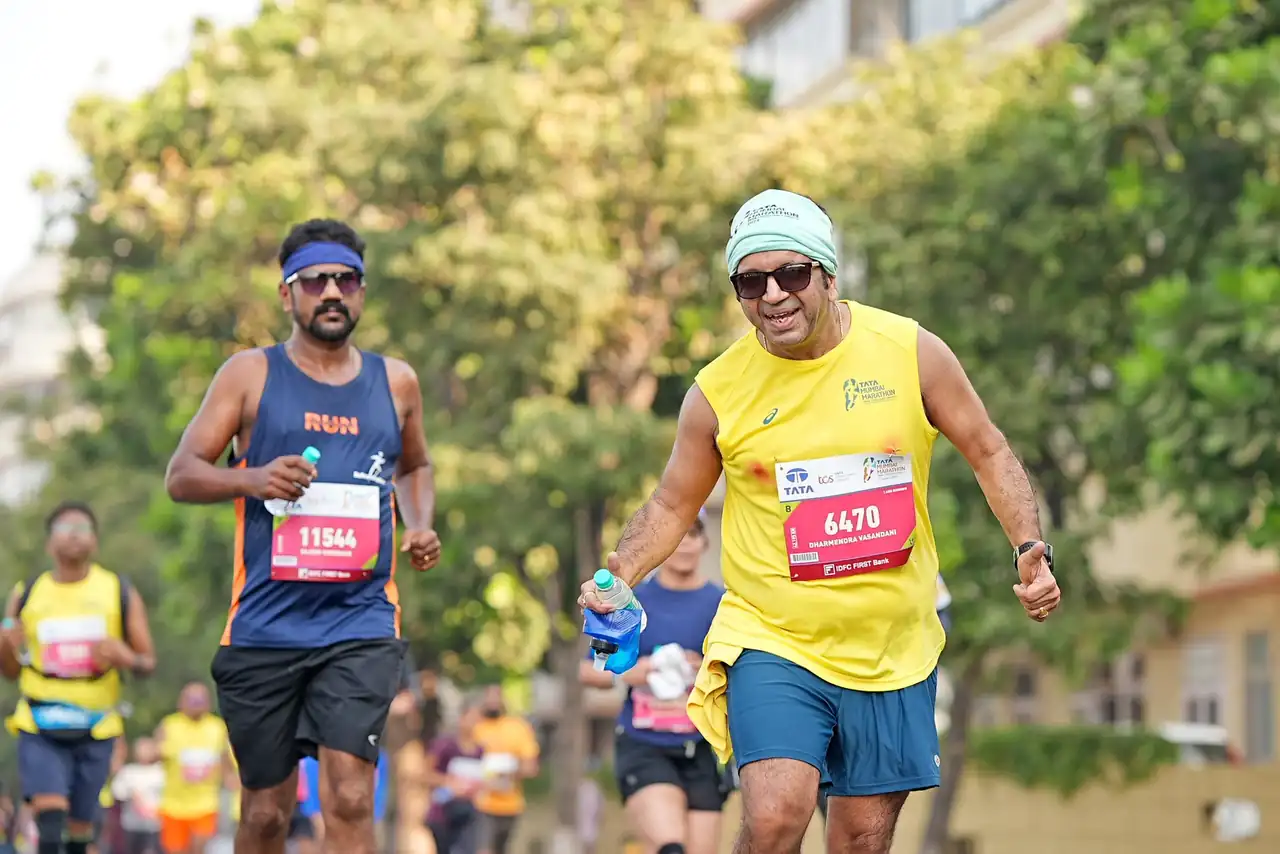
The NMDC Hyderabad Marathon has established itself as one of the major symbols of running in India: an urban, large-scale race with a course that blends avenues, bridges, tech districts, and stretches with a strong environmental character. It began in 2011 and, since then, has gone from being a gamble by the Hyderabad Runners Society to becoming a national benchmark with massive participation, elite fields, and an organization that has steadily refined every detail.
Its sporting value is not limited to the marathon. The event combines 42.195 km, half marathon, 10K and 5K, in a format that opens the door to international-level athletes as well as recreational runners, families, and first-timers. That breadth explains much of its growth: in 2025 it reached 28,300 registered runners, a figure that made it India’s second major marathon by participation, behind only Mumbai.
A race that has grown at the pace of Hyderabad
The history of the event begins before its current name. The Hyderabad Runners Society was founded in 2007 to promote a running culture that was still in its infancy in the city, and four years later the first edition took place. That debut brought together about 1,300 runners and put a simple but powerful idea on the road: that a large city can also be built around a mass race without losing its identity.
Since then, the evolution has been steady. Airtel was the main sponsor for more than a decade and, in 2022, NMDC took over as title sponsor. That change did not alter the event’s original spirit, but it did strengthen its profile, its logistical muscle, and the competitive stature of the elite field. The race also earned the World Athletics Label in 2024, recognition that places it on a more visible and prestigious international tier.
What sets Hyderabad apart is not only its size, but the way it has connected sport with the city. The marathon does not merely set up a starting line and a finish line; it turns streets, bridges, and familiar landmarks into part of the story. The race flows like a ribbon stitching together the city center with the technological corridor of Gachibowli and HITEC City, two landscapes that summarize Hyderabad’s recent transformation.
The course: an urban postcard with tough stretches
The full marathon starts at People’s Plaza, near Necklace Road, and finishes at the G.M.C. Balayogi Athletic Stadium in Gachibowli. It is a point-to-point route that begins near Hussain Sagar Lake and then moves into city avenues, flyovers, and more open transit zones. It is not a flat or forgiving course: the organizers themselves describe it as a circuit with ups and downs, and elevation references point to a demanding profile, though one that can be fast for those who know how to manage themselves.
Passing through places such as Tank Bund, Banjara Hills, Durgam Cheruvu, and the University of Hyderabad campus gives the race an unusual variety. At times it feels like an urban outing with broad views; at others, a struggle against heat, humidity, and hills. That mix is precisely what has made the event famous among runners seeking serious times without giving up the character of a big city.
The half marathon shares much of the opening route and also finishes in Gachibowli. The 10K, by contrast, starts at the Hitex Exhibition Ground and merges with the final section of the longer course, while the 5K stays within a more contained area around Hitex and the NAC campus. This distance-based structure means the event is not just one race, but several overlapping experiences, each with its own logic and audience.
In September and August, the heat is a factor. Hyderabad usually deals with high humidity and temperatures that can make pacing difficult in the early hours. That is why the starts are so early: the marathon and elite wave begin around 4:30, the half marathon at 5:30, the 10K at 7:00, and the 5K also early, in an attempt to protect runners and contain heat strain. The start time here is not a minor detail, but part of the sporting design.
The distances and the type of runner they attract
The NMDC Hyderabad Marathon is not defined only by the image of the classic marathon. Its real strength lies in the range of distances and in how each one serves a different role within the event ecosystem. The full marathon attracts the most experienced runners; the half marathon offers an ambitious but more accessible goal; the 10K works as a serious entry point into distance running, and the 5K opens the weekend to first-timers, families, and participants who value the experience more than the clock.
This layered model explains why the race has ceased to be a strictly competitive appointment and has become a sporting festival with civic purpose. In the 5K, young runners from age 10 can participate, while the 10K requires participants to be at least 14. The half marathon and marathon are reserved for adults, with stricter access criteria for the longer distance. There is, therefore, a clear progression between initiation, consolidation, and elite competition.
The event has also refined its wave-start system. The full marathon is divided into elite and mass fields, with cut-off times and accreditation requirements to organize participation. That helps protect the competition, improve safety, and prevent an uncontrolled surge from distorting the race. In an event of this scale, logistics are almost as important as the legs.
Participation, elite competition, and the weight of times
The presence of African runners has raised the sporting level of the race, although Indian runners have also left a very strong mark. The historical list includes local names that defined the early stage, such as Harun Ali, Anil Thakur, or Ram Singh Yadav, and more recent ones such as Gopi Thonakal, who posted 2:23:38 in 2023, the best Indian time in the race so far. Hyderabad’s story is, in large part, the story of how national talent and the arrival of runners from Kenya or Ethiopia coexisted in an increasingly deep field.
The current records reflect that progression. In 2025, Francis Cheruiyot set the men’s best at 2:17:27 and Millicent Jemutai Kibet took the women’s record down to 2:39:27. Those times speak of a race respected by specialists, with enough toughness to demand smart pacing and enough speed to reward ambition.
The popular side of the race is not just scenery either. In 2025, overall participation came close to record numbers, with runners from more than 150 Indian cities joining, alongside a strong core of local participants. This mix of elite athletes, clubs, companies, and recreational runners is one of the keys to the event’s continuity. It does not rely on a single audience layer; it is supported by several.
The organizers have also added features that are now part of the modern language of major races: RFID timing, frequent aid stations, pacers for different paces, and visible medical support. Runners are not just signing up for a distance; they are entering a mechanism fine-tuned so that the whole city can absorb a morning of shared effort.
A race with a social and environmental agenda
One of the event’s most distinctive features is its charitable dimension. Since 2014, the marathon has run a charity partner program that mobilizes funds for causes related to health, education, community development, women’s empowerment, and environmental conservation. In 2025, 29 organizations took part and fundraising reached very high figures, a fact that has ultimately given the event an identity that goes far beyond the sporting result.
Sustainability also matters. For years, the event has worked on waste reduction practices, with zero-waste measures, segregation stations, and options for those who prefer not to receive certain physical items, such as the technical shirt. This is not a reputational add-on; it responds to a real problem in major urban races, where the volume of plastics, bottles, and waste can become an unavoidable shadow if it is not controlled.
That combination of sport and social responsibility has helped secure the race’s place on the international calendar. Hyderabad does not sell only a fast route or a shiny medal; it sells a way of understanding the marathon as a tool for the city. In an era of events that increasingly resemble one another, that nuance matters. A lot.
The organization behind the race
The Hyderabad Runners Society is the operational heart of the event. Founded as a nonprofit association, it has built an active runner base, training groups, and a community network that sustains the event year after year. That structure is less visible than the main sponsorship or the records, but it explains why the race has been able to grow without losing coherence.
Its work ranges from certifying the course to coordinating with traffic police, healthcare services, and volunteer management. In a metropolis with heavy traffic and sticky heat, closing roads, organizing detours, and protecting runners is a precision operation. The race’s success as a sporting morning—not a monumental traffic jam—depends on it.
The presence of pacers and split-point controls has also sharpened the competitive profile. In the half marathon and the 10Ks, many participants chase very specific paces, from sub-two-hour marks to more conservative times. For them, an event with good signage, regular aid, and a well-structured weekend is not a luxury; it is the difference between a smooth experience and a blind race.
Results, standout names, and the evolution of the winners list
Hyderabad’s winners list works like a snapshot of its maturity. In the early years, Indian dominance prevailed; later, international victories gained ground; and in recent times, the list has alternated between local surnames and East African athletes. That alternation shows that the race no longer depends on a single competitive narrative, but on a level attractive enough for different athletic markets.
In the men’s race, the progression has been steady. Harun Ali won the first edition, Ram Singh Yadav made a major leap in 2013, and later runners such as Titus Kariuki, Meswin Balcha, and Stephen Kibet raised the bar to a tougher level. Francis Cheruiyot’s 2025 victory closed, for now, a cycle with a time that already sits in serious international territory.
The women’s race also saw a shift in leading figures. Sudha More, Jyoti Gawate, Tamsi Singh, and Sheila Chebet are part of a timeline that shows how the race moved from a locally dominated event to a competition with greater international depth. Millicent Jemutai Kibet, with her 2025 record, neatly summarizes that evolution: speed, consistency, and growing recognition of the race among elite distance runners.
What really matters on a race morning in Hyderabad
The main opponent is not always the clock. In Hyderabad, the weather can shape the script just as much as a race bib from the elite field. High humidity and very early starts force runners to adjust their pacing with a caution that might seem excessive in other cities. But here, prudence does not reduce ambition; it makes it possible. Those who go out too fast in the first kilometers usually pay for it later.
The course profile matters too. Bridges, ramps, and transitions between central areas and the tech corridor turn the race into a succession of changing rhythms. A runner trying to set a personal best must read the pavement almost like a driver reads the road: anticipating the next turn, the next climb, and the distribution of effort before the body demands it.
That hybrid character, part fast race and part demanding course, is one of the reasons the Hyderabad Marathon remains interesting year after year. It is not a flat postcard experience, nor an extreme mountain challenge. It is something else: an urban race with personality, able to reward both preparation and race intelligence.
An event that has changed the conversation about running in India
The NMDC Hyderabad Marathon is no longer measured only by its entries. Its importance lies in having helped consolidate a distance-running culture in a region where that habit was not as deeply rooted as in other parts of the world. In 2011 it was an ambitious initiative; today it is a reference point for runners, brands, volunteers, and social organizations.
The race has helped normalize running as an urban activity, has boosted club networks, and has put Hyderabad on the sporting map with its own identity. Its mix of elite competition, mass participation, and community commitment explains why it continues to grow without needing gimmicks. It does not depend on fireworks; it depends on consistency, scheduling, and a city that learned to run seriously.
That is, in essence, its real weight: having shown that a major marathon measures not only who arrives first, but also a city’s ability to organize itself, open up, and recognize itself in the effort of thousands of people. Hyderabad has done so with an unusual blend of ambition and discipline. And that is why its marathon is already part of India’s sporting landscape with the naturalness of a race that has ceased to be a novelty and become an institution.
What a race like this leaves in the running calendar
Large-format urban races usually live between two extremes: clock obsession and mass celebration. Hyderabad has found a very effective middle ground. It maintains a competitive elite field, takes technical detail seriously, and at the same time does not lose the popular energy that makes it recognizable. That combination is rare and explains its staying power.
In the international calendar, the race offers a clear picture of what a major Asian marathon in a transforming city can be: a living course, start times designed around the climate, broad participation, institutional sponsorship, and a strong social base. It is not just another race. It is an example of how running can become cultural infrastructure.
And that is where its journalistic interest lies: in how each edition confirms that the modern marathon no longer belongs only to specialists, but also to cities that know how to turn collective effort into a lasting narrative. Hyderabad understood this, consolidated it, and projected it far beyond its finish line.



How to prevent thigh chafing: causes and real solutions

Women’s running windbreakers: seven jackets and how to choose

Do more workouts get rid of soreness? A guide for runners

Jaén Half Marathon 2026: Record 3,800 Runners Registered

Men’s short running tights: how to choose the right pair

World Triathlon confirms data breach involving medical data

Izan Edo targets podium at Miyazaki World Cup

María Pérez ranks ninth in World Athletics’ 2026 top ten

Dos Santos, Duplantis and Sawe: World Athlete of the Year finalists

San Silvestre Vallecana 2026: 42,000 places, prices and start times

 Races3 months ago
Valencia Half Marathon 2027: date and registration

 Races3 months ago
Valencia Marathon 2026: entry, ballot and course

 Reviews and Comparisons4 months ago
Asics Gel-Roadmiles 3 for men: review and current price

 Reviews and Comparisons4 months ago
Asics Gel Sonoma 8 Gore-Tex: complete analysis for trail and rain

 Sneakers3 months ago
Saucony Endorphin Pro 4: full review and verdict

 News5 months ago
Strava API 2026: what changes for clubs, challenges and runner apps?

 Reviews and Comparisons5 months ago
Nike Alphafly 3: opinions, sensations, and real key points

 Reviews and Comparisons4 months ago
Under Armour running shoes review 2025-2026: models and key features

 Sports Equipment4 months ago
Shoe sizes in cm: a clear guide to getting the right fit for your footwear

 Sneakers3 months ago
Skechers GO RUN Consistent 2.0 analysis: comfort and limits

 News5 months ago
Valencia Marathon 2026 route: key tips to train and run better

 Sneakers4 months ago
Adidas Adizero Boston 13 for men: review and verdict