Races
Ibiza Half Triathlon 2027: date, course, and key points
The 2027 race returns with 21 km, starting in San José and finishing in Figueretas, on a very fast course.

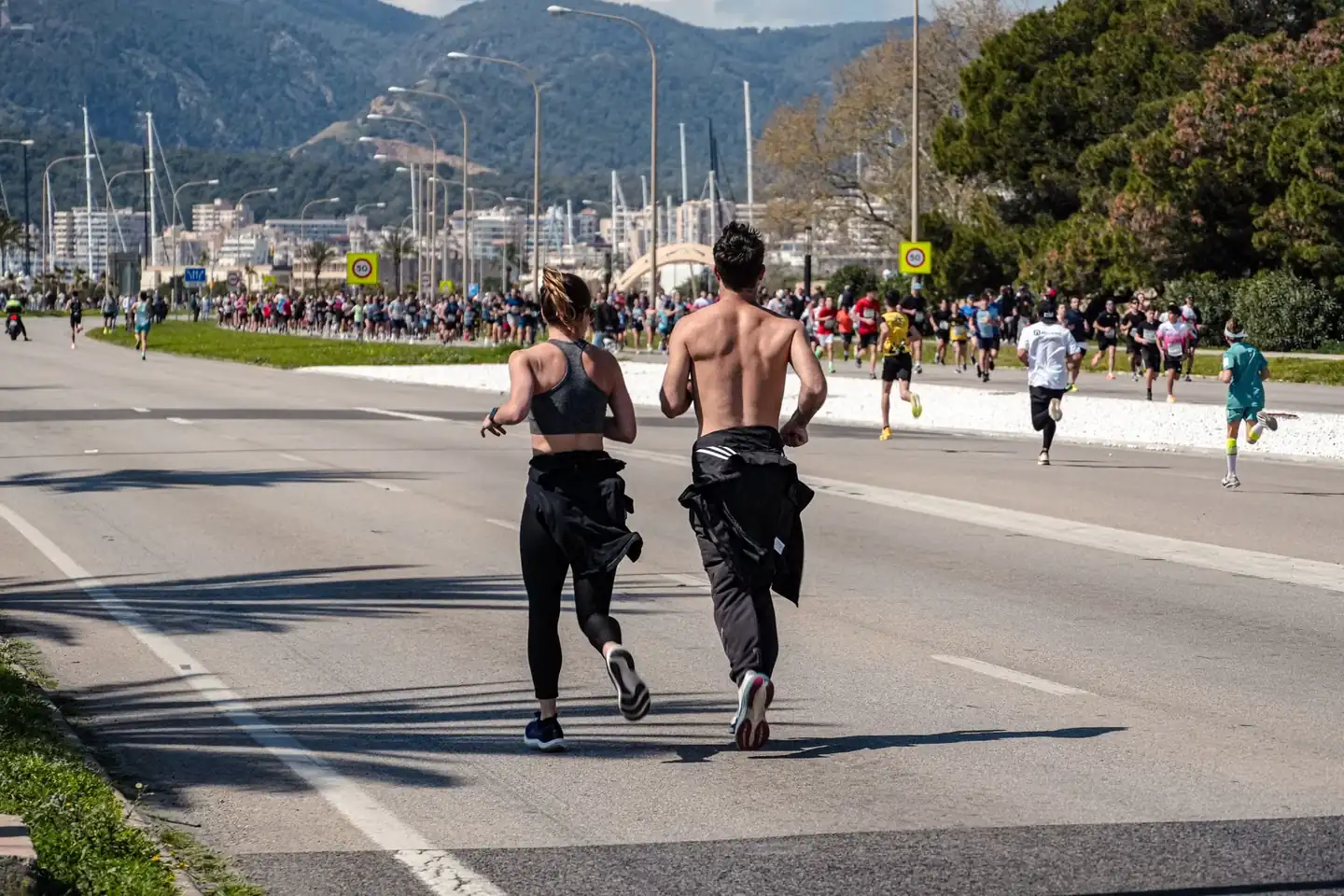
Imagen: 0xd1ma / Pexels
The Ibiza Half Triathlon 2027 already has a date, route and its own sporting story: it will return on April 3 with a start set for 18:00 from San José and a finish on the seafront promenade of Figueretas, in the city of Ibiza. The race, organized by the Ibiza Half Triathlon Sports Association, keeps the seal of a half marathon certified by the Royal Spanish Athletics Federation and under the refereeing supervision of the Balearic Athletics Federation.
It is not just another race on the calendar; it is one of those events that blend clock-driven ambition, Mediterranean scenery, and a finish that concentrates the energy of the entire island. With close to 4,500 participants expected, refreshment stations every few kilometers and a maximum time of 2 hours and 30 minutes, the event sits between demand and a festive experience, a combination that explains much of its appeal.
A half marathon with Ibizan identity
The race has established itself as one of Spain’s major half marathons for its ability to bring together sport and territory without blurring either element. The course links San José with Ibiza city and passes through very recognizable spots in the southwest of the island, with stretches running among pine trees, gentle curves and open sea views. That mix of fast road and coastal atmosphere gives it a very particular, almost cinematic character.
From an athletic point of view, the route has a clear virtue: it allows you to run at a steady pace if effort is managed well. The finish on the Figueretas seafront adds the visual component of the great island races, those in which the roar of the finish line can be heard before it is seen. In parallel, the organizers take care of the logistical details with kilometer markers, hydration points and transportation for participants from Ibiza city to the start, an aspect that in races of this type makes the difference between a smooth day and a heavy race.
The 2027 edition also arrives after a particularly successful 2026, with participation that exceeded 4,500 people and with a competitive weight that has grown year after year. That growth is not explained only by the climate or the island’s tourist appeal; it also responds to a well-defined race identity, with federation approval, cash prizes and a finish that is not limited to the finish line.
Date, start and competitive framework
The official date is April 3, 2027 and the start is scheduled for 18:00. That time, unusual for a half marathon, shapes the strategy. It forces runners to manage the day more carefully than with a morning start and places the effort in an afternoon stretch in which light, temperature and wind can change quickly. For the runner, that means planning food, hydration and the pre-race hours with more precision than usual.
The event has the support of the Consell d’Eivissa and the councils of Ibiza and San José, institutional backing that reinforces its sporting dimension and its external reach. The RFEA certification also matters, because not every half marathon can boast a homologated course and refereeing supervision that guarantees competitive integrity. In a race with so many entrants, that regulated framework brings reliability to times, performances and the final reading of the standings.
The limit to complete the distance is 2 hours and 30 minutes, a threshold that leaves no room for improvisation and rewards pace management. This is not a stroll of a race, although its tourist aesthetic might suggest otherwise; it is a half marathon that demands real endurance, especially if the day is complicated by a crosswind or by starting too fast in the first kilometers. The toughness does not come from big elevation changes, but from the sum of details that wear you down quietly.
Course & elevation Edition 2027
Per-kilometre table
| Km | Elevation | Grade |
|---|---|---|
| 1 | 161 m | -3.3 % |
| 2 | 119 m | -4.2 % |
| 3 | 95 m | -2.4 % |
| 4 | 90 m | -0.5 % |
| 5 | 73 m | -1.7 % |
| 6 | 61 m | -1.2 % |
| 7 | 40 m | -2.1 % |
| 8 | 16 m | -2.4 % |
| 9 | 17 m | 0.2 % |
| 10 | 9 m | -0.9 % |
| 11 | 10 m | 0.1 % |
| 12 | 19 m | 0.9 % |
| 13 | 30 m | 1.1 % |
| 14 | 31 m | 0.1 % |
| 15 | 22 m | -0.8 % |
| 16 | 28 m | 0.5 % |
| 17 | 19 m | -0.8 % |
| 18 | 20 m | 0.1 % |
| 19 | 15 m | -0.5 % |
| 20 | 12 m | -0.3 % |
| 21 | 8 m | -0.4 % |
| 22 | 7 m | -0.6 % |
Plan your pace on this course →
Route source: OpenRunner
The route: from San José to the sea at Figueretas
The official itinerary links the municipality of San José with the city of Ibiza and offers a very clear reading of the territory. The start in San José opens the race toward the island’s southwest, along roads surrounded by Mediterranean vegetation and an environment that leaves room for the stride. Then the course moves closer to the coast and gains visual presence, with the sea as a constant reference even if not always as the main front-facing protagonist.
That kind of route is usually especially rewarding for those looking for a balance between performance and experience. It is neither a pure urban circuit nor a mountain half marathon; it sits in an intermediate zone, with enough visual dynamism to avoid monotony and enough continuity to sustain high paces. In practice, it is a race designed to be run intelligently: start cautiously, stay consistent in the middle section and save a strong final stretch before the last push toward Figueretas.
The organizers mark references every kilometer and place refreshment stations at kilometers 6, 11 and 16. That pattern helps distribute effort and avoids the hydration gaps that make late-afternoon half marathons more difficult. In a 21.1-kilometer race, that support cadence is more important than it seems, because it keeps the runner connected to the race without forcing improvisation. Each intermediate point functions as a small control station on a coastal crossing.
The finish context also matters. Figueretas, with its seafront promenade, is not just a final setting; it acts as an emotional amplifier. The finishing straight in an open space, with human traffic and a sporting atmosphere, turns the last kilometer into a sequence of noise, color and acceleration. In that setting, the stopwatch stops being an isolated piece of data and becomes part of a broader, almost choral scene.
Participation, prizes and runner profile
The forecast of nearly 4,500 athletes places the race among the top tier of Spanish half marathons. This is not an event reserved exclusively for elites, although the leading competition carries its own weight; the appeal lies precisely in the mix of high-level runners, experienced amateurs and participants seeking a destination experience. That diversity explains why the race works both as a sporting event and as a calendar product.
The organizers award cash prizes and trophies for the top three overall finishers, both in the men’s and women’s categories, in addition to age-group recognitions. This prize structure is typical of races with competitive ambition, but here it becomes more relevant because it coexists with a very large field of participants. The result is a ranking that not only looks at the leaders, but also at the density of the race, where each age band keeps its own pulse.
Another distinctive detail is the customizable Finisher medal with the name and finishing time. It may seem like a small gesture, but in an event of this size it works as a very carefully designed keepsake, almost a collector’s item. Symbolically, it fixes the experience and gives a more intimate finish to a mass-participation race. Along with the race pack and the accident insurance included in the entry fee, it makes for a fairly complete participation offer.
The ideal profile for this half marathon is broad, though not limitless. It suits runners who already have a solid base to sustain 21 kilometers and those looking for a fast race in an attractive setting. It is also very appealing for anyone who values simple logistics: organized start, planned transport, kilometer information service and a finish in a very recognizable area. The race does not live on grandiose promises, but on an execution that tries to remove friction from the runner and let the legs do the talking.
Why the evening schedule changes the strategy
Starting at 18:00 changes the pre-race routine more than it seems. In an evening half marathon, the runner arrives with more hours of waiting, more time on their feet, more risk of overeating and more room for the mind to get restless before the gun. That requires a different management of energy. It is not just about running well, but about reaching the start line fresh without having drained yourself beforehand.
That format also introduces an interesting environmental variable. In April, Ibiza usually offers mild temperatures and still-long daylight, but wind and humidity can change the thermal feel throughout the afternoon. Runners who know the island know that the Mediterranean landscape has a changing, almost theatrical beauty, and that the body does not interpret effort the same way when the sun goes down and the air begins to thicken.
For that reason, the race lends itself to a conservative tactic at the start and a more ambitious one at the end. Going too fast in the first kilometers can be costly on the final straight, especially if the pace rises unintentionally because of the excitement of the atmosphere. In a certified half marathon with 21.1 kilometers, the best ally is usually not euphoria, but consistency.
The sunset also adds a visual dimension that few road races can match. The oblique light on the coast, the gradual move toward the city and the finish by the sea turn the race into a transitional sequence. It is not a fixed postcard; it is movement. And that, in an endurance event, has a narrative value that is hard to replicate on a flatter, more enclosed course.
The weight of the organization and federation backing
The RFEA certification and the supervision of the Balearic judges are not an institutional ornament. In a race with so much participation, precision matters. Measurements matter, fairness between athletes matters, control of split points matters, validation of times matters and the consistency of the competition matters. For those seeking an official mark or aiming to compare their performance with other homologated races, that backing is an essential part of the event’s value.
The invisible logistical work is also relevant. Exclusive buses from Ibiza city to the start, for example, prevent a transport bottleneck that could spoil the experience from the outset. Big races are decided as much on the pavement as in the management of access, bags, bib numbers and returns. When that chain works, the runner only perceives smoothness. When it fails, everything becomes clumsy and the race loses its shine.
The combination of institutional sponsorship, route design and runner services outlines a half marathon that has learned to think at scale. It does not just sell a distance; it organizes a whole day. From bib pick-up to the finish, everything points to a self-contained experience, with a certain air of a sports festival. And there lies a big part of its success: the race does not begin or end with the stopwatch, but with the way the island is lived during those hours.
The 2026 edition and what its growth tells us
The 2026 edition confirmed the race’s leap in volume and visibility. More than 4,500 athletes from 32 countries reinforced the international profile of a race that had already ceased to be local and had entered the radar of calendar travelers. The victory of Mangusho Nockson and Annete Chesang also gave a top-level competitive sheen to a race that had already been gaining media attention and participation.
That growth has a simple explanation and a deeper one. The simple one is that Ibiza, as a destination, sells itself. The deeper one is that the organizers have managed to combine tourist appeal with an event capable of sustaining athletic credibility. It is not enough to run in a beautiful place; the race has to work, the route has to make sense and the runner has to feel that their time counts. That is where the race has made ground.
The calendar also helps. Positioned in spring, the half marathon avoids some of the intense summer heat and sits in a very sought-after slot for those preparing endurance goals without yet moving into the big marathon months. That middle position makes it useful for many profiles: runners chasing a personal best, ambitious first-timers and sports travelers who want to turn a competition into a getaway.
The impression, looking at its evolution, is that the Ibiza Half Triathlon has achieved something uncommon: to be a recognizable brand without losing its local accent. The island is not reduced to a backdrop; it becomes part of the race’s discourse, logistics, atmosphere and story. And that, in an increasingly saturated market of similar events, makes a difference.
What a race like this leaves on the runner’s calendar
A half marathon like this is measured by more than the winner’s time. It also matters what it reveals about the runner’s moment, their fitness and their relationship with destination races. Some races serve to compete, and others help you understand exactly where you are. This one belongs to both categories. It demands, but it also returns valuable information.
The route, the schedule and the setting ensure that each edition leaves a very specific mark. Those running fast will find a reasonable platform to chase a best time. Those running with the experience in mind will find a full afternoon of sport, light and sea. And those who return year after year probably do so for a mix of reasons that are not always easy to order: the itinerary, the organization, the atmosphere and that very particular feeling of moving toward a finish line beside the Mediterranean.
At its core, the value of this race lies in combining precision and landscape, two ingredients that are rarely balanced well. The race is serious without being cold, attractive without being empty, and competitive without giving up its island character. That is probably why it keeps growing and why its 2027 edition is once again drawing attention on the national calendar.
Because not all half marathons say the same thing. Some are limited to measuring kilometers. Others, like this one, turn those 21.1 kilometers into a way of reading the territory, the effort and the passing of time with the sea beside you.
You may also like: Ibiza Half Marathon 2024: route, time and key details of the race.
Where to stay in Ibiza
Hotels available 1–4 April 2027.
Affiliate links: if you book through this map we earn a commission, at no extra cost to you.



How to prevent thigh chafing: causes and real solutions

Women’s running windbreakers: seven jackets and how to choose

Do more workouts get rid of soreness? A guide for runners

Jaén Half Marathon 2026: Record 3,800 Runners Registered

Men’s short running tights: how to choose the right pair

World Triathlon confirms data breach involving medical data

Izan Edo targets podium at Miyazaki World Cup

María Pérez ranks ninth in World Athletics’ 2026 top ten

Dos Santos, Duplantis and Sawe: World Athlete of the Year finalists

San Silvestre Vallecana 2026: 42,000 places, prices and start times

 Races3 months ago
Valencia Half Marathon 2027: date and registration

 Races3 months ago
Valencia Marathon 2026: entry, ballot and course

 Reviews and Comparisons4 months ago
Asics Gel-Roadmiles 3 for men: review and current price

 Reviews and Comparisons4 months ago
Asics Gel Sonoma 8 Gore-Tex: complete analysis for trail and rain

 Sneakers3 months ago
Saucony Endorphin Pro 4: full review and verdict

 News5 months ago
Strava API 2026: what changes for clubs, challenges and runner apps?

 Reviews and Comparisons5 months ago
Nike Alphafly 3: opinions, sensations, and real key points

 Reviews and Comparisons4 months ago
Under Armour running shoes review 2025-2026: models and key features

 Sports Equipment4 months ago
Shoe sizes in cm: a clear guide to getting the right fit for your footwear

 Sneakers3 months ago
Skechers GO RUN Consistent 2.0 analysis: comfort and limits

 News5 months ago
Valencia Marathon 2026 route: key tips to train and run better

 Sneakers4 months ago
Adidas Adizero Boston 13 for men: review and verdict