Races
Ibiza T100: this is how Van Riel’s victory and the circuit battle unfolded
Van Riel showcased his class in Ibiza with a final attack, a tight podium, and a key context for the T100 circuit.

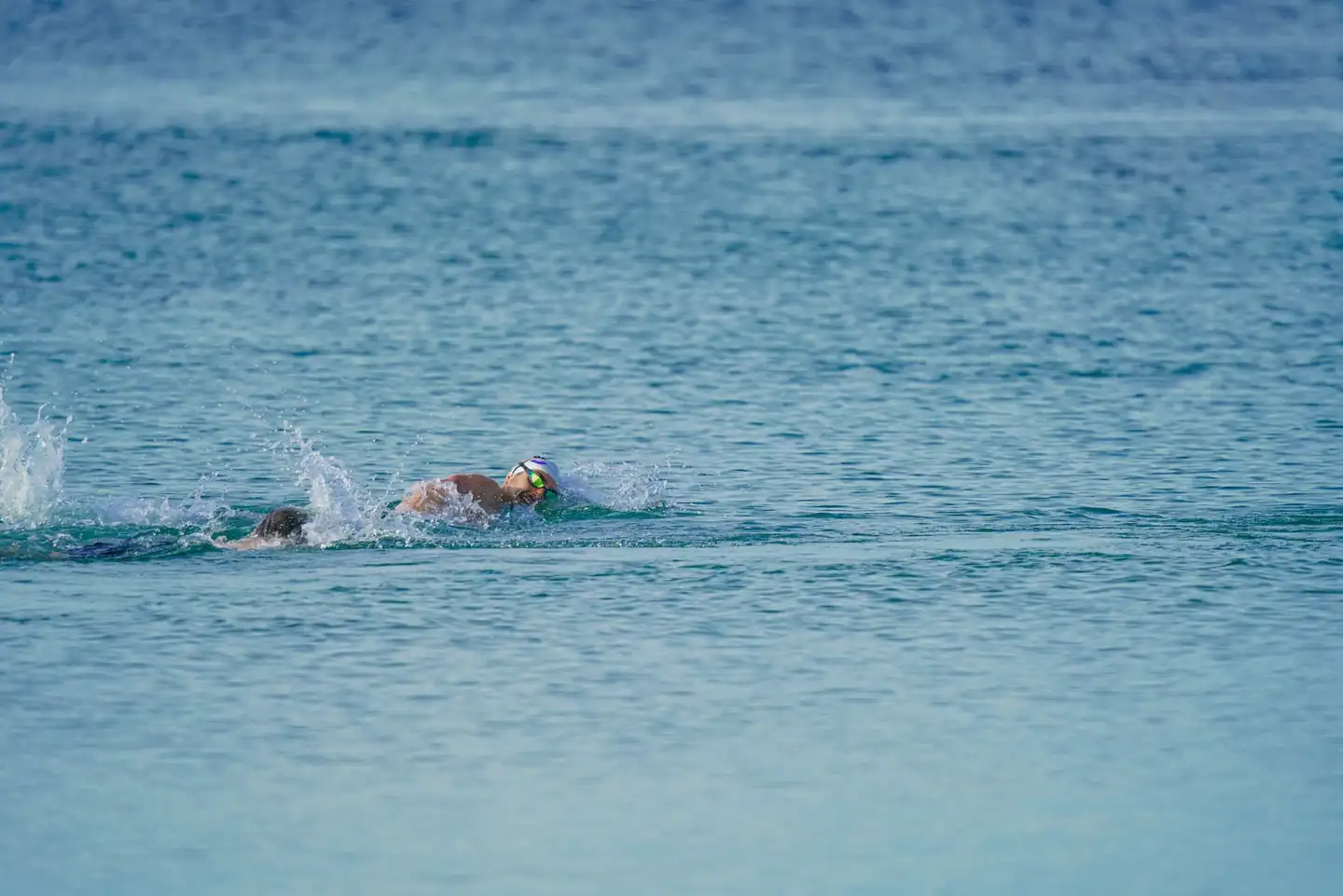
Ibiza once again placed itself at the center of world triathlon with a race that combined heat, tactical tension, and a textbook finish. Marten van Riel took the men’s event at the T100 on the island after edging out Sam Laidlow in the final meters, a victory that confirmed his status as a benchmark in the middle distance and reinforced his position as a major title contender on the circuit. The Belgian crossed the line in 3:11:36, just 26 seconds ahead of the Frenchman, in one of those finishes that leave the feeling that every meter mattered from the first buoy.
The Ibiza race was much more than a result. It represented a key stop on the T100 Triathlon World Tour, an international long-distance championship that has been gaining weight because of the quality of its participants, the 100-kilometer format, and the mix of spectacle and demand. At Figueretas Beach, with the Mediterranean as the starting point and the Ibiza coastline as the backdrop, the race offered a highly recognizable image of modern triathlon: fast swimming, cycling with changing scenarios, and a run where patience matters as much as strength.
A victory built in the water and sealed in the final straight
Van Riel took the initiative from the first meters of the swim segment and came out of the water in the lead with a time of 24:46. That detail was not minor. In a race of this level, coming out of the water well guarantees nothing, but it does help avoid the uncomfortable chase that forces you to run always against the clock. The Belgian quickly understood that Ibiza was not won with power alone, but with positioning, effort management, and a clean transition between each discipline.
During the cycling leg, the race saw constant changes at the front. Alistair Brownlee stayed close to the leading positions, but a drafting penalty altered his race and moved him out of the fight for victory. That episode helped clarify an already demanding scenario: a tightly controlled lead group, with little room for errors and several names capable of taking advantage of any hesitation.
There was no marathon in Ibiza; what there was instead was an 18-kilometer run that turned into a duel between endurance and control. Sam Laidlow took command of the race in that section, but Van Riel never fully lost his wheel. With 3.3 kilometers to go, the Belgian launched the move that decided the day. That sustained, cool acceleration was the decisive blow: not a desperate sprint, but a measured surge that raised the race’s intensity and left Laidlow with no answer.
Figueretas, Santa Eulalia, and the technical landscape that shaped the race
Ibiza’s course was not just a backdrop. The open-water swim off Figueretas Beach provided the usual setting for major Mediterranean events: relatively calm sea conditions, clear visual references, and an initial selection based on positioning and efficiency. In that kind of start, every stroke matters more than it seems, because the first sense of order or disorder carries through much of the day.
The cycling segment took the athletes on a three-lap course passing through Santa Eulalia and back, a combination that mixed hard climbs, technical sections, and time-trial stretches. That variety favors triathletes capable of alternating steady power with a good reading of the route. Ibiza punishes anyone who stays rigid on the bike and rewards those who know how to change pace without emptying themselves. It is not a route for hiding; it is a route for measuring effort with surgical precision.
The run, meanwhile, offered a scene that was kinder and crueller at the same time. The seven-lap circuit around Ibiza’s historic center felt fast in appearance and demanding in practice. The proximity of the sea, the hot asphalt, and the crowd concentrated at very visible points create a kind of emotional tunnel where each kilometer seems shorter, but also harsher. In that context, effort management becomes a matter of discipline. Van Riel handled it better than anyone.
Course & elevation Edition 2023
Per-kilometre table
| Km | Elevation | Grade |
|---|---|---|
| 1 | 161 m | -3.9 % |
| 2 | 117 m | -4.4 % |
| 3 | 92 m | -2.5 % |
| 4 | 88 m | -0.5 % |
| 5 | 72 m | -1.6 % |
| 6 | 61 m | -1.1 % |
| 7 | 36 m | -2.5 % |
| 8 | 15 m | -2.2 % |
| 9 | 18 m | 0.3 % |
| 10 | 9 m | -0.9 % |
| 11 | 10 m | 0.1 % |
| 12 | 19 m | 0.8 % |
| 13 | 30 m | 1.2 % |
| 14 | 30 m | 0.0 % |
| 15 | 22 m | -0.8 % |
| 16 | 28 m | 0.6 % |
| 17 | 20 m | -0.8 % |
| 18 | 21 m | 0.1 % |
| 19 | 14 m | -0.7 % |
| 20 | 12 m | -0.2 % |
| 21 | 8 m | -0.4 % |
| 22 | 8 m | -0.4 % |
Plan your pace on this course →
Route source: OpenRunner
The value of victory in a circuit that no longer allows caution
The win had both sporting and strategic impact. With this result, Van Riel became the first man to win twice on the T100 circuit, a mark that speaks to both consistency and the ability to perform in different settings. In addition, the victory earned him 35 points and a $25,000 prize, an important boost in an overall standings table that still had two stops ahead: Lake Las Vegas and Dubai, before the season finale.
The broader reading is clear: the T100 has established a format in which standing out once is not enough. You have to repeat, sustain, and adapt. On that ground, Van Riel has shown a rare blend of speed, composure, and calculated aggression. His Ibiza victory was not the product of one dominant discipline, but of the sum of a solid swim, a well-managed bike leg, and a run decided at exactly the right moment.
Sam Laidlow finished second, 30 seconds back, and once again confirmed that, on a good day, he can fight for any middle-distance victory. His role was that of an uncomfortable rival, always present, always resourceful. Behind him, Mika Noodt completed the podium with his first T100 top-3, a sign of growth in a generation that is increasingly pushing hard. The German crossed the line in 3:13:30 and offered an image of consolidation on a circuit where the leap in quality is measured in minutes, not perceptions.
The role of the Spanish athletes and the local imprint of the event
Antonio Benito was the best Spanish representative in the men’s race and finished in sixth place with a time of 3:15:58. His presence in the top 10 carried special value in an event held on Spanish soil and with growing international reach. In races of this caliber, finishing among the top ten already means holding the pace of a very compact elite, where a bad transition or a slight bike setback can cost several places at once.
The local dimension of Ibiza was not limited to the clock. The day was surrounded by a schedule that included amateur participation, open-water activities, and a visible presence of the triathlon community, both professional and recreational. That ecosystem is an essential part of the new T100: a mix of top-level competition and a participatory format that seeks continuity beyond the main result. On the island, that idea fit especially well because of the environment and the sporting tradition that has been growing around triathlon in Spain.
The organization also reinforced the environmental message with a beach cleanup in Figueretas, in which several top triathletes took part alongside local organizations. Beyond the image, the gesture reflected an increasingly present tension in endurance sport: the desire to compete in natural settings without degrading them. In places like Ibiza, where the fragility of the coastline coexists with enormous tourist pressure, this kind of action stops being merely decorative and takes on real weight in the event’s narrative.
The men’s race, one by one, and what it revealed about the current level
The men’s top 10 in Ibiza paints a clear picture of the current state of long-distance triathlon. Van Riel was first in 3:11:36, Laidlow second in 3:12:02, and Noodt third in 3:13:30. Brownlee finished fourth, Funk fifth, and Benito sixth, in a classification where the margins between fourth and tenth remained tight. That competitive density explains why the T100 has gained interest: there are no races decided by prolonged attrition and lack of opposition, but rather events in which several athletes still have real chances well into the run.
Brownlee, despite the penalty, staged a strong comeback to fourth place. His case illustrates well the kind of race Ibiza demands: even with a penalty, there is room to rebuild the day if endurance and mentality are in place. Funk and Bogen also stayed inside the top half of the standings, while athletes such as Max Sperl, Andrew Keulen, and Mathis Margirier completed a top 10 that reflected competitiveness and diverse profiles. It was not a race of overwhelming dominance, but one of selective survival.
That is the great virtue of the T100 format: it forces the best athletes to show their full range. No one can hide weaknesses for long. The swim does not allow relaxation, the bike punishes any indecision, and the run ultimately sorts out the real hierarchy. Ibiza delivered exactly that: a classification in which the biggest names responded, but where the final detail, the small burst of pace, separated the winner from the rest.
What Ibiza leaves behind for the final stretch of the T100
The result on the island reshaped the title fight and left Van Riel in a very solid position heading into the final stretch of the season. The victory did not settle anything, but it did set the tone. In short, high-level circuits, momentum matters. Arriving at the last events with recent wins changes confidence, rivals’ perceptions, and the way the next start is approached. Van Riel arrives with that momentum.
Laidlow, for his part, came away strengthened despite the defeat. He was able to fight toe-to-toe for much of the final segment and confirmed that his ceiling remains very high. And Noodt, with his first podium, took a step that may be more important than it seems: in such a demanding circuit, the first top-3 often opens a door mentally as well. In these races, the leap from a good performance to a constant threat often happens in a single day like this.
Ibiza also left a useful image for understanding where professional triathlon is headed. The discipline no longer lives only from historic names or isolated showcases. It lives from a calendar with attractive stops, highly recognizable venues, and a narrative in which the public can follow who leads, who falls, and who rises again. The island brought together all those ingredients in a single morning: a clean-swim sea, a bike leg with constant tension, and a finish that was not decided until the final kilometers.
A Mediterranean setting that already has its own signature within triathlon
Ibiza is no longer just a beautiful host city; it is beginning to have its own sporting identity. The combination of climate, landscape, logistics, and crowd response gives the race a lasting imprint beyond the specific edition. In the T100, where each city seeks to differentiate itself, the island offers a very valuable mix: international reach, a recognizable course, and an atmosphere that moves between resort and pure competition. That duality gives it personality.
There is also a broader reading. The presence of figures such as Taylor Knibb, Ashleigh Gentle, Lucy Charles-Barclay, Kat Matthews, and Flora Duffy in the women’s race, added to the level of the men’s race, turns the Ibiza stage into a first-rate observation point for world triathlon. It is not a decorative stop on the calendar; it is a place where form, ambition, and adaptability are measured. And in endurance sports, that combination is worth almost as much as raw power.
In short, the Ibiza edition delivered a race to remember for its competitive clarity. Van Riel won because he knew how to wait, attack, and endure; Laidlow lost by very little; Noodt confirmed that he can be part of the big conversation. The rest of the top 10 completed an accurate portrait of a discipline that has learned to live on the edge. In that landscape, Ibiza no longer appears only as a Mediterranean postcard, but as a stop that carries weight, brings order, and leaves clear signs of who is arriving strong at the end of the season.



How to prevent thigh chafing: causes and real solutions

Women’s running windbreakers: seven jackets and how to choose

Do more workouts get rid of soreness? A guide for runners

Jaén Half Marathon 2026: Record 3,800 Runners Registered

Men’s short running tights: how to choose the right pair

World Triathlon confirms data breach involving medical data

Izan Edo targets podium at Miyazaki World Cup

María Pérez ranks ninth in World Athletics’ 2026 top ten

Dos Santos, Duplantis and Sawe: World Athlete of the Year finalists

San Silvestre Vallecana 2026: 42,000 places, prices and start times

 Races3 months ago
Valencia Half Marathon 2027: date and registration

 Races3 months ago
Valencia Marathon 2026: entry, ballot and course

 Reviews and Comparisons4 months ago
Asics Gel-Roadmiles 3 for men: review and current price

 Reviews and Comparisons4 months ago
Asics Gel Sonoma 8 Gore-Tex: complete analysis for trail and rain

 Sneakers3 months ago
Saucony Endorphin Pro 4: full review and verdict

 News5 months ago
Strava API 2026: what changes for clubs, challenges and runner apps?

 Reviews and Comparisons5 months ago
Nike Alphafly 3: opinions, sensations, and real key points

 Reviews and Comparisons4 months ago
Under Armour running shoes review 2025-2026: models and key features

 Sports Equipment4 months ago
Shoe sizes in cm: a clear guide to getting the right fit for your footwear

 Sneakers3 months ago
Skechers GO RUN Consistent 2.0 analysis: comfort and limits

 News5 months ago
Valencia Marathon 2026 route: key tips to train and run better

 Sneakers4 months ago
Adidas Adizero Boston 13 for men: review and verdict