Races
Ibiza Trail Festival: complete guide to the event and its distances
Dates, distances, schedules, prices, gear, and rules for the great trail event in Sant Antoni.

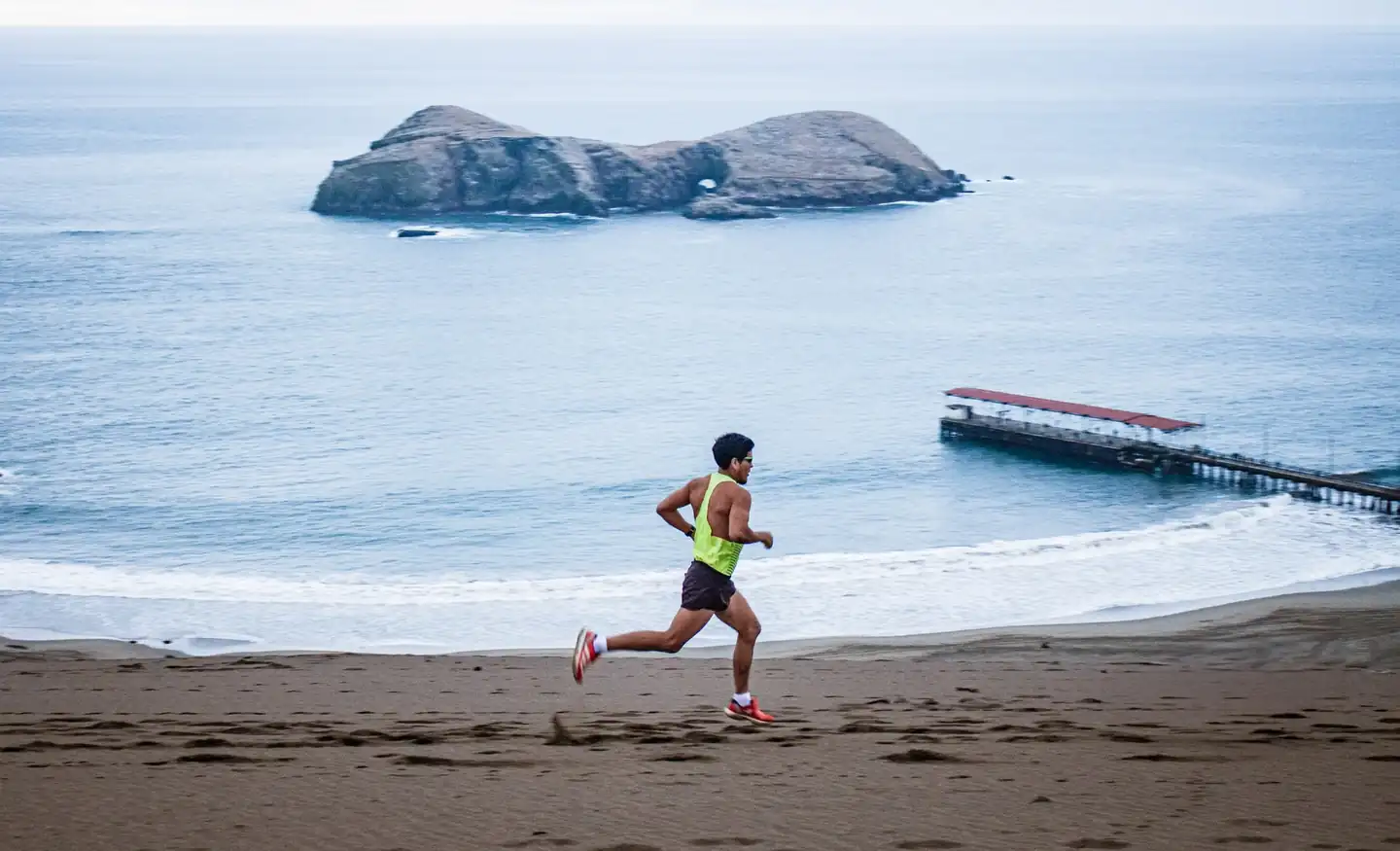
Trail running in Ibiza is no longer understood as just a race: the Sant Antoni event has become a date with its own identity, a weekend in which sport shares the stage with music, gastronomy, and the island’s western coastal landscape. The 18th edition of the Ibiza Trail Maratón will take place on 24 October 2026, with start and finish on the seafront promenade of Sant Antoni de Portmany, next to the beginning of s’Arenal, and it brings together three distances designed for very different profiles: 11, 28, and 48 kilometers.
The proposal is broader than a simple mountain route. The organizers present it as a sports festival, with an approach that combines technical trails, runnable sections, elevation gain, and a location that is highly recognizable to anyone who knows Sant Antoni bay. At the same time, the regulations make it clear that this is not an improvised event: there are participation caps, cut-off times, gear checks, medical support, insurance, and specific rules that shape both the experience and the race strategy.
An event that blends landscape, sport, and a festival format
The event’s uniqueness lies in its immediate surroundings. The shared start and finish on Sant Antoni’s promenade make it a very visible, almost scenic race, with the sea in the background and compact logistics for runners and companions. That starting point is no minor detail: it improves access, concentrates services, and gives the whole event the feeling of an urban hub opening onto the mountains, something uncommon in island trail running.
The 2026 edition consolidates a formula the organizers have been refining for years. Under the umbrella of the Ibiza Trail Maratón Festival, the main race coexists with activities and a full-weekend narrative, but the heart of it remains sporting. The three official distances —Starter, Half Marathon, and Marathon— aim to cover everyone from runners making their debut in the discipline to experienced athletes who need a long, demanding course with technical sections.
The event also has federation backing, as it appears on the official calendar of the Balearic Athletics Federation. That helps explain why the rules are so detailed: there is more at stake than sports tourism. There are rankings, categories, officials, timing chips, intermediate checkpoints, and a safety system operating under the logic of a sanctioned competition.
The official distances and the kind of runner they suit
The 11-kilometer Starter distance is the entry point. It is designed for those looking for a short experience with the true feel of trail running, without giving up elevation changes and varied terrain. The race presentation itself describes it as an option for beginner runners or for those who want to enjoy the course without the accumulated toughness of the longer distances. Even so, it is not a stroll: the organizers present it with a demanding first section and a second part with spectacular views over the Sant Antoni coast.
The 28-kilometer Half Marathon raises the bar to a high intermediate level. The route climbs through Sa Talaia and reaches about 600 meters of cumulative elevation by kilometer 10.5, where the first significant aid station is located. From there, the course opens toward the coast and returns with wide views of coves and sea, a very Ibiza contrast between rock, forest, and shoreline. This is the distance where the effort starts to resemble a prolonged conversation with the terrain.
The 48-kilometer Marathon is the festival’s most ambitious side. It follows part of the half-marathon route, then detours toward Santa Inés and Es Broll, and connects with a more technical section before returning to Sant Antoni. The organizers speak of about 1,600 meters of positive elevation gain, a figure that makes the tone of the race clear: this is not an asphalt marathon adapted to the mountains, but a true trail race with changing terrain, sustained climbs, and stretches where the legs must negotiate rather than impose.
Prices, entries, and the registration calendar
The registration calendar is closed by date and by quota. The sign-up period opens on 1 April and ends on 12 October at 23:59. After that deadline, no new registrations are accepted. In addition, the organizers set a maximum of 500 participants per race, a figure that helps control pressure on the trails, logistical traffic, and on-course services.
Prices vary depending on distance and the registration period. In the most recent reference information, the Starter is listed at 25 euros in the initial period, 30 euros in the middle period, and 35 euros in the final phase. The Half Marathon is listed at 35 euros, 40 euros, and 45 euros, respectively, while the Marathon is set at 55 euros, 60 euros, and 65 euros.
The system not only scales the price; it also sends a clear message about demand. The event’s own communication has repeatedly stressed on its channels that spots sell out quickly and that some distances fill up well in advance. That behavior reinforces the feeling of a limited-capacity event, closer to a controlled festival than a mass race. For runners, that means the decision window is real, not rhetorical.
Start times and maximum time to complete each race
Saturday, 24 October, structures the day with precision. The long marathon starts at 7:30, the half marathon at 8:30, and the Starter at 10:00. All depart from the Sant Antoni promenade, which reduces logistical friction and concentrates activity in one setting. The finish line also shares that same space, a detail that simplifies the experience for runners and spectators alike.
The time limits are strict. In the Marathon, the maximum time is 7 hours and 30 minutes; in the Half Marathon, 6 hours and 30 minutes. For the Starter, the finish line closes at 15:00, so the total margin is very tight. Failing to arrive on time means automatic disqualification and removal from the race, with the safety setup being progressively dismantled by the organizers.
The intermediate cut-offs are especially important in the long distance. In the Marathon, the first critical checkpoint is at kilometer 20, with a deadline of 11:00, and the second at kilometer 38, closing at 13:45. In the half marathon, the key point is at kilometer 17.5, with a cutoff at 12:00. Anyone who fails to make it in time is disqualified, has their bib removed, and is transported to the finish by the organization. If they decide to continue on their own, they do so without the race’s support and entirely at their own risk.
Mandatory gear and aid stations without cups
The mandatory gear list is not decorative. In the Marathon, runners must carry a visible bib, a headlamp, a mobile phone with sufficient battery, a windproof or waterproof jacket depending on the weather, a cup or personal container for aid stations, and an emergency thermal blanket. In the Half Marathon the requirements are very similar, except that the headlamp is not among the mandatory items. In the Starter, no compulsory gear is listed, although it is still essential to bring a personal container if you want to drink fluids.
The aid-station setup follows an increasingly common environmental logic in trail running. No cups are provided at the supply points, so each participant must bring their own container. It is also not allowed to drink directly from water jugs or tanks. The organizers further insist that waste must be deposited only in the designated places, usually at aid stations or in the finish area.
The aid stations are distributed differently depending on the distance. In the Marathon they appear at kilometers 12.5, 20, 30.3, 38, 43.5, and at the finish at 48. In the half marathon they are at kilometers 12.5, 17.5, and 23.5, with the finish at 28. In the Starter, the first is at 6.5 and the finish at 11. In the race, that distribution does more than feed runners; it also sets the mental cadence, like small stations along a route of tides and stone.
Checkpoints, safety, and race withdrawal
The course includes checkpoints and continuous supervision. Along the route, checkpoints are set up where officials or organization staff verify runner passage, record bib numbers, and detect incidents. The bib is not just a photo accessory: it must be worn on the front of the shirt, without folding, cutting, or covering advertising, and it must remain visible throughout the race. Using a bib belt is allowed as long as it meets the same conditions.
Safety relies on specialized personnel deployed at specific points on the course, along with a coordinated operation involving Sant Antoni de Portmany Local Police, the Civil Guard, Civil Protection, Port Police, and the organizers themselves. There is also a sweeper runner for each distance, responsible for accompanying the last participant still within the official cut-offs. That detail speaks well of the event’s philosophy: no one is simply forgotten on the mountain, even if the race has firm limits.
If a participant decides to drop out, they must notify the organizers as soon as possible and may only do so at the designated aid stations. From there, evacuation vehicles are made available. Outside those points, withdrawal changes in nature: the runner must reach the next checkpoint by their own means. The organizers provide only one return trip per pickup point, always subject to the checkpoint’s closure. In the mountains, that management of withdrawal matters as much as the attack strategy itself.
Rules, penalties, and details that can change a result
The regulations distinguish minor and major infractions with specific sanctions. Minor offenses include not wearing the bib visibly, hiding advertising, entering the finish without a bib, starting early, or failing to yield when another runner asks to pass. These actions can result in penalties of between 1 and 5 minutes. In an event so tightly timed, that punishment can be decisive.
Serious infractions lead to disqualification or heavier penalties. Not carrying the mandatory gear means 5 minutes for each missing item. Failing to complete the course, using another athlete’s bib, littering outside permitted areas, altering course markings, ignoring officials’ instructions, or showing disrespectful behavior are grounds for disqualification. So is finishing outside the time limit or missing the intermediate cut-offs.
There are other rules worth noting. Conventional headphones are prohibited, although bone-conduction devices are allowed. Trekking poles are only permitted with rubber tips, and their use is banned in specially protected areas. The fact that the event emphasizes cleanliness and environmental protection is not cosmetic: in Ibiza, the terrain is part of the attraction and also part of the event’s fragility.
Categories, prizes, and the importance of local rankings
The race awards prizes for overall standings and age categories. There are overall men’s and women’s classifications, as well as veteran categories for men and women starting at 30 years old, with subgroups from 30 to 39, 40 to 49, 50 to 59, and 60 or older. For a category to be valid, it must have at least three registered athletes; otherwise, the organizers may cancel it and reassign the participants.
Trophies are awarded to the top three overall and to the winner of each category in each distance, though they are not cumulative. There is also a special local category for all distances, with a prize for the first resident man and first resident woman from Ibiza in each one. That nod has something of a sporting postcard and island identity: the race looks outward, but it also recognizes those running from home.
Classification by sex is governed by what appears on the national identity document. It is one of those clauses that show just how much the regulations aim to avoid ambiguity, even in aspects that other events leave to the organizers’ discretion. In mountain races with several moving parts, administrative precision is often as important as timing.
Insurance, medical support, and bib collection
Medical coverage and accident insurance are part of the registration package. All officially registered athletes are covered by insurance that protects against accidents directly resulting from race participation, but not against pre-existing illnesses, latent injuries, recklessness, negligence, or incidents unrelated to the event. It is a common distinction, although it is often overlooked until something goes wrong.
There will be medical support with a responsible doctor and ambulances both in the start/finish area and at intermediate points designated by the organizers. Those with physical, respiratory, allergic, or other conditions requiring special attention must report them before the race and note them on the back of the bib. If an accident or illness requires transport, the protocol first asks that the organizers be contacted so the insurance claim can be opened and care activated at the designated center.
Bib collection takes place on Friday, 23 October, from 10:00 to 13:00 and from 16:00 to 20:00, at Hotel Blau Parc, in Sant Antoni de Portmany, on Velázquez Street, 9. Identification with a national ID card or passport is mandatory. For minors, a signed authorization from a parent or guardian is required; and those who declared a federation license must present the corresponding athletics and trail license or a valid identification document. The bib is personal and non-transferable, so runner changes are not allowed.
The more technical side of Ibiza, far from the obvious postcard image
The event’s value is not just in the starting-line photo. Its real appeal is the sum of course, challenge, landscape, and regulations. There are trail races that seem designed to rack up kilometers; this one, instead, focuses on the complete experience, from bib pickup to the final checkpoint. That places it in a category of its own within the Balearic calendar and has made it a reference for those who want to run close to the sea without giving up the mountains.
There is also a symbolic dimension that explains its growth. Ibiza is usually associated with nightlife, summer, and the coast, but this event offers another reading of the island: trails, elevation, silence, forests, and an October light gentler than the height of August. The Ibiza Trail Festival works, in essence, as a sporting translation of the territory: a way to measure the island in strides, with salty skin, tired legs, and the feeling of having seen a less obvious and more authentic Ibiza.
In a calendar increasingly saturated with races, this event retains a valuable trait: it forces you to read the fine print carefully. Those who come for the beauty of the landscape will find much more; those who take cut-offs, gear, and safety seriously will discover an organization designed to keep the adventure from descending into chaos. And that is a big part of its appeal: epic still needs rules, and the trail, to be memorable, must also be precise.
You may also like: 3 Días Trail Ibiza 2026: stages, distances and route.



How to prevent thigh chafing: causes and real solutions

Women’s running windbreakers: seven jackets and how to choose

Do more workouts get rid of soreness? A guide for runners

Jaén Half Marathon 2026: Record 3,800 Runners Registered

Men’s short running tights: how to choose the right pair

World Triathlon confirms data breach involving medical data

Izan Edo targets podium at Miyazaki World Cup

María Pérez ranks ninth in World Athletics’ 2026 top ten

Dos Santos, Duplantis and Sawe: World Athlete of the Year finalists

San Silvestre Vallecana 2026: 42,000 places, prices and start times

 Races4 months ago
Valencia Half Marathon 2027: date and registration

 Races4 months ago
Valencia Marathon 2026: entry, ballot and course

 Reviews and Comparisons4 months ago
Asics Gel-Roadmiles 3 for men: review and current price

 Reviews and Comparisons4 months ago
Asics Gel Sonoma 8 Gore-Tex: complete analysis for trail and rain

 Sneakers3 months ago
Saucony Endorphin Pro 4: full review and verdict

 News5 months ago
Strava API 2026: what changes for clubs, challenges and runner apps?

 Reviews and Comparisons5 months ago
Nike Alphafly 3: opinions, sensations, and real key points

 Reviews and Comparisons4 months ago
Under Armour running shoes review 2025-2026: models and key features

 Sports Equipment4 months ago
Shoe sizes in cm: a clear guide to getting the right fit for your footwear

 Sneakers3 months ago
Skechers GO RUN Consistent 2.0 analysis: comfort and limits

 News5 months ago
Valencia Marathon 2026 route: key tips to train and run better

 Sneakers4 months ago
Adidas Adizero Boston 13 for men: review and verdict