Races
Ican Triathlon Gandia 2026: date and distances
Gandia is preparing for a race with several distances, a major-event atmosphere, and services designed for triathletes.

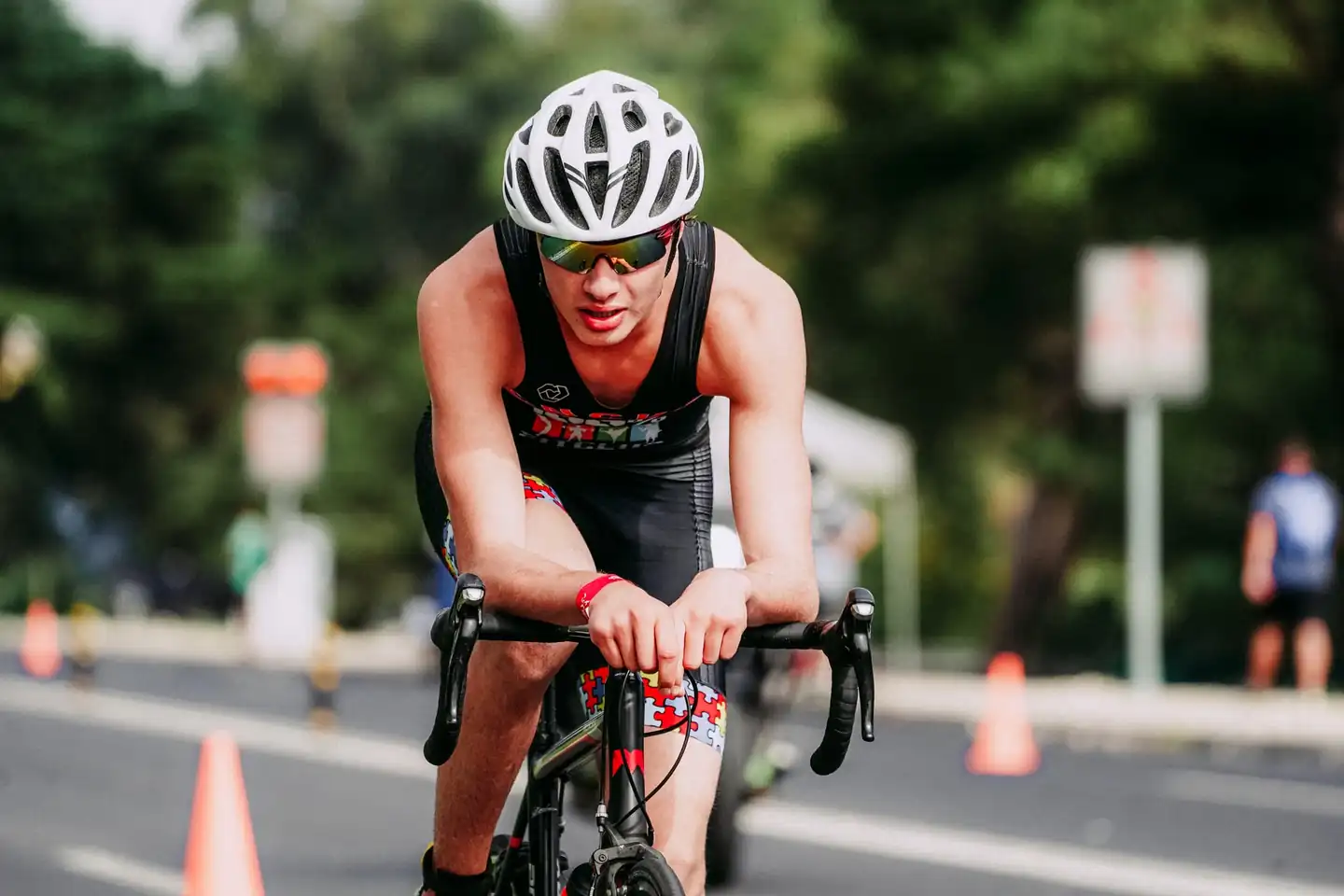
ICAN Triathlon once again puts Gandia on the map of long-distance triathlon with a proposal that combines competition, hospitality, and a format that is very familiar to runners who also bike and swim. The 2026 edition already has a date marked on the calendar: October 17, a day that brings together the most demanding and the most accessible versions of the same event, with distances ranging from short to endurance effort.
The event has established itself as a benchmark in the Valencian Community for more than just its course. Its sporting story is built on a single venue, an organization that insists on personal treatment, and a city, Gandia, that knows how to market itself as a destination with history, beaches, and services. At its core, the formula is clear: compete, yes, but also make the full experience make sense for those who arrive with a bike, a transition bag, and many hours of training behind them.
A race with its own identity in the Valencian calendar
ICAN Triathlon does not present itself as just another anonymous race within the circuit. Its positioning has grown on the basis of a simple and very effective idea: to offer a complete triathlon experience, with attention to athletes and companions, and with a structure that avoids the logistical fragmentation of other more dispersed events. The single venue organizes the day and reduces the feeling of jumping from one place to another, something that in triathlon always matters more than it seems.
That approach explains why the event generates interest even months before it takes place. Recent updates from the organization point to sustained demand, with bib numbers already sold in high quantities and registration tiers that keep selling out in phases. In an increasingly competitive sports market, that is no small thing: it speaks of loyalty, but also of a recognizable event brand, with a community that responds.
The 2026 edition follows that line and once again places Gandia as a setting that blends road, sea, and urban management. In events like this, the course matters, but so does the sense of order. A good transition can be worth as much as a well-placed aid station, and a logistical detail can shape an athlete’s perception for hours. ICAN has built part of its appeal precisely there, in what is not always visible in the final photo.
Date, venue, and distances that define the 2026 edition
The announced date for ICAN Triathlon 2026 is Saturday, October 17, a choice that fits well with the end of the season and with a still pleasant climate on the Valencian coast. Gandia also provides a solid tourist base, with enough capacity to absorb athletes, families, and teams without the city losing its everyday rhythm. That balance between competition and destination is one of the event’s assets.
The sporting offering spans several distances that open the door to very different profiles. The available information places the race in formats ranging from a short distance to long distance, with intermediate options also present. In practice, that turns the event into a meeting point for triathletes looking to make their debut in a controlled environment and for those aiming for a long day with the classic swim, bike, and run script.
The variety of distances not only broadens the audience; it also sharpens the event’s identity. An athlete tackling a shorter format finds a less intimidating setting, while the one taking on a long-endurance race gets an organization designed to sustain hours of effort. That dual reading has been one of the hallmarks of modern triathlon: the same showcase, but with several levels of ambition.
An event that sells more than a classification
In triathlon, the sporting narrative does not end with the clock. ICAN Triathlon has developed a model in which competition and the participant experience both matter. The official communication itself emphasizes complementary services such as accommodation, nutrition, mechanical assistance, and spaces dedicated to the triathlete. Together, these elements turn a demanding race into a stay with a certain level of operational comfort.
That focus is no accident. Anyone traveling to a long competition usually does so with very precise planning: hotel booking, bike setup, gear check, nutrition control, and rest schedules. When the event integrates those factors better, outside noise decreases and focus on what matters increases. In an endurance sport, where every decision echoes through the day, that kind of support matters almost as much as race strategy.
There is also a less visible emotional dimension. The organization speaks of family, personalized treatment, and community around the event. Beyond the slogan, that language responds to a real demand in today’s triathlon: big events, yes, but not cold ones. In fact, many athletes specifically look for races where the environment does not feel like an assembly line and where the weekend still retains something of a club atmosphere, even if the start line brings together hundreds of athletes.
Gandia as a sports and tourist setting
The choice of Gandia is not decorative. The city offers a mix of accessibility, accommodation, dining options, and a seafront that works well for a race of this kind. For the triathlete, that means less logistical friction; for the companion, more options to spend the day without depending entirely on the competition. This is no minor detail: in many races, the host city shapes the memory of the weekend.
In addition, the scenic value adds to the appeal. The coast has a very recognizable light in October, cleaner and calmer than in midsummer, and that helps build the atmosphere of a major event without excess. Triathlon, by definition, already contains plenty of natural drama: strokes, bike turns, strides at the limit. When the surroundings help, the scene gains depth and the event becomes more memorable.
The tourist dimension also explains why the organization places so much emphasis on the city as part of the sporting product. It is not just about competing on a course; it is about experiencing an athletic getaway with identity. That model, increasingly common in endurance events, has found a particularly profitable location in Gandia thanks to its combination of beach, services, and ease of moving participants around.
Registrations, sales pace, and reading the interest
Recent communications from the organization point to a high volume of registrations and the opening of new allocation tiers as the race approaches. That behavior not only reflects interest; it also shows a staggered commercial strategy, common in sporting events that want to reward early commitment without losing the ability to respond to actual demand.
From a journalistic standpoint, this is significant because it reveals the state of the triathlon market in Spain. Not all races can boast the same number of bibs, much less so far in advance. When an event easily surpasses several hundred registrations, or is headed toward a notable sellout, readers understand that they are not looking at a symbolic race, but at a competition with real traction.
For participants, the reading is simple: a place in a race like this is not seen as a neutral formality, but as a decision tied to the calendar. Those competing in October usually structure their season earlier, define goals in spring or summer, and reserve the end of the year for an event that serves as a peak performance target. ICAN Triathlon fits that logic because it concentrates sporting stimulus, reasonable logistics, and a setting attractive enough to justify the trip.
What type of athlete is best suited to this event
The versatility of distances means the race attracts very different profiles. Some arrive looking for a first major experience in a well-organized environment, while others go straight for the long distance as a season test. Between those extremes there is ample room for triathletes who already master the discipline and want a race with enough substance to measure their true condition without the pressure of a national championship or an elite event.
There is also a less obvious competitive advantage: predictability. An established event offers more useful information to participants, from the type of venue to the way the day is structured. In triathlon, where equipment details, transitions, and start order carry enormous weight, that predictability is worth gold. It reduces uncertainty and leaves room for what truly determines performance: swim calmly, bike smart, and run without wearing yourself out too early.
That is why the event appeals to endurance runners who are getting into triathlon and to veteran triathletes who value the combination of setting and organization. It is not a race designed for sporting posturing, but for those who understand that a good event is built with many small gears. And when those gears work, the experience becomes cleaner, smoother, and, above all, more competitive.
What the organization brings to participants and their entourage
ICAN’s proposal is based on a network of services that extends the event beyond the bib. The presence of accommodation, nutrition, mechanical assistance, and common areas points to a very complete vision of the sporting weekend. In triathlon, that support layer can prevent setbacks that would otherwise ruin months of preparation: a poorly adjusted wheel, an unsuitable dinner, or an arrival that is too tight for bib pickup.
The idea of accompaniment also stands out. Many events measure their quality only by the course or the number of entries, but modern triathlon looks further. A city that welcomes the participant well, logistics that reduce wasted time, and clear communication all raise the event’s overall perception. Athletes do not always put it that way, but they feel it: less friction, more focus, a better race day.
Along those lines, the organization emphasizes attention to both participants and their companions. The nuance matters because it reflects a very precise understanding of endurance sport: one rarely travels alone to an event of this kind. There are families, clubs, friends, or small groups that turn the weekend into a small expedition. When everything is more orderly, the event stops being just a sports appointment and becomes part of a shared memory.
A name that already carries weight in Spanish long-course triathlon
ICAN Triathlon has built its prestige on continuity, scale, and a recognizable brand in the national calendar. The race does not need to exaggerate its profile to attract attention: it is enough to maintain a clear proposal and keep the interest of a community that values both physical endurance and organization. In a sport where comparisons are constant, that is a real competitive advantage.
The growing interest in the 2026 edition confirms that the event retains strong pull even a year before it takes place. That kind of response usually happens in events that have found their place between the large mass of popular races and elite competitions. They are not incompatible worlds, but they are different. ICAN seems to have understood that long- and middle-distance triathlon needs structure, not just epic spirit.
The Gandia event, with its already defined date and multi-format proposal, will continue to be an interesting barometer of the state of Spanish triathlon. Not only because of what happens on the podium, but because of what it reveals beyond it: demand, loyalty, organizational maturity, and a city’s ability to become, for one weekend, a capital of effort measured in strokes, pedals, and strides.
Gandia and the triathlon that is no longer measured only in times
There are events that are explained by the final classification and others that are understood by the sum of sensations. ICAN Triathlon belongs to the second category. Its value is not limited to a distance or a time, but to the way it combines physical challenge, urban setting, and an organization that tries to care for the full experience. That balance is, today, one of triathlon’s most valuable currencies.
That is why the 2026 edition matters beyond the date or the number of spots. It matters because it confirms that Gandia has managed to become a stable setting for a demanding race, because it keeps alive an event with its own identity, and because it offers athletes a format in which effort is not presented in isolation, but accompanied by context. In times of sports saturation, that clarity is worth as much as a strong run split.
The final image is that of a city waking up ready to receive swimmers, cyclists, and runners, with the beach in the background, logistics fine-tuned, and the usual tension of major race days. Triathlon, after all, has something of mobile architecture about it. And when that architecture is built well, as ICAN aims to do in Gandia, the result is not only raced: it is also remembered.
You may also like: TriXàbia Memorial Edu Monfort 2026: date, distances, and prices.



How to prevent thigh chafing: causes and real solutions

Women’s running windbreakers: seven jackets and how to choose

Do more workouts get rid of soreness? A guide for runners

Jaén Half Marathon 2026: Record 3,800 Runners Registered

Men’s short running tights: how to choose the right pair

World Triathlon confirms data breach involving medical data

Izan Edo targets podium at Miyazaki World Cup

María Pérez ranks ninth in World Athletics’ 2026 top ten

Dos Santos, Duplantis and Sawe: World Athlete of the Year finalists

San Silvestre Vallecana 2026: 42,000 places, prices and start times

 Races4 months ago
Valencia Half Marathon 2027: date and registration

 Races4 months ago
Valencia Marathon 2026: entry, ballot and course

 Reviews and Comparisons4 months ago
Asics Gel-Roadmiles 3 for men: review and current price

 Reviews and Comparisons4 months ago
Asics Gel Sonoma 8 Gore-Tex: complete analysis for trail and rain

 Sneakers4 months ago
Saucony Endorphin Pro 4: full review and verdict

 News5 months ago
Strava API 2026: what changes for clubs, challenges and runner apps?

 Reviews and Comparisons5 months ago
Nike Alphafly 3: opinions, sensations, and real key points

 Reviews and Comparisons4 months ago
Under Armour running shoes review 2025-2026: models and key features

 Sports Equipment4 months ago
Shoe sizes in cm: a clear guide to getting the right fit for your footwear

 Sneakers3 months ago
Skechers GO RUN Consistent 2.0 analysis: comfort and limits

 News5 months ago
Valencia Marathon 2026 route: key tips to train and run better

 Sneakers4 months ago
Adidas Adizero Boston 13 for men: review and verdict