Races
Jerez Half Marathon 2026: route, schedule, and key details
The Jerez race returns in October with 21.097 km through the city, starting at Álvaro Domecq and finishing at Chapín.

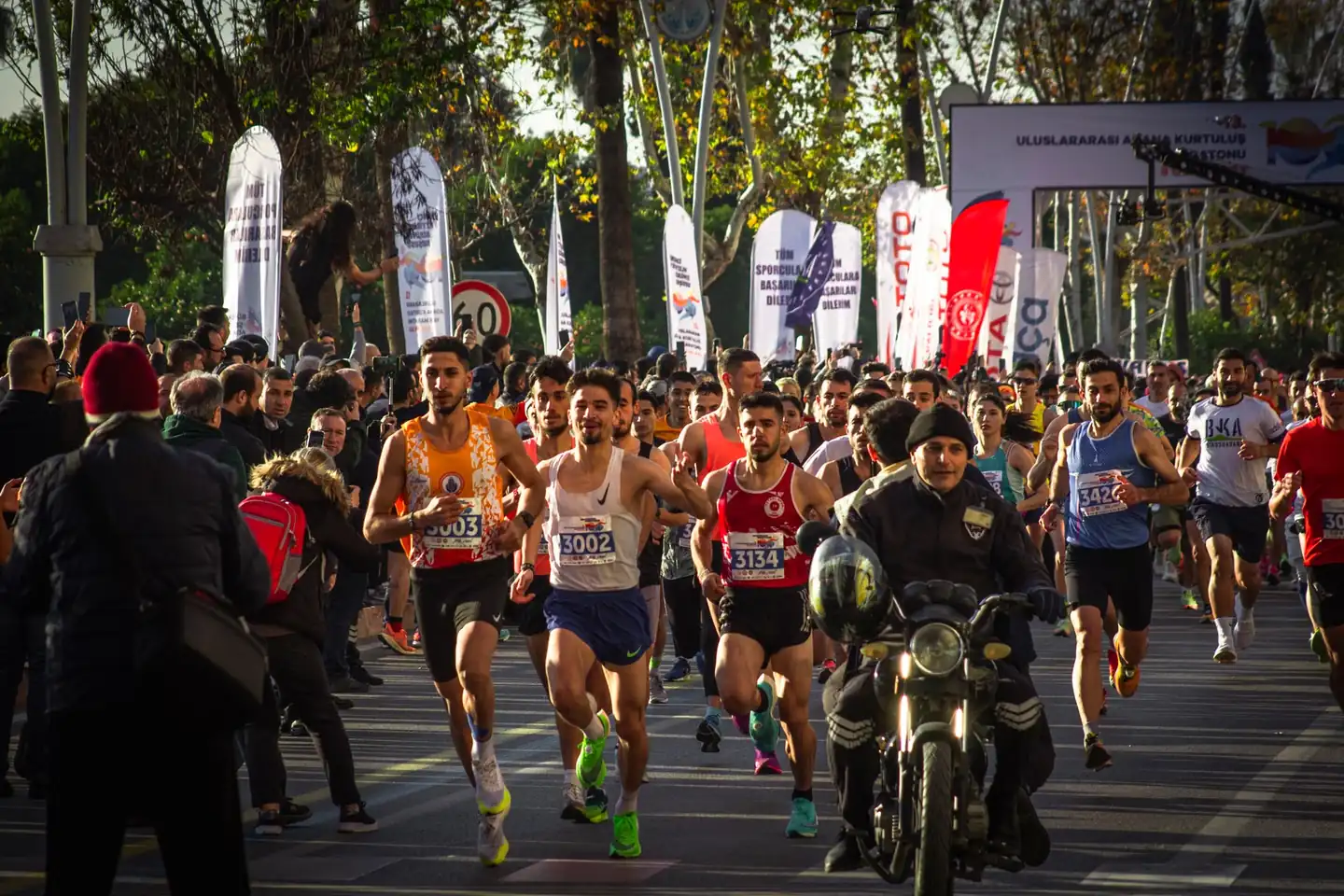
Jerez de la Frontera brings running back to the center of its calendar with a half marathon that combines city, heritage, and a route designed to maintain steady paces on asphalt. The race features an officially certified distance of 21.097 kilometers, with the start on Avenida Alcalde Álvaro Domecq and the finish at Chapín municipal stadium, an ending that adds competitive tension and also an emotional weight that is unusual in urban races of this profile.
The 2026 edition is set for October 18 at 9:00, a schedule that aims to soften the heat still possible in Cádiz at that time of year. The event is organized by the Sports Department of the Jerez City Council, with support from Sportmadness, and the event retains the hallmark of a classic city race: wide streets, aid stations, kilometer markers, and a course that demands more strategy than elevation management.
A half marathon with a Jerez identity
The strength of this race is not only in the distance. Jerez runs with its own character: the route passes through a city with a strong cultural identity, where historic architecture, open avenues, and sporting tradition coexist naturally. That turns each kilometer into something more than just a move from one point to another; the runner moves through a setting with memory, noise, rhythm, and a very Andalusian aesthetic.
That urban context matters. In a half marathon, the surroundings can either propel or wear you down, and here both effects appear at once. The starting atmosphere is usually lively, with runners positioning themselves cautiously in the opening stages and others setting off too freely, carried away by excitement. The course, by contrast, rewards sensible pacing. This is not a race for improvising, because the sum of small pace changes, the asphalt, and the possible October temperatures make effort accumulate very visibly from kilometer 14 or 15 onward.
Jerez also offers a very recognizable image for those who follow the half marathon calendar in Andalusia. It is a city race with specific weight, one of those that combine local tradition, a finish venue, and enough history for runners to identify it immediately within the national map. In 2026 it reaches its thirtieth edition, a figure that speaks of continuity and of an already well-established place in the schedule of road-running enthusiasts.
The course and what it means to run it
The race starts on Avenida Alcalde Álvaro Domecq, a wide space that makes it easier to line up participants and reduces the starting chaos that sometimes comes with narrower events. From there, the course enters the streets of Jerez with an officially certified urban format of 21.097 meters, designed for an official half marathon. The finish in Chapín not only marks the end of the effort: it also provides one of those finishes that leave a mark because of the atmosphere in the venue and the feeling of entering a sporting space with history.
The organizers describe the route as an urban course suitable for running at a good pace, but experience from previous years shows that true flat terrain is rarely absolute. In Jerez, as in many Andalusian cities, there are slight false flats, stretches of hard asphalt, and some sections where wind or cobblestones can change the perceived effort. For that reason, this race should not be read as a stroll. It is rather a steady-pace half marathon, with room to run well if the legs respond, but with enough character to punish any excess enthusiasm in the first hour.
The interesting point lies in that mix of technical solvency and urban scenery. Along the route, runners pass through representative parts of the city, which adds an almost narrative dimension to the effort. Memorable races are not only the ones you run fast, but the ones that leave a clear sequence in your memory: the wide avenue at the start, the stretch where the pack spreads out, the moment when the clock starts demanding discipline, and the final entry into Chapín, where everything is reduced to breathing, noise, and empty legs.
Course & elevation Edition 2026
Per-kilometre table
| Km | Elevation | Grade |
|---|---|---|
| 1 | 37 m | -2.0 % |
| 2 | 13 m | -2.3 % |
| 3 | 27 m | 1.4 % |
| 4 | 30 m | 0.3 % |
| 5 | 44 m | 1.4 % |
| 6 | 76 m | 3.2 % |
| 7 | 44 m | -3.3 % |
| 8 | 27 m | -1.7 % |
| 9 | 19 m | -0.8 % |
| 10 | 33 m | 1.5 % |
| 11 | 36 m | 0.2 % |
| 12 | 17 m | -1.9 % |
| 13 | 15 m | -0.2 % |
| 14 | 14 m | -0.1 % |
| 15 | 41 m | 2.7 % |
| 16 | 29 m | -1.3 % |
| 17 | 17 m | -1.1 % |
| 18 | 22 m | 0.5 % |
| 19 | 33 m | 1.1 % |
| 20 | 55 m | 2.2 % |
| 21 | 55 m | 0.0 % |
| 22 | 56 m | 1.2 % |
Plan your pace on this course →
Route source: GPX
Schedule, distance, and key event details
The 2026 edition takes place on Sunday, October 18, with the start at 09:00. That time is not incidental. In Jerez, October can bring mild temperatures, but the sun still has bite and the asphalt retains heat more than it seems. Starting early reduces thermal strain and makes a challenge that already demands a lot in a half marathon more manageable. The official distance is the classic one: 21.097 kilometers, an officially certified half marathon that allows fair comparisons with other races on the calendar.
Registration, according to information published by various calendar platforms, ranges between 14 and 31 euros, although that amount may vary by tier or availability. Registration closes on September 27, 2026, giving the race a reasonable margin between the administrative deadline and race day. The collection of the race bib is expected at the Chapín sports complex, with extended hours in the days leading up to the race and also a pick-up option on race day during a limited morning time slot.
There is another detail worth keeping in mind: the maximum time to complete the race is set at 2 hours and 30 minutes. That limit defines the event’s organizational logic and, in practice, the type of runner for whom the race is most comfortable. Those moving at mid-pack or ambitious half-marathon paces will have plenty of room; those going more at the limit should start with a conservative strategy from the first kilometer so they do not miss the cutoff purely through pacing miscalculation.
Aid stations, bib, and race services
An urban half marathon is not sustained by the course alone. It also depends on logistics, and in this regard Jerez includes several elements that structure the runner’s experience. The race announces aid stations, timing, baggage storage, finisher medal, medical support, changing rooms, showers, and toilets. In other words, a complete setup that meets expectations for a race of this level and makes both the before and after of the competition easier.
The runner’s packet usually includes the commemorative technical shirt and various sponsor gifts, a very common format in this type of event. Beyond its material value, that package serves a practical and symbolic purpose: it confirms registration, organizes access to the start, and offers a small extension of race day. The bib is not just a number; in a half marathon like Jerez, it is also the key to a very specific experience, with schedules, pickup, control, and an atmosphere centered on the runner for a few hours.
The organizers have also indicated open participation for athletes with physical or intellectual disabilities, whether on foot, handbike, or wheelchair. This approach broadens the scope of the event and places it within a more inclusive framework, something that is increasingly present in the national calendar. In a sport that for years was explained almost exclusively by times and marks, this kind of openness adds extra value, especially in high-visibility urban events.
The type of runner that fits best here
Jerez suits several profiles, but especially those looking for a half marathon that is comfortable to run but not soft. The generally flat course favors runners who want to improve their time or maintain a controlled pace without major changes in elevation. However, the city also offers nuances: hard asphalt, possible turns, small rises and drops, and a final stretch where fatigue matters more than the profile on paper.
That makes it an interesting race to debut at the distance if your training is solid. A first-time half marathon needs a wide start, a readable course, and logistics that do not complicate the day. Jerez offers exactly that, though with the warning that 21 kilometers are never a formality. It also works for experienced runners looking for a benchmark at the start of autumn, or for those who want to measure their level after the summer and before taking on tougher goals in winter.
In this type of race, pacing management often separates a solid experience from an uncomfortable day. Starting too fast can turn kilometer 16 into an invisible hill; starting too slowly, on the other hand, reduces the chance of enjoying the final stretch and taking advantage of the route. The Jerez half marathon calls for balance, a word that in running means as much as caution, self-knowledge, and a certain respect for the distance.
Jerez as a race and travel setting
One of the distinctive features of this event is that it is not limited to the clock. Jerez de la Frontera brings a very recognizable urban texture, with heritage, squares, equestrian tradition, and a personality that runs through the entire city. Running there means moving between broad avenues and a local identity that can be felt in the air. You do not need to be a tourist to notice it: it is enough to move a few meters and watch how the city unfolds around the race.
For many runners, that adds motivation. The sporting experience becomes part of a visit that, before or after the race, can leave very vivid images of the city center, the October atmosphere, and the life of the city beyond the course. That combination of effort and scenery explains why local half marathons often have an emotional value that goes beyond the result. A runner’s memory works through scenes, and Jerez has plenty of ingredients to build them.
In addition, the finish at Chapín adds a strongly symbolic ending. The stadium provides a recognizable, almost ceremonial sense of closure that fits the logic of a half marathon very well. Entering a sports venue after 21 kilometers turns the final meters into a kind of visual reward. The body arrives tired, yes, but the scene helps close the race with an intensity that is remembered for a long time.
What to keep in mind before the start
October conditions in Cádiz usually encourage an optimistic reading, but the weather should not be underestimated. Jerez may seem friendly and, at the same time, require serious hydration. A mild day at the start can turn into a race of constant sweating if the sun is strong or if the wind is against you on some of the boulevards. Those factors do not always appear in the technical sheet, but they are part of the real script of any urban half marathon.
The surface also matters. Asphalt is fast, yes, but it is punishing. It does not forgive lack of cushioning or shoes chosen without criteria. In a race like this, the body accumulates impact from the first kilometer and collects the bill at the end. Those who have trained on softer surfaces or with limited long-run volume will notice the difference. That is why the value of the race lies not only in its apparent ease, but in the way it forces you to maintain a clean running mechanic, without wasting energy.
The structure of the event itself hints at another reality: here you compete, but you also manage. Bib, schedules, aid stations, time limit, stadium finish, and organizational control form a fairly clear package. It is a race designed for the runner to arrive, test themselves, and leave with a useful reference. It does not need gimmicks; it is enough to combine city, distance, and an environment that understands very well the value of a classic half marathon.
An autumn test for legs and mind
The Jerez Half Marathon has established itself as one of those races that help organize the season. It arrives at a strategic date, with enough room to benefit from summer training and still enough time to aim for other goals later on. For some it will be a search for a personal best; for others, a debut; for many, a serious stop on the Andalusian calendar. In all cases, the race shares a common trait: it demands respect, but returns a very complete experience.
The appeal lies in that blend of elements that, taken separately, might seem predictable, but together work solidly. 21.097 kilometers, a morning start, an urban course, a stadium finish, heritage all around, and an atmosphere that stays connected to the runner. In an era of races that are increasingly fragmented or too similar to each other, Jerez maintains a clear identity. It does not promise miracles, but it does promise a recognizable half marathon, with character and with a history that keeps being written edition after edition.
That is why the interest it generates does not depend only on the date or the route. It is sustained by the feeling of being in front of a race that has found its place. Jerez does not need to sell itself as an exotic race or an extreme challenge. It is enough for it to be what it is: a serious urban half marathon with personality, one of those races you run with an alert mind and remember with the exact mix of fatigue and satisfaction that good 21-kilometer races leave behind.
You may also like: 2025 Jerez Half Marathon: date, start and key points of the route.



How to prevent thigh chafing: causes and real solutions

Women’s running windbreakers: seven jackets and how to choose

Do more workouts get rid of soreness? A guide for runners

Jaén Half Marathon 2026: Record 3,800 Runners Registered

Men’s short running tights: how to choose the right pair

World Triathlon confirms data breach involving medical data

Izan Edo targets podium at Miyazaki World Cup

María Pérez ranks ninth in World Athletics’ 2026 top ten

Dos Santos, Duplantis and Sawe: World Athlete of the Year finalists

San Silvestre Vallecana 2026: 42,000 places, prices and start times

 Races3 months ago
Valencia Half Marathon 2027: date and registration

 Races3 months ago
Valencia Marathon 2026: entry, ballot and course

 Reviews and Comparisons4 months ago
Asics Gel-Roadmiles 3 for men: review and current price

 Reviews and Comparisons4 months ago
Asics Gel Sonoma 8 Gore-Tex: complete analysis for trail and rain

 Sneakers3 months ago
Saucony Endorphin Pro 4: full review and verdict

 News5 months ago
Strava API 2026: what changes for clubs, challenges and runner apps?

 Reviews and Comparisons5 months ago
Nike Alphafly 3: opinions, sensations, and real key points

 Reviews and Comparisons4 months ago
Under Armour running shoes review 2025-2026: models and key features

 Sports Equipment4 months ago
Shoe sizes in cm: a clear guide to getting the right fit for your footwear

 Sneakers3 months ago
Skechers GO RUN Consistent 2.0 analysis: comfort and limits

 News5 months ago
Valencia Marathon 2026 route: key tips to train and run better

 Sneakers4 months ago
Adidas Adizero Boston 13 for men: review and verdict