Races
Juan Pérez Memorial 2026: date, routes and prices
Tona debuts a race with children’s events, 2.5 km and 5 km, starting at Plaça l’Hostal and finishing at Plaça Major.

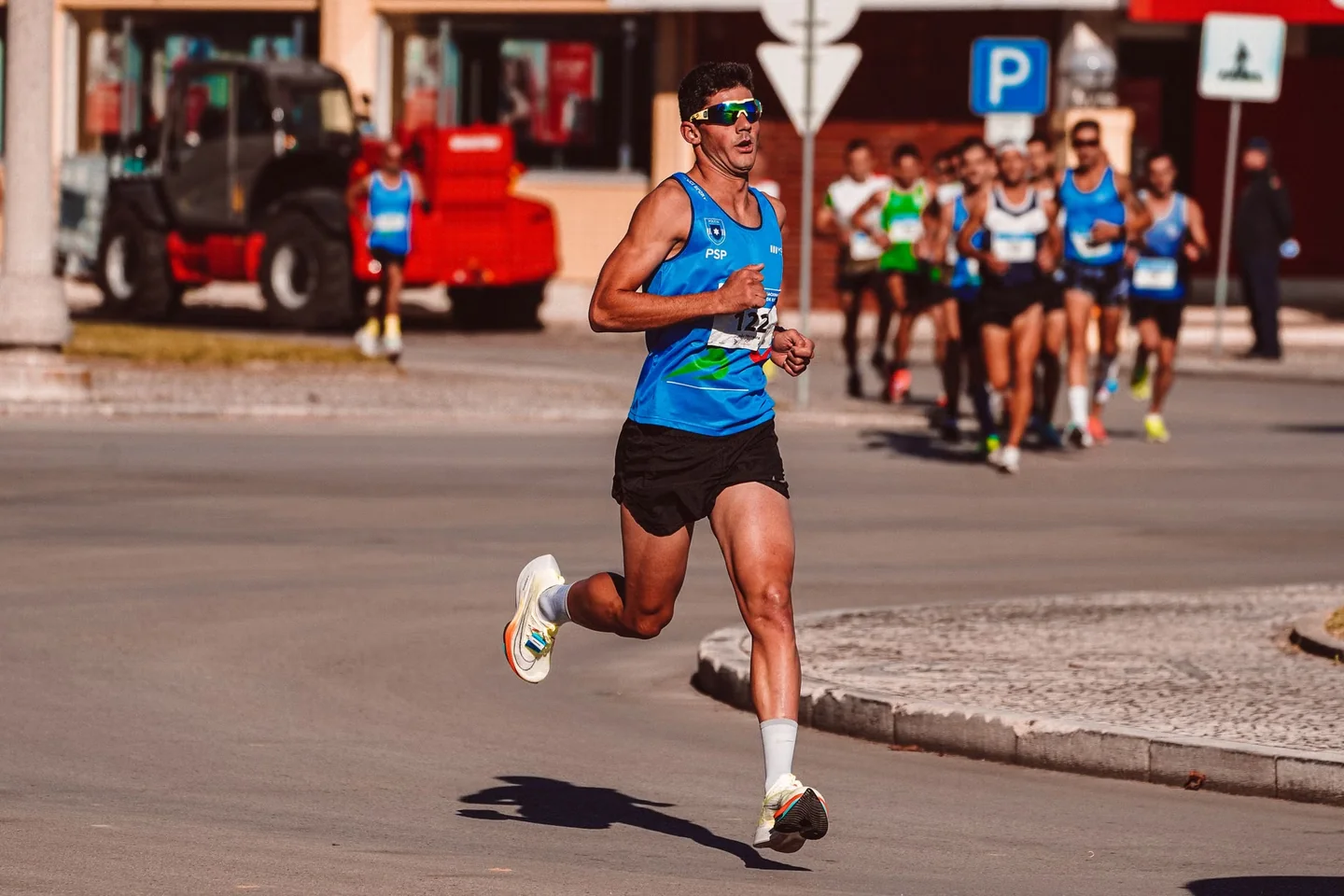
The 1st Juan Pérez Memorial makes its debut in Tona as a popular event designed to bring together tribute, grassroots athletics, and a small-town atmosphere, with the start in Plaça l’Hostal and the finish in Plaça Major. The race is set for Saturday, October 24, 2026, at 10:00 a.m., and is presented as a short but intense day—one of those that turn the town center into a living circuit, with neighbors, families, and runners sharing sidewalks, corners, and applause.
The schedule combines free children’s races, a 2,500-meter distance for participants aged 13 and over, and another of 5,000 meters, also for those over 13. The registration fee for the longer races starts at 5 euros, while the 200-meter and 700-meter races are free and award a medal to all participants. The event is organized by the Associació Atlètica Tona, with a simple, accessible approach closely aligned with the spirit of local autumn races.
A first edition with its own identity
Sports memorial races usually begin with a mix of affection and the desire to endure. In this case, the name Juan Pérez is linked from the very first year to a race that does not seek grandeur, but rather the value of closeness: an urban course, manageable distances, and participation that, by its format, can attract both regular runners and local families and those from the surrounding area. That combination explains why these kinds of events become a gateway to popular running.
The choice of Tona is no accident either. The route follows recognizable streets in the center and is concluded between two emblematic squares, giving the race the feel of a compact and easy-to-follow course for the public. In races like this, the setting matters as much as the clock: the sound of footsteps on the asphalt, the tight turns, and the proximity of the finish line create an atmosphere that feels more like a neighborhood celebration than a distant competition.
The asphalt completely dominates the course, with 100% urban pavement according to the available technical information, so the event suits those who prefer controlled paces, smoother profiles, and a clear reading of effort. There are no mountain sections or technical changes in terrain; everything revolves around speed, breathing management, and the rhythm with which each runner chooses to tackle their race.
Short routes, broad atmosphere
The children’s races set the tone for the memorial. At 10:00, the 200 meters for boys and girls aged 0 to 8 take place, starting in Plaça l’Hostal, right in front of Bon Àrea, and finishing in Plaça Major. Ten minutes later, at 10:15, it is time for the 700 meters for the 9 to 12 age group, with a route that passes through Carrer Barcelona, Carrer Major, Carrer Maduixes, Carrer St. Andreu, and Carrer Call before ending in the main square.
The value of these distances is not just in the number. In beginner races, every meter counts as a complete experience: the child making their debut, the family cheering from the sidewalk, and the final medal that turns effort into memory. The organization also confirms that these two races are free of charge, a detail that broadens the social reach of the event and makes participation more open.
From there, the memorial moves into a purely competitive format. At 11:45, the 2,500-meter and 5,000-meter races take place, both aimed at those over 13 years old. The shorter distance offers a single lap of the urban circuit described; the longer one, two full laps, which usually translates into a more demanding tactical reading, especially if the runner wants to maintain pace without paying for it in the second half.
The fact that the course is entirely asphalt also shapes the strategy. There is no mud or elevation to hide fatigue; here the wear appears through the accumulation of strides, the tension of the turns, and the constant exposure to the same kind of impact. It is a route that rewards consistency and punishes an overly ambitious start, a classic feature of urban middle- and short-distance races.
Registration, price, and practical conditions
Registration for the 2,500- and 5,000-meter races costs 5 euros, a modest amount even within the popular racing calendar. That price places the memorial in a very accessible range for an event with trophies, local organization, and closed courses in the town center. By contrast, the youth races keep the open-participation component with free entry and medals for all boys and girls who cross the finish line.
The organization also indicates that registrations for the races for ages 13 and up must be completed before October 22, while the categories from 0 to 12 are handled on the same day in Plaça Major. This dual system reflects a common logic in village races: on one hand, planning for adults; on the other, the spontaneity of the family setting, which makes it possible to add children’s participation without too much bureaucracy.
No certified distance is listed, so the memorial should be understood as a local popular race, more focused on the sporting experience and remembrance than on the pursuit of official times. Nor is there any clearly specified participant cap in the available information, so the main interest lies in the racing experience and the coexistence between categories.
The price, the free entry for minors, and the lack of technical complexity create a proposal that is very recognizable to anyone following the urban racing circuit in Catalonia and, in particular, in the province of Barcelona. These are races that do not need great embellishment to work: a closed circuit, a well-chosen time, and a community willing to fill public space with running shoes and applause are enough.
Timetables, categories, and the rhythm of a compact morning
The memorial schedule concentrates all activity into less than two hours. That compactness is not just a logistical detail; it defines the character of the day. At 10:00 a.m. the children’s block begins, at 10:15 the second youth race is decided, and at 11:45 the adult races bring the most visible competitive element of the day. The structure allows the public to follow the entire program without long waits or major movement.
The age divisions are also very clear. The 200 meters are reserved for runners aged 0 to 8, the 700 meters for ages 9 to 12, and the 2,500- and 5,000-meter distances are for ages 13 and over. This segmentation helps explain the memorial’s purpose: it is not a single race, but a small athletic festival where each age group has its place and scale.
The prizes reinforce that spirit. In the children’s races, the organization awards medals to all participants, a gesture that underscores inclusion and shared memory. In the adult distances, trophies are announced for the top three men and women in both races, a classic formula that keeps the competitive incentive without losing the tone of a neighborhood event.
A children’s race within a memorial also carries a special symbolic weight. It often works as a seed: the child who walks across the finish line today may become a grassroots runner tomorrow. In that sense, the memorial not only remembers a person, but also projects sporting and social continuity in the town.
An urban circuit that highlights the effort
In Tona, the relationship between start and finish provides a very clear visual narrative. The race begins in Plaça l’Hostal and ends in Plaça Major, with a route that passes through streets such as Barcelona, Major, Maduixes, St. Andreu, Call, Juan Llusà, Av. Balneari, and Sebastià Roqueta depending on the distance. That sequence turns the town center into a corridor of effort and reference, where the runner always knows where they are and spectators can follow the progress without losing sight of it.
Single-lap and two-lap races have different readings, even though they share the same setting. In 2,500 meters, the margin for error is small and managing the first section is decisive. In 5,000 meters, the accumulation of the second pass through the circuit introduces a mental endurance component, because each corner repeats the same gesture and each straight brings back the same sensation of effort. The race becomes almost musical: stride, breathing, turn, applause, repeat.
The technical information also notes that the memorial is not presented as a charity race or part of a larger circuit or championship. That gives it independence and allows it to function as a sporting tribute in its own right, without needing to rely on external structures. In a crowded calendar, that uniqueness is often an advantage: the runner knows they are taking part in an event with its own identity and a human scale.
The lack of significant elevation in the available data fits the nature of the route. The memorial does not seek climbs or sections for mountain specialists; its logic is different, much more urban and direct. The asphalt, the closeness of the finish line, and the passage through the center create a clean race setting, with no excuses and immediate readability for anyone standing on the starting line.
What a race like this adds to the popular calendar
Races like this memorial serve a purpose that goes beyond the result. They sustain the athletic life of towns, offer an entry point for younger children, and remind us that running does not always need a big infrastructure to make sense. Sometimes a square, a well-chosen date, and a community that shows up are enough. The rest comes from the runner themselves, with their stride, their breathing, and the way they cross the finish line.
From a sporting perspective, short distances help diversify the calendar. Anyone used to preparing for 10Ks or half marathons finds a 2,500- or 5,000-meter race to be a different stimulus, more explosive and less predictable. The intensity rises, the margin for maneuver shrinks, and the race demands an almost brutally honest effort. There is no time to disguise anything.
There is also a civic component that should not be overlooked. Streets closed to traffic, even briefly, return the space to the people. The route becomes a kind of shared stage where the runners are the protagonists, but not the only ones. In events like this, the background noise does not come from engines, but from the murmur of those who come to watch, cheer, or accompany a child on their first outing.
The first edition of a memorial always leaves a mark, because it sets the starting point for a possible tradition. If the event takes hold, the local calendar will gain one more date with emotional weight and sporting value. If it remains an isolated experience, at least it will have left behind an October morning with its own name, simple routes, and a shared finish line in the very center of Tona.
A tribute measured in meters, applause, and memory
The best portrait of the 1st Juan Pérez Memorial is not found just by looking at the entry fee or the mileage. It is better understood by imagining the whole scene: children waiting for their start in the square, adults checking the clock before the 2,500 or 5,000 meters, and the sharp sound of shoes on the asphalt of the old town. It is a small race in appearance, but with the emotional density of events created to last.
The combination of free children’s participation, affordable fees, an urban course, and trophies in the adult races creates a coherent proposal, without unnecessary ornamentation. Tona thus adds an event that can attract both those looking to compete and those who simply want to be part of a different morning, with sport, neighborhood spirit, and remembrance on the same finish line.
At its core, the memorial neatly summarizes a very common idea in popular running: races are not always measured by the size of the poster, but by how clearly they connect with their territory. And here that connection is very well defined. The start, the finish, the price, the ages, and the course tell a simple story—one that leaves a lasting impression because it is lived at street level, step by step, without embellishment and with memory running at the same pace as the participants.



How to prevent thigh chafing: causes and real solutions

Women’s running windbreakers: seven jackets and how to choose

Do more workouts get rid of soreness? A guide for runners

Jaén Half Marathon 2026: Record 3,800 Runners Registered

Men’s short running tights: how to choose the right pair

World Triathlon confirms data breach involving medical data

Izan Edo targets podium at Miyazaki World Cup

María Pérez ranks ninth in World Athletics’ 2026 top ten

Dos Santos, Duplantis and Sawe: World Athlete of the Year finalists

San Silvestre Vallecana 2026: 42,000 places, prices and start times

 Races3 months ago
Valencia Half Marathon 2027: date and registration

 Races3 months ago
Valencia Marathon 2026: entry, ballot and course

 Reviews and Comparisons4 months ago
Asics Gel-Roadmiles 3 for men: review and current price

 Reviews and Comparisons4 months ago
Asics Gel Sonoma 8 Gore-Tex: complete analysis for trail and rain

 Sneakers3 months ago
Saucony Endorphin Pro 4: full review and verdict

 News5 months ago
Strava API 2026: what changes for clubs, challenges and runner apps?

 Reviews and Comparisons5 months ago
Nike Alphafly 3: opinions, sensations, and real key points

 Reviews and Comparisons4 months ago
Under Armour running shoes review 2025-2026: models and key features

 Sports Equipment4 months ago
Shoe sizes in cm: a clear guide to getting the right fit for your footwear

 Sneakers3 months ago
Skechers GO RUN Consistent 2.0 analysis: comfort and limits

 News5 months ago
Valencia Marathon 2026 route: key tips to train and run better

 Sneakers4 months ago
Adidas Adizero Boston 13 for men: review and verdict