Routes
Sant Pere-La Sagrera Urban Mile 2026: guide and context
The Sant Pere-La Sagrera race combines speed, a popular atmosphere, and categories for all ages in Palau-solità i Plegamans.

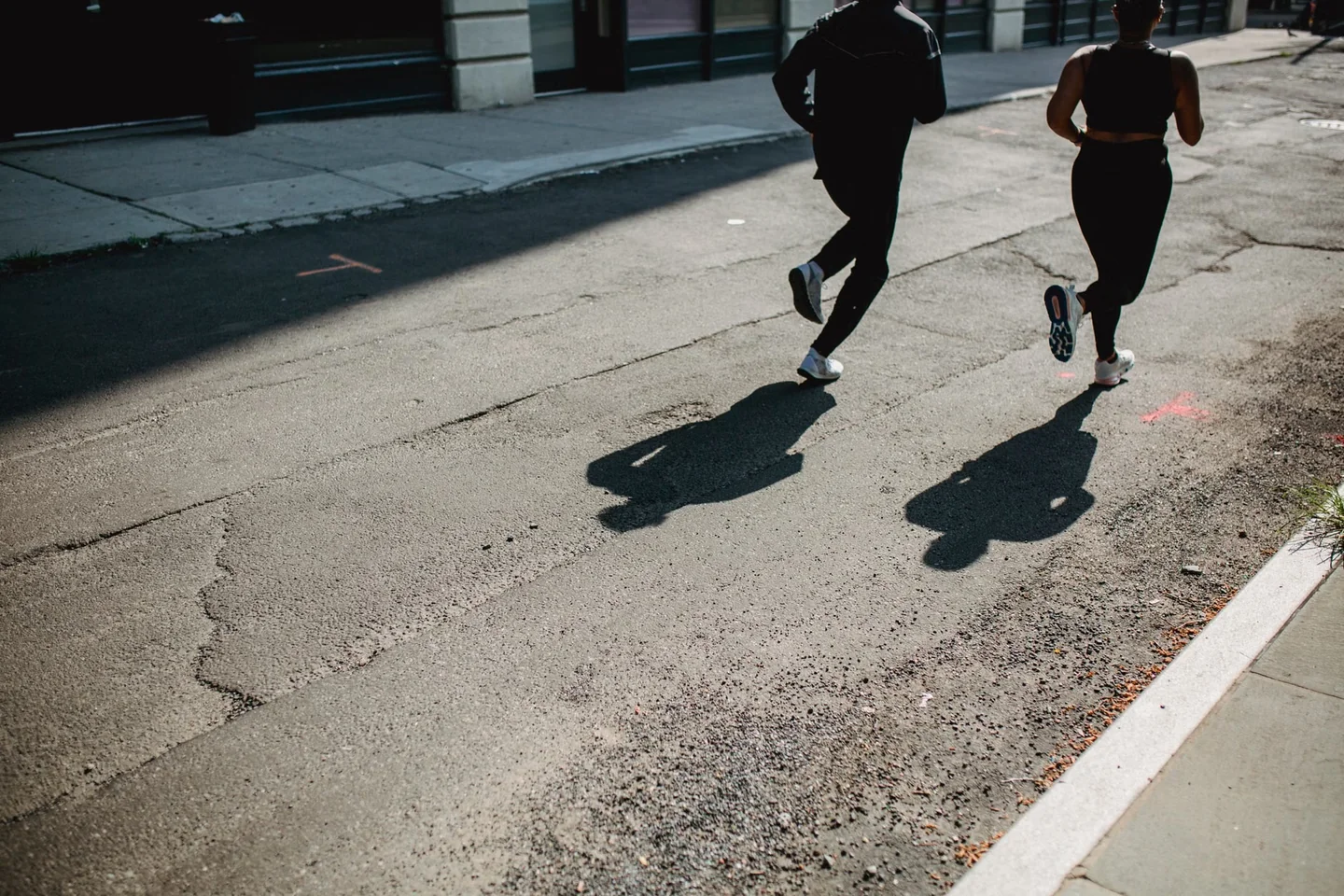
The Sant Pere-La Sagrera Urban Mile has established itself as one of the most recognizable events on the local calendar in Palau-solità i Plegamans. Its mix of speed, festive atmosphere, and short format makes it a very distinctive event within popular athletics: intense, accessible, and with the appeal of an urban one-mile course, where every meter counts and the margin for error is reduced to a minimum.
The interest in this race is not just about the stopwatch. Its connection to the Sant Pere festival also carries weight, as does the continuity of an organization closely tied to the local community, and the fact that it brings together everyone from experienced runners to children’s categories. That gives it its own identity, closer to an athletic community day than to a simple results-driven competition.
A mile with its own identity in the popular calendar
The urban mile follows a very different logic from other popular distances. It is 1,609 meters that demand a precise reading of effort: going out too fast can take its toll in the final stretch, but holding back too much often dooms any attempt at a good time. That delicate balance creates a special tension even before the starting gun.
In Sant Pere-La Sagrera, that tension is combined with a festive, urban setting that changes the usual tone of many races. The course is run on asphalt, on a fast and flat circuit designed to keep the pace steady throughout. That combination of a short route and favorable terrain explains why the event has been gaining importance within Catalan athletics and why it is associated with championships and category standings.
The value of this event also lies in its consistency. Year after year, the organizers have refined posters, regulations, circuits, and services, creating a structure that makes participation easier and gives the race stability. In the running ecosystem, where many events appear and disappear quickly, that continuity functions almost like a seal of trust.
The course: speed, asphalt, and no tricks
The available data describe a completely flat race, certified and run on asphalt, with an urban circuit that has been presented in different editions as very fast. This kind of route favors pace changes, tight finishes, and close times, something that usually attracts both athletes with competitive ambition and those looking for a short, well-organized experience.
The start and finish have been set on C. Sant Galdric, in Palau-solità i Plegamans, a detail that helps picture the format of the event: an orderly urban center, a race line marked by the proximity of the crowd, and a development that rewards positioning from the first meters. In a mile, position matters as much as fitness; the pack’s line, the first turn, and the finish can decide half the standings.
Certification of the course adds sporting interest. It is no minor detail: it allows performances to be compared with greater reliability and places the race on firmer ground for athletes who scrutinize results closely. At the same time, the range of categories means the experience is not limited to the elite; the race opens up to very different ages, from youth groups to veterans, reinforcing its profile as a complete athletics event.
An event that grew with the editions and grassroots work
Competitors and the organizers’ own website show a clear evolution over the years. In 2019, it was already being described as an event with new features and gifts for everyone; in 2022, the race regained momentum after the pandemic break and became the official venue for the Catalan Championship; in 2023, the tenth anniversary was celebrated with a notable number of participants and graphic material; in 2024, the eleventh edition was consolidated; and in 2025, the race remained linked to federation competition and to a well-established format.
That evolution is not just a matter of numbers. It also shows how a local race can build prestige without losing its community roots. The support of the Associació Revetlla Sant Pere-La Sagrera, together with athletics organizations and institutional collaborations, has given the mile an organizational foundation visible in concrete details: clear regulations, explained circuit, chip timing, diplomas, trophies, and a participation format that is anything but improvised.
This kind of consolidation is often what separates a one-off event from a race that runners look forward to every season. The Sant Pere-La Sagrera mile belongs to that second group: a competition that is no longer understood only as a festival activity, but as a fixed point on the map of Catalan popular speed events.
Categories, atmosphere, and a very open door to athletics
One of the keys to this event’s appeal is that it combines a high level with mass participation. Recent editions speak of categories ranging from elite and senior to veterans, juniors, cadets, children, under-11s, under-9s, and under-7s. That breadth turns the day into something like a showcase of athletics in both miniature and full scale.
The presence of children’s races completely changes the atmosphere. It is not just a circuit for those looking to push the clock; it also includes the learning aspect, the first contact with a real event, and the characteristic noise of youth competitions, where the crowd cheers beyond the standings. That contrast between elite demands and the spontaneity of the youngest gives the event a very particular human warmth.
Recent editions have also described services such as bag check, showers, refreshments, massage, sandwiches or food at the finish, diplomas for participants, and prizes for winners. These elements do not change the sporting essence of the race, but they do help explain why a mile can work as a complete event rather than just a short date on the calendar.
What racing an urban mile brings
The mile has a charm that does not depend solely on spectacle. For runners, it is a distance that requires fine control of effort and punishes any excess confidence. There is no time to hide: the heart rate rises very early and fatigue appears almost like a wall at the end of the second or third segment. It is a short race, yes, but rarely a simple one.
That is why this distance usually appeals to very different profiles. Some are drawn to its explosive character, almost like a long middle-distance race; others because it allows competition without the physical burden of a half marathon or a 10K; and younger runners find it a manageable distance, with intensity but without the logistics of a longer event. At a time when many races are getting longer, the mile retains a classic feel, almost like track athletics moved onto the road.
In addition, the urban format brings a very clear visual component. The runner sees the circuit, recognizes landmarks, and feels the crowd closer. It is not the same to run among endless straightaways as it is to do so with turns, intersections, and the buzz of the neighborhood right next to the course. In Sant Pere-La Sagrera, that closeness is part of the appeal and reinforces the feeling of a local event with sporting ambition.
Registrations, results, and the event’s digital footprint
The organizers have gradually integrated digital channels to manage registrations, publish standings, and display photo albums. In recent years, results have been handled through specialized platforms such as Championchip or XipGroc, while the association’s own website has served as a living archive of regulations, posters, maps, and summaries of past editions.
That digital layer serves an important function: it preserves sporting memory and makes it easier to follow the runner’s progress. In a short race, where details matter so much, category standings and official podiums become part of the story. It is not just about knowing who won, but about understanding how a day that mixes competition, togetherness, and a certain neighborhood ritual unfolded.
The photos and videos from the race also have documentary value. Editions with more than a thousand images available show that the mile creates a rich scene: bib numbers, pre-race nerves, surges, podiums, celebrations, and spectators along the edges. This visual archive has helped define the event’s identity and give it continuity beyond the day itself.
A short race with a long perspective for local athletics
Events like the Sant Pere-La Sagrera Urban Mile usually matter more than their 1,609 meters might suggest. They serve as an entry point into athletics for some, as a speed test for others, and as a shared celebration for the community. That triple role explains their staying power and their ability to grow without losing their close-knit tone.
In the case of Palau-solità i Plegamans, the race has also been integrated into the broader Sant Pere festival program, placing it in a singular position: it does not compete only on the sporting calendar, but also interacts with the cultural and neighborhood agenda. That coexistence gives it a visibility that few urban races of its size manage to sustain so consistently.
What this mile ultimately leaves behind is a very clear image of popular running at its best: a fast course, recognizable organization, open categories, sporting grassroots, and a community that identifies with the race. You do not need a great mountain or an epic distance to build a memorable event. Sometimes all it takes is a stretch of asphalt, a precise clock, and the pulse of a neighborhood that takes its race seriously.
A name that is now part of the region’s running map
The Sant Pere-La Sagrera Urban Mile has gone from being an initiative tied to local festivities to becoming a stable reference for those who follow short races in Catalonia. Its evolution, documented across several editions and backed by official results, shows a race that has managed to grow without giving up its human scale.
That balance between competitiveness and closeness is probably its greatest strength. The mile does not promise big gimmicks; it offers something more valuable on the popular calendar: a clear, fast, and well-defined experience, where the athlete knows what they are facing and the public immediately understands what they are seeing. In times of excess, that sporting clarity carries its own weight.
That is why this race continues to draw interest year after year. Because it is short, yes, but not light. Because it is urban, but not impersonal. And because, in just one mile, it sums up a very specific way of living running: with technique, with atmosphere, and with the feeling that each edition leaves a small mark on the athletic map of the area.
You may also like: Milla del Drac de Poblenou 2025: date, route, and prices.



How to prevent thigh chafing: causes and real solutions

Women’s running windbreakers: seven jackets and how to choose

Do more workouts get rid of soreness? A guide for runners

Jaén Half Marathon 2026: Record 3,800 Runners Registered

Men’s short running tights: how to choose the right pair

World Triathlon confirms data breach involving medical data

Izan Edo targets podium at Miyazaki World Cup

María Pérez ranks ninth in World Athletics’ 2026 top ten

Dos Santos, Duplantis and Sawe: World Athlete of the Year finalists

San Silvestre Vallecana 2026: 42,000 places, prices and start times

 Races4 months ago
Valencia Half Marathon 2027: date and registration

 Races4 months ago
Valencia Marathon 2026: entry, ballot and course

 Reviews and Comparisons4 months ago
Asics Gel-Roadmiles 3 for men: review and current price

 Reviews and Comparisons4 months ago
Asics Gel Sonoma 8 Gore-Tex: complete analysis for trail and rain

 Sneakers3 months ago
Saucony Endorphin Pro 4: full review and verdict

 News5 months ago
Strava API 2026: what changes for clubs, challenges and runner apps?

 Reviews and Comparisons5 months ago
Nike Alphafly 3: opinions, sensations, and real key points

 Reviews and Comparisons4 months ago
Under Armour running shoes review 2025-2026: models and key features

 Sports Equipment4 months ago
Shoe sizes in cm: a clear guide to getting the right fit for your footwear

 Sneakers3 months ago
Skechers GO RUN Consistent 2.0 analysis: comfort and limits

 News5 months ago
Valencia Marathon 2026 route: key tips to train and run better

 Sneakers4 months ago
Adidas Adizero Boston 13 for men: review and verdict