Races
Lanzarote Marathon: route, dates, and registrations 2026
Coast, volcano, and temperate climate: a unique test with distances for everyone and key details of the 2026 edition.

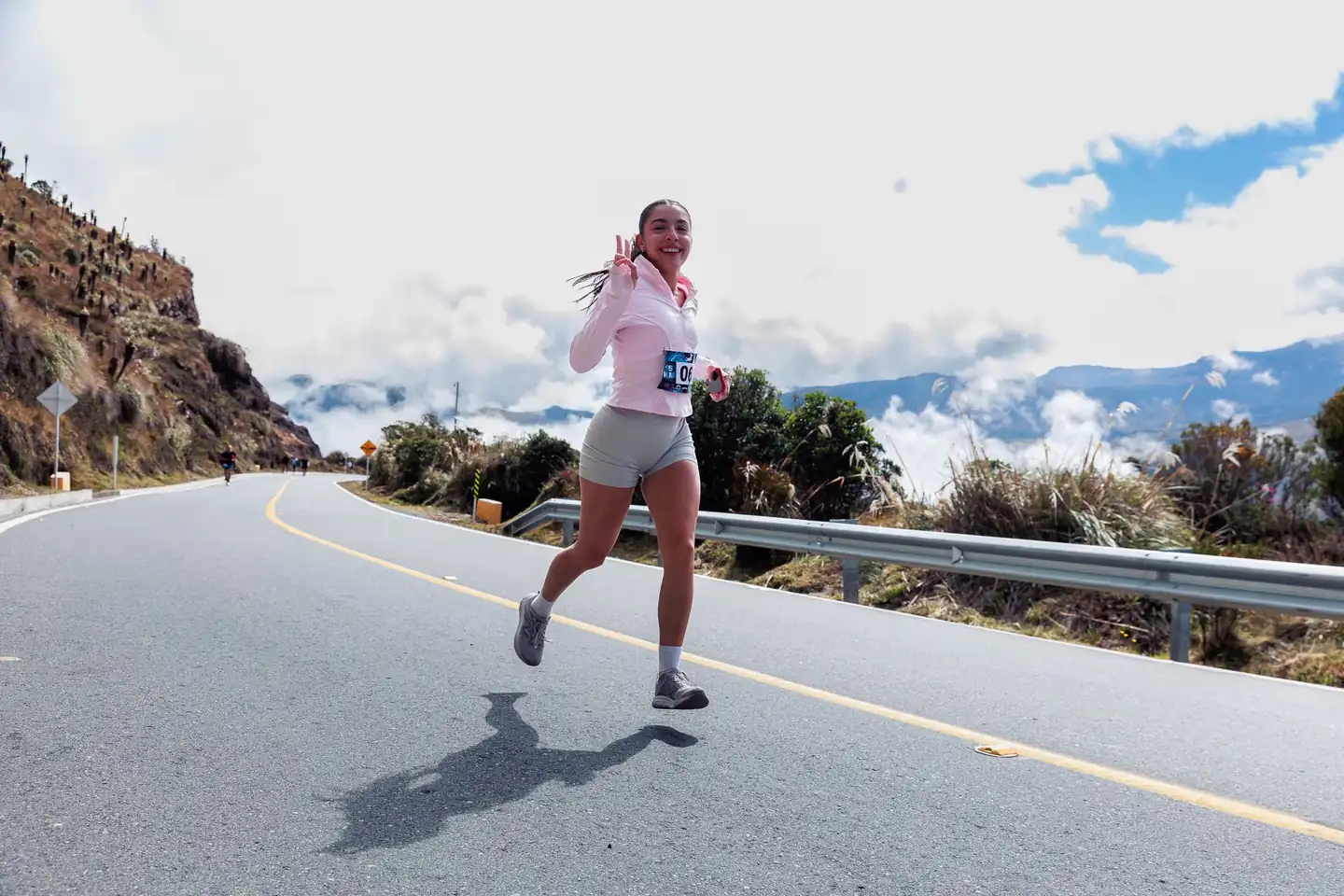
The Lanzarote Marathon returns in December 2026 with a proposal that blends sport, landscape, and very carefully planned logistics. The race is held in Costa Teguise and covers a good part of the island’s eastern coastline, with an asphalt setting beside the sea, fairly favorable profiles, and a climate that is usually kind for running in the middle of a European winter.
The confirmed edition takes place between December 3 and 5, 2026, with the marquee distance on Saturday the 5th. The program is not limited to the marathon: it also includes 10 kilometers, half marathon, a 5-kilometer race, and kids’ races, making the event a broad one, with strong local significance and a growing presence among runners looking for an experience different from the major urban marathons.
A race defined by the coast and the Atlantic climate
The standout feature of this race is its setting. Lanzarote does not offer the classic backdrop of a major capital city or an inner-city avenue circuit; here the runner moves between the deep blue of the ocean, volcanic rock, and a clear light that in December is usually still very bright. The organizers place the race along a stretch of coastline where the scenery changes quickly, but without abrupt breaks, and that gives the course a very recognizable identity.
The appeal also lies in the calendar. Running in the Canary Islands at the start of December generally means mild temperatures around 19 to 21 degrees Celsius, with air that can be warm but also windy. That combination means you should not get overconfident: the climate invites light clothing, although the Atlantic can set its own pace, especially in the more exposed sections. On an island where the volcanic landscape seems drawn in charcoal and salt, every kilometer has a visual texture very different from that of a race on the mainland.
The race has also established an international profile. It is not just a race for chasing a personal best, but also a travel experience. Volcano, sea, and asphalt form a triptych that weighs heavily in the decision of those traveling from outside the Canary Islands or even from other European countries. And that half-sporting, half-touristic nature explains much of its growing reputation.
Dates, distances, and schedules for the 2026 edition
The event structure concentrates its main races between December 3 and 5, 2026. That schedule makes it possible to organize the pre-race activity, the shorter races, and the main starts with enough room for traffic, bib pickup, and event services to operate without excessive congestion. The organizers confirm an edition with distances for different runner profiles and with part of the program also designed for families and junior categories.
The marquee distance, the 42.195-kilometer marathon, starts on Saturday the 5th at 08:00. The half marathon starts at 10:30 and the 10-kilometer race at 12:00. In addition, the program includes a wheelchair half marathon, scheduled for 09:00, an important benchmark for an event that has been broadening its inclusive approach. The 5-kilometer and kids’ races take place on Thursday, December 3, as a lead-in that opens the sports weekend with a more popular and family-friendly tone.
The variety of distances is one of its strengths. Not all competitions with international ambitions offer such a wide range in the same setting and with the same visual identity. Here the runner can choose between the full challenge of the marathon, a more manageable half marathon, an accessible 10K, or a 5K designed to boost participation without losing the atmosphere of a major event.
The course: a fast profile with open scenery
The route runs along Lanzarote’s eastern coast and passes through areas such as Costa Teguise, Arrecife, San Bartolomé, and Puerto del Carmen, with an out-and-back logic that combines promenades, avenues, and sections open to the sea. It is a road circuit, with regular surfaces and a profile that, although not completely flat in absolute terms, is perceived as favorable for holding steady paces.
In the marathon, the start is located in front of Sands Beach Resort in Costa Teguise, and the circuit takes runners south along very recognizable coastal stretches, with visual references to the ocean, the beaches, and the volcanic terrain. In the half marathon, the start is set on Avenida de las Playas in Puerto del Carmen, while the 10 kilometers begin at La Marina in Arrecife, heading toward Costa Teguise. That distribution of starts gives each distance its own personality, even though they all share the same Atlantic DNA.
Asphalt beside the sea is the main attraction. There are no major climbs or mountain-like difficulty to break the rhythm; what matters here is the ability to stay focused on a course that, because of its beauty, can be distracting. The runner is not competing only against the clock, but also against the temptation to look around too much. The horizon, the changing colors of the water, and the black volcanic stone create an almost hypnotic backdrop.
Race conditions and real potential for a personal best
The Lanzarote Marathon was not built as a super-fast race in the style of record-setting urban courses, but it does offer an appealing terrain for those looking for a clean race, relatively stable, and without excessive elevation changes. Reported elevation by specialized competitors places the marathon at around 301 meters of positive gain, a moderate figure for a race of this kind and compatible with sustained pacing if the day cooperates.
The weather matters as much as the profile. December in Lanzarote is usually kinder than in much of mainland Spain, but that does not mean there is no strain. Wind can make a difference in exposed sections, and the perceived temperature varies depending on sun, humidity, and start time. In a coastal race, the breeze that feels cooling in one stretch can become resistance in the next. That duality means the course must be read with a cool head.
The regularity of the surface also matters. Running on asphalt makes for a fluid stride, especially for those traveling with the goal of finishing well or adjusting a half marathon or marathon pace without technical surprises. At the same time, the apparent monotony of a long road beside the sea can take a mental toll. That is why this race requires careful management: hydrate on time, control the pace from the start, and do not be carried away by the illusion of the first part, which usually feels friendlier than it will later prove to be.
Registration, prices, and runner services
Registrations are handled through the official organization and, according to available information, the event maintains a tiered pricing structure depending on the sign-up date. For the marathon, published fees range from 60 euros in the first period to 80 euros in the final listed period. The half marathon ranges from 45 to 65 euros, the 10K from 30 to 50 euros, the 5K from 6.50 to 15 euros, and the kids’ race is listed at 10 euros. The wheelchair race is shown at 50 euros in the indicated period.
Beyond the price, the organizers detail services that help explain the scale of the event. There are aid stations approximately every 2.5 kilometers, changing rooms open for a broad time window, and shuttle services for some distances, especially the half marathon and 10K, with departure from Sands Beach Resort to the start points. That kind of logistics matters a lot on an island where every transfer needs a bit more planning than in a compact city race.
Bib pickup is also clearly defined. It takes place at the expo in front of Sands Beach Resort, at Avenida Islas Canarias, 18, in Costa Teguise. The published time slots cover the Thursday and Friday before the main race, a reasonable window to manage arrivals, avoid excessive queues, and have everything ready before the big Saturday. For those traveling from elsewhere, that detail is worth almost as much as the price: it reduces stress and clarifies schedules.
Why this event is gaining space on the calendar
The Lanzarote Marathon has earned its own place because it offers something that is not common: a road race with a strongly marked island identity. It does not compete only on time or participant numbers, but on a mix of landscape, climate, and experience that makes the trip part of the prize. Lanzarote is not raced neutrally; it is raced with the island in front, beside you, and often above you too, in the form of wind.
The race also fits a clear trend in the Spanish calendar: runners are increasingly looking for events with personality, outside the more repeated urban mold. Here there is volcano, coastline, scattered architecture, and a sense of openness that breaks with the closed geometry of many streets. The result is a race remembered as much for its surroundings as for the official time.
There is also a very visible community component. The inclusion of kids’ events, the presence of intermediate distances, and the commitment to adapted formats mean the event is read not only as a pure marathon, but as a more complete sporting occasion. That broadens the audience and strengthens its position on the running map in Spain.
What to keep in mind before traveling to the island
The island calls for a bit more planning than a mainland race. Runners coming from elsewhere often arrange flights, accommodation, and transfers in advance, especially because Costa Teguise and the areas near the finish concentrate much of the logistical convenience. Sleeping near the start or finish not only saves time; it also reduces friction on a race morning when any unnecessary trip is felt more than expected.
Gear also deserves a practical approach. In an environment with likely sun, mild temperatures, and variable wind, clothing should be light but not improvised. Racing shoes or fast training shoes fit well on an asphalt, regular course, but the final choice depends more on the runner than on the scenery. What does seem clear is that you should not debut anything on race day. The island already brings enough variables without adding more uncertainty for the feet.
Hydration and pacing are the two major keys. Even if aid stations are well spaced, a coastal race with a pleasant feel can lead you to underestimate dehydration. And although the course may seem comfortable, a marathon is still a marathon: a long, demanding effort, where the final kilometers punish any excess of early enthusiasm.
A race that combines sports tourism and Atlantic character
The Lanzarote Marathon works as a sporting showcase for the island. Its course displays a very specific part of the territory, but it does so with a logic that benefits both runner and visitor. The sea, the rock, the coastal villages, and the December light create a setting that needs no embellishment. Added to that is an organization with clear services and a program that opens the door to different levels of participation.
In an increasingly crowded calendar, this race stands out for not looking too much like any other. It has the serenity of great open landscapes and, at the same time, the intensity of a race with a start, finish, and a running clock. That contrast explains its appeal: it is not just about running facing the ocean, but doing so on an island where the terrain constantly reminds you of its volcanic origin.
What remains in the background is a clear image: a winter marathon where the blue of the Atlantic competes with the black of the lava. Few races can be summed up with such a precise postcard. And that is why, beyond times, bibs, or prices, the Lanzarote Marathon continues to grow as one of the most distinctive events in Spanish running.
You may also like: Lanzarote 2026: marathon dates, entry fees and route.
Where to stay in Costa Teguise
Hotels available 3–6 December 2026.
Affiliate links: if you book through this map we earn a commission, at no extra cost to you.



How to prevent thigh chafing: causes and real solutions

Women’s running windbreakers: seven jackets and how to choose

Do more workouts get rid of soreness? A guide for runners

Jaén Half Marathon 2026: Record 3,800 Runners Registered

Men’s short running tights: how to choose the right pair

World Triathlon confirms data breach involving medical data

Izan Edo targets podium at Miyazaki World Cup

María Pérez ranks ninth in World Athletics’ 2026 top ten

Dos Santos, Duplantis and Sawe: World Athlete of the Year finalists

San Silvestre Vallecana 2026: 42,000 places, prices and start times

 Races3 months ago
Valencia Half Marathon 2027: date and registration

 Races3 months ago
Valencia Marathon 2026: entry, ballot and course

 Reviews and Comparisons4 months ago
Asics Gel-Roadmiles 3 for men: review and current price

 Reviews and Comparisons4 months ago
Asics Gel Sonoma 8 Gore-Tex: complete analysis for trail and rain

 Sneakers3 months ago
Saucony Endorphin Pro 4: full review and verdict

 News5 months ago
Strava API 2026: what changes for clubs, challenges and runner apps?

 Reviews and Comparisons5 months ago
Nike Alphafly 3: opinions, sensations, and real key points

 Reviews and Comparisons4 months ago
Under Armour running shoes review 2025-2026: models and key features

 Sports Equipment4 months ago
Shoe sizes in cm: a clear guide to getting the right fit for your footwear

 Sneakers3 months ago
Skechers GO RUN Consistent 2.0 analysis: comfort and limits

 News5 months ago
Valencia Marathon 2026 route: key tips to train and run better

 Sneakers4 months ago
Adidas Adizero Boston 13 for men: review and verdict