Races
Loch Ness Marathon 2026: date and course
Scenic route, services, records, and atmosphere of the great Scottish fondo that ends in Inverness.

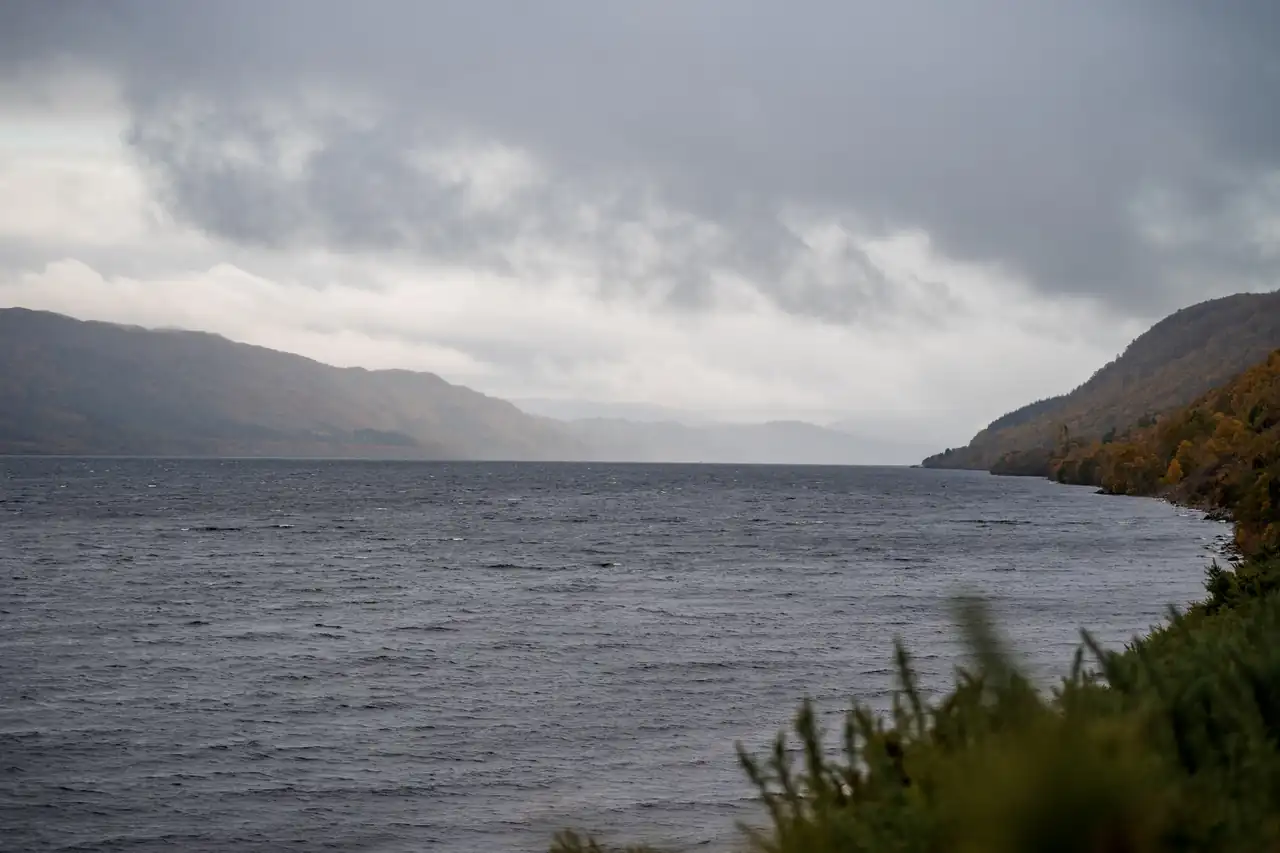
The Baxters Loch Ness Marathon has become one of the major draws on the international calendar for a simple reason: it combines a fast and highly scenic route with the appeal of the Scottish Highlands. Held in late September, the race links a rural start beside Loch Ness with an urban finish in Inverness, in an uncommon mix of open scenery, asphalt, and a profile favorable for chasing a personal best.
Its strength is not just the fame of the lake. The logistics of a mature event, the breadth of its running festival, and a reputation built over more than two decades of history also carry weight. The main marathon covers 42.2 kilometers on a point-to-point course, while the program includes a 10K, a 5K, and a children’s race, all with an atmosphere that has turned the event into a travel destination for runners from many countries.
A great long-distance race that looks to the scenery and the clock
The race was born in 2002 and has since grown to occupy its own place among the major road marathons in the United Kingdom. Its identity rests on a very clear idea: to offer a highly attractive scenic experience without giving up a route capable of rewarding serious preparation. The course drops significantly from the Highlands down to Inverness, something that, if well managed, can translate into competitive splits.
The event is run by Caledonian Concepts and sponsored by Baxters Food Group, a partnership that has given continuity to the race and helped consolidate its brand. Over the years, the marathon has ceased to be just a race and has become a running festival with a life of its own, a gathering where recreational athletes, experienced runners, families, and charity participants all coexist.
That growth is also reflected in its scale. In recent editions, organizers have handled very high entry numbers, with thousands of runners spread across all distances and an atmosphere befitting a major event, while still retaining some of the close-knit feel that many reports highlight. The result is a race that combines the scope of a big event with the sensation of running through a landscape that opens and closes like a moving backdrop.
The date, the start, and the point-to-point format
The 2026 edition is set for Sunday, September 27, with the start at 10:00. The marathon begins in the Whitebridge area, between Whitebridge and Fort Augustus, on the southern side of Loch Ness, and finishes in Bught Park in Inverness. That point-to-point format shapes everything: strategy, transport, pre-race logistics, and the way the runner experiences the race from the very first minute.
The start in a moorland and open-road setting creates a powerful contrast with the arrival in the capital of the Highlands. During the first kilometers, runners move through a moorland landscape and then drop toward the lakeshore, where the route enters that stretch of secondary roads and long views that defines the whole experience. Later, the course narrows toward the urban area, crosses the River Ness, and ends with crowds on the streets of Inverness.
Chip timing allows for net times to be recorded, a well-established solution in this type of mass-participation event. The official cutoff is seven hours, a generous margin that makes clear the inclusive character of the race, although the organizers also set operational limits for safety and road reopening. In other words, it is a race open to a wide range of paces, but organized with the precision of a major road event.
Course & elevation Edition 2026
Per-kilometre table
| Km | Elevation | Grade |
|---|---|---|
| 1 | 263 m | -4.5 % |
| 2 | 225 m | -3.8 % |
| 3 | 217 m | -0.8 % |
| 4 | 198 m | -1.9 % |
| 5 | 182 m | -1.6 % |
| 6 | 165 m | -1.7 % |
| 7 | 161 m | -0.4 % |
| 8 | 160 m | -0.1 % |
| 9 | 186 m | 2.5 % |
| 10 | 138 m | -4.7 % |
| 11 | 98 m | -4.0 % |
| 12 | 89 m | -0.9 % |
| 13 | 85 m | -0.4 % |
| 14 | 56 m | -2.9 % |
| 15 | 35 m | -2.2 % |
| 16 | 24 m | -1.0 % |
| 17 | 34 m | 1.0 % |
| 18 | 32 m | -0.3 % |
| 19 | 31 m | -0.1 % |
| 20 | 31 m | 0.0 % |
| 21 | 36 m | 0.5 % |
| 22 | 35 m | 0.0 % |
| 23 | 31 m | -0.4 % |
| 24 | 41 m | 1.0 % |
| 25 | 40 m | -0.1 % |
| 26 | 29 m | -1.0 % |
| 27 | 24 m | -0.6 % |
| 28 | 26 m | 0.2 % |
| 29 | 35 m | 0.9 % |
| 30 | 48 m | 1.4 % |
| 31 | 80 m | 3.2 % |
| 32 | 78 m | -0.2 % |
| 33 | 64 m | -1.4 % |
| 34 | 49 m | -1.5 % |
| 35 | 40 m | -0.9 % |
| 36 | 34 m | -0.6 % |
| 37 | 25 m | -0.9 % |
| 38 | 18 m | -0.7 % |
| 39 | 16 m | -0.2 % |
| 40 | 8 m | -0.8 % |
| 41 | 8 m | 0.0 % |
| 42 | 9 m | 0.1 % |
| 43 | 8 m | -0.6 % |
Plan your pace on this course →
Route source: Google My Maps
What the course is like and why so much is said about it
The Baxters Loch Ness Marathon profile is clearly downhill, although downhill should not be mistaken for absolute ease. The route includes rolling sections and stretches of rural road that can take a toll if you go out too aggressively in the first half. The advantage lies in the overall progression: the course helps you run with a sense of flow, especially when the legs respond and the wind stays calm.
The first part follows the B862 road, skirting the southern shore of Loch Ness. There are some very recognizable landmarks for those who follow the race visually: the expanse of the loch, the low hills, the intense green, and a sense of openness that changes a lot depending on the light. Passing Foyers, the views toward the ruins of Urquhart Castle, and the surroundings of Dores all add layers of scenery to an already highly photogenic route.
In the second half, the marathon moves further into the Inverness corridor. The route links up with the B861 and then the A82 before entering the city and following the course of the River Ness for several kilometers. The final stretch beside the river and the crossing over Ness Bridge are often among the most memorable sections, because they condense the transition from rural isolation to the urban finish, with the sound of the crowd growing little by little like a rising tide.
The favorable net elevation drop has produced very strong times, but the organizers themselves insist that it remains a demanding marathon. Exposure to the changeable Highland weather, side winds, and some gentle climbs require runners not to lose control of their effort. In short, it is a race where the scenery inspires, but the clock demands discipline.
More than a marathon: a festival with several entry points
The celebration is not limited to the 42.2 kilometers. The festival includes the Baxters River Ness 10K, the River Ness 5K, and the Wee Nessie, a children’s race designed for very young ages. That combination broadens the event’s reach and explains why many families experience it as a full weekend, not just a single run on the road.
The 10K is one of the program’s major complements and shares part of the urban appeal of the Inverness setting. The 5K, more accessible, is aimed at runners looking for a short distance in a pleasant, flat setting. Wee Nessie, meanwhile, is more playful than competitive and reinforces the image of an event open to several generations.
The previous Saturday usually serves as registration and expo day, with displays, merchandise stands, talks, live music, food trucks, and the atmosphere of a major event. That social layer matters almost as much as the race itself, because it turns the trip into a small sporting stay in the Highlands. For a marathon with a strong tourist component, that ecosystem is part of the product and part of its success.
Services, rules, and what the runner receives
The marathon entry includes several highly valued services: finisher medal, technical T-shirt, goodie bag, electronic timing, downloadable certificate, refreshments, transport to the start, and baggage transfer to the finish. Post-race food is also offered, with the usual presence of soup and a bread roll, a simple detail that fits the region’s changeable weather well.
There are water and gel stations along the route, and the organizers recommend careful hydration management, especially because the weather can change quickly. Bus transport from Inverness to the start is built into the experience, easing a major part of the logistical puzzle of a point-to-point race. Dropping off a clothing bag at the start and having it transferred to the finish completes an operation designed so runners can focus on racing.
The rules are the usual ones for an event of this level, with attention to bib numbers, safety, and respect for public roads. For example, running with poles or with a cycling escort along the route is not allowed. The wheelchair category is not available in the marathon for safety and course reasons, although the organizers note more suitable options within the shorter program.
An international magnet with numbers that explain its importance
The popularity of the Baxters Loch Ness Marathon has continued to grow. From a first edition with fewer than a thousand participants, the race has evolved to bring together thousands of runners and dozens of nationalities. The scenic appeal, the prestige of a carefully measured race, and the aura of a travel destination have all been decisive in that expansion.
International participation has always been one of its defining features. Although most runners come from the UK, the list of represented countries is usually broad and reflects a very modern running trend: buying an experience, not just a bib. In this case, the added value lies in the combination of marathon, getaway, scenery, and local folklore.
Its charitable dimension also stands out. Since its creation, the race has raised millions of pounds for good causes, with long-term partnerships with organizations such as Macmillan Cancer Support and other community-focused causes. That side helps explain why the event is seen as something more than a competitive race. It is a race, yes, but it also mobilizes volunteers, visitors, and the local economy at a key time of year for the region.
Records, winners, and the true value of a downhill mark
The course records say a lot about its potential speed. In the men’s race, the current best mark is 2:15:46, set by Alex Milne in 2025. In the women’s race, the record still stands at 2:42:04, achieved by Katie White in 2019. These are times that confirm the course’s ability to produce fast results when conditions, pacing, and tactical caution all align.
The winners’ history shows a mix of international and British names, with recurring victories by athletes from Kenya, Ethiopia, Tanzania, and Jordan, as well as wins by Scottish and English runners at different times. That alternation has given the race prestige without turning it into an exclusive elite circuit. The marathon remains accessible to recreational runners, while at the same time retaining a high-level competitive layer.
In recent editions, the event has continued to update its best marks and refine its organizational capacity. That has made it useful for different runner profiles: first-time marathoners find a friendly, well-structured atmosphere; those chasing a personal best see a course with a net drop and manageable pace; and those traveling for the story simply find one of those settings that seems designed to stay in the memory.
The experience of running between myth, road, and horizon
Some races are remembered for the stopwatch and others for the scene. The Baxters Loch Ness Marathon belongs to both categories. The lakeshore, the cold September air, the open hills, and the final transition into Inverness create an almost cinematic sequence. The runner moves from the stillness of the rural landscape to the urban pulse of the finish, as if crossing two countries within the same race.
That contrast explains part of its success. It is neither a textbook flat marathon nor a mountain race in the strict sense; it sits in an intermediate zone, with enough favorable elevation to attract those chasing a fast time and enough character not to feel like a highway to the clock. The balance is delicate, and that is precisely where its personality lies.
The connection with the Nessie legend adds a cultural element that rarely feels like empty folklore. In this case it works as brand identity, as a recurring nod, and as the thread that links the race to the territory. The event sells a landscape, but also a story: that of the runner who heads into the Highlands, circles Scotland’s most famous loch, and finishes in a city that beats at the foot of the river.
That is why the Baxters Loch Ness Marathon has continued to gain ground year after year. Because it offers a great marathon with technical precision, sufficiently polished logistics, a memorable start, and a meaningful finish. And because in an increasingly crowded calendar, few races can boast such a recognizable claim: running where the scenery matters as much as the effort.



How to prevent thigh chafing: causes and real solutions

Women’s running windbreakers: seven jackets and how to choose

Do more workouts get rid of soreness? A guide for runners

Jaén Half Marathon 2026: Record 3,800 Runners Registered

Men’s short running tights: how to choose the right pair

World Triathlon confirms data breach involving medical data

Izan Edo targets podium at Miyazaki World Cup

María Pérez ranks ninth in World Athletics’ 2026 top ten

Dos Santos, Duplantis and Sawe: World Athlete of the Year finalists

San Silvestre Vallecana 2026: 42,000 places, prices and start times

 Races3 months ago
Valencia Half Marathon 2027: date and registration

 Races3 months ago
Valencia Marathon 2026: entry, ballot and course

 Reviews and Comparisons4 months ago
Asics Gel-Roadmiles 3 for men: review and current price

 Reviews and Comparisons4 months ago
Asics Gel Sonoma 8 Gore-Tex: complete analysis for trail and rain

 Sneakers3 months ago
Saucony Endorphin Pro 4: full review and verdict

 News5 months ago
Strava API 2026: what changes for clubs, challenges and runner apps?

 Reviews and Comparisons5 months ago
Nike Alphafly 3: opinions, sensations, and real key points

 Reviews and Comparisons4 months ago
Under Armour running shoes review 2025-2026: models and key features

 Sports Equipment4 months ago
Shoe sizes in cm: a clear guide to getting the right fit for your footwear

 Sneakers3 months ago
Skechers GO RUN Consistent 2.0 analysis: comfort and limits

 News5 months ago
Valencia Marathon 2026 route: key tips to train and run better

 Sneakers4 months ago
Adidas Adizero Boston 13 for men: review and verdict