Races
Venice Marathon 2026: route, schedules, and key aspects of the race
Venice turns its marathon into a one-of-a-kind challenge among bridges, water, and heritage, with details already set.

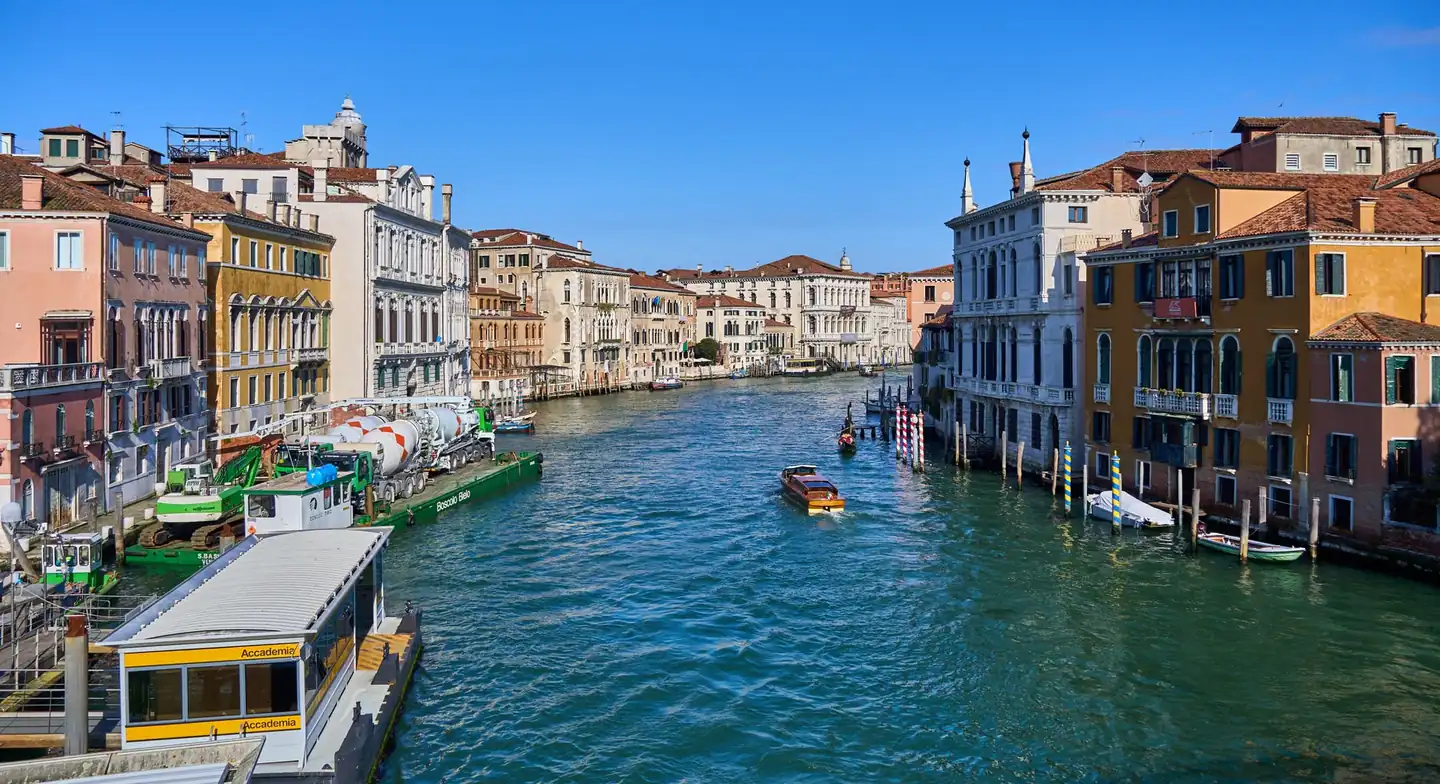
The Venice Marathon once again places Venice at the center of European athletics with a course unlike any other major continental city: it starts on the mainland, crosses the Riviera del Brenta, and enters the lagoon via the Ponte della Libertà before reaching the historic heart, finishing beside Riva Sette Martiri. The 2026 edition is set for October 25, with the marathon starting at 9:40, the half marathon at 8:45, and the 10K at 8:00.
It is not just a 42.195-kilometer race; it is an urban test with the soul of a crossing, where the scenery changes from a Venetian villa to a canal, from a park to a long straight bridge, from the wet stone of the alleyways to the open horizon of the San Marco basin. That mix explains why the Venicemarathon attracts thousands of international runners and why, year after year, the half marathon sells out first while demand remains strong for the longer distances.
A course that turns the city into a stage
The marathon starts at Villa Pisani, in Stra, one of the most emblematic mansions on the Riviera del Brenta. From there, the route stretches between 18th-century villas, riverbanks, and small towns in the Veneto, creating a linear, almost cinematic race. There is no feeling of circling the same scenery; instead, you move through a sequence of scenes that change with each stride.
The opening section has an almost architectural value. The Venetian villas, the banks of the Brenta, and the passage through towns such as Dolo, Mira, Oriago, and Marghera place the runner in a heritage corridor that does not rely solely on the final postcard view. The marathon is built from the outside in, and that transition is one of its defining traits: first the region, then the city, and finally the most recognizable Venice.
As the race approaches the historic center, the terrain changes character. The Ponte della Libertà, nearly 4 kilometers long, acts as an entrance walkway to the lagoon and demands smart effort management. Then come the port areas, the Giudecca Canal, the Accademia, the Royal Gardens, and, in the decisive stretch, St. Mark’s Square, the Doge’s Palace, and the finish line facing the basin. It is a sequence of landmarks that turns the final kilometers into a kind of physical and visual parade.
The toughest part comes when the scenery turns iconic
Venice does not forgive lapses of concentration in the final kilometers. The closing stretch is full of turns, pace changes, and uneven surfaces, with cobbled sections and stretches where technique matters as much as the legs. In a marathon that is broadly flat overall, that detail makes the difference between finishing strong and finishing empty. The official cumulative elevation gain is around 78 meters of ascent, a modest figure for a major urban race, but enough to add nuance to pacing strategy.
The organizer sets the maximum time to complete the marathon at 6 hours. In addition, there are intermediate cutoffs: 2 hours and 45 minutes for the half marathon split and 3 hours and 50 minutes for kilometer 30. These marks reflect a large but orderly event, designed for runners of different profiles, though always within a clear competitive framework.
The finish at Riva Sette Martiri, facing the lagoon, concentrates the emotional side of the race. It is not a neutral finish, as might happen in a stadium or on a wide avenue, but an ending open to the water and to the city’s historic silhouette. That final scene, with fatigue still on the face and the echo of stone underfoot, is one of the most recognizable images on the international calendar.
Distances, schedules, and race weekend rhythm
The Venice Marathon features three main races: the marathon, the half marathon, and the 10K. The queen distance starts in Stra; the half marathon starts from Piazza Ferretto in Mestre; and the 10K starts from Parco San Giuliano. All three share the goal of bringing runners to the same final Venice, even though their routes and times are very different.
The half marathon offers perhaps the clearest balance between accessibility and spectacle. Starting at 8:45, it covers 21.0975 kilometers and has a maximum time of 2 hours and 30 minutes, with a cutoff at the 10K mark at 1 hour and 10 minutes. The 10K, meanwhile, begins at 8:00, shares part of the final stretch with the longer races, and demands that runners make the most of every curve and bridge in the historic center from the very start.
In all three cases, the shared finish area at Riva Sette Martiri gives the event coherence. That organizational choice ensures that the final stretch becomes the true showcase of the race, both for those completing 42 kilometers and for those choosing a shorter distance. The city becomes a shared finish line, reinforcing the event’s identity beyond the clock.
Entries, bibs, and requirements worth knowing
The entry fee for the competitive marathon is set at 105 euros in the rate observed for 2026, down from an initial price of 120 euros. The reference information also lists an entry deadline of October 11, with the current price band valid until August 31, 2026. These are useful details for understanding that the cost is not fixed throughout the entire registration period and that the organizers use tiered pricing.
To take part in the competitive category, runners who are not affiliated with a federation recognized by World Athletics or FIDAL must purchase a Runcard and present a medical certificate. Those who cannot meet those requirements can register as non-competitive by signing a liability waiver. In that case, their time appears in a separate classification, with no option for prizes or a place in the overall podium standings.
Bib collection is scheduled at the Exposport Venicemarathon Village, in Parco San Giuliano in Mestre, on October 23 and 24, from 9:00 to 20:00. Centralizing pick-up there, along with other pre-race services, confirms that the event is not limited to Sunday’s race: the entire weekend is organized as a small running district.
Services, aid stations, and runner logistics
The bib includes more than a start and a finish. According to the published information, registration includes a finisher medal, race bag, official T-shirt, electronic certificate, timing chip, pacers, photo service, transport to the start, aid stations, nutrition stations, medical assistance, baggage storage, toilets, changing rooms, and emailed results. It is a classic package for a major international marathon, but with the added value of especially demanding logistics due to the urban setting.
The organizers list eight aid stations at kilometers 5, 10, 15, 21, 25, 30, 35, and 40. Water is available at all of them, and from kilometer 20 onward, seasonal fruit, energy biscuits, bananas, apples, and sports drinks are added. In a race where pace can be disrupted by bridges or pavement, that support network is more important than it may appear on paper.
There are also free shuttles for runners, departing from Venice Tronchetto and Mestre to the start areas. To get back to the mainland, a boat service runs between Venice Giardini and Venice Tronchetto in specific time slots after the race. That combination of bus and boat neatly sums up the complexity of the event: it is not enough to arrive; thousands of people must be moved around a city that works on water and very precise connections.
The city, the water, and the October calendar
October usually offers reasonable weather for running in Venice, with typical temperatures between 7 and 15 degrees Celsius. It is a range that favors runners looking for a marathon without extreme heat, although humidity, fog, or rain can change from one day to the next. In the lagoon, weather is never a fixed backdrop; it is part of the story.
The race also coexists with a very Venetian factor: acqua alta. In some editions it has altered parts of the course or created memorable scenes, with runners moving along walkways or water in certain streets. It is not the norm, but it is a reminder that this race takes place in a fragile city, where nature can intervene with almost theatrical force.
That coexistence between sport and environment turns the Venice Marathon into something more than a calendar date. Some run for a personal best, but others run for the experience. And in that blend lies part of its appeal: the race offers an international stage, with more than half of participants being foreign in some editions, while retaining a strongly local identity tied to the history of the Brenta, the temporary bridges, and the slow entrance into the most photogenic city in Italy.
Why it remains one of the most unique marathons in Europe
The Venice Marathon is not only competing on time. It competes on memory. A runner may remember their exact split, but they also remember the sound of their footsteps on stone, the view of the Grand Canal from the temporary bridge, the first glimpse of St. Mark’s around a corner, and the feeling of crossing the finish line with the lagoon beside them. Few races manage to turn the course into such a complete story.
That is the true value of the event: bringing performance, heritage, and logistics together in a single sporting gesture. From Stra to Riva Sette Martiri, the race draws a line that connects not only geographic points, but also eras, urban styles, and different ways of understanding running. It is a relatively fast marathon in its opening section, complex in its final stretch, and memorable all the way through.
That is why it continues to occupy a special place on the international calendar. It does not need to sell itself as an oddity: by definition, it is one. And in a discipline as measured as the marathon, where every second counts, Venice adds something less quantifiable but decisive, a kind of muted brilliance that clings to memory like the lagoon’s humidity. Those who cross its finish line do not simply complete 42.195 kilometers; they pass through an entire city turned into a sporting stage.
A finish line that sums up the power of the urban marathon
The great merit of this race is that it does not disguise its uniqueness. It embraces it. Bridges, water, stone, villages, avenues, canals, and squares are not decoration, but part of the effort’s structure. That honesty explains why the Venice Marathon is still seen as an essential race for anyone looking for more than just a good time.
In an age of very homogeneous races, its course retains an almost handcrafted feel, despite the scale of the organization. There is coordination, time controls, shuttles, expo areas, medals, bibs, and clear rules, but all of that serves a larger scene. Venice does not adapt to the marathon; the marathon learns to speak Venice’s language.
And that is the final reason for its prestige. The Venice Marathon is a big, international, well-structured race, yes, but it is also an experience that forces you to look, not just run. At the finish, facing the lagoon, the runner understands that the final result is not only on the stopwatch. It is also in the city that has passed, kilometer by kilometer, from scenery to protagonist.
You may also like: Venice Marathon: course, history and key facts.



How to prevent thigh chafing: causes and real solutions

Women’s running windbreakers: seven jackets and how to choose

Do more workouts get rid of soreness? A guide for runners

Jaén Half Marathon 2026: Record 3,800 Runners Registered

Men’s short running tights: how to choose the right pair

World Triathlon confirms data breach involving medical data

Izan Edo targets podium at Miyazaki World Cup

María Pérez ranks ninth in World Athletics’ 2026 top ten

Dos Santos, Duplantis and Sawe: World Athlete of the Year finalists

San Silvestre Vallecana 2026: 42,000 places, prices and start times

 Races3 months ago
Valencia Half Marathon 2027: date and registration

 Races3 months ago
Valencia Marathon 2026: entry, ballot and course

 Reviews and Comparisons4 months ago
Asics Gel-Roadmiles 3 for men: review and current price

 Reviews and Comparisons4 months ago
Asics Gel Sonoma 8 Gore-Tex: complete analysis for trail and rain

 Sneakers3 months ago
Saucony Endorphin Pro 4: full review and verdict

 News5 months ago
Strava API 2026: what changes for clubs, challenges and runner apps?

 Reviews and Comparisons5 months ago
Nike Alphafly 3: opinions, sensations, and real key points

 Reviews and Comparisons4 months ago
Under Armour running shoes review 2025-2026: models and key features

 Sports Equipment4 months ago
Shoe sizes in cm: a clear guide to getting the right fit for your footwear

 Sneakers3 months ago
Skechers GO RUN Consistent 2.0 analysis: comfort and limits

 News5 months ago
Valencia Marathon 2026 route: key tips to train and run better

 Sneakers4 months ago
Adidas Adizero Boston 13 for men: review and verdict