Races
Longford Marathon 2027: date, course and entry fees
The Irish event offers distances from 5K to ultramarathon. Here are the published prices and details for August.

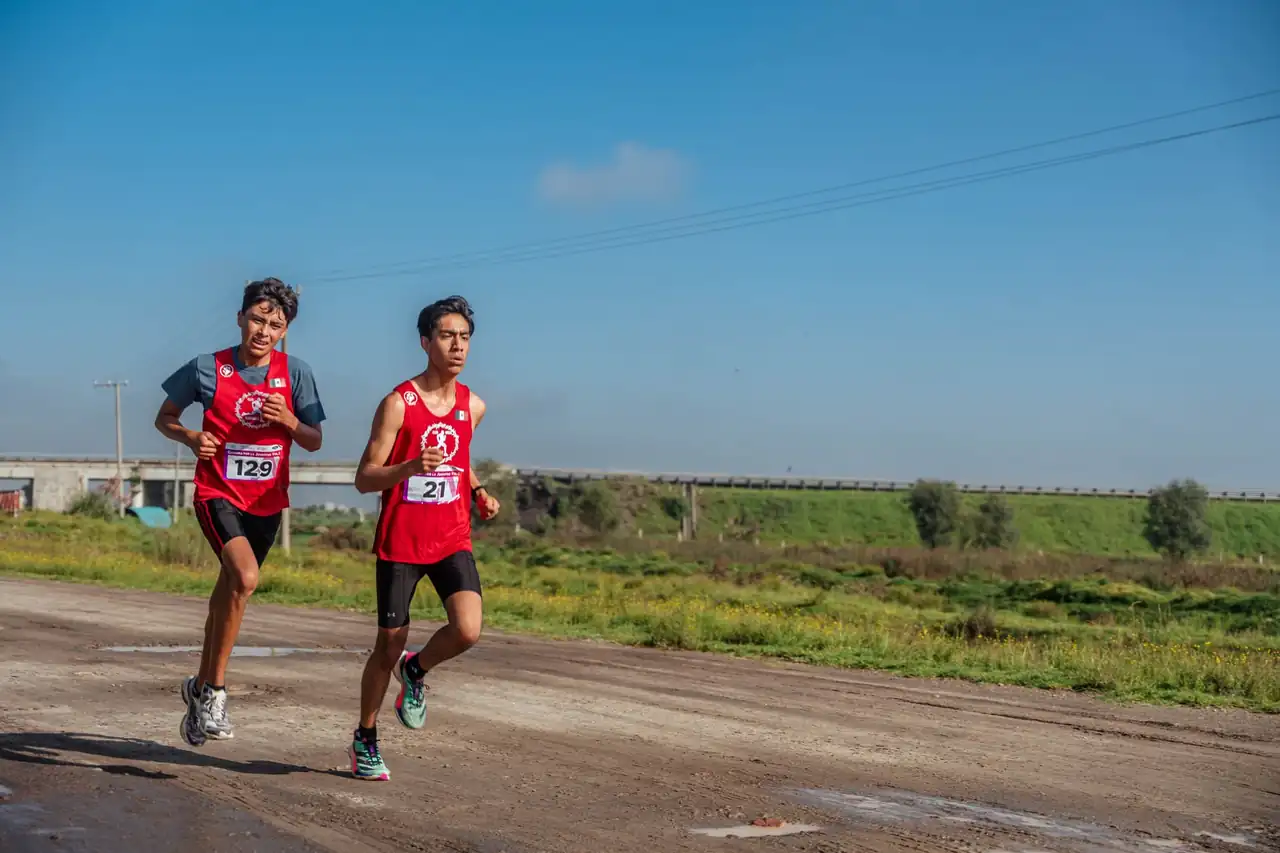
Longford’s 2027 marathon will take place on Sunday, August 29, in this town in central Ireland. The event brings together a 5K, half marathon, marathon and relay, alongside a 39.3-mile ultramarathon listed as part of its program. The registration listing identifies Main Street as the meeting point and gives a 9 a.m. start for the first four events.
Published entry fees are €30, €55 and €75 for the 5K, half marathon and individual marathon, respectively. The four-person relay costs €140 per team. The date is confirmed, but some details require a distinction between the 2027 listing and information from previous editions, particularly the ultra start time, course maps and specific services along the route.
Longford offers a different experience from a major city marathon: roads through fields, a starting area in town and a route the organizer describes as largely flat. The course is presented as a journey through three Irish counties, Longford, Roscommon and Leitrim. That rural character defines the event, although it does not establish every turn of the 2027 route.
The race began in 2002 to celebrate Longford runner Liam Fenelon completing his 100th marathon. That origin helps explain its identity: an event built around runners and a local community, rather than simply a distance. Since then, the program has incorporated formats that allow people to share the weekend without all taking on the same physical challenge.
For runners traveling from Spain, the first essential detail is the calendar. August 29, 2027, falls on a Sunday and matches the date supplied for this edition. One analysis website lists Tuesday, August 24, but that contradicts the event listing. The consistent reference for planning a trip is August 29, 2027, not the alternative date shown by that aggregator.
Published start times also differ. The ticket listing gives 9 a.m. for the 5K, half marathon, marathon and relay, while another directory shows 7 a.m. as the overall event start. There is insufficient information to assign that second time to a specific distance. Therefore, 9 a.m. is the reference for the races named in the registration listing, while the ultra start still needs specific confirmation.
Main Street is given as the event location. Descriptions of earlier courses place the start and finish outside the Longford Arms Hotel in central Longford. Both references point toward the same town-center area, but neither replaces the final instructions for access, number collection or entry to the starting area. The exact location of each service is not detailed in the available information for 2027.
The shortest event, Streets of Longford 5K, offers a distance of 5 kilometers for €30. It shares the event listing with longer races, but should not be treated as a shortened version of the marathon route: each distance needs its own course. The supplied material refers to a 2025 map, not a final map for this edition that would support a precise description of streets, turns or elevation changes.
The half marathon costs €55 and has the standard race distance of 21.0975 kilometers. Its historical description refers to a flat, single-lap route, beginning with a section through town before heading onto rural roads. It differs from the full marathon in both duration and energy demands, although sharing the atmosphere and some of the surroundings does not necessarily mean sharing every service or restriction.
On that earlier route, the half marathon covered roughly a mile through Longford before following the N5 toward Strokestown. It then turned onto quieter roads, passing homes and farms, and returned along Battery Road. That provides a useful picture of the landscape, but remains a description of previous editions. It does not establish that the 2027 route will follow exactly the same sequence.
The individual marathon has a published entry fee of €75 and a standard distance of 42.195 kilometers. The organizer describes the course as flat, an appealing feature for runners seeking a steady rhythm. However, flat does not mean entirely without gradients, nor does it guarantee a personal best: wind, temperature, fitness and pacing still matter over more than 42 kilometers.
Some pages display 42.25 kilometers for the marathon and 21.15 for the half marathon on their maps. These figures do not exactly match the standard distances and should not be treated as official measurements without knowing how they were obtained. A digital route reading can differ from a measured race distance. The supplied documentation does not establish specific certification for 2027, so that should not be assumed either.
An aggregator attributes 121 meters of total climbing to the marathon and a highest point around 60 meters above sea level. These are external analysis figures, not a confirmed elevation profile for the coming edition. They may suggest gently rolling terrain, but do not justify presenting those 121 meters as definitive. That distinction matters when a runner compares races in search of the smallest possible disruption to pace.
The same analysis offers time estimates that are internally inconsistent: one section describes the course as slightly slower than an average marathon, while another calculates improvements of several minutes. Because of that contradiction, its predictions cannot support a promise of a specific advantage. There is no reliable basis for claiming Longford will help a runner gain two or three minutes over another race at the same effort.
The relay allows four participants to cover the marathon distance together and has a listed price of €140 per team. Split equally, that works out at €35 per person. This calculation helps compare entry costs, but says nothing about the length of each leg. The available documentation also does not specify changeover points, transport between relay runners or the handover procedure used.
Racing as a team changes the nature of the day: each runner covers a portion of the route, but everyone depends on coordination. It should not be assumed that all four legs are exactly the same length or that runners can choose any point to join the course. For this format, the decisive information will be the official allocation of relay legs, together with the access and transport rules published by the organizer.
The advertised ultramarathon covers 39.3 miles, equivalent to about 63.25 kilometers using the standard conversion. It exceeds the marathon distance by approximately 21 kilometers and involves a different scale of effort. Earlier course material also displays a reading of 63.42 kilometers. That difference makes it important to separate the advertised distance from a map measurement, rather than presenting the two figures as identical.
The most important warning about this race is explicit: the ultramarathon does not have an AAI permit, according to the registration information. AAI stands for the Athletics Association of Ireland, the Irish athletics governing body. The notice applies specifically to the ultra; it should not automatically be extended to the other distances or interpreted as a statement that the event has no safety measures, which the supplied information does not establish.
The absence of that permit should not be confused with a ban on taking part. It does mean the conditions of this particular race deserve attention, especially if a runner needs the result to meet federation requirements or qualify for another competition. No entry fee or unambiguous start time is supplied for the 2027 ultra. Both remain information not yet substantiated and should not be inferred from the prices of the other races.
The published fees allow a specific comparison of the initial outlay, but do not establish the full cost of a trip. Possible booking charges, price changes, refund conditions and items included with entry are not detailed either. A €75 entry fee does not, by itself, prove that a shirt, medal or transport is included. The contents of each entry package need explicit confirmation before being described as guaranteed benefits.
A similar distinction applies to available places. The information includes a ticket purchase page and fees, but no closing date, overall entry limit or sold-out notice. There is therefore no basis for announcing a shortage of places or an imminent price increase. The confirmed event date and the actual availability of each race are separate matters, even though race directories often combine them.
The rural scenery is one of Longford’s most distinctive features. Descriptions refer to quiet roads, fields, farms and a return to town, rather than a race dominated by metropolitan avenues. That combination may create a sense of continuity, with fewer abrupt changes in surroundings than in a large city. It does not, however, establish that there will be a complete road closure, a condition not confirmed in the 2027 information.
Drink stations are historically described as roughly three miles apart, equivalent to about 4.8 kilometers. The half marathon description also mentions a station with an energy drink at mile 9, around kilometer 14.5. These are useful references for understanding support on previous courses, but they are not yet a definitive inventory of locations, products or quantities available for the next edition.
The difference between water and energy intake matters over longer distances. A drink station does not necessarily mean gels, solid food or a drink that every runner can tolerate will be available. In the marathon, and especially the ultra, fueling depends on expected time on course and individual experience. The contents of the aid stations matter as much as their spacing, and remain unspecified for 2027.
August offers no weather guarantee either. Competing websites show different historical figures: one mentions 12 to 19 degrees Celsius and another a range of 5 to 22 degrees, alongside rainfall estimates that cannot be checked against the supplied material. None of these figures is a race-day weather forecast. This far ahead, announcing a specific temperature or an exact probability of rain would create a false sense of certainty.
For runners from the Valencian Community, the change of surroundings deserves consideration without turning it into a promise of cool conditions. Training through a Mediterranean summer and then racing in Ireland may involve different humidity, wind and temperatures. Starting clothing and planned pace need to reflect the actual weather that day, not a climate label. Wind on open roads can also change the effort required even when elevation gain is minimal.
Training needs to match the chosen event as well. A 5K concentrates intensity into a much shorter period; a half marathon extends sustained effort; a marathon requires managing reserves for hours, and an ultra increases exposure to fatigue still further. A flat course description does not erase those differences. Distance still determines the challenge, even when the same event name covers every start.
In general, arriving ready for a marathon requires a training progression compatible with health, previous experience and recovery. There is no universal preparation period that suits everyone, and it would be misleading to infer one solely from Longford’s course profile. A relay may reduce the individual distance, but that does not make every leg a trivial effort. A manageable training load depends on the runner, not the appeal of the destination.
Travel from Spain adds decisions that are not covered by the race entry fee. Airport choice, onward travel to Longford, accommodation and the return journey affect both the budget and rest before the start. The reference material includes no travel packages, partner hotels or participant buses. Any cost calculation should therefore separate entry, transport and accommodation, without attributing unconfirmed services to the organizer.
The central location makes the race area easier to identify on a map, but does not guarantee parking beside the start or unrestricted access. An event on Main Street may involve temporary traffic changes whose extent has not yet been detailed. For a runner arriving from another town, knowing where to collect the number and allowing enough time to reach the start will matter more than road distance alone. Sunday morning logistics remain subject to specific instructions.
Other missing details may determine the choice of race: minimum age, time limit, number collection arrangements and cancellation or transfer conditions. There is no basis for stating that a medical certificate is required, or for ruling it out in every circumstance. Nor can a six-hour marathon limit be assigned by analogy with other events. Requirements must come from the rules for this edition, not from general running customs.
Longford’s format suits runners interested in a road event with a local identity and several distances. It does not need to be presented as Ireland’s fastest, cheapest or easiest option to explain its appeal. The connection to Liam Fenelon, the passage through three counties and the range of formats give it a distinct character. That rural race identity is more substantial than an external difficulty ranking without a validated methodology.
The listing establishes a clear foundation for 2027: Sunday, August 29, Longford as the venue, four formats with published fees and an advertised ultra carrying a specific governing-body warning. Gaps should not be filled with 2025 or 2026 details, or automated calculations presented as certainties. For an event that involves planning a trip, separating facts from predictions is part of useful reporting, not merely a footnote.
The appeal of this event lies in its combination of a runner-centered history and a course that heads into the landscape of central Ireland. Choosing between 5K, half marathon, marathon, relay and ultra changes the budget, preparation and experience, even though all share Longford as their reference point. The date and fees allow plans to take shape; the rules and final instructions will define the actual conditions of participation.
You may also like: Longford Marathon 2026: date, routes, and key details of the event.
Where to stay in Longford
Hotels available 27–30 August 2027.
Affiliate links: if you book through this map we earn a commission, at no extra cost to you.



How to prevent thigh chafing: causes and real solutions

Women’s running windbreakers: seven jackets and how to choose

Do more workouts get rid of soreness? A guide for runners

Jaén Half Marathon 2026: Record 3,800 Runners Registered

Men’s short running tights: how to choose the right pair

World Triathlon confirms data breach involving medical data

Izan Edo targets podium at Miyazaki World Cup

María Pérez ranks ninth in World Athletics’ 2026 top ten

Dos Santos, Duplantis and Sawe: World Athlete of the Year finalists

San Silvestre Vallecana 2026: 42,000 places, prices and start times

 Races3 months ago
Valencia Half Marathon 2027: date and registration

 Races3 months ago
Valencia Marathon 2026: entry, ballot and course

 Reviews and Comparisons4 months ago
Asics Gel-Roadmiles 3 for men: review and current price

 Reviews and Comparisons4 months ago
Asics Gel Sonoma 8 Gore-Tex: complete analysis for trail and rain

 Sneakers3 months ago
Saucony Endorphin Pro 4: full review and verdict

 News5 months ago
Strava API 2026: what changes for clubs, challenges and runner apps?

 Reviews and Comparisons5 months ago
Nike Alphafly 3: opinions, sensations, and real key points

 Reviews and Comparisons4 months ago
Under Armour running shoes review 2025-2026: models and key features

 Sports Equipment4 months ago
Shoe sizes in cm: a clear guide to getting the right fit for your footwear

 Sneakers3 months ago
Skechers GO RUN Consistent 2.0 analysis: comfort and limits

 News5 months ago
Valencia Marathon 2026 route: key tips to train and run better

 Sneakers4 months ago
Adidas Adizero Boston 13 for men: review and verdict