Races
Loures-Odivelas-Loures Half Marathon 2026: date and route
The race returns with a half marathon, 10K and 5K, start and finish in Loures, and a course designed for fast running.

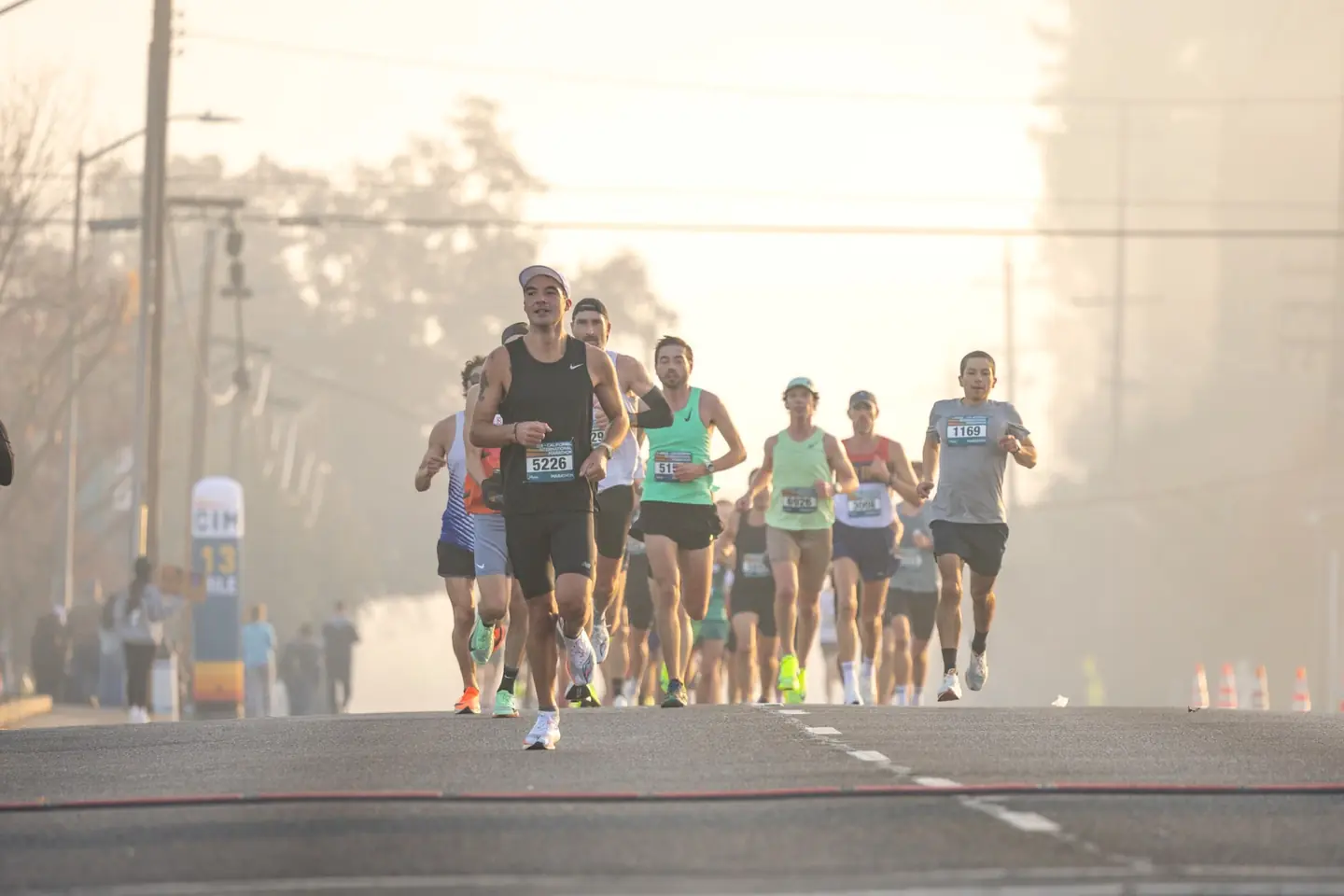
Imagen: Stephen Leonardi / Pexels
The half marathon that connects Loures and Odivelas returns on September 20, 2026 with the start and finish at Loures’ Parque Adão Barata, on a certified 21.1 km course, alongside a 10 km race and a 5 km walk. The event brings back a name with a legacy in the Lisbon metropolitan area and presents itself as a fast, very urban road race, with a promotional early-bird entry fee and an atmosphere that blends mass participation with competition.
The organization is run by the two city councils, under the slogan Juntos pelo Desporto, and the event has been relaunched as a gathering with a big-neighborhood, wide-street, mass-participation spirit. The route links the two municipalities and returns to the origin of a race that in the 1980s and 1990s already worked as an athletic bridge between Loures and Odivelas, with a profile designed both to chase a personal best and to enjoy a community day centered on running.
A comeback with symbolic weight on the Portuguese running map
The value of this race lies not only in the distance, but also in the history it carries. Loures and Odivelas have not put on just any half marathon: they have revived an event that once served to stitch together two neighboring municipalities through sport, a simple but powerful idea that fits well with the current moment in popular athletics. It is no coincidence that the event takes place in September, in the middle of European Week of Sport, when the sporting calendar emphasizes shared exercise and the visibility of physical activity in the city.
In that context, the race works like a postcard of the Lisbon metropolitan area. There is no mountain or trail here, nor an epic postcard profile; road running rules, along with residential neighborhoods and the logic of a city-to-city race that, while accessible, still retains that competitive edge that attracts those looking to test themselves over 21.0975 kilometers. The official half marathon distance keeps the international standard, and the course also has a measurement certification recognized by World Athletics, an important detail for those chasing marks with comparative value.
That seal does not automatically make the race easy, but it does make it reliable. For runners, that means clear reference points, precise measurement, and a course that lets you interpret your time without doubts about the mileage. In a calendar crowded with races, that credibility matters as much as the atmosphere or the race pack, because the half marathon remains the distance where the difference between an improvised route and a properly calibrated circuit is most noticeable.
An out-and-back course with a metropolitan feel
The start and finish are set at Parque Adão Barata in Loures, and from there the route heads toward Odivelas before returning to the same point. That out-and-back structure is not just a logistical device: it helps organize traffic, concentrates the race atmosphere in a visible epicenter, and allows participants to better read their effort, because the return leg often creates a more understandable mental finish than a scattered city finish.
The course is announced as flat and suitable for a wide range of profiles, from experienced runners to those tackling the distance for the first time. Road surfaces dominate, with urban areas, green spaces, and residential neighborhoods giving the route a varied texture without the severity of a broken course. That balance is often valuable in September, when the heat can still linger and the ability to hold a steady pace matters more than an unforgiving elevation profile from the outset.
The sporting reading is clear: this is a half marathon to be run with your head, not with drama. The organization mentions aid stations distributed along the course and an atmosphere energized by public support, elements that, combined with the race’s urban character, usually help create a smooth experience. The shared stretch between municipalities adds an interesting nuance as well: the runner does not just cross streets, but a territorial relationship, a kind of sporting exchange between two neighboring towns that meet in the same race.
Distances designed for very different audiences
The main event is 21.1 km, but the day does not end there. There is also a 10K and a 5 km walk, which completely changes the start-line picture. Instead of a closed-off elite, what appears is a shared platform where those looking to compete, those wanting to complete an intermediate distance, and those simply wishing to walk in an organized event all coexist. That mix explains much of the appeal of the race and places it within the modern logic of urban races: less exclusivity, more layers of participation.
The 10K serves a very specific purpose. For some, it is a race in its own right; for others, a way to be part of the event without taking on the commitment of 21 kilometers. The 5 km walk, meanwhile, opens the door to families, companions, and occasional participants. In editorial terms, that diversity says a lot about the race: it is not trying to be a closed-off event, but a day of public sport in the most literal sense.
The schedule also sets the distances apart. The half marathon starts at 09:00, the 10K at 09:45, and the 5 km walk at 09:50. That staggered timing better organizes the flow of runners and allows the event to breathe without unnecessary crowding. For a reader comparing options, the information is no small matter: an early start helps avoid some of the September heat and, at the same time, makes it easier for the sports morning to finish at a reasonable hour.
Registration, prices, and the early-bird window
Entry fees start at 18 euros for the half marathon, 12 euros for the 10K, and 6 euros for the 5 km walk in the promotional period observed. These amounts come with a discount applied to the base price, with an early-bird window that, in the reference information, runs until September 2, 2026. For budget-conscious runners, that range gives a clear signal: the fee is not designed to skyrocket, but it does reward those who sign up early.
The registration closing date shown in the reference is September 16, 2026, just four days before the race. That final window is often useful for those adjusting their schedules, although it should be read with caution, since actual availability may vary depending on demand and capacity. The event is presented as a ticketed race and, at the same time, as the kind of organization that makes it clear when the reduced-price phase ends. In this case, the important detail is the difference between the promotional price and the reference price, not a promise of unlimited spots.
The price range also fits a fairly common model in medium-participation European urban races. There are no luxuries or gimmicks, but there is a full-service logic for runners: bib, timing, support, and a few extras that make the entry more than just access to the start line. For those comparing races on the Iberian Peninsula, the cost places this event in a reasonable bracket for a certified half marathon with several parallel distances.
What the entry includes and why it matters
The event sheet lists a broad set of services: finisher medal, gift bag, official T-shirt, electronic certificate, single-use timing chip, and pacers. It also includes photo and video service, training program, massage, drink and nutrition stations, medical assistance, restrooms, showers, accident insurance, and an official event hoodie. It is an extensive list that reflects a competition designed for road runners who value both time and the full experience of race day.
In practice, these elements say more about the race culture than any slogan ever could. The disposable chip simplifies return logistics; pacers help stabilize pace; massage and medical support enhance the sense of care; the T-shirt and medal fulfill the ritual role that many events already consider part of the race’s identity. These are not just decorative extras: they build the memory of the race, that small emotional balance that remains when the clock stops mattering.
There is also a useful detail for practical runners: no mandatory gear is required, and the organization recommends carrying a mobile phone with enough battery. The absence of mandatory technical equipment makes the event more accessible, although the advice about the phone shows reasonable caution. If the weather changes or any incident occurs, having communication battery life is not an obsession, but a sensible precaution. The reference to safety pins or a personal bib holder also points to an organization that does not improvise, even in the smallest details.
The type of runner this event suits
This half marathon is especially well suited to anyone looking for a steady performance on a fast, accurately measured circuit. The flat profile, early start, and alternation between urban stretches and green areas favor a race that is less punishing than others with more elevation or more exposure to open terrain. It is not a race built for mountain drama or the fatigue of a tangled course; its strength lies in consistency.
It also works for those who value races with a local identity. Loures and Odivelas are not just an administrative backdrop: they are part of the race narrative, because the connection between municipalities is precisely the idea that sustains the event. In a calendar where clone-like half marathons abound, this one revives a specific geography and a recognizable sporting memory. In sports journalism, that is no minor detail: races survive better when they have a reason to exist beyond the number of registrants.
The broader public will also find it appealing because of its multiple-format setup. The half marathon is not isolated; it coexists with the 10K and the walk, broadening the range of participants without blurring the competitive character of the main race. The result is a morning with several paces and one shared setting, something that usually enriches the atmosphere without descending into chaos. The race thus emerges as a small ecosystem: local elite, recreational runners, walkers, and families sharing space without stepping on one another’s story.
Logistical context and useful race-day reading
Parque Adão Barata serves as the operational hub for both start and finish, simplifying the experience for participants and companions. Concentrating both points in the same location reduces dispersion, makes bib pickup easier, and simplifies post-finish logistics. In an urban race, that decision has enormous value: fewer transfers, less uncertainty, and a finish that feels truly complete rather than fragmented.
The fact that the half marathon starts before the 10K and the walk also contributes to cleaner flow management. First, the largest and most demanding group is released; then the shorter-distance starts are organized. It is a simple architecture, but an effective one, and it helps the event function without giving the impression of an improvised fair. The main distance is also marked as suitable from age 18, a standard threshold in races of this type for the half marathon and the 10K.
Another relevant point is the refund policy indicated in the available information. It states that, within 24 hours of registration, a full refund can be obtained if the participant changes their mind. At the same time, it clarifies that if the race is canceled for reasons beyond the organization’s control and by decision of other entities, the paid amount will not be refunded. These are legal and operational nuances worth reading carefully, because they define both the initial flexibility and the organizer’s limits of responsibility.
A race that blends calendar, territory, and sporting memory
The strength of Loures-Odivelas-Loures lies in that unusual combination of historical memory, measured course, and open participation. Some races sell themselves on toughness, others on scenery, and some on brand prestige. This one rests on a quieter and perhaps stronger mix: two municipalities reviving an old race, a certified half marathon, complementary distances, and a September morning designed for both running and togetherness.
The reference to the slogan Juntos pelo Desporto is not just an institutional flourish; it sums up the spirit of the event quite well. A race like this is understood not only as a sporting product, but as a piece of urban fabric. The runner crosses streets, yes, but also a sense of community that sport keeps alive when it manages to step outside the closed circuit and into the everyday life of a city.
That is why the half marathon has a double reading: it serves to compete, and it serves to tell a story. The story of a return, of two municipalities recognizing themselves in a shared route, and of an event that wants to reclaim a visible place in the Portuguese calendar. In times of event saturation, that narrative organizes things better than any slogan. And, at the end of the day, it is what turns a well-run race into something more durable than a simple registration: a date remembered because it had shape, context, and a meaningful start line.



How to prevent thigh chafing: causes and real solutions

Women’s running windbreakers: seven jackets and how to choose

Do more workouts get rid of soreness? A guide for runners

Jaén Half Marathon 2026: Record 3,800 Runners Registered

Men’s short running tights: how to choose the right pair

World Triathlon confirms data breach involving medical data

Izan Edo targets podium at Miyazaki World Cup

María Pérez ranks ninth in World Athletics’ 2026 top ten

Dos Santos, Duplantis and Sawe: World Athlete of the Year finalists

San Silvestre Vallecana 2026: 42,000 places, prices and start times

 Races4 months ago
Valencia Half Marathon 2027: date and registration

 Races4 months ago
Valencia Marathon 2026: entry, ballot and course

 Reviews and Comparisons4 months ago
Asics Gel-Roadmiles 3 for men: review and current price

 Reviews and Comparisons4 months ago
Asics Gel Sonoma 8 Gore-Tex: complete analysis for trail and rain

 Sneakers4 months ago
Saucony Endorphin Pro 4: full review and verdict

 News5 months ago
Strava API 2026: what changes for clubs, challenges and runner apps?

 Reviews and Comparisons5 months ago
Nike Alphafly 3: opinions, sensations, and real key points

 Reviews and Comparisons4 months ago
Under Armour running shoes review 2025-2026: models and key features

 Sports Equipment4 months ago
Shoe sizes in cm: a clear guide to getting the right fit for your footwear

 Sneakers3 months ago
Skechers GO RUN Consistent 2.0 analysis: comfort and limits

 News5 months ago
Valencia Marathon 2026 route: key tips to train and run better

 Sneakers4 months ago
Adidas Adizero Boston 13 for men: review and verdict