Races
Madrid Half Marathon 2026 Results: podiums, times, and key takeaways
Kenya signed a historic double in Madrid, with fast podiums, standout Spanish athletes, and a very intense edition.

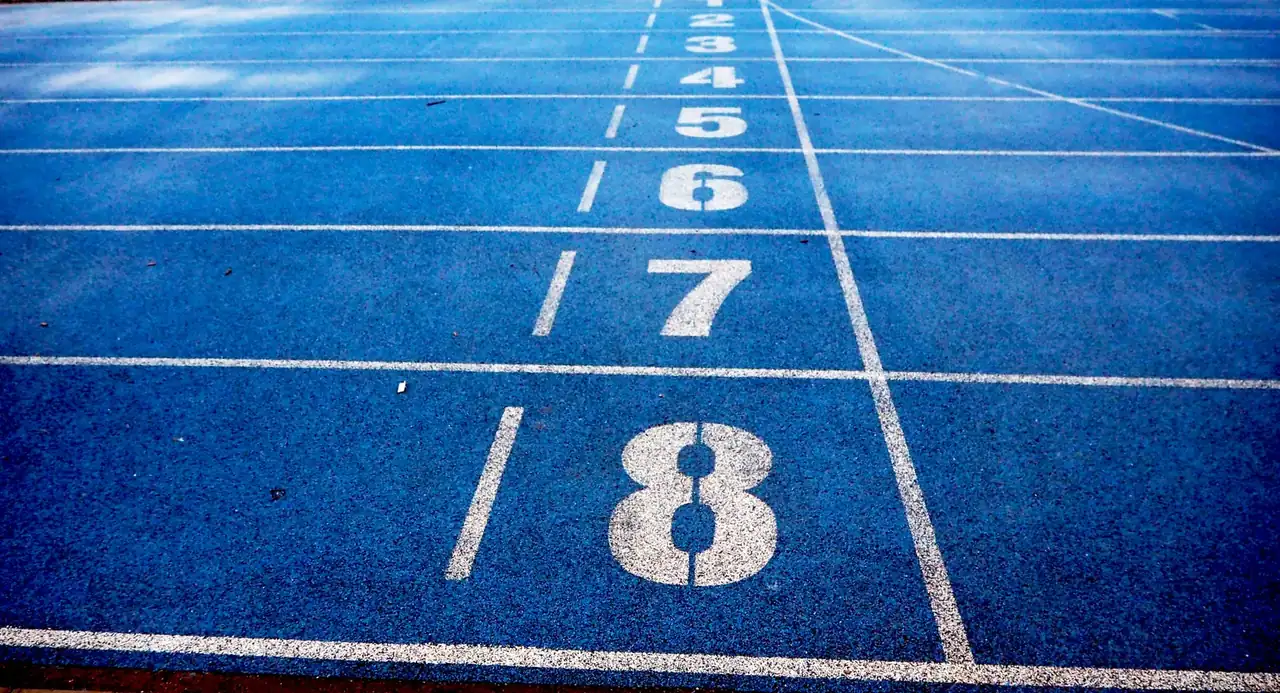
Imagen: Mateusz Dach / Pexels
Madrid ran at full speed again. The results of the Madrid Half Marathon 2026 painted a clear picture of the day: Kenyan dominance among the elite, a 25th edition with the feel of a major event, and a city turned for hours into a human corridor of 21.097 kilometers. The victories of Levy Kibet in 1:00:49 and Lidwina Chepngetich in 1:08:30 summed up a fast, tactically clean morning with tight margins among the podium places.
The race also confirmed the international stature of the Madrid event, which brought together 31,000 runners between the main distance and the ProFuturo race, and raised the bar for a competition that can no longer be understood as just a mass-participation event. On the capital’s asphalt, the podiums were written with names from Kenya and Ethiopia, while the best Spanish runners made a solid showing on a demanding urban course, with the treacherous beauty of routes that punish every climb, every turn, and every change of pace.
A half marathon that once again measured Madrid’s pulse
The 25th edition of the Movistar Madrid Half Marathon had the precision of a clock and the energy of a tide. The start was given at 9:15 from Paseo de la Castellana, in front of the Villa Magna hotel, and the finish awaited on Paseo de Recoletos, next to the National Library. Between them, a 21.097-kilometer route that passes through some of the city’s most recognizable icons, with the Prado, Puerta de Alcalá, Gran Vía, and the surroundings of the Royal Palace as a backdrop.
That setting explains why the race holds a unique place on the Spanish calendar. It is not just a fast or massive half marathon; it is also a race that portrays Madrid as a moving postcard. For runners, that means sustained effort across an urban landscape that alternates open avenues with more technical sections, where pace can break easily if the race is tackled without patience. For spectators, on the other hand, the day offered a continuous sequence of noise, flags, elite strides, and popular runners moving forward like a single stream.
Levy Kibet and the weight of a controlled victory
Levy Kibet Chematot repeated his dominant presence in Madrid and did so with a time of 1:00:49, a solid performance in a race that forgives no lapses. His victory was not built on a spectacular early attack, but rather on effective energy management, with an intelligent reading of pace changes and a clear ability to sustain the effort when the race began to tighten in the final kilometers.
Behind him, Shadrack Kipkurui Kenduiywo finished in 1:01:48 and Berihun Moges Kebede completed the podium in 1:02:08. The gap between first and third was just 1 minute and 19 seconds, a margin that speaks both to the evenly matched elite level and to the demands of the course. Beyond the final order, the men’s podium once again confirmed a familiar pattern in distance running: East Africa continues to set the pace in major urban races when the tempo is high and the race demands endurance, efficiency, and composure.
Madrid, moreover, is consolidating itself as a venue where athletes from that competitive bloc feel at home. The route has the right mix of openness and toughness: it allows fast running, but forces you to do it wisely. It is not a track. Nor is it a pure downhill race. It is a real endurance test, with the asphalt as the final judge.
Chepngetich asserted authority in the women’s race
Lidwina Chepngetich won in 1:08:30 and delivered a performance of professionalism and control. In practice, her race resembled a surgical operation: maintain the right threshold, give away no meters, and wait for her rivals to wear down before finishing the job in the decisive stretch. Her compatriot Jedidah Chepkemoi Sang was second in 1:08:59, just 29 seconds slower, in a very close battle that kept uncertainty alive until the end.
Caroline Jebet Korir completed an all-Kenyan podium in 1:10:28. The women’s category told a decisive story: Kenya occupied all three podium spots and made it clear that, on a day of good weather and high level, consistency remains a decisive currency. The Madrid half marathon rewards those who manage fatigue best, especially when the pace becomes a steady drip along long and visually deceptive avenues.
The times of the top three also help explain the toughness of the race. In an urban half marathon, going under 1:09 already represents a display of strength; doing it with less than half a minute between the winner and the runner-up adds a layer of competitive tension that, for the public, reads as a living race rather than a simple demonstration of superiority. Madrid had both of those things.
The official results and what they mean overall
The men’s standings showed remarkable depth of talent. Alongside the leading trio, Raymond Cheruiyot finished fourth in 1:02:36, Elisha Kiprop Chemiron was fifth in 1:02:53, and Christopher Kitetu Muthini sixth in 1:02:56. The first Spaniard on the list was Juan Pérez Moreno, eighth in 1:04:25, ahead of Diego Jiménez Rodríguez, ninth in 1:06:32, and Rubén Ángel Fernández, tenth in 1:06:47.
In the women’s category, Fatima Azzahraa was the best Spanish runner with 1:13:53, followed by Devora Avramova, seventh in 1:14:21, Azucena Díaz Calvo, the sixth notable Spanish finisher with 1:16:27, and Blanca Castaño Bravo, who rounded out a solid national presence in a very international top 10. Norwegian Berit Mogstad, Luxembourg’s Anna Reiff, and Polina Chechetka completed the upper part of the standings, where the mix of nationalities added more color to an already lively morning.
These results matter beyond the podium because they place Madrid on the map of fast, competitive spring half marathons. The race does more than crown winners; it also shows where the elite stands, how Spanish runners respond against battle-tested rivals, and what margin the course offers to those chasing a personal best. And in that reading, the 2026 edition left a clear impression: the level at the front was high and the middle of the overall standings was highly competitive.
A popular celebration behind the elite
The size of the event is not explained only by the favorites’ times. Madrid brought together 31,000 participants between the half marathon and the 5K ProFuturo Race, a figure that illustrates the scale of the event better than any promotional poster. On a morning like this, the city becomes a territory of overlapping rhythms: the light spring of those chasing a personal best, the cautious steps of a debutant, the heavy breathing at kilometer 18, and the almost childlike joy of those who only want to cross the finish line.
That coexistence between elite and recreational runners is part of the race’s real appeal. The atmosphere on Paseo de la Castellana, the passage through the city center, and the arrival at Recoletos create an urban experience lived through sight, sound, and legs. There are cheers on the sidewalks, names on the bibs, groups of friends pushing from the edge of the course, and the noise of a waking city accompanying every kilometer.
The ProFuturo Race also added a charitable layer with its 5K, within a weekend that by itself already functions as a celebration of running in the capital. Antía Castro’s women’s victory over that distance served as a reminder that the Madrid half marathon has grown into a multi-event occasion, where the pursuit of the clock, a social cause, and the simple pleasure of running through the center of a big city all coexist.
Why this edition told a special story
The 25th edition had more than just a round number. It marked a quarter-century of a race that has evolved alongside the city, the level of the athletes, and the way recreational runners understand the challenge. Not every half marathon manages to sustain a recognizable identity for so long. Madrid has done so, combining ambitious logistics, a highly visible course, and a distinctive brand that now extends beyond the local sphere.
There was also a symbolic element in how the leading roles were distributed. Kenyan victories in both main races are no surprise, but they do confirm the event’s international dimension. When podiums are filled with strong times and tight gaps, the race gains competitive value. When, in addition, the best Spanish representation stays close to the top, the overall picture becomes richer and more useful for fans who follow distance running closely.
In that sense, Madrid stood its ground as a benchmark race. Not only because of the winner’s level, but because of the whole package: massive participation, a recognizable route, the atmosphere of a big city, and official results that confirm a sustained step up in quality. The figure of 31,000 entrants alone already places it on another scale. But it was the way the race unfolded that ultimately reinforced its weight on the calendar.
What to look at in Madrid’s standings
Beyond the final order, the results offer several useful takeaways. The first is the margin between the favorites: in the men’s race, less than a minute and a half separated the winner from the bronze medalist; in the women’s race, less than two minutes separated the top three. The second is the role of the Spanish runners, who delivered respectable performances in a highly demanding context. The third is the depth of the race, where the top 10 positions still feature very serious times and leave no room for relaxation.
The Madrid half marathon also sends a clear message to anyone following it as an athletics fan. The course rewards consistency over impulse. The iconic stretches look good on the map, but the stopwatch cares more about legs than scenery. That is why runners who go out too fast can pay a heavy price in the closing stages, while those who manage their energy better usually find reward when the city narrows and the body begins to protest.
In an increasingly competitive distance-running season, the Madrid race remains a serious measuring stick. The 2026 standings do more than list names; they record a form state, an international hierarchy, and the pulse of a popular mass that turns the capital into a carpet of running shoes, footsteps, and stopwatches.
A race that is also read through its immediate memory
The results of the Madrid Half Marathon 2026 leave a clear record for fans: Kenya dominated the elite, the podiums were fast, and the event confirmed its maturity as a major spring race in Spain. Kibet, Chepngetich, and their challengers produced a textbook race in which tactics, endurance, and consistency mattered more than any spectacular gesture.
But the story does not end with the results sheet. There is also the image of a city fully engaged with its race, of thousands of bibs moving along familiar avenues as if they were new territory, and of a competition that, in its 25th edition, achieved something hard to sustain year after year: keeping sporting interest without losing popular momentum. In Madrid, the half marathon remains exactly that, a very precise mix of serious competition and urban celebration.
And in that mix lies much of its strength. The names change, the times get sharper, the level rises, but the scene remains: a Sunday in March, an open city, and a route that demands respect. The 2026 edition is now part of that fast memory left by major races, the kind preserved in stopwatches, sweat, and the finish line.
You may also like: Madrid Half Marathon 2026 results: rankings and times.
Official results: app.streamrunning.com.



How to prevent thigh chafing: causes and real solutions

Women’s running windbreakers: seven jackets and how to choose

Do more workouts get rid of soreness? A guide for runners

Jaén Half Marathon 2026: Record 3,800 Runners Registered

Men’s short running tights: how to choose the right pair

World Triathlon confirms data breach involving medical data

Izan Edo targets podium at Miyazaki World Cup

María Pérez ranks ninth in World Athletics’ 2026 top ten

Dos Santos, Duplantis and Sawe: World Athlete of the Year finalists

San Silvestre Vallecana 2026: 42,000 places, prices and start times

 Races3 months ago
Valencia Half Marathon 2027: date and registration

 Races3 months ago
Valencia Marathon 2026: entry, ballot and course

 Reviews and Comparisons4 months ago
Asics Gel-Roadmiles 3 for men: review and current price

 Reviews and Comparisons4 months ago
Asics Gel Sonoma 8 Gore-Tex: complete analysis for trail and rain

 Sneakers3 months ago
Saucony Endorphin Pro 4: full review and verdict

 News5 months ago
Strava API 2026: what changes for clubs, challenges and runner apps?

 Reviews and Comparisons5 months ago
Nike Alphafly 3: opinions, sensations, and real key points

 Reviews and Comparisons4 months ago
Under Armour running shoes review 2025-2026: models and key features

 Sports Equipment4 months ago
Shoe sizes in cm: a clear guide to getting the right fit for your footwear

 Sneakers3 months ago
Skechers GO RUN Consistent 2.0 analysis: comfort and limits

 News5 months ago
Valencia Marathon 2026 route: key tips to train and run better

 Sneakers4 months ago
Adidas Adizero Boston 13 for men: review and verdict