Races
Madrid Women’s Race 2026: route, schedules and bib collection
Start, finish, bib numbers, transportation, and the atmosphere of the great pink event that takes over Madrid every spring.

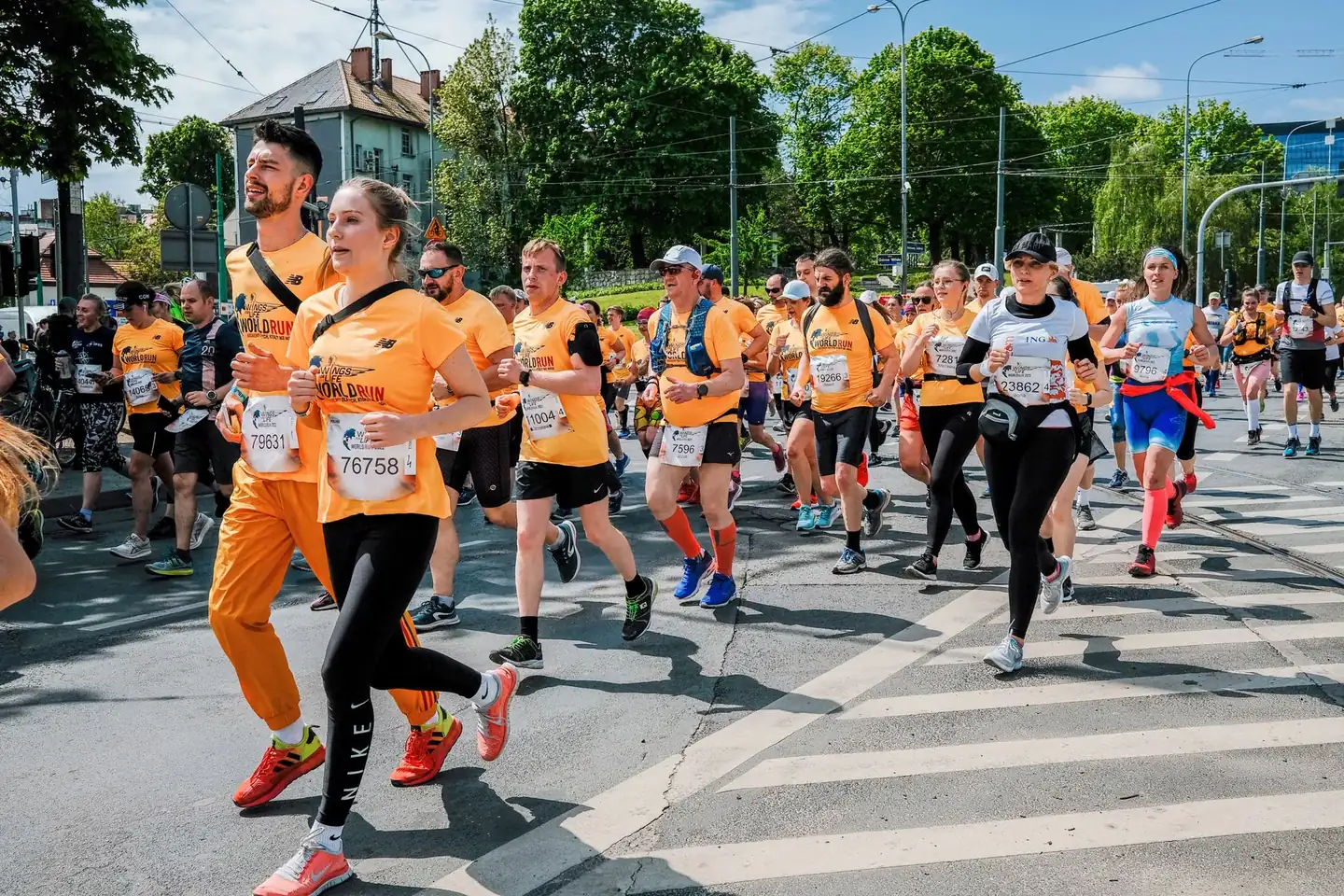
Madrid will once again turn pink with an event that blends sport, a social cause, and an open-air city experience. The Madrid Women’s Race 2026 will bring together 38,000 participants on a May morning, starting on Paseo de la Castellana, covering a route of about 6.4 kilometers, and finishing at Camoens, in Parque del Oeste.
The race keeps its most recognizable formula: an accessible course, a lively atmosphere, and a closing festival that turns the finish line into a stage for music, physical activity, and collective celebration. The expected maximum time is 90 minutes, a benchmark that clearly explains the spirit of the day, open both to those who run and to those who prefer to complete the course walking.
A pink tide that is already part of the city’s calendar
It is not just a popular race. Every year, Madrid hosts one of the major women’s running events in Europe, with a charitable purpose that has given the race its own weight within the national calendar. The image is already familiar: thousands of bibs, pink-toned T-shirts, and a route that crosses some of the capital’s most recognizable avenues.
Its strength lies not only in the number of registered runners, but in the mix of profiles that gather at the start. There are runners looking for pace, others who see the day as a shared walk, and many who arrive in groups, with family, or with coworkers. That diversity explains why the event works as a large social snapshot of women’s running in Spain.
This edition also draws interest because of the symbolic dimension of the event. The Madrid Women’s Race has established itself as a platform for visibility for causes linked to women’s health, breast cancer prevention, and the fight against gender-based violence. That context gives it a different reading from a conventional race: the clock matters here, but it does not monopolize the scene.
Schedule, start, and finish: the facts that organize the morning
The start is set for 09:00 a.m. on Sunday, May 10, 2026. The starting point is located on Paseo de la Castellana, around Nuevos Ministerios and Plaza de San Juan de la Cruz, a wide area that helps distribute the tide of participants before the race makes its way through the city.
The finish will be at Paseo de Camoens, next to Parque del Oeste, a particularly convenient ending point for such a large number of runners. The final stretch is usually one of the most enjoyable parts of the course: trees, open space, and a sense of arrival that contrasts with the noise of the urban center through which much of the route passes.
The time limit also defines the experience. The 90 minutes allow broad participation without excessive pressure, something that fits the mass nature of the event. In practice, that turns the Madrid Women’s Race into a start where very different paces coexist without losing cohesion, like a ribbon of colors moving along emblematic avenues.
The route, kilometer by kilometer, through major avenues and historic streets
The 6.4-kilometer route combines wide stretches, highly recognizable avenues, and a final section that ends in one of Madrid’s best-known green spaces. The first impression is usually marked by the Castellana, where the width helps the start feel smoother despite the enormous number of runners.
From there, the route heads toward the Colón axis and the city center, passing through areas such as Cibeles, Alcalá, Gran Vía, Plaza de España, and Princesa, according to the usual race design. It is a course designed to show Madrid in its full urban dimension, with its mix of grand boulevards, monumental architecture, and a crowd that usually fills the sidewalks with an almost festival-like sporting energy.
It is not a completely flat circuit, although it is accessible. The profile offers favorable sections and small variations that are felt more because of the crowd than because of technical difficulty. That detail matters: in such a crowded race, the real effort is often not the elevation, but maintaining pace, finding space, and not getting swept away by the group’s excitement.
The arrival at Parque del Oeste adds a powerful visual layer. After concrete and traffic, the race ends among greenery, paths, and a much more relaxed atmosphere. That contrast helps explain why the event leaves such a recognizable mark on the participants’ memories: it begins as a major urban mobilization and ends with the feel of an open-air celebration.
Race number pickup at CDM Gallur and what you should know
The bib and official T-shirt are collected before the race at the SportWoman Fair, held at the Gallur Municipal Sports Center, on Avenida de Ángel Sanz Briz, s/n. The organizers provide two days for this process: Friday, May 8, and Saturday, May 9, 2026, always from 10:00 a.m. to 8:00 p.m.
An essential logistical point is that there is no bib pickup on race day. That rule, very common in events of this scale, means you need to plan pickup in advance. Another person may also collect it on the runner’s behalf if they bring the required documentation, which is useful for those who cannot go because of schedule or distance.
The fair is not just a pickup point: it also serves as a prelude to the event, with a steady flow of participants and a size distribution that is often closely linked to arrival order. In other words, anyone interested in a specific T-shirt size would do well not to leave it until the last minute. That small bit of logistics, often overlooked, makes the difference between showing up fully prepared and feeling as though the race were improvised.
How to get to Gallur and the start without too much hassle
Public transport is the most sensible option for getting to both the bib fair and Sunday’s start. For CDM Gallur, the most practical reference is the Laguna station, with Metro and commuter train connections, plus several bus lines that bring you to the sports complex from different parts of the city.
On race day, the start area at Nuevos Ministerios has a very solid transport network. Metro and commuter rail converge there, making access easy from central Madrid and also from other municipalities in the metropolitan area. The area fills up quickly, however, so arrival timing matters as much as the mode of transport you choose.
Traffic disruptions along Castellana, Gran Vía, and Princesa are predictable because of the event’s scale. For that reason, using a private car usually takes a back seat, not only for convenience but for sheer efficiency. On a morning with hundreds of thousands of movements within the city, the metro works like an underground lane that avoids the visible traffic jam at street level.
The most reasonable practical recommendation is to arrive with plenty of time to spare. Even though the start is set for 09:00 a.m., the buildup of participants, access to the starting corrals, and bag-drop use can lengthen the actual arrival at the start line. In an event like this, the last few minutes always weigh more than they seem to at home.
A finish that is not limited to crossing the line
The Madrid Women’s Race does not end when you pass under the arch. The post-race fitness festival is an essential part of the format and explains much of its identity. At the finish in Camoens, there is an atmosphere of music, guided activity, and group classes that extends the race’s energy long after the last kilometer.
That closing turns the morning into something like a shared celebration. Anyone crossing the finish line does not encounter a quiet departure, but rather a transition into movement, dancing, and stretching. It is an intelligent way to close out the effort: the body moves from the impact of running to the gentler rhythm of a collective outdoor session.
There is also an organizational logic behind that choice. In a mass-participation race, the festival helps spread out the arrival, eases crowding at the finish, and broadens the experience beyond the sporting result. The message is clear: the event can be run, walked, or experienced at another pace, but always within the same shared scene.
Solidarity, health, and visibility: the underlying reason the race exists
The charitable dimension is inseparable from the race. The event maintains its link to causes related to breast cancer, women’s health, and other social awareness efforts. That foundation explains why the race generates such a broad response and why it is not seen merely as a recreational event.
In 2026, moreover, the national circuit continues to reinforce Madrid’s role as one of its major stages. The capital does not only concentrate participation; it also projects the image of the Women’s Race to the rest of the country. The scale of the Madrid edition serves as a showcase for the whole movement, which combines mass sport and social messaging with uncommon effectiveness.
Charity entries, the presence of associations, and the focus on awareness give the day several layers. There is the visible layer, the bib and the T-shirt. There is the sporting layer, the act of adding kilometers in the street. And there is the most lasting layer: remembering that an event like this can mobilize thousands of people without losing sight of the reason that gives it meaning.
What kind of runner finds her place in this event
The great virtue of this race is that it does not require a single profile. There is room for those who set out to compete, those who go at a comfortable pace, and those who prefer to cover the 6.4 kilometers on foot. On the same Sunday, the ambition to chase a time and the simple desire to be there, to take part, and to be part of a collective tide, all coexist.
For those new to running, the distance is friendly in size. It is not an intimidating number, but it is not trivial either. It feels like a well-built entry point: enough to feel the effort, short enough not to overwhelm. And for more experienced runners, the event offers a different context, with the challenge of handling a mass start and an urban circuit with many visual references.
The group aspect also carries a lot of weight. The Madrid Women’s Race is often experienced in pairs, by clubs, by families, or among coworkers. That shared character blends pace with conversation, photos, and the feeling of moving in the same direction. Some races are measured in seconds; this one is also measured in moments.
The small logistics that prevent big problems
The details beforehand matter more than they seem. Wearing the bib clearly visible, not trying out new shoes on race day, hydrating normally, and eating without last-minute experiments are simple habits that greatly reduce the chance of setbacks. In a short, crowded race, the comfort of your gear matters as much as motivation.
The official T-shirt often becomes part of the day’s visual landscape, but that does not mean you should give up basic runner common sense. Footwear should be tested, clothing should allow free movement, and arrival time should be planned with a margin. These are almost household rules, although in the context of the Castellana they become a form of caution.
The bag drop also deserves mention. In races with tens of thousands of registered participants, lines can grow quickly and waiting can feel longer than expected. Bringing only the essentials and leaving valuables out of the equation helps the day flow more smoothly. It is not glamour; it is pure organization.
Madrid as a stage: a race that shows the city from another angle
The route also works as an urban tour. Few popular races allow you to see Madrid from Castellana to Parque del Oeste with such a density of symbols: business, monuments, avenues, stopped traffic, and spectators cheering from the sidewalks. The city looks at itself while it runs.
That visual component explains why the Madrid Women’s Race has such strong photographic and media appeal. Images of the start, the pink tide crossing Gran Vía, or the arrival among the trees in Camoens summarize something broader than competition. They show a city turned, for a few hours, into a shared space for thousands of women moving in the same rhythm.
That is why the race continues year after year as one of the great fixtures of the popular calendar. It does not need gimmicks. It only needs a set date, a recognizable route, a solid cause behind it, and a mass of participants that turns a spring morning into a scene hard to repeat. Madrid runs, yes, but it also represents itself with every stride.
An event that blends popular sport and collective memory
The Madrid Women’s Race 2026 arrives with the force of editions that have already become part of the city’s memory. Its route, schedule, and logistics matter, but the real value of the event lies in how it brings all of that together into a shared experience. It accommodates personal bests, shared walks, advocacy, and celebration.
The morning of May 10 will leave a very specific image: thousands of women moving along one of Madrid’s main arteries, wearing the same T-shirt and driven by different motivations, yet united by the same scene. That is the kind of event that explains why some races outgrow the calendar and become a civic tradition.
In times when running is fragmented by metrics, apps, and training plans, this race preserves something very valuable: a way of running that needs no manual. Start, move forward, finish, and share the journey. The city, for a few hours, changes pace; and in that change lies much of its appeal.



How to prevent thigh chafing: causes and real solutions

Women’s running windbreakers: seven jackets and how to choose

Do more workouts get rid of soreness? A guide for runners

Jaén Half Marathon 2026: Record 3,800 Runners Registered

Men’s short running tights: how to choose the right pair

World Triathlon confirms data breach involving medical data

Izan Edo targets podium at Miyazaki World Cup

María Pérez ranks ninth in World Athletics’ 2026 top ten

Dos Santos, Duplantis and Sawe: World Athlete of the Year finalists

San Silvestre Vallecana 2026: 42,000 places, prices and start times

 Races3 months ago
Valencia Half Marathon 2027: date and registration

 Races3 months ago
Valencia Marathon 2026: entry, ballot and course

 Reviews and Comparisons4 months ago
Asics Gel-Roadmiles 3 for men: review and current price

 Reviews and Comparisons4 months ago
Asics Gel Sonoma 8 Gore-Tex: complete analysis for trail and rain

 Sneakers3 months ago
Saucony Endorphin Pro 4: full review and verdict

 News5 months ago
Strava API 2026: what changes for clubs, challenges and runner apps?

 Reviews and Comparisons5 months ago
Nike Alphafly 3: opinions, sensations, and real key points

 Reviews and Comparisons4 months ago
Under Armour running shoes review 2025-2026: models and key features

 Sports Equipment4 months ago
Shoe sizes in cm: a clear guide to getting the right fit for your footwear

 Sneakers3 months ago
Skechers GO RUN Consistent 2.0 analysis: comfort and limits

 News5 months ago
Valencia Marathon 2026 route: key tips to train and run better

 Sneakers4 months ago
Adidas Adizero Boston 13 for men: review and verdict