News
Women’s race bib: pickup, price, and key details for 2026
Dates, pickup, access, and useful details so you don’t arrive with questions at Madrid’s big women’s event.

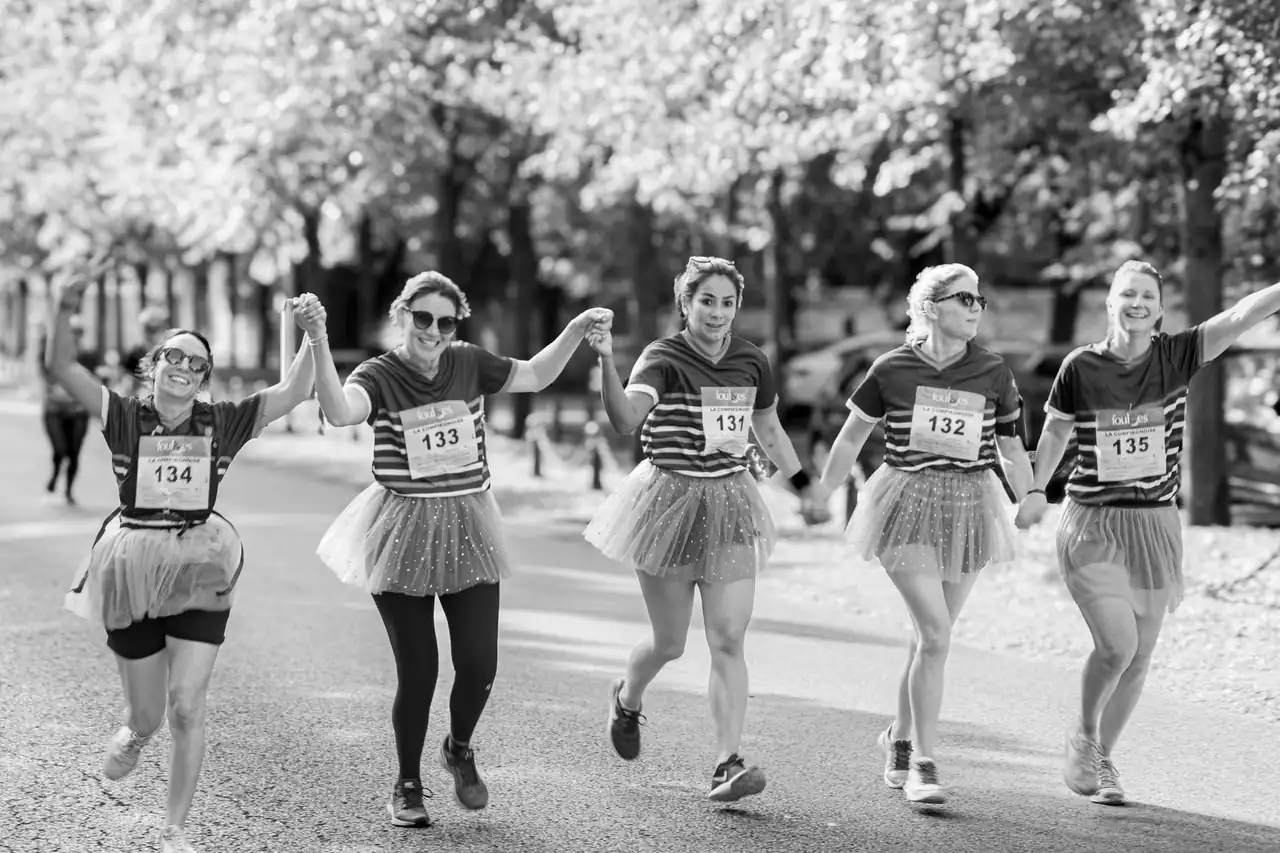
The bib number for the Carrera de la Mujer is much more than a number on a T-shirt: it opens the door to one of the most popular and highly anticipated events on the Spanish calendar, a day that blends sport, a huge atmosphere, and a strong charitable component. In the Madrid edition of 2026, the organizers have set the bib pickup at the Gallur Municipal Sports Center, with two available days and extended opening hours, while the start keeps its grand setup on the Castellana and the finish at Parque del Oeste.
For the participant, the key point is clear from the start: the bib is not handed out on race day, the chip is integrated into the paper bib itself, and collection is concentrated at the pre-race expo. That detail, which may seem minor, ends up shaping the entire logistics of the weekend, from transportation to choosing the exact moment to go pick up the T-shirt and the runner’s bag.
Bib collection and the logistical heart of the event
The experience begins before the starting gun. The organizers enable bib-chip pickup, the official T-shirt, and the rest of the material at CDM Gallur, a space that works as the pre-race expo and concentrates much of the participant traffic during Friday and Saturday. The choice is no accident: for an event that draws tens of thousands of runners, centralizing this process avoids chaotic lines on race morning and better organizes the arrival of participants from inside and outside Madrid.
The announced schedule, from 10:00 a.m. to 8:00 p.m. continuously, gives plenty of room to choose the most convenient time, but demand usually concentrates in very specific time slots. Anyone looking for a specific T-shirt size tends to go early, because distribution is done on a first-come, first-served basis. That mechanism, as simple as it is unforgiving, makes early pickup a small practical advantage for those who do not want to leave the expo with a size that does not fit or with the feeling of having arrived too late at the distribution table.
The Gallur venue also follows a transportation logic. Access via Laguna, by both metro and commuter rail, makes arrival easier and reduces the temptation to use a private car, which is not advisable on a weekend when traffic along the Castellana corridor and surrounding areas becomes complicated by road closures and detours. For a runner, arriving with time to spare, without unnecessary baggage and with registration in hand is almost as important as the training beforehand.
What the bib includes and why nothing should be left to chance
In this event, the bib serves a dual purpose. On one hand, it identifies the participant; on the other, it integrates the timing system. That requires a minimum of care: do not fold it or peel off any part, pin it securely to the front of the T-shirt, and make sure it remains visible. It is a basic recommendation, but even today it solves more than one problem, especially when haste or excitement leads people to place the number in any old way.
The package is usually completed with the official T-shirt and the runner’s bag, two items that are part of the ritual of the event. The T-shirt is not just a keepsake: in high-attendance races, it is also a sign of collective identity, a way to turn the avenue into a sea of color visible from afar. The bag, for its part, contains the event’s useful material, although it is worth remembering that its contents may vary depending on the edition and sponsorship agreements.
If registration is made late, the room to choose a size gets smaller and the bib stops being a mere formality and becomes a small organizational matter. That is why early pickup has real value, not just symbolic value. It avoids last-minute trips, reduces Saturday morning pressure, and allows you to review all the documentation calmly before the asphalt takes center stage.
Madrid’s route and the impact of a massive start
The Madrid race keeps an approximate distance of 6.4 kilometers, a length that makes it accessible to a very broad audience and explains much of its success. The start is set on Paseo de la Castellana, between Nuevos Ministerios and Plaza de San Juan de la Cruz, and the finish is placed on Paseo de Camoens, next to Parque del Oeste. Between the two points, an urban course unfolds that combines wide avenues with more lively and narrower sections toward the end.
The course profile does not present major technical demands, though it does offer enough relief for the start to require its own strategy. In such a massive race, the first kilometer is not run with the legs alone: it is also run with patience. The urge to start too fast is almost automatic, but the route rewards a steady pace, especially for those who want to finish with good feelings and without the Castellana turning into a lactate highway too soon.
The finish at Parque del Oeste provides a very distinctive contrast. After the noise of the big avenues, the surroundings open up, the light changes, and the final festival appears, that space where sport blends with group classes and shared celebration. The race does not end when you cross the line; the experience continues in an atmosphere that explains why so many women repeat year after year.
Timetables, access, and the real margin to arrive without rushing
The Madrid start is set for 9:00 a.m., an hour that requires waking up early but helps the city breathe better during the event. Arriving with a margin is not a decorative suggestion. Between access control, finding your starting corral, the bag drop area, and the usual density of participants, time can disappear quickly. Arriving 45 to 60 minutes before the start is a sensible benchmark, especially if you want to avoid the classic last-minute race against the clock.
To get to the start area, metro and commuter rail are the most sensible options. Nuevos Ministerios serves as the main hub and brings together several lines, while Gregorio Marañón or Río Rosas can serve as alternatives depending on where you are coming from. A car, on the other hand, offers more problems than advantages: traffic closures, parking restrictions, and a stressful arrival that usually ends in unnecessary tension.
That practical detail often goes unnoticed when people talk about big popular events, but here it has real weight. The Carrera de la Mujer is experienced as a celebration, yes, although celebration needs a foundation of order. Transportation planning largely determines the experience, from the moment you pick up the bib to the instant you enter the starting corral with your body still cold and your mind already focused on the first meters.
Solidarity, visibility, and the meaning of wearing that number
The bib in this race carries a symbolic weight that goes beyond logistics. The Carrera de la Mujer has a strong charitable character, linked to causes such as the fight against breast cancer and other initiatives related to health and gender violence. That makes the number, visible on the chest, also serve as a collective reminder of why the streets fill with pink every spring.
In recent editions, the organizers have also reinforced the social component with financial contributions to organizations linked to research, care, and support for women in vulnerable situations. The underlying message is simple but powerful: running can also be a way to support, to raise visibility, and to sustain a shared story that does not end at the finish line.
That background explains why many runners keep the bib long after race day. It is not just any souvenir, but an object that condenses effort, belonging, and a shared cause. In races like this, memory often remains in very specific images: the packed start, the uniform T-shirt, the sound of the crowd, and that number pinned to the chest like a light but meaningful badge.
Buying, transferring, or losing a bib: what to check before making a move
The high demand for this race means that the bib market can appear each year as a parallel shadow, especially when spots sell out quickly. In that area, caution is advisable. Each organizer sets its own rules on transfers, deadlines, and required documentation, and a transfer is not always possible. Checking the official rules before any exchange avoids misunderstandings and problems at pickup.
The reality is that a bib is not just a piece of paper; it is a record linked to identity, insurance, participation, and, in many cases, a T-shirt and bag associated with a specific size. That is why private transactions often require proof of registration, an ID card, and sometimes express authorization. Skipping that process can leave the participant out at the access control or, worse, with a useless purchase.
In a large event, the excitement of joining at the last minute often clashes with the organization’s rules. And that is where the less photogenic but more important part of the event appears: administrative security. Confirming whether the bib is transferable, whether the expo still distributes by time slot, and whether the documentation matches what the race requires is not a minor formality; it is the difference between running and being left out.
What the day feels like from the inside, between excitement and routine
First-time attendees usually imagine a major sporting event; repeat participants know the race is more like an urban choreography. Thousands of runners adjust their bib, check the chip, look for the bag drop, and move along the Castellana with a mix of nerves and familiarity. In that mosaic, every gesture matters: the safety pin that does not go through properly, the T-shirt riding up with movement, the watch marking the warm-up, the final photo before entering the corral.
The race atmosphere also influences how the distance is approached. The 6.4 kilometers invite you to run, walk, or combine both, and that flexibility broadens the participant profile. Some want to finish at a comfortable pace, some want to test how they feel, and others simply want to be part of a sea of people that has already become part of the emotional calendar of popular running in Spain. That wide range of profiles is one of its keys, because it makes the race a gateway into sport and, at the same time, an event for those who have been running for years.
The finish, with Parque del Oeste as a backdrop, usually arrives with a near-cinematic contrast. The urban toughness of the start gives way to a friendlier, more open, and more festive area. The body notices it, the breathing changes, and the bib no longer feels as heavy as it did at the beginning. By then, the number on the chest fulfills its original function and another more intimate one: it records that this Sunday was part of a crowd with a common purpose.
A small number for an event that moves much more than runners
Interest in the Carrera de la Mujer bib is not driven only by the limited number of spots or the event’s popularity. It comes from a mix of accessible sport, a recognizable brand, and a social component that few popular races have managed to sustain with such continuity. That is why practical information about pickup, schedules, access, and materials is not a minor add-on; it is the map that lets you arrive smoothly at an experience with far more depth than it appears to have from the outside.
In Madrid, the event has established its own scene: the pre-race expo at Gallur, the Castellana as the great starting corridor, the return toward the west of the city, and the finish turned into celebration. All of that fits, at heart, into a tiny object. A bib that is picked up well, worn correctly, and understood properly sums up the relationship between organization, participation, and memory. And in a race like this, that small rectangle of paper ends up being the key to a morning that combines asphalt, purpose, and crowd with very little improvisation.
The key, in the end, is not to leave logistics until the last minute. Pickup at Gallur, the 9:00 a.m. start, traffic closures, and choosing the right size are all pieces of the same mechanism. Those who organize them in advance reach Sunday with less friction and more room for what matters: running, walking, or celebrating that pink wave that every year proves again that a popular race can also be a great collective gesture.
You may also like: Madrid Runs for Madrid 2025: the shirt and everything it reveals.



How to prevent thigh chafing: causes and real solutions

Women’s running windbreakers: seven jackets and how to choose

Do more workouts get rid of soreness? A guide for runners

Jaén Half Marathon 2026: Record 3,800 Runners Registered

Men’s short running tights: how to choose the right pair

World Triathlon confirms data breach involving medical data

Izan Edo targets podium at Miyazaki World Cup

María Pérez ranks ninth in World Athletics’ 2026 top ten

Dos Santos, Duplantis and Sawe: World Athlete of the Year finalists

San Silvestre Vallecana 2026: 42,000 places, prices and start times

 Races4 months ago
Valencia Half Marathon 2027: date and registration

 Races4 months ago
Valencia Marathon 2026: entry, ballot and course

 Reviews and Comparisons4 months ago
Asics Gel-Roadmiles 3 for men: review and current price

 Reviews and Comparisons4 months ago
Asics Gel Sonoma 8 Gore-Tex: complete analysis for trail and rain

 Sneakers4 months ago
Saucony Endorphin Pro 4: full review and verdict

 News5 months ago
Strava API 2026: what changes for clubs, challenges and runner apps?

 Reviews and Comparisons5 months ago
Nike Alphafly 3: opinions, sensations, and real key points

 Reviews and Comparisons4 months ago
Under Armour running shoes review 2025-2026: models and key features

 Sports Equipment4 months ago
Shoe sizes in cm: a clear guide to getting the right fit for your footwear

 Sneakers3 months ago
Skechers GO RUN Consistent 2.0 analysis: comfort and limits

 News5 months ago
Valencia Marathon 2026 route: key tips to train and run better

 Sneakers4 months ago
Adidas Adizero Boston 13 for men: review and verdict