Races
Marathon des Oussailles 2026: route, schedules, and prices
The Pyrenean event brings together a marathon, half marathon and 10 km on a fast course, with starts in Aulus, Seix and Eycheil.

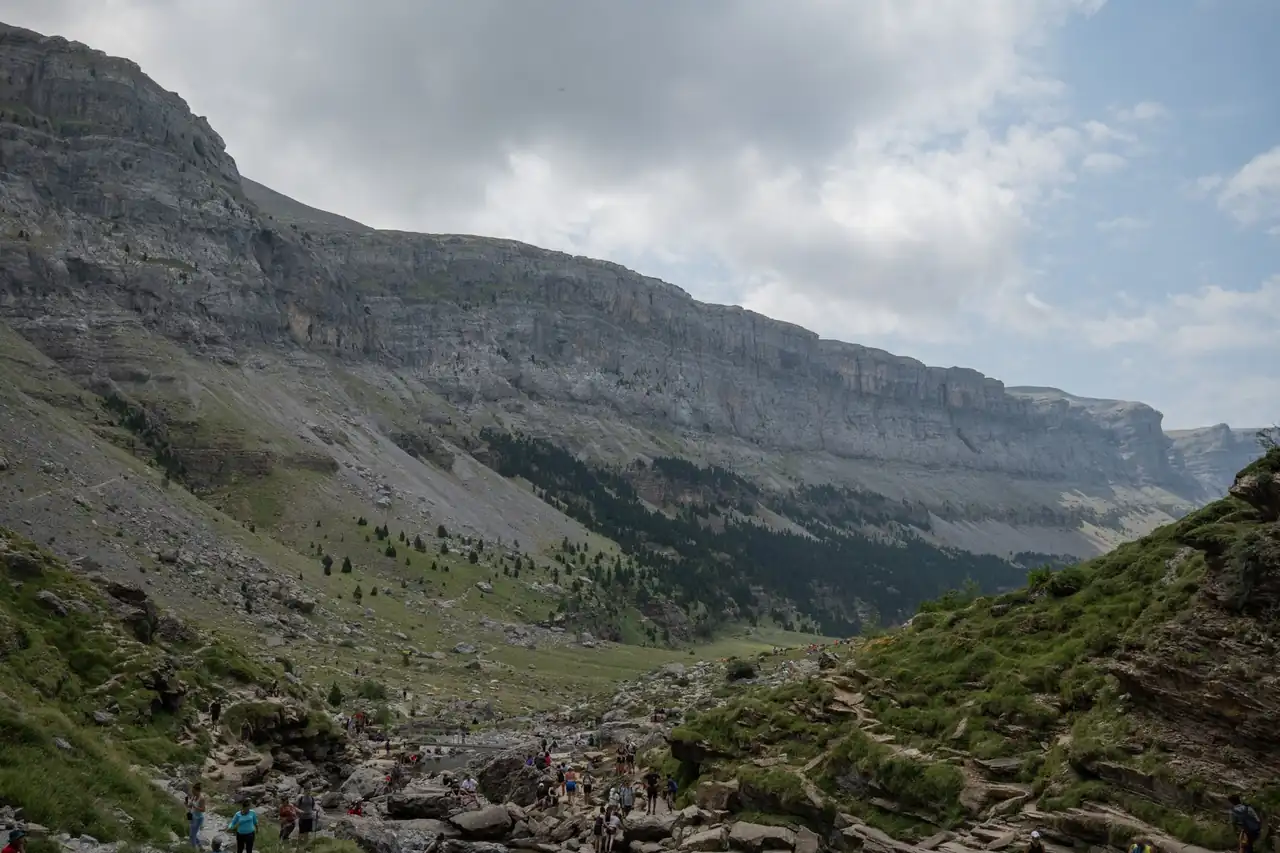
The Marathon des Oussailles puts Ariège back on the map of French running with a rather unusual selling point: a mountain marathon that has earned a reputation for its almost continuous downhill profile. The 42.195-kilometer start in Aulus-les-Bains and finish in Saint-Girons, crossing the Garbet valley and then the Salat valley, make the race faster than its scenery suggests, but also more delicate than it may seem at first glance.
The 2026 edition is set for Sunday, August 23 and keeps a formula that blends competition, scenery, and popular participation. The program brings together the marathon, half marathon, 10 kilometers, a walk, and children’s races, with an organization designed to attract both experienced runners and those looking for a first high-mountain experience without the isolation of an ultratrail.
A Pyrenean marathon with a reputation for speed
The uniqueness of this race is immediately clear when you look at the elevation profile. The marathon course is downhill for 95%, a figure that explains why it often appears among the fastest marathons in France. It is not an easy-road for effortless times: the descent demands prepared legs, control in foot placement, and smart effort management. But it does offer a rare opportunity in a mountain event, where the clock is not usually the main attraction.
The start in Aulus-les-Bains, at about 750 meters above sea level, and the finish at the athletics stadium in Saint-Girons, around 400 meters, trace a long, sustained journey through the heart of Couserans. The runner is not only descending in altitude, but also passing through villages, changing valleys, and moving into a geography that alternates water, forest, stone, and meadows. In practice, the race feels a bit like a natural conveyor belt: it pushes you forward, but punishes you if you run it as if it were flat.
The sporting appeal lies precisely there. It is not an event for hiding behind the elevation, but for reading it with respect. The stride tends to lengthen on its own as the ground drops, but the legs absorb impact continuously, especially in the first kilometers, where enthusiasm can do more damage than a climb. That mix of apparent speed and mechanical fatigue is what has given the event its identity.
Different starts, the same finish, and the same landscape in the background
The marathon starts in Aulus-les-Bains; the half marathon starts in Seix; the 10-kilometer race starts in Eycheil. The three distances come together in Saint-Girons, where the finish at the stadium provides that closed-circuit atmosphere runners and their companions appreciate so much. The spread of start locations reflects a clear idea: to adapt the effort to different levels without giving up the coherence of the route.
In the case of the marathon, passing through Aulus, Seix, Oust, and Eycheil draws a descending line through the valley, with stretches where the landscape opens the chest and others where the trees frame the road like a green tunnel. The half marathon condenses the essence of the event into a more approachable distance for many runners, while the 10-kilometer race offers a direct entry point into a race that, although known for its marathon, is not limited to it.
There is also a walk and children’s events, a decision that gives the day a broader, more family-friendly tone. The event is not limited to the local elite or those chasing a personal best; it works as a sporting celebration of the region, with several layers of participation. That breadth helps explain its annual roots and the interest it sparks among those who travel to the area at the end of August.
Timings, distances, and the event format
The official 2026 program concentrates the starts in the morning. The individual marathon and the four-runner relay start are scheduled for 8:30 in Aulus-les-Bains. The half marathon starts in Seix at 9:25, while the individual 10-kilometer race begins at 10:15 in Eycheil. Shortly after that comes the walk from Oussaillès to Eycheil, and at 10:45 the children’s races take place in Eycheil.
That sequence creates a staggered day, without the chaos that large events with massive waves of runners sometimes generate. The structure allows each distance to keep its identity and lets the safety, aid-station, and participant-flow systems be organized with some clarity. The marathon relay format also adds a tactical dimension that is uncommon in an event of this kind, useful for clubs, groups of friends, or runners who prefer to divide the effort over the 42.195 kilometers.
The variety of options is one of the reasons the race remains appealing to very different profiles. Some travel for the full marathon experience, while others stick to the half or the 10K, which are more accessible and less demanding as a first contact with the Pyrenean setting. In all cases, the backdrop remains the same: a road race with the soul of an alpine valley.
A course that rewards the mind as much as the legs
Long downhills can be deceptive. From the outside, the effort seems smaller because there are no brutal ramps or long ascents. However, in a race like this the runner needs fine pace management, because the downhill terrain tempts you to run above what is sensible. Early over-speeding is paid for later, especially in the quadriceps and calves, and even more so when the course keeps descending for so many consecutive kilometers.
The Marathon des Oussailles lives on that border between speed and control. A fast race is not always an easy race, and here the difference is felt with every step. Cadence, trunk stability, and the ability to let yourself run without falling apart are key to reaching the finish intact. Anyone looking only at the elevation can imagine a chance to fly; anyone who knows long downhills knows they can also leave your legs feeling as if they had been hit by a roller.
The setting is not just a postcard, either. Crossing Couserans in August means running through shaded areas, accumulated heat, and open stretches where the sun weighs more than it seems. Added to that is the psychological effect of the landscape: the valley slides ahead of the runner, almost like a slow current, and that alters the perception of effort. The race demands that you read your body carefully, not just enjoy the view.
Registration, prices, and practical requirements
The published 2026 fees place the marathon at 32 euros, the half marathon at 23 euros, and the 10 kilometers at 16 euros. The four-runner marathon team costs 48 euros. There is also an individual meal for 13 euros and a companion meal for 13 euros, a small detail in appearance but useful for organizing logistics for those traveling to the area with family or friends.
Registration is linked to the event’s official website, and the required documentation includes a federation license or medical certificate, according to the organization’s published guidelines. This is a common condition in French races of this type, especially when the event combines long distances, fast sections, and open participation for runners with or without a license.
Bib collection takes place the day before in the afternoon and also on the morning of the race at the Saint-Girons stadium, a practical arrangement to avoid excessive queues and spread out the flow of participants. In events with multiple starts, that kind of detail organizes more than it seems: it reduces pre-race tension, makes transportation easier, and ensures the main day does not become a parallel race against the clock.
What the Couserans setting adds to the race
The value of the event is not explained by elevation alone. Aulus-les-Bains, Seix, Eycheil, and Saint-Girons are part of a very recognizable Pyrenean Ariège landscape, with narrow valleys, stone villages, and vegetation that in summer combines density and brightness. The route does not cross a neutral backdrop, but a territory with identity, where valley winds, the sound of water, and the alternation between sun and shade are almost physically present.
That connection to the territory has been one of the foundations of the event’s roots. The race is organized with local support and mobilizes volunteers, residents, and municipal services that turn the day into more than just a competition. Hospitality is not only visible at the finish; it also appears in the passing villages, at the aid stations, and in the way the valley embraces the event. The result is a race where the stopwatch coexists with a human scale.
The finish in Saint-Girons offers a very concrete image: stadium, atmosphere, visible fatigue, and shared relief. After kilometers of descent, the finish on the track gives the marathon a sense of clean closure, almost cinematic. Geography goes from controlling the runner to being left behind, as if the whole race had been one long gesture of moving from the mountains to the flatlands.
Who this event makes sense for, and why it still draws attention
The event attracts very different profiles because it does not limit its appeal to a single promise. For the competitive runner, the course offers a real chance at a personal best if they can pace themselves and if their muscles can tolerate the downhill. For the enthusiast seeking a distinctive experience, it provides a powerful scenic setting without the extreme harshness of a trail race. For the sports traveler, it combines a summer getaway with an event that has its own identity.
The downhill marathon is not a format for everyone, and that is precisely why it remains interesting. It has something paradoxical about it: it seems gentle because it goes downhill, but it demands a lot. It seems fast, but it punishes. It seems straightforward, but it forces decisions minute by minute. That tension gives it character and prevents it from becoming just another calendar curiosity.
In 2026, the August 23 edition keeps all the elements that have made the race recognizable: staggered starts, a finish in Saint-Girons, options for several levels, affordable pricing, and a geography that needs no embellishment to impress. Among French marathons, few offer such a clear combination of speed, scenery, and emotional relief. That is where its strength lies, and also why every summer it returns to claim its own place in the Pyrenean calendar.
A race measured in kilometers, but also in territory and memory
In an increasingly crowded calendar, the Marathon des Oussailles retains a clear personality. It does not compete on volume, but on sporting character and scenery. The continuous downhill, the starts spread across several villages, and the stadium finish create an experience that is easy to recognize even for someone unfamiliar with the area. That clarity, rare in such a broad race landscape, is one of its greatest virtues.
The race also reminds us of something essential in popular running: a race can be technically demanding and, at the same time, accessible in its concept. Here the runner decides whether to tackle the 42.195 kilometers, try the half, go for the 10K, or take part in the relay. The mountain stops being an absolute filter and becomes a framework that organizes the experience. The result is an event remembered not only for how it is run, but also for where it is run.
That balance between performance and landscape explains why the Marathon des Oussailles is not just another date in August. It is a race with its own story, one of those that leaves you feeling as if you crossed an entire valley rather than completed a distance. And that is, in the end, the kind of impression that tends to remain once the numbers have been filed away.



How to prevent thigh chafing: causes and real solutions

Women’s running windbreakers: seven jackets and how to choose

Do more workouts get rid of soreness? A guide for runners

Jaén Half Marathon 2026: Record 3,800 Runners Registered

Men’s short running tights: how to choose the right pair

World Triathlon confirms data breach involving medical data

Izan Edo targets podium at Miyazaki World Cup

María Pérez ranks ninth in World Athletics’ 2026 top ten

Dos Santos, Duplantis and Sawe: World Athlete of the Year finalists

San Silvestre Vallecana 2026: 42,000 places, prices and start times

 Races3 months ago
Valencia Half Marathon 2027: date and registration

 Races3 months ago
Valencia Marathon 2026: entry, ballot and course

 Reviews and Comparisons4 months ago
Asics Gel-Roadmiles 3 for men: review and current price

 Reviews and Comparisons4 months ago
Asics Gel Sonoma 8 Gore-Tex: complete analysis for trail and rain

 Sneakers3 months ago
Saucony Endorphin Pro 4: full review and verdict

 News5 months ago
Strava API 2026: what changes for clubs, challenges and runner apps?

 Reviews and Comparisons5 months ago
Nike Alphafly 3: opinions, sensations, and real key points

 Reviews and Comparisons4 months ago
Under Armour running shoes review 2025-2026: models and key features

 Sports Equipment4 months ago
Shoe sizes in cm: a clear guide to getting the right fit for your footwear

 Sneakers3 months ago
Skechers GO RUN Consistent 2.0 analysis: comfort and limits

 News5 months ago
Valencia Marathon 2026 route: key tips to train and run better

 Sneakers4 months ago
Adidas Adizero Boston 13 for men: review and verdict