Races
Vercors Marathon 2027: routes, schedules, and registrations
The Villard-de-Lans event combines a marathon, 20 km, 10 km, and high-mountain marches.

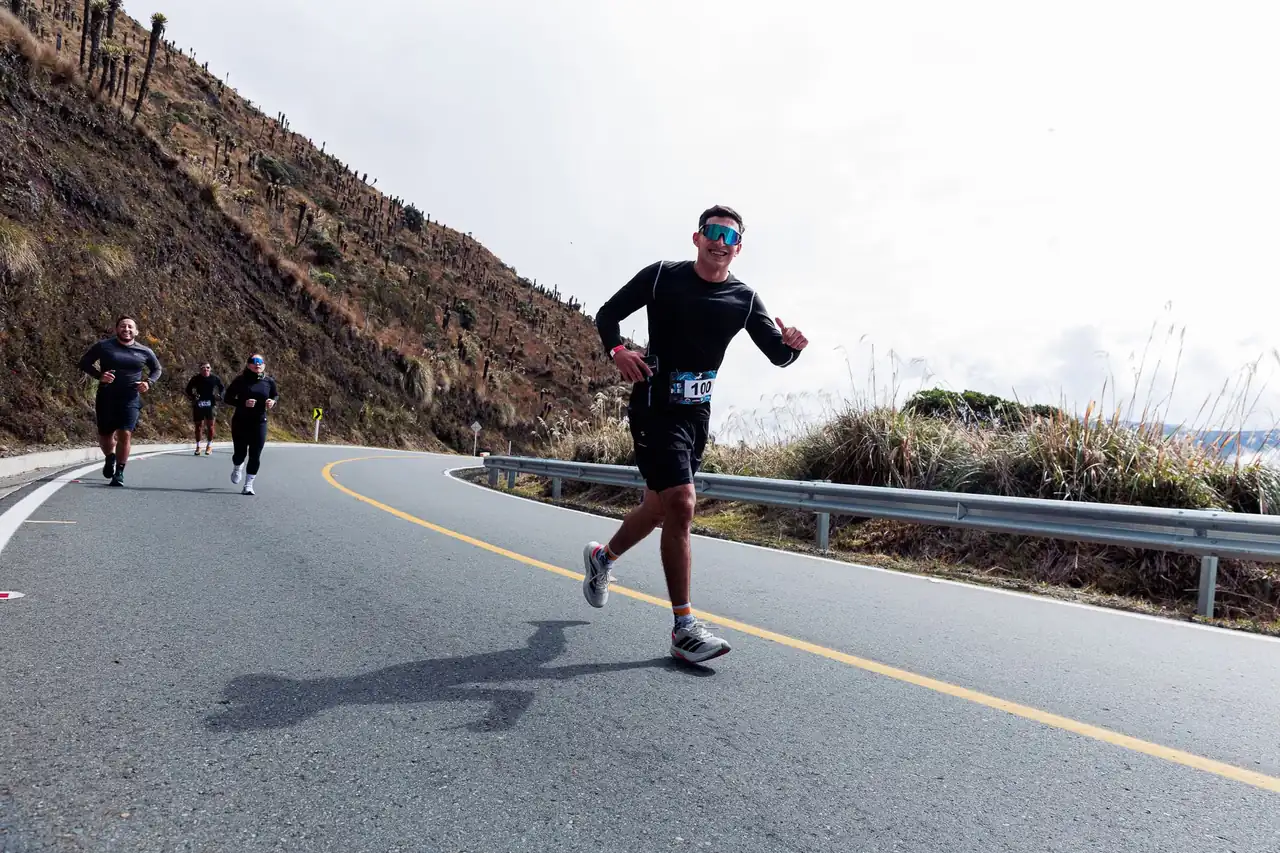
The Marathon du Vercors has established itself as one of the most distinctive events on the French calendar for a very simple reason: it turns a road race into a mountain experience without losing the logic of the route. Villard-de-Lans, in the Vercors massif, serves as the base for a weekend that blends competition, hiking, and alpine scenery at more than 1,000 meters above sea level.
The 2027 edition keeps the formula that has helped the event grow: marathon, 20 km, 10 km and two hikes, with routes that cross forests, high-altitude villages, and mountain roads. It is not just about running; it is about sustaining the effort in an environment where the air feels drier, the elevation gain weighs more, and the surroundings force you to look beyond the stopwatch.
A road race in a high-mountain landscape
The appeal of the Vercors Marathon comes from a paradox that defines it well: it is a road event, but its narrative belongs to the mountains. The main course is advertised as 100% on asphalt and track, although for participants the feeling is that of entering a natural corridor among fir trees, meadows, and open slopes. That blend sets it apart from other similar events, where the difficulty of the terrain is almost always associated with trail running.
The organizers have emphasized a very specific feature that marks its identity: it is the first road marathon in Europe above 1,000 meters of altitude. That detail is not just a promotional flourish; it changes the way you run, breathe, and manage your effort. In a race like this, the body is subjected to a different load than in a flat urban race, even if the surface is more forgiving than that of a pure mountain course.
The setting also adds character. The event takes place in France’s largest regional park, passing through Villard-de-Lans, Lans-en-Vercors, Autrans-Méaudre, and areas near the Col de la Croix Perrin. The maximum altitude cited in the reference information reaches 1,218 meters, a figure that gives context to the demands of the weekend. It is not a backdrop: it is part of the effort.
The distances and what each one offers
The official program brings together four main formats for running and walking. The marathon is the flagship distance, with 42.195 kilometers and around 531 meters of positive elevation gain in the most detailed race information. Other reference sources place the figure at around 480 meters, so it should be understood as a route with moderate but steady climbing, enough to affect pace and punish the legs in the second half.
The 20 km appears as a highly competitive format for those seeking an intermediate distance without giving up the scenery. Its elevation gain is around 210-229 meters, depending on the source consulted, and much of its character comes from the passage through Lans-en-Vercors and the return toward Villard-de-Lans. It is a distance that is less forgiving than it may seem: not a breakaway race, but one of control.
The 10 km adds around 150-164 meters of climbing and is presented as the fastest format in the program, though certainly not flat. It starts in Villard-de-Lans, passes through the hamlet of Cochettes, and links small localities such as Ville Vieille, Les Bonnets, and Les Geymonds before returning to the center. Its value lies in combining accessibility, scenery, and sustained effort without giving away the meters.
Added to these distances are two walks: the Resistance Trail of 11 km and the gourmet walk of 5 km. The first starts in Corrençon-en-Vercors and follows roads and paths with guides along the route; the second departs from Méaudre and places the emphasis on the surroundings and local gastronomy. Their presence broadens the event’s audience and reinforces the idea of a weekend open to more than just athletes.
Schedules, starts, and the rhythm of the weekend
The schedule is designed to spread the effort over two days. The marathon starts on Saturday, June 27 at 8:00 in Villard-de-Lans, while the 10 km starts at 3:00 p.m. and the 20 km at 7:00 p.m., also from the same town. This staggered start format creates a clear reading of the event: first the flagship distance, then the shorter formats, followed by the late-afternoon and evening atmosphere.
The walks are concentrated on Sunday, June 28. The Resistance Walk begins at 10:00 a.m. in Saint-Nizier-du-Moucherotte and the Gourmet Walk at 11:00 a.m. in Corrençon-en-Vercors. In this way, the organization turns the second day into a less competitive and more exploratory segment, ideal for companions, walkers, and runners who prefer to recover on foot among high-altitude landscapes.
Race bib pickup is also precisely organized. It can be collected on Friday, June 26 from 4:00 p.m. to 8:00 p.m. and on Saturday, June 27 from 6:30 a.m. to 6:00 p.m., both time slots at Place Pierre Chabert. This detail may seem minor, but for an event with multiple schedules and formats, logistics begin long before the starting gun.
Registration, prices, and participation conditions
Prices vary depending on distance and registration date. For the marathon, the starting fee was 63 euros for the first 800 bibs combined, rising to 70 euros for the rest and reaching 85 euros on-site from midnight on June 26, 2026. The 20 km ranged from 40 to 42 euros, with an on-site price of 60 euros; the 10 km from 25 to 30 euros, up to 40 euros on-site; and the walks from 18 to 22 euros, with an on-site price of 30 euros.
Beyond the fee, the event requires a PPS certificate dated within the last three months or a valid Fédération Française d’Athlétisme license. Parental authorization is also required for minors in the events where their participation is allowed. These conditions place the race within the regulated framework of French running and are worth reading carefully, because they are not a mere formality but part of the entry process.
The organization also includes options such as cancellation and postponement coverage, although those options depend on the rate and the time of purchase. The approach is quite practical: each runner assumes the risk and flexibility of their entry in the way that suits them best. In a mountain road race, with travel and accommodation involved, that planning matters almost as much as physical preparation.
Gear, aid stations, and small details that change the race
One of the most useful features of the Marathon du Vercors is that it does not leave logistics to chance. There will be aid stations roughly every 5 kilometers with drinks and solid food, a reasonable frequency for a race of this length and elevation gain. However, the organizers add an important condition: no paper or plastic cups are provided, so each participant must bring their own container, whether a soft flask or a collapsible cup.
Mandatory gear includes some food or energy reserve and a thermal blanket for all courses. In mountain races, this kind of requirement says a lot about the real environment of the event: even though the race is on roads, the context is alpine and the weather can change quickly. Carrying a fully charged mobile phone is also recommended, although this is a suggestion rather than a requirement.
There are other limitations worth noting. Treking poles are not allowed, except in the walks, and animals are not permitted on the course. Storage and changing facilities are provided, but no showers. Details like these may seem minor from the outside, but in practice they define the runner’s experience as much as the course profile or total elevation gain.
The course profile and the sporting reading of the effort
The Vercors marathon is not broken by one endless mountain pass or a series of wild ramps. Its difficulty is more subtle, almost one of attrition. The route combines rolling, climbing, rolling again, and climbing again, a sequence that tests patience more than explosiveness. Those who start too fast will pay for it later, because the legs meet resistance on a course that offers few real pauses.
The most iconic point on the course is the Col de la Croix Perrin, located at 1,218 meters. In a race of this kind, the pass acts as an emotional marker as well as a physical one: it appears as the reference point that justifies the effort and also as the place where the landscape opens up most dramatically. That kind of passage gives meaning to the race and helps explain why so many runners return year after year.
In the 20 km and 10 km, the logic changes, but not entirely. The challenge still lies in pace control and in reading the terrain. These are distances that allow competitive racing, even if the surroundings encourage you to think about enjoying the scenery as well. It is no coincidence that the organization emphasizes nature, forest, and altitude: the Vercors turns the race into a kind of conversation between legs and environment.
Atmosphere, territory, and a different way of understanding running
The race is built around a territory that is highly recognizable to runners seeking clean air, relative silence, and open horizons. The Vercors does not have the noise of a big city or the flatness of an urban circuit; it has a different texture. Fir trees, filtered light, road curves, and small hamlets create an almost cinematic scene, the kind that makes you slow down a little to look around without losing concentration.
There is also a cultural component that goes beyond sport. The presence of the Resistance Walk and the reference to local heritage connect the event with the historical memory of the massif, while the gourmet walk introduces the gastronomic and family dimension. That balance between performance and place is one of the keys to its success: it does not force you to choose between competing and discovering, but places both on the same map.
Participation data point to a growing event. In the previous edition, there were nearly 3,000 participants, with a 96% recommendation rate in the organizer’s information. These figures help explain the scale of the weekend, although what matters most remains the experience of those who start: a well-organized, highly visual event with its own identity.
Why this marathon stands out among mountain road races
The running market is full of races with scenery, but few combine road running, altitude, and alpine atmosphere so clearly. The Marathon du Vercors does not try to sell artificial epic drama or present itself as an extreme adventure; its proposal is more elegant and rarer: a road race, yes, but in a setting that seems designed to push runners out of routine. That gives it a distinct personality for both local elites and recreational runners looking for something special.
Its calendar also fits the European summer well. At the end of June, the average weather in Villard-de-Lans is usually mild, with a historical reference of around 23 degrees Celsius for the high and 13 for the low, according to one of the consulted profiles. This weather window does not remove the challenge, but it does help avoid the harsher heat found in other parts of Europe, something many runners appreciate in the middle of the summer racing block.
Within the international running calendar, the Vercors Marathon has found its own place: that of races defined not only by distance, but by place. And in running, that is worth a lot. The route, altitude, logistics, and scenery combine to offer a race that leaves a mark because it does more than measure times; it also measures the ability to adapt to an environment that sets its own pace.
What an edition like this leaves in a runner’s calendar
The Marathon du Vercors works as a kind of bridge between two worlds. On one side, it preserves the classic structure of a road race, with clear distances, timing, and defined starts. On the other, it introduces mountain, nature, and heritage elements that move it away from the usual urban model. That tension makes the event appealing to very different profiles: those who want a hilly marathon, those looking for a 10 km in an unusual setting, or those who prefer walking without giving up the sporting atmosphere.
The strength of the event lies precisely in that ability to add without losing focus. It does not try to become trail running, even though it relies on the terrain; it does not give up asphalt, even though the scenery pushes it toward adventure; it does not limit itself to the marathon, even though that remains its flagship. The result is a compact, visually striking, and carefully calibrated event, with enough personality to stand out in an increasingly crowded calendar.
On the European running map, the Vercors Marathon already occupies a clear place: a high-altitude road race with alpine identity and popular appeal. It stays in the memory because of the course, yes, but also because of the feeling of having run within a territory that cannot be fully tamed. And perhaps that is its greatest value: reminding us that, sometimes, a bib weighs less than the landscape that surrounds it.
Where to stay in Villard-de-Lans
Hotels available 25–28 June 2027.
Affiliate links: if you book through this map we earn a commission, at no extra cost to you.



How to prevent thigh chafing: causes and real solutions

Women’s running windbreakers: seven jackets and how to choose

Do more workouts get rid of soreness? A guide for runners

Jaén Half Marathon 2026: Record 3,800 Runners Registered

Men’s short running tights: how to choose the right pair

World Triathlon confirms data breach involving medical data

Izan Edo targets podium at Miyazaki World Cup

María Pérez ranks ninth in World Athletics’ 2026 top ten

Dos Santos, Duplantis and Sawe: World Athlete of the Year finalists

San Silvestre Vallecana 2026: 42,000 places, prices and start times

 Races4 months ago
Valencia Half Marathon 2027: date and registration

 Races4 months ago
Valencia Marathon 2026: entry, ballot and course

 Reviews and Comparisons4 months ago
Asics Gel-Roadmiles 3 for men: review and current price

 Reviews and Comparisons4 months ago
Asics Gel Sonoma 8 Gore-Tex: complete analysis for trail and rain

 Sneakers3 months ago
Saucony Endorphin Pro 4: full review and verdict

 News5 months ago
Strava API 2026: what changes for clubs, challenges and runner apps?

 Reviews and Comparisons5 months ago
Nike Alphafly 3: opinions, sensations, and real key points

 Reviews and Comparisons4 months ago
Under Armour running shoes review 2025-2026: models and key features

 Sports Equipment4 months ago
Shoe sizes in cm: a clear guide to getting the right fit for your footwear

 Sneakers3 months ago
Skechers GO RUN Consistent 2.0 analysis: comfort and limits

 News5 months ago
Valencia Marathon 2026 route: key tips to train and run better

 Sneakers4 months ago
Adidas Adizero Boston 13 for men: review and verdict