Races
Medellín Marathon: history, route, and key details of the big event
The Medellín race combines history, distances for everyone, and an urban course with great sporting significance.

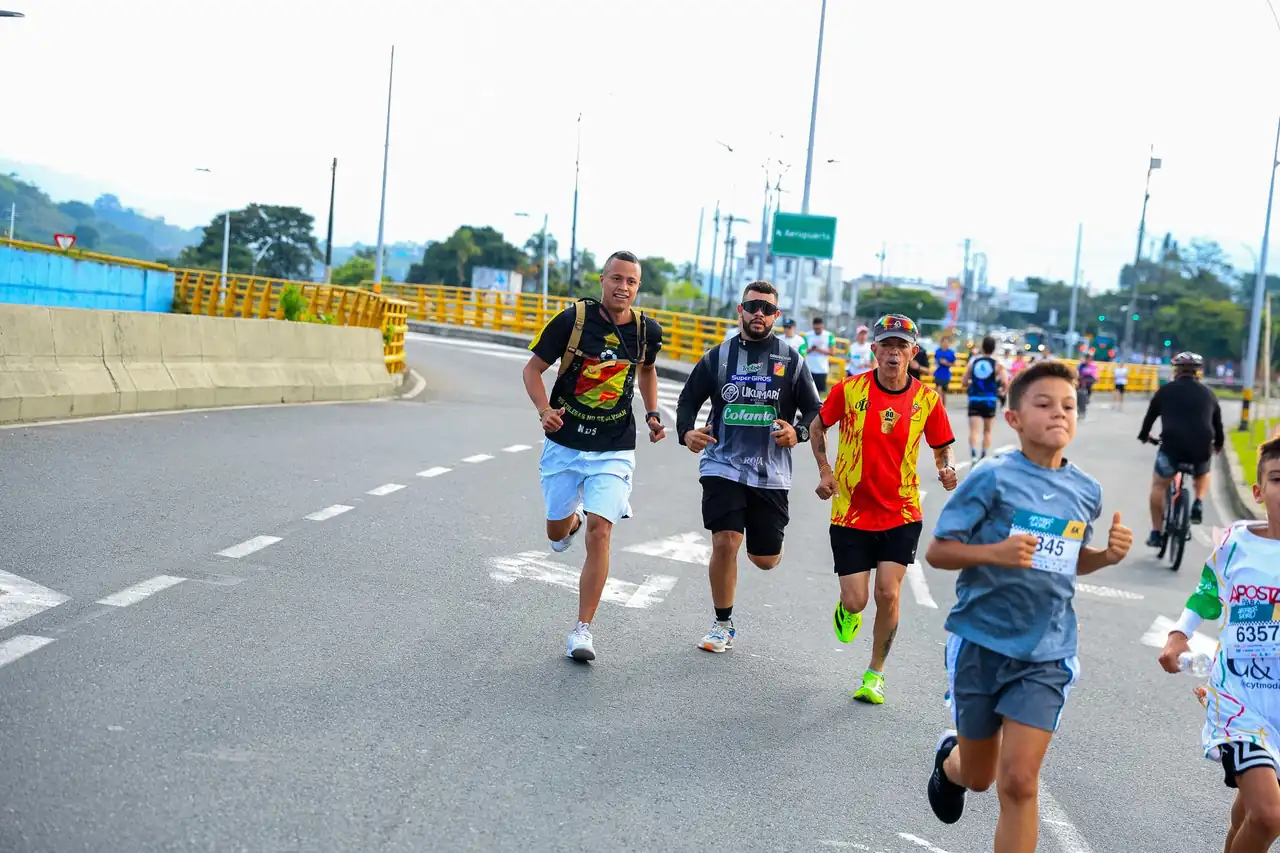
Medellín Marathon has established itself as one of the major events on the Latin American calendar thanks to its mix of tradition, variety of distances, and ability to bring elite runners and amateurs together on the same starting avenue. Born in 1995, it is Colombia’s oldest road race and one of the most recognizable in the region, with an evolution that took it from an initial 14-kilometer format to a full program of 42,195 km, half marathon, 10K and 5K.
Its sporting significance is explained not only by the number of participants or its international reach. Its urban identity also matters, as does the logistics required to organize road closures in a dense city, and the mark left by its most recent editions, including the celebration of its 30th anniversary in 2024 and the continuation of mass participation that exceeded 27,000 runners in 2025. In Medellín, the marathon is competition, showcase, and civic ceremony all at once.
A race that grew with the city
The race was born in 1995 as a long-distance initiative with an international vocation and, just one year later, had already expanded its profile to the half marathon. That modest beginning, with about 2,000 athletes from five countries, gave way to a more ambitious structure that gradually earned recognition. The presence of the International Association of Athletics Federations in certifying the course and its status as a valid Boston qualifying race strengthened its prestige and placed it on the map of the continent’s serious road races.
The big leap came in 2012, when the organization added the full marathon distance. From then on, the event was no longer just a celebration of shorter long-distance racing, but became an occasion that let the city be read at several scales: the extreme effort of the 42K, the balance of the 21K, the accessibility of the 10K, and the participatory spirit of the 5K. That breadth of options explains part of its longevity and also its ability to attract very different runner profiles.
Its recent trajectory confirms that growth. In 2018, the race brought together more than 15,000 athletes from nearly 40 countries; in 2024, there were already more than 24,000 from 42 nations and five continents; and the following year, the figure exceeded 27,000 registered runners from 45 countries. Few urban events in Latin America can boast such sustained expansion without losing their local identity.
The course and Medellín’s urban pulse
The route has been adjusted over the years to meet sporting and mobility demands. The 2023 edition introduced revised courses through downtown Medellín, a change that highlighted the race’s urban character and its need to engage with the real city, not an idealized postcard. That kind of adjustment often sets the tone for major road races: the course does not only measure times; it also manages traffic, redistributes space, and turns the city into a temporary stage for endurance and speed.
Medellín offers a recognizable setting, with wide avenues, stretches of heavy traffic, and areas where the city breathes between asphalt and everyday life. The organizers have had to coordinate closures with local authorities in municipalities within the metropolitan area such as Medellín, Envigado, and Sabaneta, which gives an idea of how complex the operation is. This is not a race contained in a park or a repetitive circuit; it is an event that requires the city to hold itself back for several hours to allow the pack to pass.
The 2026 edition already appears on international calendars for September 6, with a distribution of distances that preserves the logic of previous years. That continuity shows that the marathon has become an event with an expected date, combining organizational predictability with sporting novelty. In an urban race, maintaining that stability is almost as important as chasing a record.
The distances that explain its success
One of the keys to the interest this race generates is its tiered structure. The 42,195 km attracts those seeking the classic distance and the ultimate endurance challenge; the 21,0975 km offers a balance between demand and manageability; the 10K opens the door to less experienced runners or those who want an intense but controlled effort; and the 5K keeps the event’s recreational and family dimension alive. That range broadens the audience without diluting the prestige of the main marathon.
The variety of distances also explains the mix of profiles at the start line. On the same morning, elite athletes can share the course with amateurs, first-timers, and runners traveling for sports tourism. The structure multiplies the presence of different paces on the route and turns the day into a kind of stepped tide. The race does not demand the same commitment from everyone, but it does offer an entry point for every level.
From an editorial perspective, that model has a clear virtue: it allows Medellín Marathon to be understood not as a single race, but as a family of competitions united by the same brand and atmosphere. The marathon is the symbolic peak, but the half marathon and shorter distances sustain the participation fabric that makes the event viable in sporting and social terms.
Results, champions, and competitive level
The race has brought together some of the strongest distance runners from the region and the African circuit. In 2018, Ethiopian Habtamu Arega won the men’s marathon in 2:18:18, while Tigist Teshome took the women’s title in 2:39:04. In 2022, Colombian Jeisson Suárez won the 42K in 2:15:53 and set a new course record, a victory that carried symbolic weight because he was the first Colombian winner of the distance since 2014.
The 2023 and 2024 editions consolidated that mix of local and international dominance. Suárez won again in 2023 with 2:17:24, and in 2024 Peruvian Walter Nina took the men’s 42K title while Kenyan Naomi Jepkogei dominated the women’s category. In the half marathon, Costa Rican Mauricio González and Ecuadorian Mary Granja posted the best 21K times in 2024 with marks of 1:04:10 and 1:14:00, respectively.
The race’s competitive relevance lies not only in its winners, but also in the average level of its times and the international depth of its podium. For a marathon to bring together athletes from Colombia, Kenya, Ethiopia, Peru, Ecuador, and other countries in a single edition speaks to a reputation that is now well established. Medellín Marathon is both a showcase for regional talent and a useful barometer for measuring the state of long-distance running in Latin America.
A race defined by its social dimension
Alongside sporting performance, the organizers have cultivated a narrative of social impact that sets it apart from other road races. In 2017, the International Association of Marathons and Distance Races granted it a social recognition for programs linked to community and health causes. These included rehabilitation initiatives for people affected by landmines, breast cancer awareness campaigns, and support projects for communities with fewer resources.
That social component is not decoration. In large urban races, the presence of parallel programs helps justify traffic closures, the logistical effort, and the mobilization of volunteers and sponsors. It also strengthens the race’s public legitimacy, turning it from a mere competition into an event connected to real local issues. In Medellín, that layer of meaning has been a visible part of the brand.
The relationship with the territory is also evident in the way the race fits into the city’s image. Medellín appears not only as a visual backdrop, but as an organizing community, a starting point, and a space of belonging. That blend of sport and citizenship explains why the event has survived stage changes, route adjustments, and the forced interruption of the pandemic, which led to virtual editions in 2020 and 2021.
Organization, institutional support, and sponsorship
Since 1995, the race has been run by MCM Event Operator, an organization born from the initiative of Camacol Antioquia and the Antioquia Athletics League. That continuity in management has been essential to maintaining standards and building a recognizable identity. Long-running marathons are sustained not only by the number of registered runners; they also need a backbone that preserves technical memory, institutional relationships, and responsiveness.
The list of supporters has included public entities and private brands with a visible presence in the city. In a recent edition, the main partners included Empresas Públicas de Medellín, the Medellín City Hall, and Inder Medellín, as well as commercial names such as Nike, Gatorade, Tigo, Agua Cristal, and El Colombiano. That combination illustrates a very common model in major road races: the public sector provides legitimacy and logistics, while private investment helps sustain the runner experience and media reach.
Support also comes from athletics and road racing organizations such as World Athletics, AIMS, the Antioquia Athletics League, and the Latin American association ALCAR. Certifications matter because they validate the course, the measurement, and the credibility of the results. In a race with international ambitions, that support network is as relevant as the elite podium, even if its work usually stays out of the spotlight.
Recent editions and the return to the streets after the pandemic
The pandemic altered the calendar and forced virtual editions in 2020 and 2021, as happened in much of the global circuit. The in-person return in 2022 carried special weight because it reactivated the full experience: the noise of the start, the tension at aid stations, the control of closures, and the echo of the crowd on the avenues. For an urban marathon, returning to the street is not just a change of format; it is a recovery of its true nature.
In 2022 there was also a tragic incident, with the death of a 35-year-old runner near Calle San Juan and Avenida del Ferrocarril. In 2018, the leader of the half marathon, Kenyan Joseph Kiprono Kiptum, was hit by a car that improperly entered the course. Both incidents remind us of the fragility of any major urban event and the need to rigorously secure the routes, signage, and access control.
Safety in a race of this scale is not just a matter of rules. It depends on coordination between organizers, authorities, and support staff to close streets, direct pedestrians, and prevent dangerous crossings. When one piece fails, the impact can be sporting and human. That is why major long-distance events are measured not only by the clock, but by their ability to protect both competitors and the people living alongside the race.
What makes Medellín Marathon different within the Latin American calendar
There are races with greater global fame and others with more history in Europe or Asia, but few in Latin America combine age, size, variety, and international reach as clearly as Medellín Marathon. The city has turned its annual anniversary into a story of continuity. The city embraces the event, runners treat it as a serious appointment, and the podiums reflect a level of competition sufficient to attract athletes seeking times and visibility.
Its value also lies in the mix of settings. Runners do not just take part in a marathon; they cross a city that wants to present itself as modern, organized, and sporty. There is something of a civic parade in that image, but also a very real hardness: the heat, the asphalt, the long straightaways, and the wear-and-tear inherent in a road endurance race. The appeal comes precisely from that tension between celebration and resistance.
Medellín Marathon is now a stable reference for anyone following the racing calendar in Colombia and across the continent. Its course, its times, its institutional network, and its growth in participation explain why it continues to appear among the most talked-about events each September. This is not just a date for logging kilometers; it is a race that has learned to tell the story of a city through the effort of thousands of legs.
A marathon that looks to the future without losing its memory
The longevity of a race like this depends on its ability to change without breaking. Medellín has preserved its essence while updating routes, strengthening alliances, and expanding its international reach. That it continues to attract runners from dozens of countries, maintain distances for different levels, and sustain a recognizable brand after three decades speaks to an organization that has understood the value of continuity.
The next edition will once again test that formula. There will be elite runners, there will be amateurs, there will be a popular 5K, and there will be a 42K for those chasing the queen distance. But above all, there will be a city turned for a few hours into an open track, with the sound of footsteps on the pavement and the precise logic of a major urban race. That is the true heart of Medellín Marathon: not just a result, but a way of inhabiting Medellín by running.
In a calendar increasingly saturated with races, the Antioquian event retains a clear personality. It was born as a young marathon, grew with ambition, and today functions as a sporting and civic event that is already part of September’s landscape. Its story continues to be written stride by stride, between avenue crossings, sustained effort, and the city making its way behind every runner.



How to prevent thigh chafing: causes and real solutions

Women’s running windbreakers: seven jackets and how to choose

Do more workouts get rid of soreness? A guide for runners

Jaén Half Marathon 2026: Record 3,800 Runners Registered

Men’s short running tights: how to choose the right pair

World Triathlon confirms data breach involving medical data

Izan Edo targets podium at Miyazaki World Cup

María Pérez ranks ninth in World Athletics’ 2026 top ten

Dos Santos, Duplantis and Sawe: World Athlete of the Year finalists

San Silvestre Vallecana 2026: 42,000 places, prices and start times

 Races3 months ago
Valencia Half Marathon 2027: date and registration

 Races3 months ago
Valencia Marathon 2026: entry, ballot and course

 Reviews and Comparisons4 months ago
Asics Gel-Roadmiles 3 for men: review and current price

 Reviews and Comparisons4 months ago
Asics Gel Sonoma 8 Gore-Tex: complete analysis for trail and rain

 Sneakers3 months ago
Saucony Endorphin Pro 4: full review and verdict

 News5 months ago
Strava API 2026: what changes for clubs, challenges and runner apps?

 Reviews and Comparisons5 months ago
Nike Alphafly 3: opinions, sensations, and real key points

 Reviews and Comparisons4 months ago
Under Armour running shoes review 2025-2026: models and key features

 Sports Equipment4 months ago
Shoe sizes in cm: a clear guide to getting the right fit for your footwear

 Sneakers3 months ago
Skechers GO RUN Consistent 2.0 analysis: comfort and limits

 News5 months ago
Valencia Marathon 2026 route: key tips to train and run better

 Sneakers4 months ago
Adidas Adizero Boston 13 for men: review and verdict